

smart (phone, system, bomb etc)Precision machining: Trends in cutting-edge technologies and future perspectives
I. Introduction: A New Era of Finishing
We are at the beginning of a new revolution in precision machining. While traditional machining methods are gradually approaching their physical limits, the next generation of finishing technologies that integrate artificial intelligence, digitalisation and green manufacturing concepts are emerging strongly, redefining the boundaries of "precision" and injecting new momentum into high-end manufacturing.
II. Core technology trends that are shaping the future
Intelligent & Digital
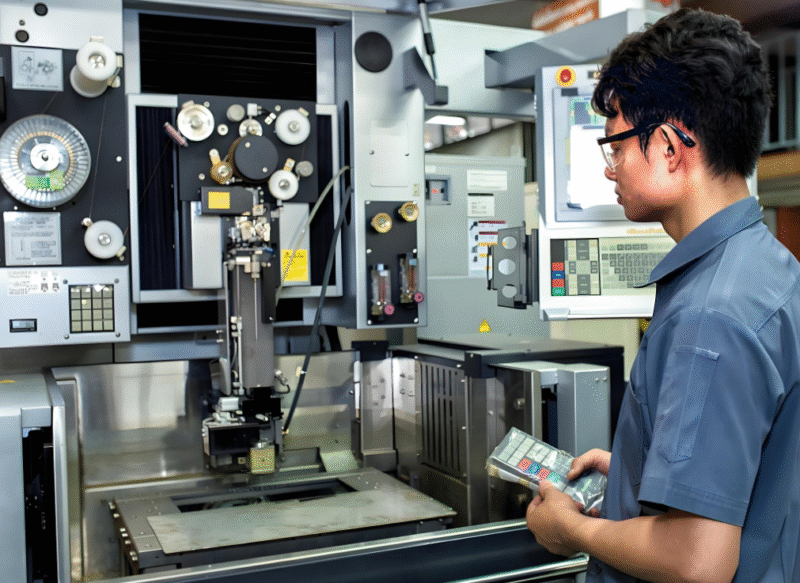
AI-enabled machining: On advanced grinding machines, intelligent closed-loop systems are disrupting the traditional machining paradigm. By integrating ultra-high-precision sensors with real-time AI analytics modules, the machines are able to collect tens of thousands of data (e.g., grinding forces and vibrations) per second and use deep learning to predict tool wear, correct process parameters in real time, and control machining fluctuations to a very low level (e.g., 0.2 microns), thus dramatically increasing the product qualification rate-2.
Digital Twin and Intelligent Service: Digital twin technology provides a new tool for precision machining process optimisation by deeply integrating with atomic-level surface analysis and other technologies-2. At the same time, big-data-based physical simulation software and database systems for cutting processes are promoting the transformation of traditional machining into intelligent service, and realising the intelligent application of process basic data-8.
Pushing the limits of precision
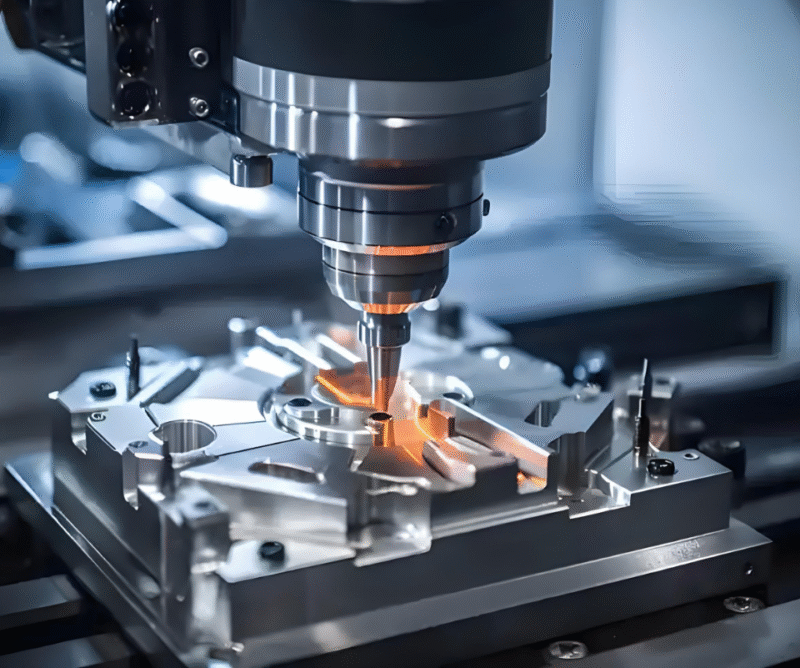
On the battlefield of nano-precision, technology is still moving forward. For example, to meet the demands of top lithography optics, the latest ultra-precision grinder uses technologies such as laser interferometer closed-loop feedback and a 0.05-micron-grade air-bearing spindle to successfully converge the face accuracy of complex free-form silicon lenses to 0.15-micron PV (peak-to-valley)-2. Industry authorities predict that engineered grinding accuracy is expected to exceed the 1-nm barrier by 2030-2.![图片[1]-智能精密机械加工:前沿技术趋势与未来展望(未来的精密机械加工将是一个多技术维度深度融合的领域)-大连富泓机械有限公司](https://cndlfh.com/wp-content/uploads/2025/10/QQ20251002-202005-800x719.png)
Green and sustainable manufacturing
Finishing technology is not only pursuing higher precision, but also actively embracing green manufacturing. In the manufacture of medical implants (e.g., artificial joints), the innovative low-temperature cold-air and micro-lubrication composite technology can significantly reduce grinding fluid consumption by 92% while maintaining a surface roughness of 0.03 microns, significantly reducing the generation of chemical waste fluids-2. This demonstrates the precision machining field's commitment to sustainable development.
Automation and Flexibility
For the processing of complex structural parts (such as special vehicle cases, aerospace guidance valve bodies, etc.), the combination of robotic machining systems and five-axis CNC machining technology has effectively solved the challenges of difficult-to-machine materials, such as large process deformation and difficult to control the quality, etc.-8. Finishing processes, such as deburring and polishing, are also being automated through robots, high-pressure water and other automated units to achieve high-efficiency, high-precision flexible production-10.
III. Future prospects
The future of precision machining will be a field of deep integration of multiple technological dimensions: deep ploughing of nanoscale machining stability in the vertical direction, horizontal expansion of composite functional modules, and green management throughout the entire lifecycle in the vertical direction-2. This technological revolution will enable precision machining to continue to play a central role in high-performance manufacturing.
IV. Conclusion: embracing change and staying ahead
For all participants, proactively understanding and applying smart, green, and ultra-precise manufacturing technologies is no longer about following trends, but about building future-proof core competencies.
Call-to-Action ★
Is your organisation ready to meet the challenges of the next generation of finishing technologies? Let us help you stay ahead of the curve. Explore our smart machining solutions or get in touch with our innovation team today to map out your future manufacturing blueprint.


 Chinese
  Japanese
  English
  German
  Finnish
No comments