

understand what one is reading or watchingmachining: Manufacturing core from drawing to finished product
Machining, the cornerstone of manufacturing, is essentially a dance of materials, precision and efficiency.
When you get a metal part with a great finish and a tight fit, have you ever wondered how it metamorphosed from a rough piece of raw material? That's the beauty of machining. It's not just about running the machine, it's about a rigorous system of engineering that goes into the whole process of making a product. This article will take you in-depth “see” machining, to understand its core processes and internal logic.
I. Core: turning, milling, boring, three basic process analysis
There are many machining processes, but turning, milling and boring are considered to be the most basic and widely used of the three pillars.
Turning: Imagine pottery drawing, where the raw material rotates and the tool is fixed to cut. Turning is similar, mainly for rotating parts (such as shafts, bushings, screws). The workpiece is rotated by the spindle, and the turning tool moves axially or radially to remove excess material and obtain cylindrical, conical, and other features.
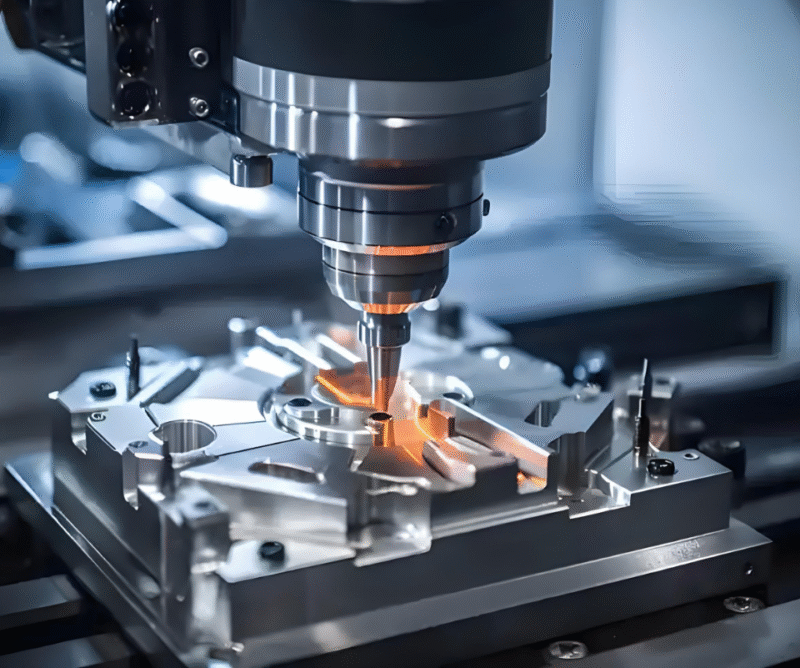
Milling: In contrast to turning, milling involves the rotation of the tool and the fixing of the workpiece. Through the high-speed rotation of the multi-flute milling cutter, it is possible to machine flat surfaces, grooves, and complex curved surfaces of the workpiece. It is extremely flexible and is the mainstay for machining box and plate parts.
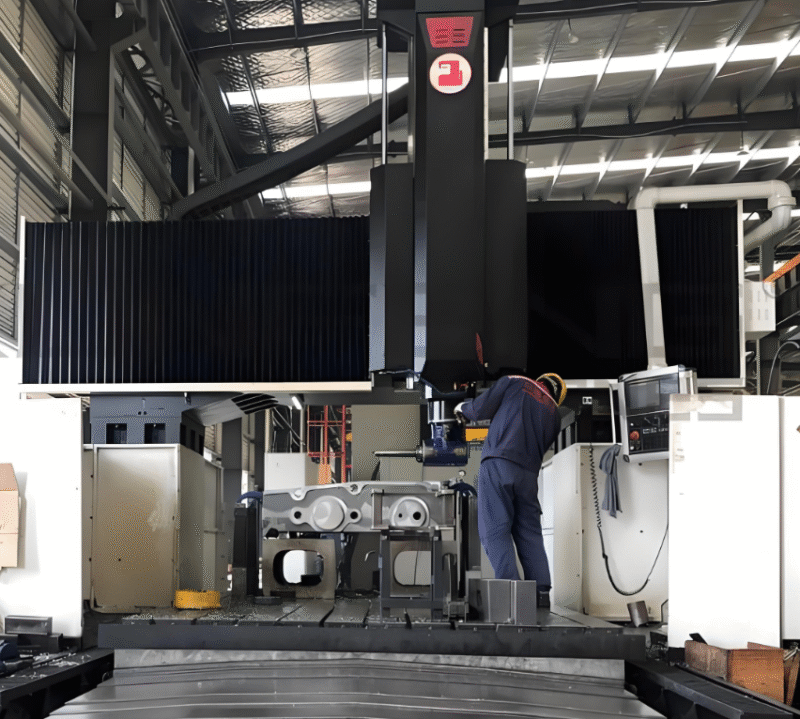
Boring: Boring comes into play when there is a need to finish a hole, especially to obtain a high degree of accuracy in the diameter, roundness and position of the hole. Boring tool in the hole has been pre-machined to rotate and feed, to achieve the “finishing” of the hole. For some large parts (such as engine block) on the precision hole system, boring is an indispensable process.
Second, the soul: process regulations, manufacturing process “guide to action”
If the equipment is the “muscle” of machining, then the process specification is the “brain” and “soul” of the command muscle. It is a guiding process document to ensure the quality of machining, improve productivity and control costs.![图片[1]-看懂机加工:从图纸到成品的制造核心-大连富泓机械有限公司](https://cndlfh.com/wp-content/uploads/2025/10/QQ20251002-202038-800x562.png)
The development of a complete machining process protocol typically includes the following steps:
Analysing product drawings: a thorough understanding of the function of the part, its technical requirements and its assembly relationship within the product. This is the cornerstone of all machining activities.
Process Review: Determines whether the dimensions, views and technical requirements on the drawings are complete and reasonable, and analyses the structural workmanship of the part to ensure that it can be manufactured economically and efficiently.
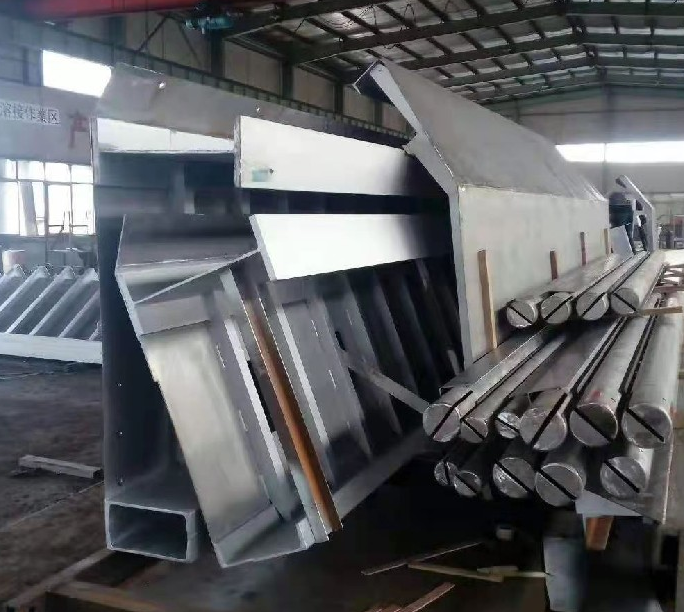
Determination of the blank: Depending on the requirements of the part, the most suitable form of blank is selected, such as a casting, a forging, a profile or a welded part. This directly affects the amount of subsequent machining, cost and part performance.
Developing the process route: this is the heart of the matter. Need to determine which face to process first, after processing which hole; which features need roughing, which need finishing; in which link to arrange heat treatment and so on. The rationality of the route arrangement is directly related to the processing efficiency and accuracy of the parts.
Selection of machine tools and fixtures: Assigning the right machine tools, fixtures, tools and gauges for each process.
Determination of parameters: specification of machining allowances, process dimensions, tolerances and cutting quantities (cutting speed, feed, etc.) for each process.
III. Evolution: CNC technology and automation, the engine of modern manufacturing
While traditional machining is highly dependent on the experience of the operator, the introduction of CNC technology has brought about a revolutionary change.
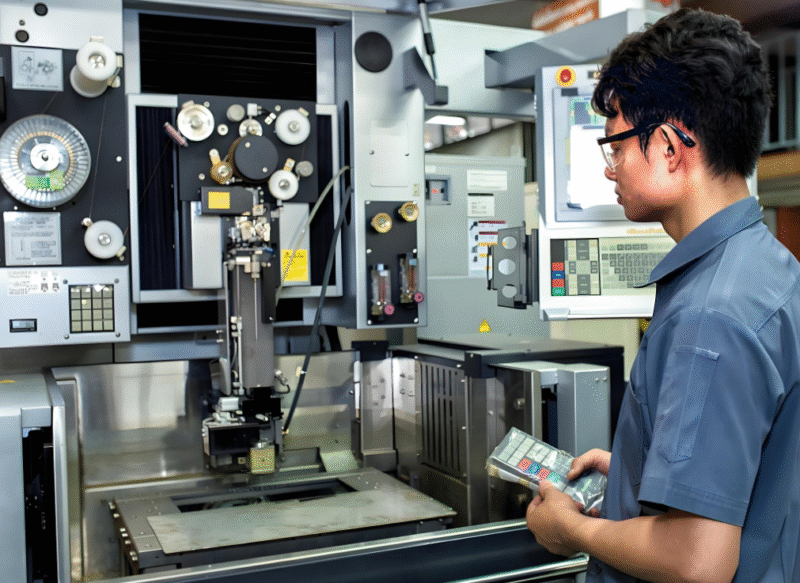
CNC machining: computer numerical control. The programmer writes a machining programme (G-code) based on a three-dimensional model, and the CNC system drives the machine's axes to perform precise, complex movements automatically.
The advantages that come with it:
High complexity: complex surfaces and structures that are difficult to achieve manually can be easily machined.
High Consistency: Once a programme has been validated, it can be repeated indefinitely to mass produce parts of consistent quality.
High efficiency: human intervention is reduced, and with functions such as automatic tool change, machining efficiency is dramatically increased.
Flexibility: When switching products, it is usually only necessary to change programmes and fixtures, making it highly adaptable.
IV. Key: Quality control, guarantee of precision and reliability
In machining, quality is made, not inspected. Still, inspection is the final hurdle to ensure that nothing goes wrong.
Process capability: Ensure that the machine tool, cutting tools and process parameters work together to consistently produce a product that meets the required tolerances.
Process inspection: operator self-inspection, quality inspector inspection, timely detection and correction of deviations.
Final Inspection: Using high-precision gauges (e.g. CMM), the critical dimensions, form and positional tolerances and surface roughness of the completed parts are fully measured to ensure compliance with the drawings.
V. Trends: Intelligent and sustainable development, the way forward
Machining technology is still evolving and is currently moving towards intelligence and green sustainability.
Smart manufacturing: AI and machine learning are being used to optimise machining parameters, predict tool life and implement predictive maintenance.
Online services:Online CNC machining platformis on the rise, with users uploading CAD models to get instant quotes and choose materials for production, greatly simplifying the manufacturing process.
Green Manufacturing: The industry is increasingly focusing on reducing energy consumption and the use of cutting fluids by optimising machining processes and making greater use of recyclable materials, working towards greener production.
concluding remarks
Understanding machining is not just about knowing a few machine tools or cutting tools, it's about understanding the rigorous systems engineering thinking behind it. From a drawing to a precision part, it unites the wisdom of process design, the precision of CNC technology and the rigour of quality control.
In today's increasingly competitive manufacturing world, a deep understanding of machining means mastering the key code to turning innovative designs into quality products. Whether you are a design engineer, purchasing professional or manager, we hope this article will help you gain a deeper understanding of this core aspect of manufacturing.


 Chinese
  Japanese
  English
  German
  Finnish
No comments