

Rivet Welding Welding and Dissolving Technology: The Invisible Ally of Modern Manufacturing
Behind the seemingly indestructible metal connection is a delicate dance between materials science and fluid dynamics.
When we talk about joining technologies in manufacturing, riveting and welding are often seen as two distinct processes. However, in today's state-of-the-art manufacturing, they are forming an unexpected synergy with a seemingly unrelated technology: dissolution. This cross-border combination is redefining the way we approach joining and separating materials.
Rivet Welding: The Perfect Balance of Non-Detachable and Detachable
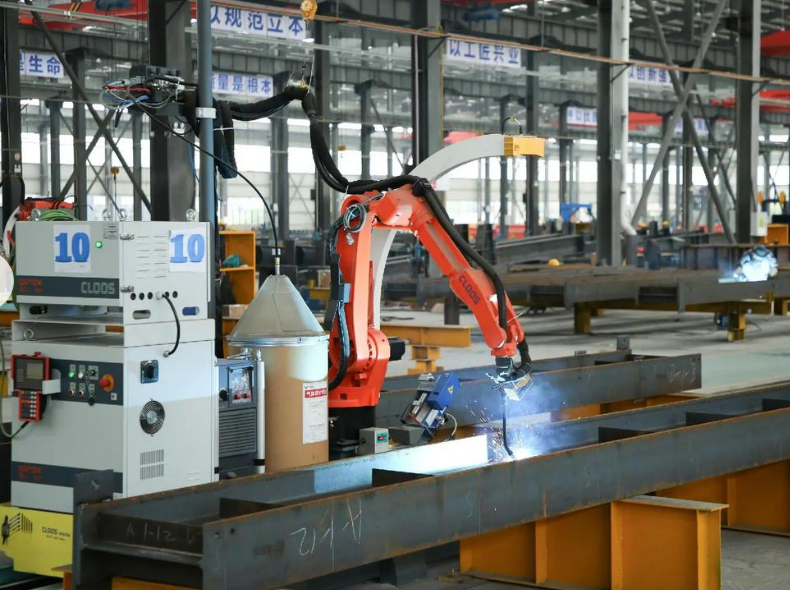
Rivet-weld welding, as a composite joining process, skilfully combines the strength of welding with the flexibility of riveting. In practice, it retains the advantages of high strength and air tightness of welded joints-1, while dispersing stress concentrations through riveted elements and improving the fatigue life of the joint-6.
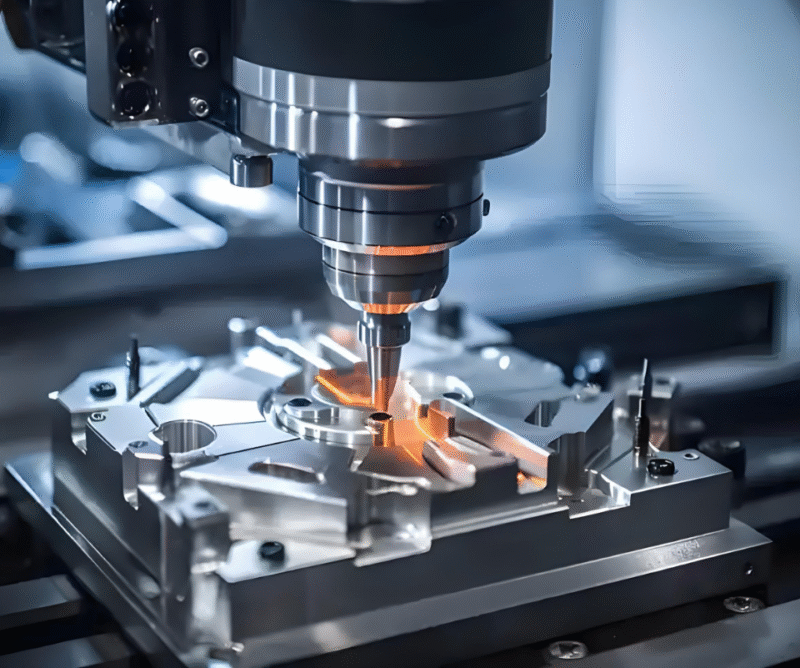
In aluminium alloy joining, the unilateral self-pierce friction riveting process demonstrates the advantages of this synergistic effect. The process utilises high-speed rotating semi-hollow rivets riveted into the plates to be joined, with friction heat generation softening the material to form a mechanical-solid phase composite joint-3. This thermally coupled process not only reduces plate deformation during joining, but also, in some parameters, allows the material between the upper and lower plates to form a metallurgical joint under the action of heat-3.![图片[1]-铆焊焊接与溶解技术:现代制造业的隐形同盟-大连富泓机械有限公司](https://cndlfh.com/wp-content/uploads/2025/10/QQ20251002-202341.png)
Dissolution technology: an unexpected bridge from separation to connection
The application of dissolution technology in manufacturing goes far beyond traditional materials separation or recycling. In welding, an understanding of the solubility of metals in welding is critical - it determines whether two metals can form an alloy of the correct composition-7.
There are two ways of thinking about the solubility of solder alloys: either the two elements must dissolve into each other when the alloy is made in order to form an alloy of the correct composition, or during the soldering process, where solubility depends on the ability of the alloy to diffuse into the metallisation-7. For example, indium (In) diffuses at a different rate than tin (Sn) into copper (Cu), and some alloys such as BiPb do not diffuse into the copper metallisation at all-7. 7.
Synergistic application of rivet welding and dissolving
1. Polymer-metal composite connections
Dissolution technologies show unique value when it comes to joining plastics to metals. For example, polystyrene dissolution technology uses solvents to dissolve waste plastics and recovers polystyrene pellets by heating, degassing, extruding and pelletising.9 The low reaction temperature of this type of dissolution process ensures that the quality of the recovered polymer material does not deteriorate.9
2. Application of high-efficiency dissolution processes to joining pre-treatment
The efficient dissolution process developed in the Bohai Oilfield controls the polymer dissolution time to around 40 minutes, setting the stage for the subsequent joining process-4. This process optimises the three phases of dissolution and significantly reduces the amount of platform space occupied by the dissolution system-4.
Future outlook: the technological frontier of cross-border integration
With the advancement of material science, the combination of rivet welding and dissolution technology will become closer. Especially in the field of multi-material structures (e.g. aluminium-steel hybrid joints) and heterogeneous material joints, a deeper understanding of the solubility behaviour between materials will directly determine the success of the joining process.
Stamped riveting (SPR) has been widely used as a mechanical cold-formed joint for aluminium-aluminium and aluminium-steel joints in automotive lightweighting design.8 Understanding the solubility characteristics of different metals during the welding process is essential for avoiding joining defects and improving the reliability of the joints-7.
concluding remarks
The combination of riveting welding and dissolution technology represents a modern manufacturing industry that is moving from traditional process boundaries to multi-dimensional integration. This cross-border synergy not only solves the technical challenges that are difficult to deal with by a traditional single process, but also opens up new possibilities for joining and separating materials. For manufacturing companies committed to technological innovation and process optimisation, an in-depth understanding of the interaction of these two technologies will be a key strategy to maintain a leading position in the highly competitive market.


 Chinese
  Japanese
  English
  German
  Finnish
No comments