

Rivet weldingThe basic process of the process is explained in detail: 8 key steps from drawing to finished product | [Your Site Name]
Meta Description: This article is a detailed analysis of the basic process of riveting and welding, covering the material, bevelling, grouping, welding, inspection and other 8 core steps, to help you fully understand the whole process of production of riveted and welded parts.
The basic process of riveting and welding processing: a read from the drawings to the finished product of the whole process
Introduction:
Have you ever wondered how strong metal frames, large equipment and structural components are manufactured by riveting and welding? Rivet welding is not simply “welding”, it is a rigorous and systematic process. Understanding the basic process of riveting and welding is crucial to ensuring product quality and controlling production costs. In this article, we will provide you with a detailed explanation of each key step from the design drawings to the final product.
I. Review of drawings and technical submissions
This is the starting point for all work. Process engineers need to scrutinise the design drawings provided by the customer and understand the technical requirements, including material types, dimensional tolerances, welding standards, etc. This is followed by a technical briefing with the production team to ensure that everyone is clear on the machining requirements and quality objectives.
II. Undercutting
Undercutting is the process of cutting raw materials (e.g. steel plates, profiles) into the required shape and size according to the drawings. Commonly used methods include:
Flame cutting: For thick plates.
Plasma cutting: fast, suitable for medium and thin plates and non-ferrous metals.
Laser cutting: High precision and good quality of the cut.
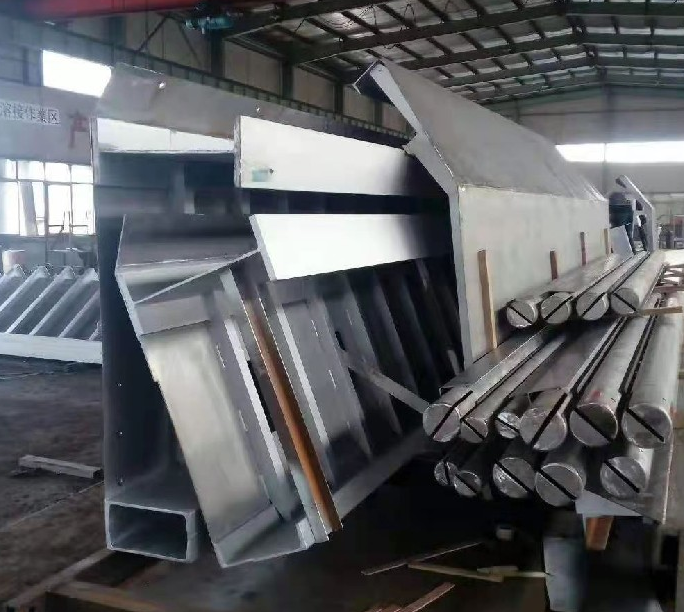
Shearing machine shear: For regular shaped plates.![图片[1]-铆焊加工的基本工艺流程:一篇看懂从图纸到成品的全过程-大连富泓机械有限公司](https://cndlfh.com/wp-content/uploads/2025/11/QQ20251002-202038.png)
III. Bevelling
In order to ensure weld penetration and form a good weld seam, it is usually necessary to machine a specific shape of bevel on the edge to be welded. Common forms of bevels are I-shaped, V-shaped, X-shaped, U-shaped and so on. Processing methods include edge planing, milling, flame bevelling and so on.
IV. Grouping and point fixing
Assembles and combines cut and bevelled parts according to drawings. Fixtures or jigs are used to ensure the relative position and dimensional accuracy of the parts. Once the assembly is complete, the parts are “spot-fixed” by means of short weld seams, which temporarily hold the parts in place for subsequent formal welding.
V. Welding
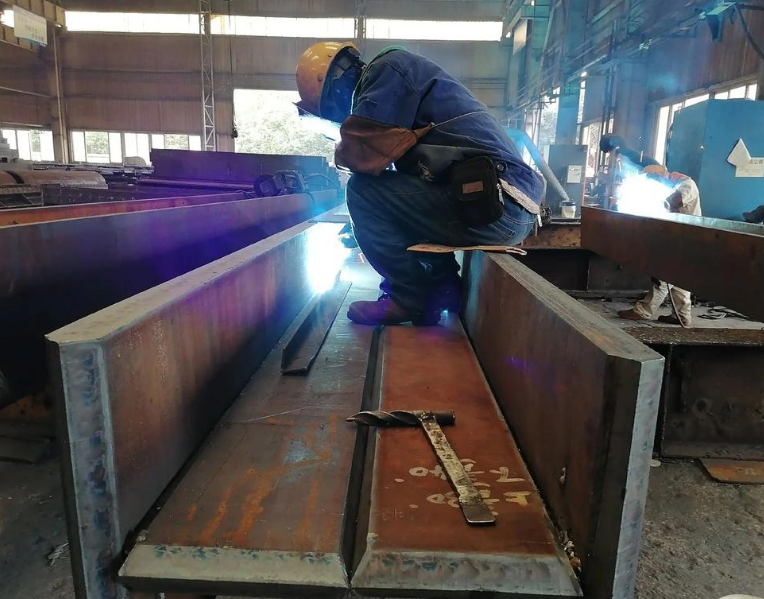
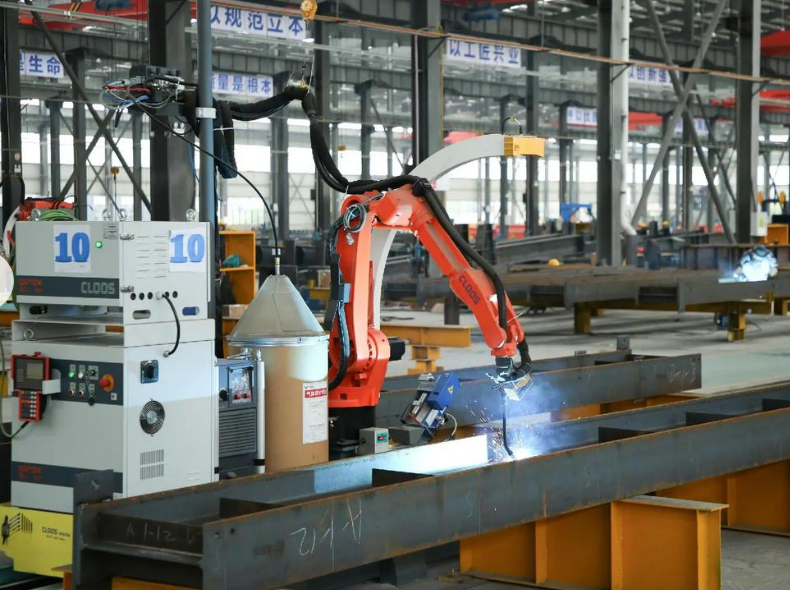
This is the core aspect of rivet welding processing. According to the product requirements, material properties and other factors, choose the appropriate welding method:
Electrode Arc Welding: Flexible and widely used.
Gas Shielded Welding: High efficiency and beautiful weld seam.
Submerged Arc Welding: For long straight welds with stable quality.
Argon arc welding: for stainless steel, aluminium and other materials that require high protection.
VI. Post-weld treatment
After welding is complete, it may be necessary to improve the appearance and performance of the product:
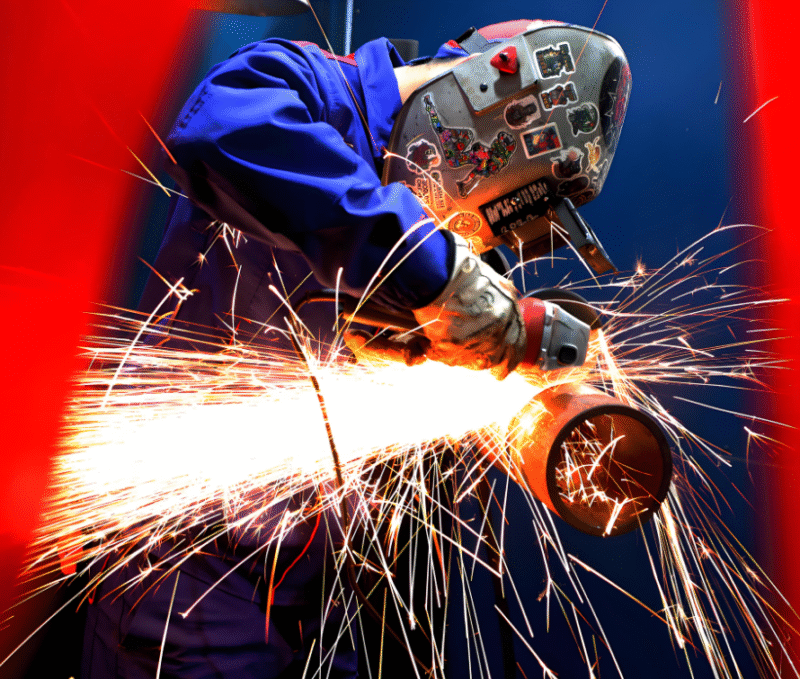
Slag Removal and Grinding: Remove slag and spatter and grind the weld seam to make it smooth and beautiful.
Calibration: Removal of stresses and distortions generated during the welding process.
Heat treatment: For critical components, stress relief annealing is performed to stabilise dimensions and properties.
VII. Quality inspection
Inspection is the final gateway to ensure product quality. It mainly includes:
Appearance inspection: Inspect the weld for surface defects.
Non-destructive testing: such as X-ray inspection, ultrasonic inspection, to detect the internal quality of the weld.
Dimensional Inspection: Verify that finished dimensions are in accordance with the drawings.
Pressure test: For container type products, carry out a water or air pressure test.
VIII. Surface treatment and rust prevention
According to the customer's requirements and the use environment, the finished products are subjected to surface treatment such as sandblasting, painting, galvanising, etc., in order to improve their anti-corrosion ability and aesthetics.
Summary:
The basic process of riveting and welding processingIt is an interlocking systematic project. Each step directly affects the quality, safety and service life of the final product. A professional rivet welding processing factory will inevitably strictly control each link. If you have rivet welding processing needs, welcome to contact us, we will provide you with high quality products and services that meet the standard.
Extended Reading:
What industry does riveting and welding processing belong to? How does it differ from traditional manufacturing?
Explain the classification of “riveting and welding”: what type of work or craft does it really belong to?

 Chinese
  Japanese
  English
  German
  Finnish
No comments