

What is the category of riveting? A comprehensive analysis from the perspective of both the type of work and the process
Meta Description: Confused about “what category does riveting belong to”? This article will help you to clearly classify the concept of riveting and welding from two dimensions, namely the type of work (riveter/welder) and the process (joining technology).
What category does rivet welding belong to?What's the best way to do this? A comprehensive analysis from the perspective of both trades and processes
Introduction:
“The term ”riveting“ often begs the question: does it refer to a trade or a craft? The answer is: both. In order to understand exactly ”what category rivet welding belongs to", we need to look at it from two different dimensions: the occupational category and the technical process.
I. Classification from the perspective of occupational groups
In the factory and labour system, “riveting and welding” usually refers to two closely related technical trades with different responsibilities:
worker with rivets
Classification: A trade that belongs to the assembly category.
Primary job: To release, lay out, set up, assemble and straighten structural metal parts. They are the “building block builders”, putting the metal parts together accurately according to the drawings and preparing them for welding. Riveters focus more on overall structural accuracy and assembly.
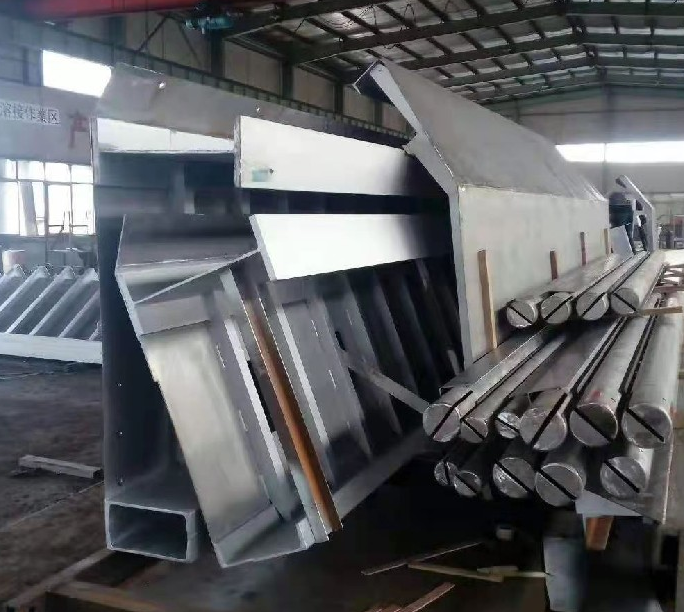
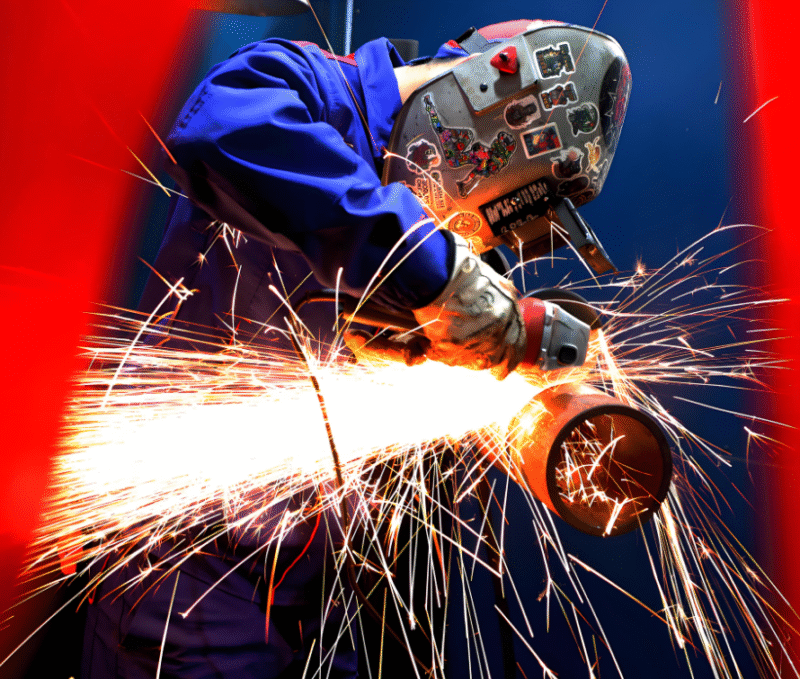
welder![图片[1]-铆焊属于什么类别?从工种与工艺两个角度全面解析-大连富泓机械有限公司](https://cndlfh.com/wp-content/uploads/2025/11/QQ20251002-201814.png)
Classification: A joining type of work.
Primary Job: Responsible for permanently joining pairs of parts together using welding equipment and materials. They are the “seamstresses” who form strong welds from molten metal. Welders focus more on the quality, strength and aesthetics of the weld.
Conclusion: At the level of trades, “riveting and welding” is a collective term for the two trades of riveters and welders, who work together to manufacture structural metal parts. One is responsible for “moulding” and the other for “joining”.
II. Classification from the point of view of technical process
From a manufacturing technology perspective, riveting is a non-removable joining process.
Position in the broad category of connectivity technologies:
Removable connections: threaded, keyed, pinned, etc.
Non-removable connections: welding, riveting, gluing, etc.
“The term ”riveting“ itself encompasses the two main non-removable joining methods, welding and riveting. Although welding has become absolutely dominant in modern industry, the historic term ”riveting" is still widely used to refer to this process of permanent joining by heat or pressure.
Position in the material machining process:
Thermal processing: Casting, forging, welding, heat treatment, etc.
Welding (the core of riveting) is explicitly categorised as a type of thermal processing because the process involves the melting and solidification of metal.
Summary:
So when someone asks, “What category does rivet welding belong to?”, you can answer:
Occupationally, it is a skilled trade in industrial manufacturing, subdivided into riveters and welders.
Technically, it is a non-detachable joining of materials and is an important form of thermal processing.
Understanding these two dimensions of classification helps us to gain a fuller and deeper understanding of the role and value of riveting in industrial production.
Extended Reading:
Don't understand the process? Read the basic process flow of riveting and welding processing in one article.
What industry does riveting and welding processing belong to? Reveal its core position in the modern industrial system


 Chinese
  Japanese
  English
  German
  Finnish
No comments