

Procurement director must read: large mining excavator seven core parameters depth comparison and avoid pit guide
Main article:
Last week, we had dinner with Lao Zhang, the equipment minister of an open-pit coal mine in Inner Mongolia, who lamented, “Last year's purchase ofThe 380-tonne mining excavator.The parameter table has been read for three months, but the result is still falling into the pit.” He said the “pit” is very specific: when the equipment is working at full load, the bucket rod hydraulic oil temperature is 8 ℃ higher than the competitors, resulting in every 600 hours of work in advance to replace the hydraulic oil, alone this increase in maintenance costs of 150,000 yuan per year.
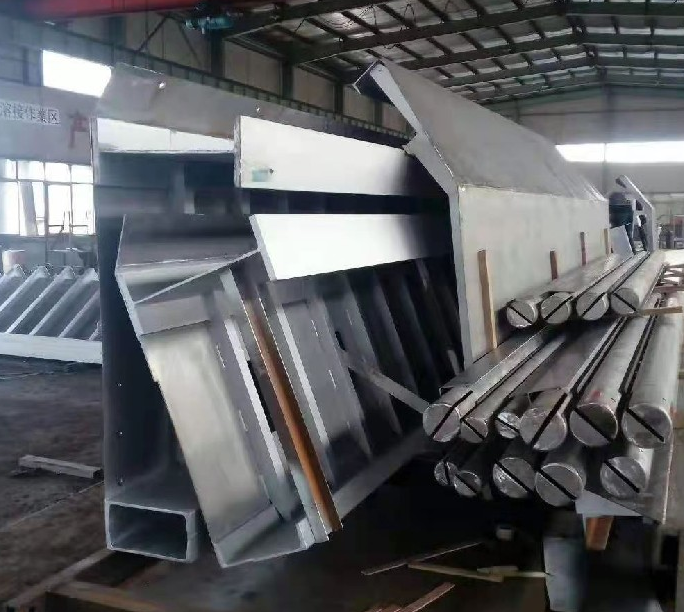
This story is not uncommon in the mining equipment procurement circle. Procurement of large mining excavators, often tens of millions of dollars of investment, the parameters of the table densely packed data, which is a marketing gimmick, which is the real performance indicators? I combine seventeen years of industry experience, for you to sort out the seven most easily misunderstood but vital parameters.![图片[1]- 采购总监必读:大型矿山挖掘机七大核心参数深度对比与避坑指南-大连富泓机械有限公司](https://cndlfh.com/wp-content/uploads/2025/12/QQ20251215-195456-800x423.png)
I. The “effective power” trap behind engine power
The “rated power” on the parameter table and the “available power” in actual operation are two different things. The procurement case of an iron ore mine in Shanxi in 2021 is very representative: they compared three excavators of the same tonnage, with a nominal power of 1,250kW for brand A, 1,200kW for brand B, and 1,180kW for brand C. According to the conventional thinking, brand A is obviously the most powerful.
But the actual field measurements were surprising:
Brand A power attenuation rate of 22% in mining area at 1800 metres above sea level
Brand B is equipped with a plateau adaptive system that controls the attenuation rate to 12%
Although the C brand has the lowest nominal power, it has more low-speed torque and is actually the most efficient in terms of loading.
Key point: not only should you look at the standard working condition power at sea level, but also ask for the measured power curve under the altitude and temperature conditions in your mining area. Ask the supplier to provide fuel consumption and power data of the same model of equipment under similar working conditions in the previous three years, which is more useful than any brochure.
II. The art of balancing working weight and grounding specific pressure
“The bigger the tonnage, the better” is a common misconception. A bauxite mine in Henan had purchased a 380-tonne excavator, which got stuck in soft ore layers during the rainy season, resulting in more than three weeks of downtime each year. Later, they switched to a 360-tonne model with wider track plates, and the ground pressure was reduced from 178kPa to 152kPa, which solved the passability problem completely.
The formula for calculating the grounding specific pressure: Operating weight ÷ (Track length × Track width × 2). This parameter is often hidden in supplier samples, but you must calculate it. Generally speaking, for mines with soft soil, it is recommended to control the grounding ratio pressure at 140-160kPa; for hard rock mines, it can be relaxed to 170-190kPa.
Three invisible indicators of the hydraulic system
Most purchasers focus on the obvious parameters of hydraulic pump displacement and operating pressure, but it is often the following three invisible indicators that really affect long-term reliability:
Hydraulic Fluid Cleanliness Retention: Suppliers are required to provide NAS cleanliness rating data for hydraulic systems. A good quality system will maintain NAS 7 or less for 2000 operating hours, while a poor system will drop to NAS 9 in 600 hours. For each level of degradation, pump and valve life is reduced by approximately 301 TP3T.
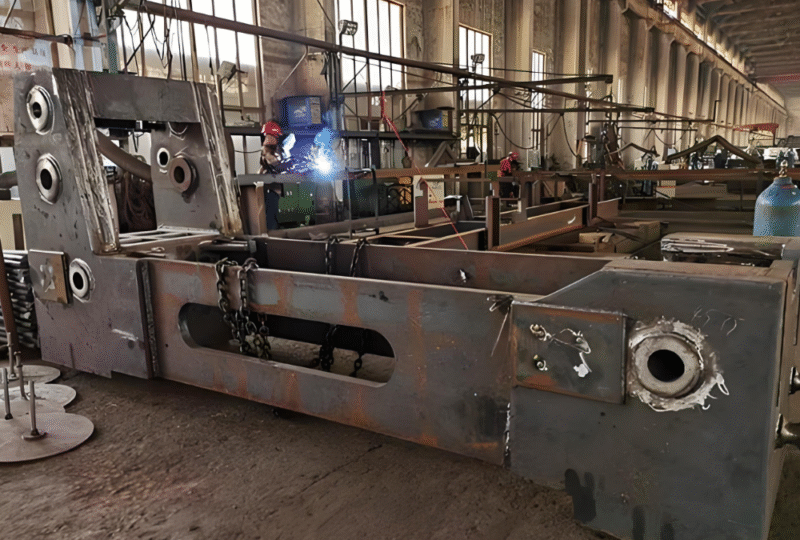
Thermal equilibrium point setting value: The optimal working temperature range of hydraulic oil is 65±5℃. A national brand through the optimisation of the radiator layout, the limit working condition oil temperature control within 72 ℃, while some brands in the ambient temperature of 35 ℃ when the oil temperature reaches 82 ℃, which is a design flaw.![图片[2]- 采购总监必读:大型矿山挖掘机七大核心参数深度对比与避坑指南-大连富泓机械有限公司](https://cndlfh.com/wp-content/uploads/2025/07/QQ20250724-210749-800x440.png)
Flow Matching Accuracy: Modern large excavators use positive flow control systems that require a flow matching error of less than 51 TP3 T. You can request to see the “Compound Motion Coordination Test” data in the third party test report.
IV. Methods for identifying the design life of structural components
The life of structural components is a decisive factor in the economics of equipment. The practice of a large domestic copper mine is worth learning from: they require suppliers to provide three points in the bidding documents:
Finite element analysis report of moving arm and bucket bar (focusing on stress concentration areas)
Calculation of the L10 life of the slewing ring (should not be less than 30,000 hours)
Chassis X-frame weld inspection standard (100% ultrasonic inspection required)
They found that the same nominal 50-tonne bucket capacity excavator, A brand dynamic arm design life of 20,000 hours, B brand reached 28,000 hours, while the price difference is only 8%. equipment minister calculated an account: according to the cost of operating 1200 yuan per hour, this 8000 hours of the gap means that nearly ten million potential value.
V. Environmental resilience indicators for electrical systems
Mining environment is a severe test for the electrical system. A coal mine in Xinjiang is located in a windy and sandy area, and they have summarised a set of electrical system assessment methods:
Protection level: IP rating of key electrical components such as controllers and sensors is required to be not less than IP67 (dustproof and waterproof), not just the whole machine protection level.
Harness quality standards: require the use of oil-resistant, high-temperature-resistant harnesses, connectors must be gold-plated contacts. There is a simple identification method: the number of grounding points in the electrical schematic diagram is required to be viewed. High-quality design every 3-5 metres there is a grounding point, poor quality design may be more than 10 metres to have a.
Electromagnetic compatibility: Large mining equipment intensive area with serious electromagnetic interference. Suppliers are required to provide third-party EMC test reports to ensure that the system can work normally in a strong electromagnetic field of 30V/m.
VI. The correct way to interpret fuel consumption data
“Fuel consumption per tonne of material is more informative than fuel consumption per hour. We have tracked the actual data of six excavators of the same class in Northeast China:
Model Hourly fuel consumption(L/h) Actual hopper capacity(m³) Fuel consumption per tonne of material(L/t) Annual difference cost
Brand A 185 22.5 0.041 Baseline
Brand B 192 24.1 0.040 -$120,000
Brand C 178 21.8 0.041 +$30,000
It looks like the B brand has the highest hourly fuel consumption, but because of its larger bucket capacity and short operating cycle time, the actual tonne of material has the lowest fuel consumption. According to the annual working hours of 5,000 hours, but the most fuel-efficient.
VII. Quantitative assessment of ease of maintenance
Maintenance costs account for 40%-60% of the total lifecycle cost of the equipment. it is recommended that a “simulated maintenance exercise” be conducted prior to purchase:
Routine maintenance point accessibility: Suppliers' representatives are asked to demonstrate on-site routine operations such as changing air filters, checking hydraulic oil levels, etc., and to record the time and types of tools required.
Overhaul cycle data: Ask for the first overhaul time for similar equipment under similar operating conditions. Quality equipment should have its first engine overhaul at 20,000-25,000 hours, while poor quality equipment may need it at 15,000 hours.
Intelligent degree of diagnostic system: modern equipment should have fault prediction function. For example, a brand of excavators can be based on the trend of hydraulic oil contamination degree, 200 hours in advance warning filter replacement needs.
Final recommendation: Form a 5-7 person technical evaluation team, including first-line personnel such as machine shop supervisors, capable operators, and electrical engineers. Let them participate in equipment inspection and parameter review, often can find the practical details that engineers ignore. Parameter table is dead, the equipment is alive, the real good equipment is those in your particular mine “with the smooth, repair and worry, calculate the money” equipment.


 Chinese
  Japanese
  English
  German
  Finnish
No comments