

Three years ago, I accompanied a coal mining purchasing team on a tour of twoExcavator Manufacturing PlantThe first factory had a shiny floor and brand new equipment; the second had grease stains on the floor and equipment that looked like it had been used. The first factory had a shiny floor, brand new equipment and a red carpet on the tour route; the second factory had grease stains on the floor, the equipment appeared to have traces of use, and the workers were using hammers to beat the jigs and fixtures. The mine's director of mechanical and electrical engineering said on the spot, “We're going to order the second one's equipment.”
His reason is very professional: “The first plant is to do appearance, the ground is so clean shows not much production; the second plant hammer knock fixture sound crisp, shows that the fixture is cast steel, not cast iron, which is really down to do the process.” This case reveals a truth of mining equipment procurement: the quality of manufacturing process, visible from the details.![图片[1]-走进制造车间:矿用液压挖掘机五大核心工艺揭秘与质量鉴别诀窍-大连富泓机械有限公司](https://cndlfh.com/wp-content/uploads/2025/12/QQ20251215-200253-800x466.png)
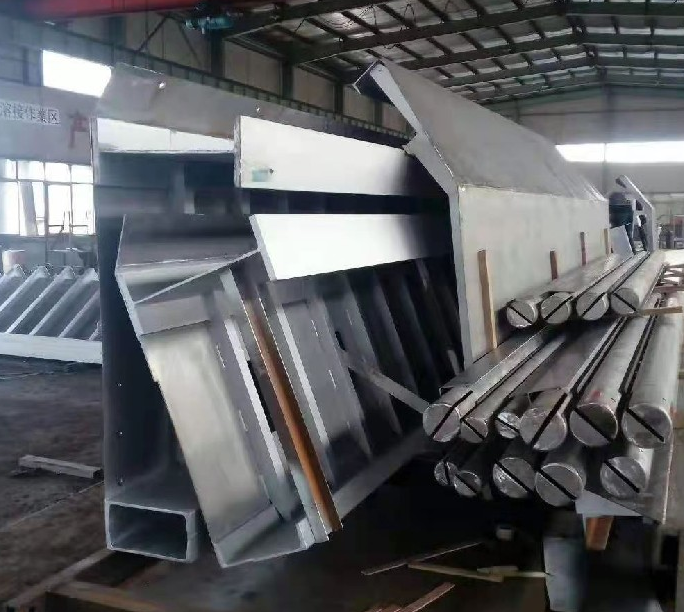
I. Structural components welding: from the “fish scale pattern” to see the enterprise craftsmanship
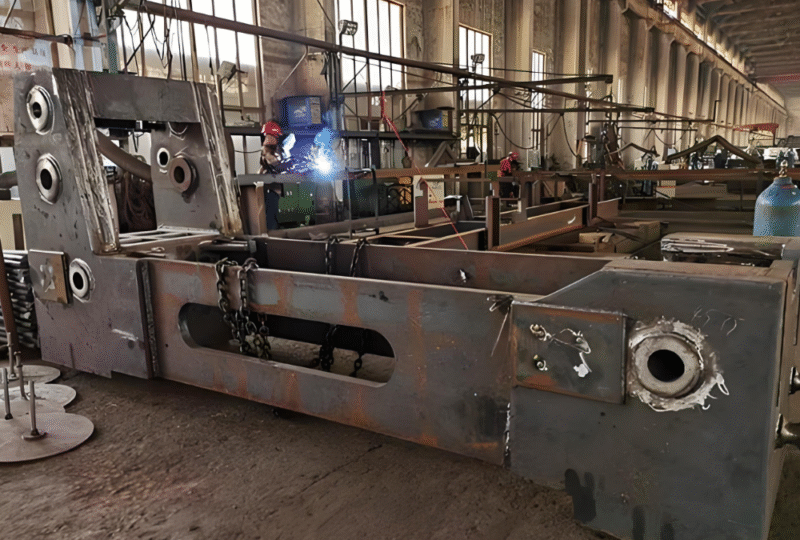
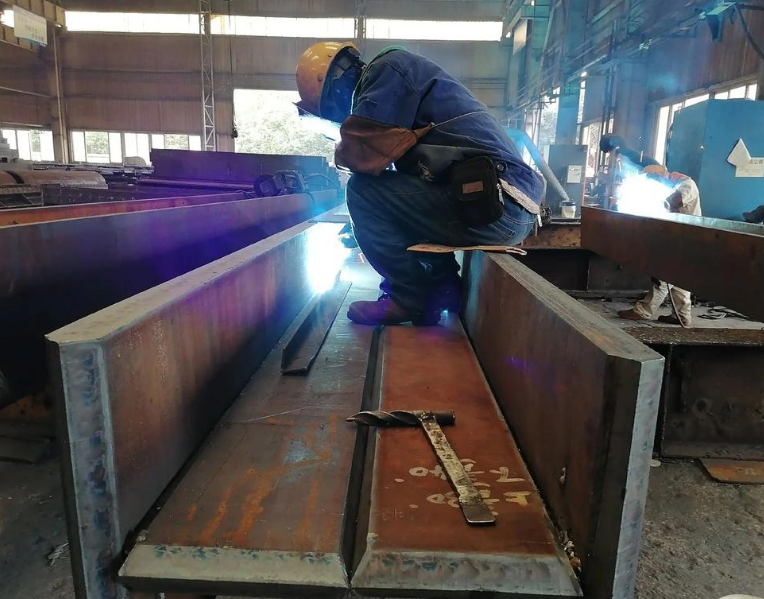
Welding quality is the lifeline of excavator structural components. The industry divides the level of welding into three levels:
Primary level: The weld is flat but there are slag and porosity. A medium-sized manufacturer once caused a moving arm to crack during the warranty period, and analysed it afterwards to find that the welding wire was not dried thoroughly and the hydrogen content of the weld exceeded the standard.
Intermediate level: Welds are uniform and pass inspection, but the heat-affected zone is poorly controlled. This can lead to stress concentrations and fatigue cracking of the equipment at around 15,000 hours.
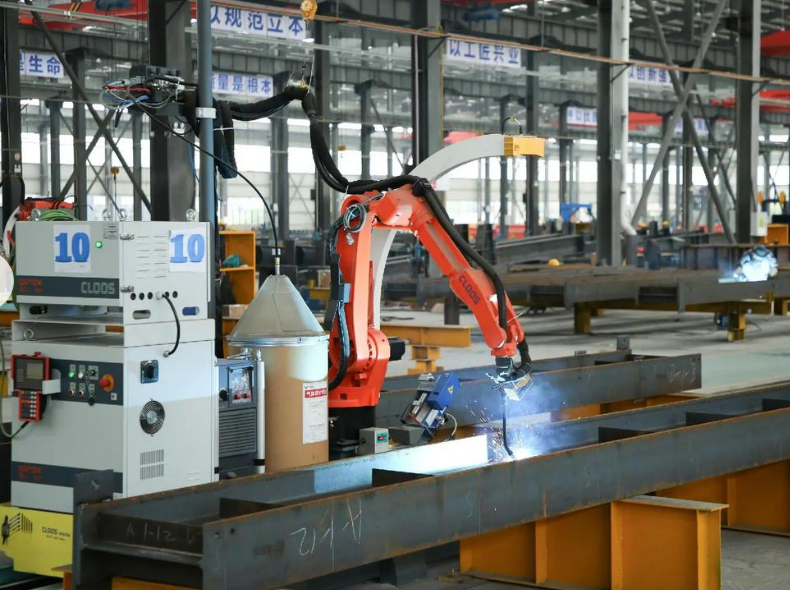
Advanced level: the weld is uniform and fine “fish scale pattern”, the width of the heat-affected zone is controlled within 3mm. A leading domestic enterprises use double wire double pulse welding process, weld strength up to 95% of the base material, fatigue life than ordinary welding to improve 40%.
On-site identification skills: require a visit to the welding shop, randomly select a weld and observe the cross-section with a ten times magnifying glass. The melt depth of a high-quality weld should reach more than 70% of the plate thickness, and the fusion line is clear and straight. If this request is rejected, you have to put a question mark.
Second, the hydraulic pipeline: from “messy as hemp” to “art” gap
70% of hydraulic system failures originate from the pipeline.In 2019, we conducted statistics on domestic mining excavator failures and found that the downtime caused by pipeline problems accounted for 23% of the total downtime.
Quality manufacturer's standard of pipework:
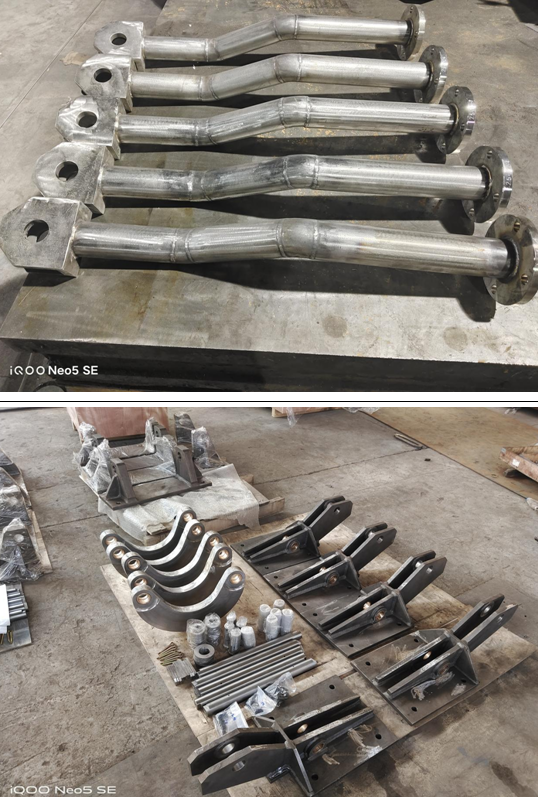
Hard tube production: the use of three-dimensional laser measurement of the material, bending radius error ≤ ± 1mm, which is to ensure that the joints do not leak the basis of the
Hose selection: multi-layer steel wire-wound hose, pulse life should be ≥ 1 million times (international standard is 500,000 times)![图片[2]-走进制造车间:矿用液压挖掘机五大核心工艺揭秘与质量鉴别诀窍-大连富泓机械有限公司](https://cndlfh.com/wp-content/uploads/2025/11/QQ20251002-201616.png)
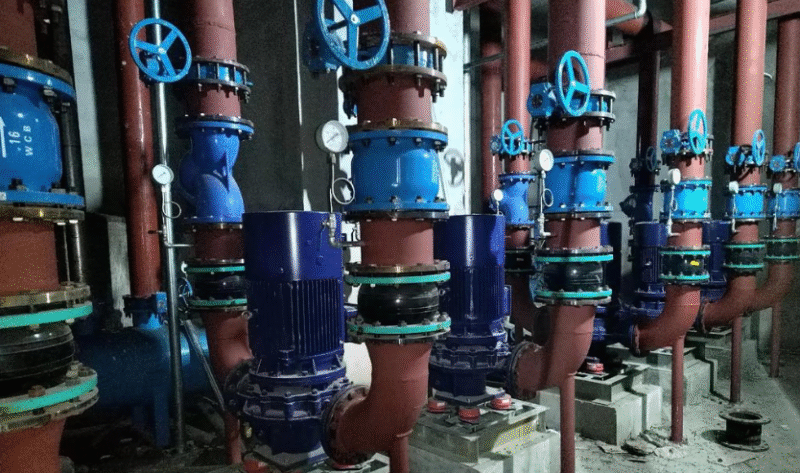
Piping layout: follow the principle of “vertical and horizontal, layered arrangement”, the distance between adjacent pipelines is not less than 2 times the diameter of the pipeline, to facilitate maintenance.
The director of a mining equipment shared his inspection methods: use a torch to illuminate the pipeline seams and observe whether there are traces of interference friction; shake the pipe bundle by hand and listen to whether there is a collision sound. These details can reflect the rigour of the manufacturing process.
Assembly process: the “digital revolution” of torque spanners”
Bolt fastening seems simple, but actually determines the long-term reliability of the equipment. The traditional assembly relies on the worker's sense of touch, pre-tightening force error can reach ± 30%. modern factories have achieved “digital tightening”:
Initial screwing: Use an electric constant torque spanner to achieve a standard torque of 30%.
Repeat tightening: Use a digital torque spanner and tighten to 100% in three stages in a criss-cross sequence.
Final screwing: torque review after 24 hours to compensate for torque degradation due to stress relaxation
We have compared two brands of slewing bearing mounting bolts, using the same strength level of bolts, but brand A used a digital tightening process and had a bolt loosening rate of 0.31 TP3T over three years, while brand B used a traditional process and had a loosening rate of 2.11 TP3T. For a large excavator with 368 slewing bearing bolts, this difference means a completely different level of reliability.
IV. Painting process: the science behind three layers of protection
Mining environments are highly corrosive, and the quality of the coating has a direct impact on the life of the equipment. Quality painting should be a “systematic project”:
The first layer: phosphating treatment: the whole phosphating after the structural components welding is completed, the film weight should reach 2.5-3.5g/m². A company had skipped the phosphating directly spray paint, the result is that the paint film in 18 months a large area of peeling.
Second layer: epoxy primer: airless spraying process, dry film thickness ≥80μm. 120μm is required for critical parts (e.g. welding seam).
Third layer: polyurethane top coat: weather resistance ≥ 2000 hours (QUV test), light retention rate of five years not less than 80%.
On-site inspection tips: 20 random measurements with a magnetic thickness gauge, the thickness is required to be uniform, the extreme difference does not exceed 30%. torch oblique illumination of the paint surface, observe whether the orange peel pattern is uniform - this is a visual reflection of the level of spraying process.
V. Factory tests: from “going through the motions” to “extreme challenges”
Factory testing is the last quality check before equipment is delivered. I have seen three levels of testing:
Formalisation test: 2 hours of no-load operation to check for leaks and noises. This is the minimum standard and is essentially meaningless.
Standardised test: 8-hour load test according to national standards, including basic movements such as digging, slewing and walking.
Liminalisation tests: a lesson to be learnt from one of the country's top manufacturers:
Continuous digging test: 4 hours of continuous digging with full bucket capacity, monitoring the temperature rise curve of hydraulic oil.
Overload protection test: artificially created overloads to verify the response time and accuracy of the protection system
Thermal balance test: continuous operation at 35°C ambient temperature to verify cooling system capability
Electrical interference test: start a high-power walkie-talkie next to the equipment to verify the system's anti-interference capability
One of their factory test reports is 86 pages thick and contains 1274 data points. When you buy such equipment, you are not only buying a machine, but also a complete set of data endorsement.
VI. Supply chain quality control: “final elimination” of suppliers”
The quality level of machine manufacturers depends on the level of supply chain management. Komatsu Japan's supplier quality control method is known in the industry as “harshness”:
Access evaluation: new suppliers must pass 153 evaluations, any one of which scores zero is a one-vote veto
Process monitoring: Quality engineers are assigned to key components to monitor the production process in real time.
Quality traceability: each part has a unique code, problems can be traced back to specific production lines, operators, raw material batches
A domestic excavator manufacturer learned this method, the early failure rate of hydraulic cylinders from 3.2% to 0.8%. their purchasing director revealed a detail: for seal suppliers, they not only check the product, but also check the supplier's “constant temperature and humidity warehouse” -- seal storage environment requires 23 ± 2 ℃, humidity 50% ± 5%, which can ensure stable material performance --The storage environment for seals requires 23±2°C and 50%±5% humidity, which ensures stable material performance.
Advice to buyers: Next time you visit a factory, look not just at the assembly line, but also at the supplier management Kanban boards, quality gate control points, and non-conforming product isolation areas. The reality of these places says more about a company's quality culture than any publicity. Remember, good manufacturing process cannot be bought with money, it is the precipitation of time, experience and craftsmanship.

 Chinese
  Japanese
  English
  German
  Finnish
No comments