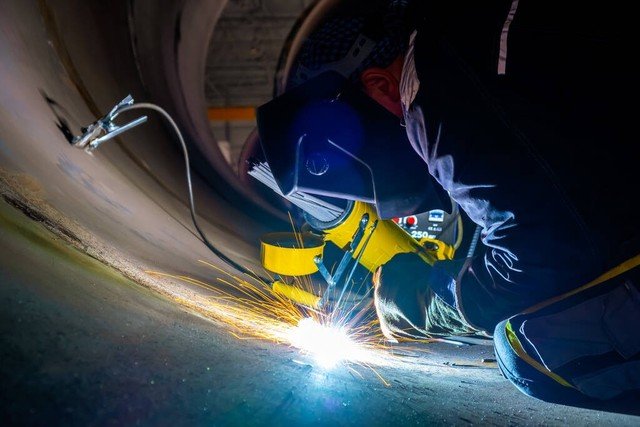


The first step, for some friends who just stepped into this place, to introduce the argon arc welding, and then introduced in the use of the two bonded welding, followed by plasma welding, followed by mentioning the laser welding, respectively, to explain their respective principles of operation, as well as the advantages they have. This can facilitate those who want to learn, or intend to enter the processing industry owners, make the appropriate choice.
![图片[1]-氩弧焊、二保焊、等离子焊、激光焊,该如何选择呢-大连富泓机械有限公司](/wp-content/uploads/2026/01/1768271607557_0.jpg)
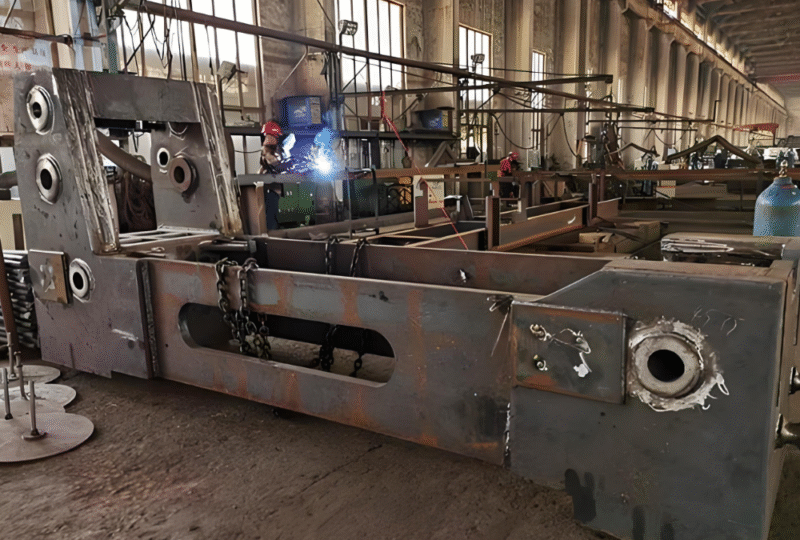
For argon arc welding, its arc using high pressure breakdown of this arc, to be first in the electrode needle (that is, tungsten needle) and the workpiece between the application of high-frequency high pressure, so as to break through the argon, so that argon can conduct electricity, and then the supply of a continuous current, which will ensure that the arc remains stable. In the welding, is the use of welding rod and workpiece contact to ignite the arc, and then lift the welding rod and maintain a certain distance, in the welding power supply to provide a suitable arc voltage and welding current, the arc can be burned stably, in the process will produce high temperatures, so that the welding rod and the weldment is heated locally to the melting state.
![图片[2]-氩弧焊、二保焊、等离子焊、激光焊,该如何选择呢-大连富泓机械有限公司](/wp-content/uploads/2026/01/1768271607557_2.jpg)
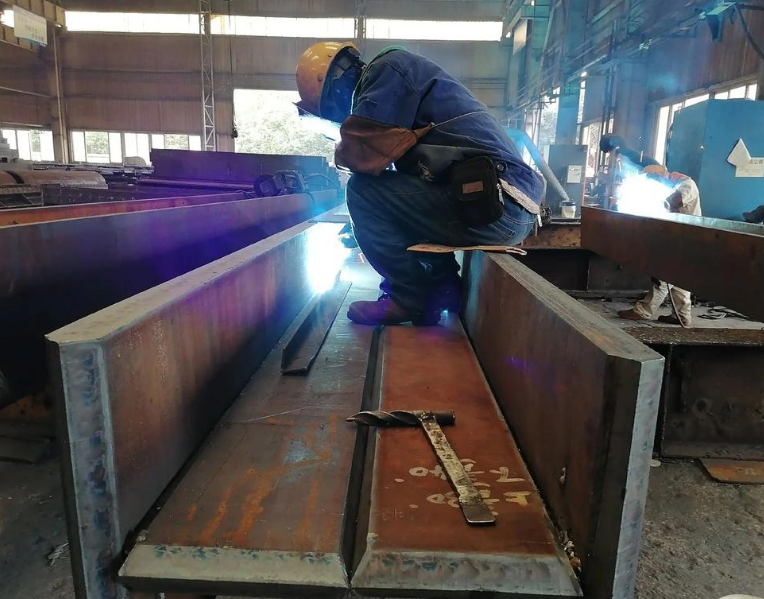
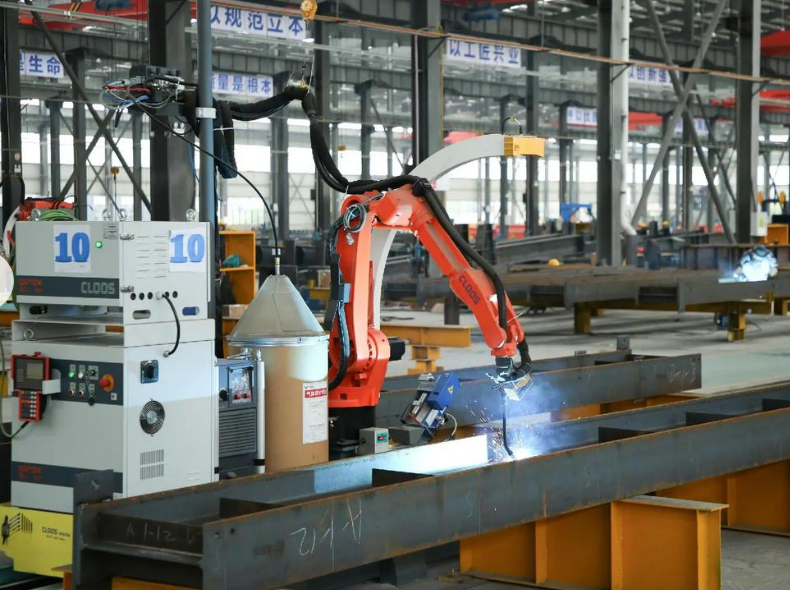
The principle of two-shielded welding is that the welding wire and the welding piece as two electrodes, and then generate an electric arc, relying on the heat of the arc to melt the metal, take carbon dioxide gas as a protective gas, to protect the arc as well as the molten pool, and at the same time to obtain a good welded joints.
![图片[3]-氩弧焊、二保焊、等离子焊、激光焊,该如何选择呢-大连富泓机械有限公司](/wp-content/uploads/2026/01/1768271607557_3.jpg)
![图片[4]-氩弧焊、二保焊、等离子焊、激光焊,该如何选择呢-大连富泓机械有限公司](/wp-content/uploads/2026/01/1768271607557_4.jpg)
Plasma welding according to the requirements of the power supply, the main circuit covers two parts, one is in the cutting mode of operation, for the torch to supply 0 to 200V voltage, 0 to 30A current, or in the welding mode of operation, for the torch to supply 0 to 80V voltage, 0 to 60V current of the DC power supply circuit; and the second is for the triggering circuit as well as control circuits to provide +15V, -15V, +24V and +5V for the trigger and control circuits.
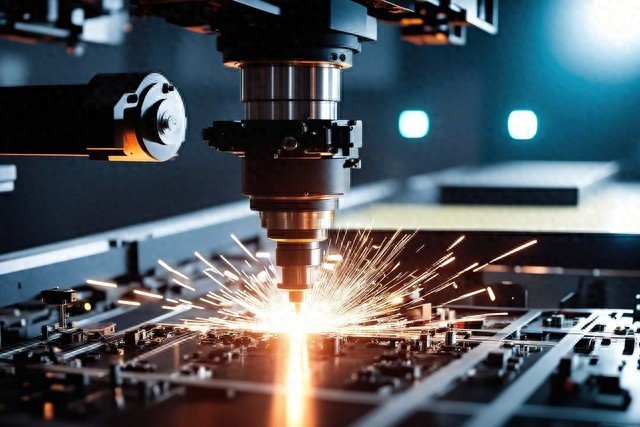
Laser welding is a welding method that uses a focused laser beam as the energy source through which heat is generated by bombarding the weldment. The optical properties of laser light, such as refraction and focusing, make laser welding particularly suitable for welding micro-parts, as well as for welding parts with poor accessibility. Laser welding is characterised by low heat input, low welding distortion and independence from electromagnetic fields.
TIG welding is suitable for welding thick parts, which have higher welding seam requirements. And this welding process requires high labour cost. It can be used for stainless steel, alloy steel, titanium, aluminium, magnesium, copper welding. But because of the high cost and low welding efficiency, it is generally not used for ordinary carbon steel welding, but the pressure vessel or pressure pipeline bottoming welding with it is quite suitable. Therefore, if not important structure, it is best not to use the process! After all, welding with electrodes is relatively more economical.
![图片[5]-氩弧焊、二保焊、等离子焊、激光焊,该如何选择呢-大连富泓机械有限公司](/wp-content/uploads/2026/01/1768271607557_5.jpg)
Shielded carbon dioxide (CO2) welding has the advantage of low cost and good quality, high productivity and good handling. Carbon dioxide gas shielded welding has a disadvantage, in the use of higher current welding, spatter is relatively large, more smoke, arc light is stronger, labour conditions are not good. Moreover, the welding equipment is relatively complex, when the control or operation is not appropriate, it is easy to appear the situation of porosity.
![图片[6]-氩弧焊、二保焊、等离子焊、激光焊,该如何选择呢-大连富泓机械有限公司](/wp-content/uploads/2026/01/1768271607557_6.jpg)
Plasma welding has a number of advantages, firstly, its arc energy is high, secondly, the weld heat-affected zone is small, thirdly, the weld deformation is very small, fourthly, the arc column rigidity is large, fifthly, because of the small hole effect to achieve a single-side weld double-sided moulding, sixthly, fewer defects in weld seams, seventhly, the weldable material is more, eighthly, the quality of weld is high, ninthly, it has excellent reproducible production, tenthly, the electrode shrinks in the nozzle, it is not easy to contaminate and burn damage. However, it also has disadvantages, namely, a large number of welding parameters and a high level of skill required of the welding operator.
![图片[7]-氩弧焊、二保焊、等离子焊、激光焊,该如何选择呢-大连富泓机械有限公司](/wp-content/uploads/2026/01/1768271607557_8.jpg)
Laser welding is able to reduce the amount of incoming heat to the lowest possible amount required, the range of metallurgical changes in the heat affected zone is relatively small, and distortion based on heat conduction is minimised.
The required amount of incoming heat can be reduced to a minimum, the range of metallurgical changes in the heat-affected area is small, and deformation due to heat conduction is minimised.
(2) There is no need to use electrodes, so there is no concern about contamination or damage to electrodes. Moreover, since it is not a contact welding process, the wear and deformation of the machine can be reduced to a minimum.
(3) The laser beam is easy to focus and align, can be guided by optical instruments, can be placed at a suitable distance from the workpiece, and can be redirected between machines or obstacles around the workpiece, whereas other welding methods do not work due to the above-mentioned spatial constraints.
(4) The workpiece can be placed in a closed space or in a controlled internal gas environment by means of evacuation.
The laser beam can be focussed on a very small area and can be used to weld small parts that are closely spaced.
(6) A wide range of weldable materials, and can be joined with each other to a variety of heterogeneous materials.
(7) Easy to automate high-speed welding, can also be digitally or computer-controlled.
(8) When welding thin materials, there is no trouble with backfusion as is likely to occur with arc welding, and the same is not true for welding fine-diameter wires.
Fibre laser welding machine
While magnetic fields can't affect it, arc welding and electron beam welding are more susceptible to it, and it can be precisely aligned to the weldment.
(10) Two metals with different physical properties (e.g. different electrical resistance) can be welded.
(11) No vacuum or X-ray protection is required.
(12) If welded by perforation, the ratio of depth to width of the weld path can be up to 10:1.
(13) The unit can be switched to deliver the laser beam to multiple workstations.
drawbacks
(1) The position of the weldment must be very precise and must be within the focusing range of the laser beam.
(2) When a fixture is used for the weldment, it must be ensured that the final position of the weldment is aligned with the weld point where the laser beam will impact.
The maximum weldable thickness is limited, penetrating workpieces with a thickness of well over 19 mm, which are not suitable for laser welding on the production line.
(4) The weldability of materials such as aluminium, copper and their alloys, which are highly reflective and have high thermal conductivity, is altered by the laser.
When carrying out laser beam welding operations from medium to high energies, plasma controllers are used to drive out ionised gases from around the molten pool to ensure that the weld bead can reappear.
(6) Energy conversion efficiency is too low, usually below 10%.
(7) Rapid solidification of the weld channel, possible porosity and embrittlement concerns.
(8) Slightly more expensive
After reading the pros and cons above, is there any man out there who knows exactly how to go about selecting these tools and equipment, let's discuss it in the comments section.



 Chinese
  Japanese
  English
  German
  Finnish
No comments