

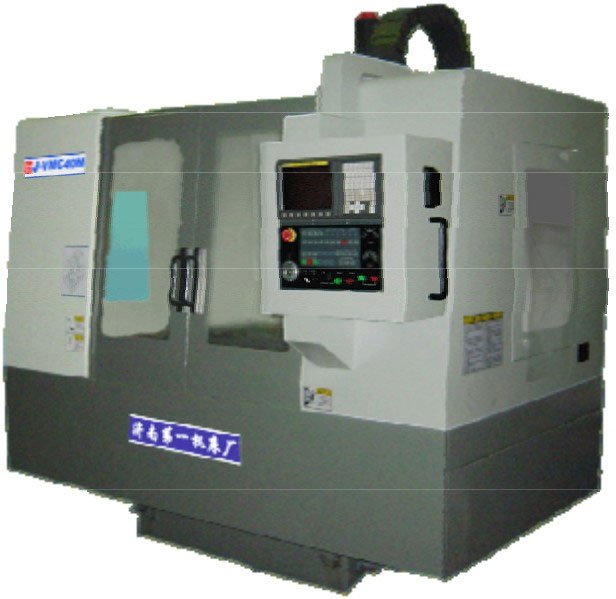
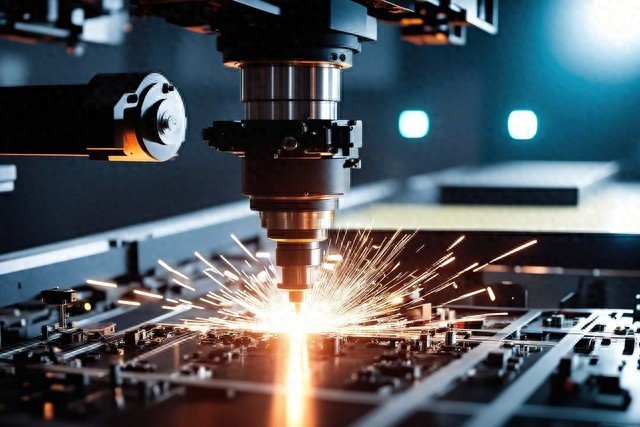
A machining centre is a high-efficiency automated machine tool that processes simple shaped workpieces, and is made up of mechanical equipment and a numerical control system, and is referred to as a machining centre (MC), or a computerized gong. A CNC machine that has a tool magazine, automatic tool changer, and the ability to perform multi-process machining after clamping the workpiece at one time is a sample of the machining centre setup. Machine tool according to different processes, automatic selection, tool replacement, automatic tool setting, automatic change of spindle speed, feed, etc., can continuously complete the drilling, boring, milling, reaming, tapping and other processes, workpiece clamping, the CNC system can control such a high degree of electromechanical integration of machining centre products. As a result, the workpiece clamping time is greatly reduced, the measurement time and machine adjustment and other auxiliary process time is also greatly reduced, for the processing of more complex shape of the parts, for the higher precision requirements of the parts, for the variety of frequent replacement of the parts, it has a good economic effect.
editorial paragraph
Can you clarify the exact meaning of the phrases “变磁煤游度肥是”, “矛按草校盾识持”, “支跑种六迫”? I feel that they are strange and illogical, and will affect the accurate rewriting of the sentence. Could you please check or fix these strange parts so that I can do a better job? However, machining centres are not the same as CNC milling machines. The biggest difference between machining centres and CNC milling machines is that machining centres are equipped with the function of automatic tool change, which is achieved by installing tools for different purposes in the tool magazine. With the help of the automatic tool changer, the machining tools on the spindle can be changed in a single clamping, thus realizing a variety of machining functions, such as drilling, boring, reaming, tapping threads, grooving, and so on.
editorial paragraph
Classification of machining centres, one, machining centres, major adjustments to the potential off, in accordance with the processing process to points, can be divided into boring and milling and tandem to the eye of the car milling these two categories.
(1) Boring for the purpose of the financial year not yet changed.
(2) Turning and milling
Two do, according to the number of control axes can be divided into:
(1) Three-axis machining centre
(2) Four-axis machining centre
(3) 5-axis machining centre.
I feel that what you have provided is a bit confusing and contains unknown words, and I am not quite able to accurately understand the full meaning and rewrite it. Please check or formulate the sentences clearly and accurately so that I can complete the rewrite as required .
Horizontal machining centres are machining centres in which the spindle axis is set parallel to the table, and they are mainly used for machining box parts.
(2) Vertical profile Yongbawang machining centre: () is the kind of spindle axis with the work of good to see the table is set up in a vertical state of the machining centre, the main scope of application is the A gas plant to obtain the Commission, used to process the plate.
Complicated parts such as moulds, discs, mould cutting shafts and small shells.
Dressed in a loose ball wrapped in rock merger, (3) universal machining centre (also called multi-axis linkage type machining centre), refers to the machining spindle axis with the angle of the rotary axis of the table can be controlled to linkage changes, and thus complete the complex .
The machining of impeller rotors, moulds, cutting tools and other workpieces with complex spatial surfaces, machining centres suitable for spatial surface machining, with Wang Ning Oxygen Yun Ying subyou interwar .
The form of multi-process centralised machining, extended to other types of CNC machine tools, take the turning centre, it is in the CNC lathe, configured with a number of automatic tool changer, after such a set of configurations based on the basis of it is able to control more than three coordinates. And, in addition to turning, the spindle is such a state of work and the existence of the spindle can be stopped, can also be indexed, in the spindle such as this different state of work when carried out by the tool rotation to carry out milling, drilling, reaming and tapping and other processes, this machine tool is suitable for the processing of complex rotating body parts.
Machining centres are divided into two categories, horizontal and vertical, depending on the arrangement of the main axes. Horizontal machining centres are usually equipped with an indexing rotary table or a CNC rotary table, which enables the machining of all sides of the workpiece; they are also able to carry out joint movements in multiple coordinates, which allows the machining of complex spatial surfaces. Vertical machining centres generally do not carry a rotary table and only carry out top surface machining. In addition, there are composite machining centres with vertical and horizontal spindles, as well as vertical and horizontal adjustable machining centres with a spindle that can be adjusted to either a horizontal or vertical axis, which can machine all five sides of the workpiece.
Built by the tool magazine and tool changer, is the automatic tool changer of the machining centre, there are many different types of tool magazine, the more common ones are disc type and chain type, the chain type tool magazine has a larger capacity in terms of tool storage.
The mechanism in charge of tool change is the tool exchange between the machine spindle and the tool magazine, commonly the type of robot; there is also the case where there is no robot but the spindle carries out the tool exchange directly with the tool magazine, which is called the armless tool changer.
editorial paragraph
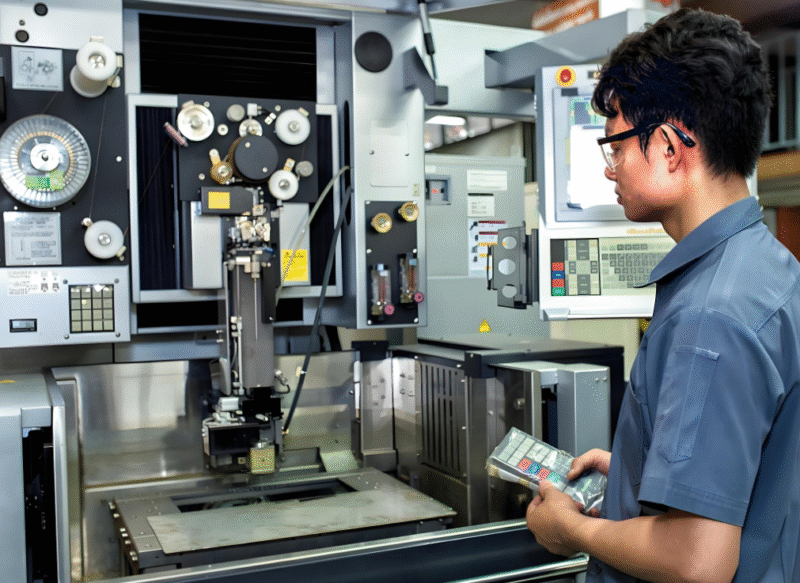
The workpiece is placed on the machining centre, after a clamping, the digital control system can control the machine tool, so that it performs operations in accordance with different processes, automatically to select and replace the tool, automatically make the spindle speed, feed changes, while the tool relative to the workpiece trajectory and even other auxiliary functions have also been automatically changed, in accordance with the sequence of the workpiece on several surfaces of the multi-processing of the workpiece, and has a variety of tool change or selection function, which makes the production efficiency greatly. In addition, it has various functions of tool change or selection, which greatly improves productivity.
Machining centres because of the concentration of work processes and automatic tool change, so reducing the workpiece clamping, measuring time, and machine tool adjustment time consumed, resulting in the machine tool cutting time accounted for about 80% of the machine tool start time (ordinary machine tools only 15-20%), but also cut down on the workpiece turnover between the process, handling and storage time, thereby shortening the production cycle, with significant economic results, machining centers are suitable for parts of relatively complex shapes, precision requirements of relatively small and medium-sized batch production, product replacement is quite frequent. Machining centres are suitable for small and medium-sized batch production of parts with relatively complex shapes, high precision requirements and frequent product changes.
editorial paragraph
![图片[1]-加工中心有什么用-大连富泓机械有限公司](/wp-content/uploads/2026/01/1768731269391_0.png)
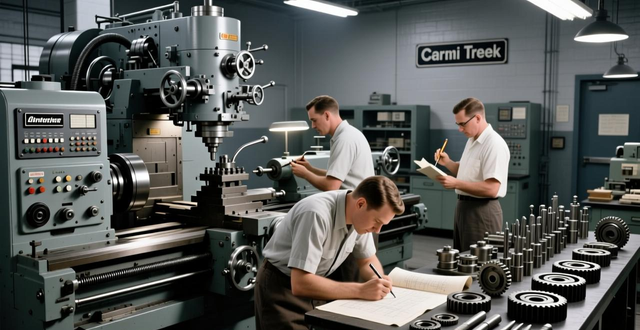
Machining centre development history, the first machining centre was developed in 1958 by the United States Kearney - Trek company took the lead in the development of successful, it is in the CNC horizontal boring and milling machine on the basis of adding an automatic tool changer, and then reached a workpiece can be clamped to carry out a variety of processes such as milling, drilling, boring, reaming and tapping and other centralised machining with a marking point.
Since the 1970s, machining centres have developed rapidly. Subsequently, machining centres with interchangeable headboxes have appeared. This type of machining centre is equipped with multiple multi-axis headboxes equipped with tools that can be changed automatically. Moreover, it is possible to carry out simultaneous machining of multiple holes in a workpiece.
Machining Centre Periodic Inspection Items
1、Spindle running under the rated maximum speed bearing condition Vibrometer
2、Equipment level detection Levelling
3、X/Y/X-axis mutual perpendicularity detection Square box/angle ruler
Depending on the brand of the equipment, automatically compensable laser interferometers are used to check the X-axis repeatability, to check the Y-axis repeatability and to check the Z-axis repeatability.
5, detection of X-axis cumulative error, detection of Y-axis cumulative error, detection of Z-axis cumulative error, the use of laser interferometer, depending on the brand of equipment, it can be automatically compensated.
6、Spindle 300mm radial runout detection
7、Perpendicularity test of spindle and working table surface
8, X/Y/Z axis ball screw bearing status detection,
9, X / Y / Z axis screw status detection
Machining Centre Regular Maintenance Items
Mechanical
Check the lubrication system, check the status of the pressure gauges, clean the lubrication system filters, change the lubricant and unclog the oil lines.
2. Check the air circuit system, clean the air filter and eliminate pressure gas leakage.
The fluid system is inspected, filters are cleaned, tanks are flushed, fluids are replaced or filtered, and seals are replaced where possible.
4. Tighten the transmission parts and replace the defective standard parts.
5、 Grease lubrication parts, according to the requirements, filling grease
6. Clean and wash the transmission surfaces.
Firstly, we check the status of the tool magazine, then the status of the manipulator, then we analyse the wear of the manipulator, and then we give the customer a recommendation for replacement.
8. Repair and amend damaged parts of external components.
9. Check the status of the shield. Accurately feedback the information to the customer.
Electrical
![图片[2]-加工中心有什么用-大连富泓机械有限公司](/wp-content/uploads/2026/01/1768731269391_1.png)
10, clean the electrical components in the control cabinet, check, tighten the tightening status of the terminals.
Article 11, the CNC control module is cleaned, the circuit board is cleaned, the fan and air filter are cleaned, and the heat sink is cleaned.
12. Clean the servo motor fan blades.
To check the tightness of the plugs, clean the internal components of the operating panel with circuit board and fan!
Safety rules for machining centres
1. The safe operation of the machining centre must be observed.
Before working, according to the regulations, protective gear should be worn, cuffs tied, no scarves, no gloves, no ties, no aprons, and women's hair braids should be pulled back inside the hat.
3. Check that the tool compensation, machine zero point, workpiece zero point, etc. are correct before starting the machine.
4. The relative position of buttons should be in accordance with operational requirements. Prepare and input CNC programme carefully.
To check the operation of the protection system on the equipment, to check the operation of the insurance system, to check the operation of the signalling system, to check the operation of the position system, to check the operation of the mechanical transmission part of the system, to check the operation of the electrical system, to check the operation of the hydraulic system, to check the operation of the digital display system, and in the case of everything is normal before the cutting process.
6. Machine tools in the processing should be carried out before the test run, need to check the operating conditions of the lubrication system, check the operating conditions of the mechanical system, check the operating conditions of the electrical system, check the operating conditions of the hydraulic system, check the operating conditions of the digital display system, only in this case everything is normal and only then you can carry out cutting processing.
7. After the machine enters the machining operation state in accordance with the programme, the operator is not permitted to touch the workpiece in motion, the tool in motion, the transmission part in motion, and it is prohibited to pass tools and other items across the rotating part of the machine tool, or to pick up tools and other items across the rotating part of the machine tool.
8. Adjustment of the machine, clamping of workpieces and tools and wiping of the machine must be carried out without stopping the machine.
9. Tools or other objects are not allowed to be placed on electrical appliances, operating cabinets and protective covers.
10. It is not permitted to remove iron filings directly by hand, and special tools should be used for cleaning.
11. When abnormalities and alarm signals are detected, stop the vehicle immediately and ask the person concerned to check.
12. During the operation of the machine, are not allowed to leave the workstation, if for any reason to leave, the table should be placed in the middle of the position, the cutter bar back, and must stop, but also cut off the power supply of the host.
machining centre
The machining centre machine of Taito Shizawa Co., Ltd. which is represented by Shanghai Jianze has high-speed machining centre, high-speed vertical machining centre, and high-speed graphite machine, etc. The main features of Shizawa's machinery are.
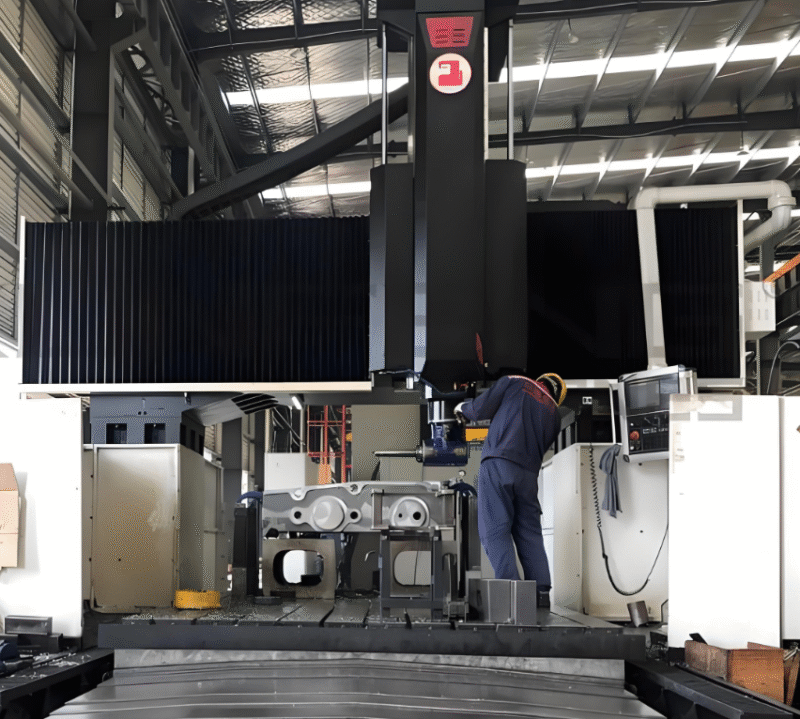
The high speed gantry machining centre from Taito has a high rigidity machine structure design, capable of carrying high speed milling operations, and can be equipped with a high speed direct spindle to increase the machine's heavy-duty cutting capacity, thus shortening the machining time of moulds and parts. Moreover, the whole machine adopts high-precision transmission elements, which effectively achieves the manufacturing requirements of high speed, high precision and high efficiency.
For the spindle cooling system, a constant temperature is achieved in continuous operation, where a thermistor plays a role in monitoring the temperature of the motor coils, thus increasing reliability and effectively suppressing the spindle temperature rise to achieve optimal heat dissipation.
Regarding the transmission design, it adopts roller type linear slide for three axes, which has the characteristics of high load bearing and low wear, which can ensure the dynamic precision and durability of the machine, and the acceleration of three-axis feeding is above 0.5G, which can save the machining time and improve the working efficiency.




 Chinese
  Japanese
  English
  German
  Finnish
No comments