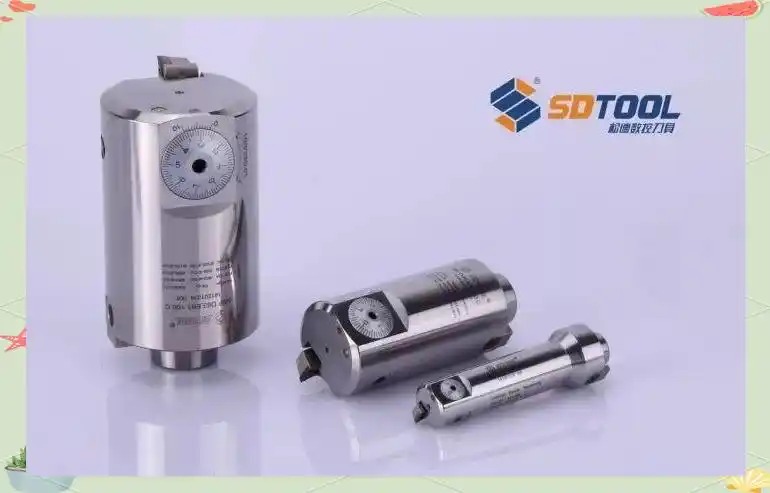


01 Boring Processing Standard
![图片[1]-镗孔加工详细流程:从粗镗到精镗的工艺解析-大连富泓机械有限公司](/wp-content/uploads/2026/01/1768961752117_0.webp)
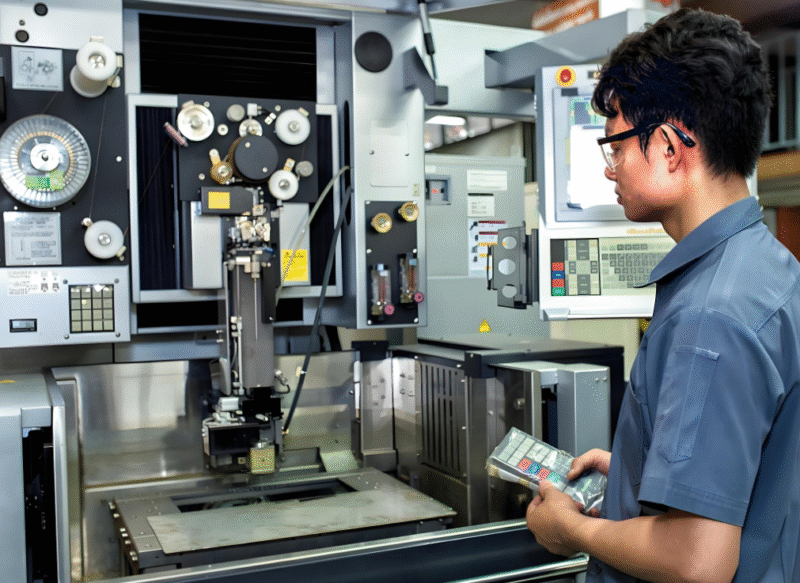
To ensure the dimensional and positional accuracy of the hole system, boring is an indispensable part of the machining centre responsible for correcting any errors that may have occurred in previous processes. It is mainly used for critical mating holes or support holes in machine parts, and therefore has extremely stringent requirements for dimensional accuracy, ensuring that the dimensional accuracy of the mating holes is in the range of IT6 to IT11, and that the shape accuracy and surface roughness are also controlled.
In general, the dimensional accuracy of the mating holes must be controlled in the range of IT7 to IT8, and the holes for machine tool spindle housings must reach the accuracy standard of IT6. For those holes that do not require high accuracy, the dimensional accuracy is usually controlled at around IT11. However, the shape accuracy of important holes for bracket, sleeve and case parts must be strictly limited to 1/2 to 1/3 of the hole diameter tolerance. At the same time, the distance between the holes must be controlled within ±0.025 to ±0.06mm, and the parallelism of the two holes must not exceed 0.03 to 0.10mm. In addition, the roughness of the boring surface must also reach the standard of Ra1.6 to 0.4μm.
![图片[2]-镗孔加工详细流程:从粗镗到精镗的工艺解析-大连富泓机械有限公司](/wp-content/uploads/2026/01/1768961752117_1.webp)
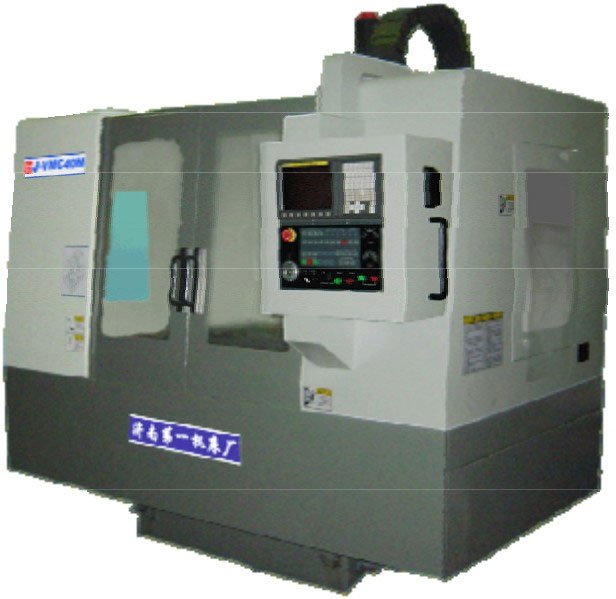
Boring Process
Generally speaking, the boring process covers rough boring, semi-finish boring, and finish boring, and the selection of these processes is affected by a variety of factors, including the accuracy of the hole, the material characteristics of the workpiece, and the specific structure of the workpiece itself.
Rough Boring Process
The initial process in cylindrical hole boring is rough boring, which is designed to pre-process the rough or drilled and reamed holes of the workpiece to create a foundation for the semi-finish and finish boring processes that follow. Rough boring is used at the beginning of the process, in order to improve efficiency, to leave a certain margin, and to pay attention to the strength of the tool and the geometry of the angle, this step ah not only that, but also to detect defects in the blank in a timely manner, such as cracks, sand, and sand holes and so on. Generally speaking, after the rough boring process is completed, you need to leave a margin of 2 to 3 mm on one side, in order to be used for subsequent processing. For precision case workpieces, tempering or aging is arranged after rough boring to release internal stresses generated during the rough boring process before finish boring is carried out. In view of the rough boring process in the use of a larger amount of cutting, resulting in cutting force and cutting temperature are relatively high in the state, which makes the tool wear is extremely serious. Therefore, the roughing tool must have sufficient strength and impact resistance, as well as an appropriate geometry to reduce cutting forces and dissipate heat.
Semi-finish Boring Process
Before fine boring, there is a pilot step of semi-fine boring, its first task is to remove the uneven allowance left after rough boring, for the hole with particularly high accuracy requirements, semi-fine boring is used to remove the uneven allowance and improve accuracy, especially for high-precision holes to be operated several times, semi-fine boring is generally done in two times, the first operation is to remove the uneven allowance in rough boring, and the second time is to further boring of the remaining allowance, with the purpose of improving the hole's size and shape accuracy, as well as reducing surface roughness. The first operation is to remove the unevenness of the rough boring allowance, and the second is to further bore the remaining allowance with the purpose of improving the hole size and shape accuracy as well as reducing the surface roughness. After semi-finish boring is done, one side of the fine boring allowance is usually reserved, with a value between 0.3 and 0.4 mm. However, for holes that do not require very high accuracy, the finish boring operation can be carried out directly after the rough boring is completed, and there is no need to set up a separate process in the semi-finish boring state.
![图片[3]-镗孔加工详细流程:从粗镗到精镗的工艺解析-大连富泓机械有限公司](/wp-content/uploads/2026/01/1768961752117_5.webp)
Finish Boring Process
![图片[4]-镗孔加工详细流程:从粗镗到精镗的工艺解析-大连富泓机械有限公司](/wp-content/uploads/2026/01/1768961752117_6.png)
The finish boring process is based on rough and semi-finish boring, using higher cutting speeds and smaller feeds to perform fine cutting on the small allowances left after rough or semi-finish boring to ensure that the surface of the bore accurately meets the requirements specified in the drawings. After rough boring, the clamping plate should be loosened and reclamped to minimise the potential impact of clamping distortion on machining accuracy. To achieve accurate machining of the hole, focus on controlling the amount of feed and back draft to reduce the impact of clamping deformation. In the fine boring process, generally should control the back draft of not more than 0.2 mm, feed control in each revolution not more than 0.1 mm.
![图片[5]-镗孔加工详细流程:从粗镗到精镗的工艺解析-大连富泓机械有限公司](/wp-content/uploads/2026/01/1768961752117_8.webp)




 Chinese
  Japanese
  English
  German
  Finnish
No comments