



Orders increase one after another, but the production line is stalled in the delivery of a peculiarly shaped part; new product research and development is in full swing, but the prototype is not machined with enough precision and frequently meets with failure; the urgent need for equipment upgrades, but the standard parts can not be adapted to each other - in the past year! In the past year, such moments are also the kind of anxiety you are reluctant to face.
Efficiency is achieved through standardisation, but the real challenges and value in manufacturing are often hidden in the corners that are not standardised. A thing with a unique structure, a special type of material, a set of circumstances with tight tolerances, it is enough to make the whole line for production into a state of silence, resulting in delays in the whole project. In the town of Gangji in Hefei, Anhui Huijiuxing Hardware Products Co., Ltd. has set itself up as a partner for customised stainless steel hardware solutions in the manufacturing sector. They focus on the scope of the field, just can mirror the industry's most common five aspects of the pain points, and their presence in this case, it is in order to crack the situation of these stuck in the dilemma.

Pain point 1: R & D trial production, from the “ideal drawings” to the “reliable physical” of the thrill of the leap
Innovation begins with the idea, but is bogged down in the realisation. The CAD model an engineer has may be perfect, but whether the tip of a lathe or a centring machine can reproduce it accurately is a test of the kind of craftsmanship that crosses the gap between theory and practice.
Everyday, they are often automotive parts and components, as well as components for intelligent devices and core connectors for specialised machinery. The structure of these parts is not only complex, but also has complex requirements for strength, wear resistance, light weight or sealing. At this point, it is far from enough to simply follow the drawings. The processor must understand the mission of the part in the machine, whether it is in a high-speed rotating state or under constant pressure, and this determines the focus of the process. For example, to machine a thin-walled stainless steel sleeve for precision instruments, not only to design a special fixture to prevent deformation, but also need to accurately calculate the cutting parameters of each cut, in order to avoid the accumulation of heat and thus lead to dimensional drift. This kind of process prediction and optimisation, which is based on in-depth understanding, is quite critical, and is the kind of key to hatching a genius idea into a reliable prototype, which can greatly compress the R&D cycle, and win valuable time for enterprises to seize the market window in an extremely efficient manner.
Pain point two: small quantities and multiple batches, the ultimate test of “flexibility” and “consistency”.
R&D isn't the only thing that can generate off-standard demand. Equipment maintenance generates demand for small-volume, multi-variety parts. Production line modifications generate demand for such low-volume, multi-variety parts. Product iteration will also give rise to such low-volume, multi-variety parts demand. This type of orders based on equipment maintenance, production line modification, product iteration, often not a lot of orders, but the requirements are more urgent, a large number of categories, resulting in the traditional large-scale production line is difficult to cope with, and also make quality control is full of challenges.
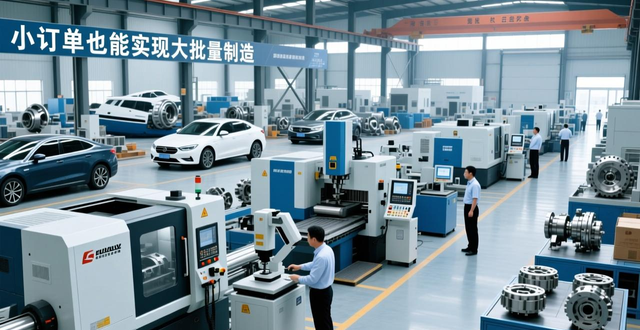
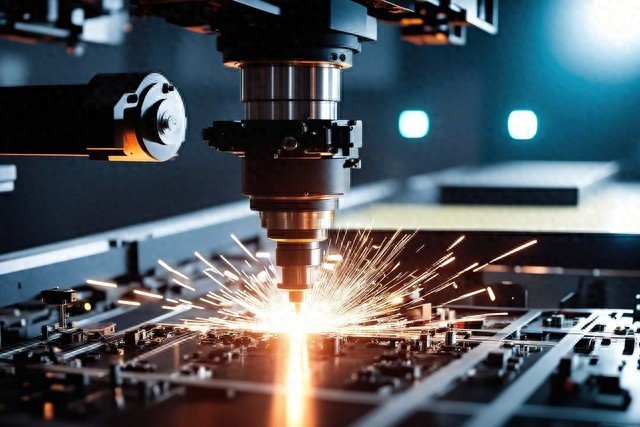
Here is exactly where such flexible precision processing enterprises show their talents, their production mode has a very high degree of flexibility and distinctive characteristics of focus, involved in the automotive and mechanical fields, covering the range of architectural and marine hardware fittings, a wide range of infinite processing scope, coupled with CNC equipment, centrifuges have the ability to quickly program and change the production, together to build a cornerstone to cope with a wide range of conditions, the more important thing is that they Construct a set of quality control system that will not lower the standard requirement because of the small number of orders, starting from the quality inspection when the raw material enters the factory, to the three coordinate measurement inspection when the first piece is manufactured, from the inspection and testing in the process of production, to the final inspection before the products are shipped out, and each and every specific link is strictly in accordance with the regulations to be implemented. This shows that even a small order of dozens or hundreds of pieces can be obtained with the same precision and stability as in mass production, and then transformed into a stable device that ensures the continuity of customer production.

Pain Point 3: Cost Myths andSupply chain resiliencedouble game
When it comes to non-standard customisation, the first reaction of many purchasers is the high cost, but the real costing, we have to count the hidden costs, that is, the loss of a non-conforming part caused by the machine downtime, a delay in the delivery of the overall project schedule dragged down by a delay in the supplier's instability to pay for the additional communication and management costs.
professionsnon-standard processingThe value lies in reducing the customer's total cost of ownership by delivering high quality and high efficiency in a single run. Process optimisation to improve material utilisation, accurate programming to reduce ineffective machining time, and stable process control to achieve extremely low scrap rates, are all fundamental to controlling costs under the premise of quality assurance. At the same time, as a stable supply partner with a complete scientific quality management system and an excellent track record of integrity, it has become a trusted node in the customer's supply chain. In response to similar needs, customers do not have to repeatedly search for new suppliers or test new suppliers, which saves a great deal of search costs and risks, and thus enhances the predictability of the supply chain and strengthens the resilience of the supply chain.

Pain Point 4: Processing Ceiling due to Technology Iteration
The manufacturing industry never stops upgrading, and new processes of all kinds are constantly emerging. From traditional metals to high-performance alloys and composites, processing technologies must evolve together. Many companies have their own processing capabilities may be limited to the traditional range, once encountered when the new needs of the time will not be able to do.
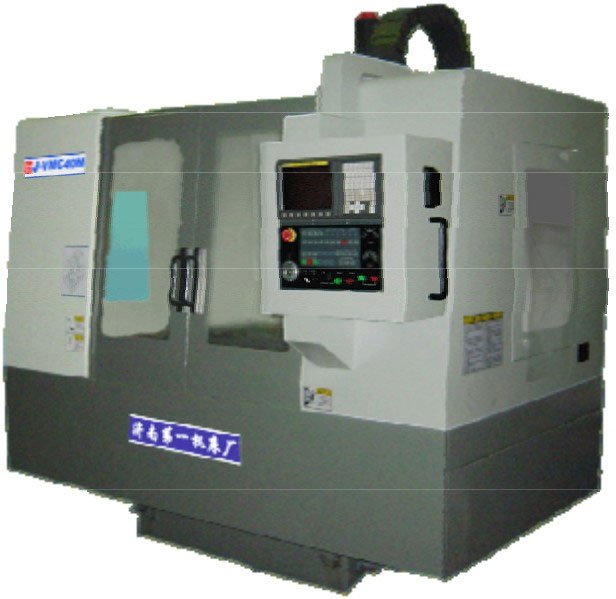
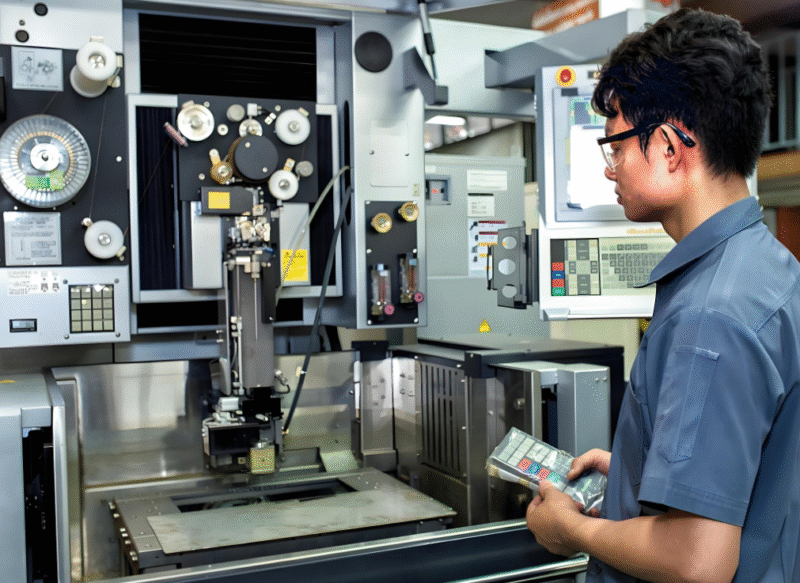
This will put forward the requirements of non-standard processing service providers, it can not only be satisfied with the current capacity, but also to have continuous learning, as well as process development awareness. Huijiu Xing's business includes all kinds of stainless steel exquisite hardware processing, and focus on the centring machine processing. The centrifugal machine has the ability to achieve turning, milling, drilling, tapping and other multi-process compound processing in a single clamping, especially in the processing of slender shafts, complex small precision parts, which reflects the depth of focus in the field of precision turning tendency. Continuous tracking of industry dynamics trends, in the stainless steel field to accumulate a more massive and rich processing parameters database, and the timely introduction of new technologies to match, this type of enterprises to break through the upper limit of the processing bottleneck, to solve the customer's cutting-edge tricky problem of the necessary homework.

Pain Point 5: Role Expectations from Implementers to Co-Creators
There is a deep sense of anticipation associated with the mode of co-operation. Simply processing a drawing is a passive response, but ideally, it's the kind of co-creation that actively contributes to manufacturing intelligence. The customer desires a processor who not only gets it right, but also thinks deeply enough to suggest design improvements in terms of manufacturability, cost optimisation and performance improvement.
This crosses the boundaries of technology and steps into the realm of knowledge sharing as well as trust building. If you serve multiple industries, you need to build up cross-disciplinary application knowledge. In communication with customers, can point out that a sharp corner in the drawings is not conducive to stress dispersion, and then recommended rounding, can be based on the subsequent heat treatment process, recommend a more suitable stainless steel grades, these value-added suggestions by virtue of experience, will be the relationship from a simple A and B, upgraded to a common partner in overcoming manufacturing problems. This also constitutes a non-standard processing enterprises the most solid moat.
concluding remarks
The grand picture of the manufacturing industry, by the standardisation to depict the efficiency of the basic tone, but also by the numerous non-standard custom to outline the differentiation of the shape of the line. Such as Anhui HuiJiuXing such professional forces, is that in the face of individual demand, make up for the ability to make a gap in the precise painting of the brush. They use technology and craftsmanship to eliminate every bottleneck from R&D to mass production; they rely on flexibility and commitment to provide support for every weak link in the supply chain.
When it comes to smart manufacturing combined with personalised needs, customised off-standard machining has moved from being an option to a necessity. It has an impact on the landing of innovation, is relevant to the continuation of production, and is still more relevant to the building of competitiveness. Finding a customisation partner who understands the pain points, is technically sound and worth trusting is probably one of the most critical strategic decisions a company can make at the beginning of 2026.
Whether you are also running around for a non-standard parts, your team and how to crack similar custom problems, in the comments section to share your experience with insights, let us a piece to explore the flexible future of manufacturing.



 Chinese
  Japanese
  English
  German
  Finnish
No comments