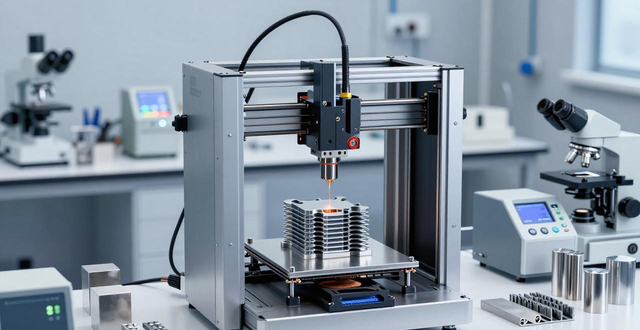


Study on the process of forming nested parts based on metal 3D printing technology
Study on the process of forming nested parts based on metal 3D printing technology
Abstracts:
The introduction of metal 3D printing technology has greatly contributed to the advancement of the manufacturing industry. This paper takes this technology as the foundation to study the forming process of nested parts, firstly analyses its principles and characteristics, thereby exploring its application in the manufacturing of nested parts, then introduces the characteristics and design criteria of nested parts, and also discusses the process parameters in the manufacturing process in detail. Finally, the feasibility and advantages of the process in the manufacturing of nested parts are confirmed by experiments.
Keywords: metal 3D printing technology, nested parts, process research
1. Introduction
By virtue of layer-by-layer accumulation of metal powder to achieve the way of forming parts, metal 3D printing technology belongs to a kind of rapid manufacturing technology relatively speaking, and the traditional processing methods than, it has a shorter manufacturing cycle, manufacturing precision and material utilisation of such advantages as nested parts are treated as a whole of multiple parts interconnected, in its manufacturing process process process research on the improvement of manufacturing efficiency as well as cost reduction is of great importance. It is of great significance to improve the manufacturing efficiency and reduce the cost.
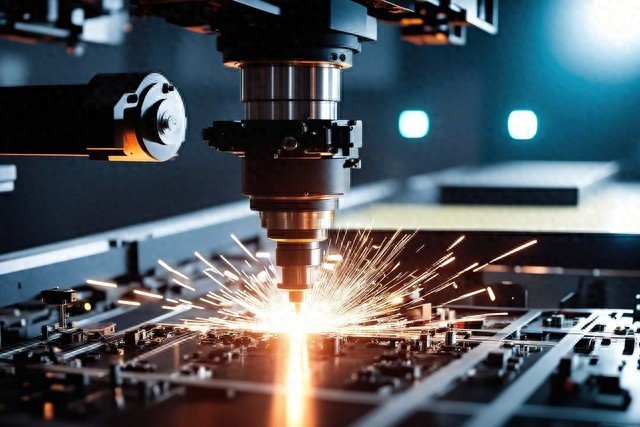
![图片[1]-基于金属3D打印技术成形嵌套零件工艺研究-大连富泓机械有限公司](/wp-content/uploads/2026/02/1770804983832_0.png)
2. Application of metal 3D printing technology in the manufacture of nested parts
In the nested parts manufacturing, metal 3D printing technology has a wide range of applications, first, with the help of metal 3D printing technology, can achieve the complex internal structure of the nested parts of the one-time forming, avoiding the traditional processing methods need to be processed several times, nesting situation, second, metal 3D printing technology can achieve a variety of materials nested parts manufacturing, so as to meet the demand for different parts of the material properties, third, metal 3D printing technology can also achieve customised manufacturing, thereby enhancing the flexibility and efficiency of manufacturing. Thirdly, metal 3D printing technology is also able to realise the customised manufacturing of nested parts, which in turn enhances the flexibility and efficiency of manufacturing.
3. Characteristics and design principles of nested parts
Nested parts with multiple interrelated characteristics, in the design, the following principles need to be considered: first, to ensure that the fit between the nested parts of the accuracy and stiffness, in order to ensure that it can work properly; second, the need to consider the nested parts of the assembly and disassembly of the degree of convenience, to facilitate the maintenance and replacement; third, to consider the nested parts of the dimensions and shape of the requirements, in order to meet the requirements of the actual application of the nested parts. requirements in practical applications.
4. Study of process parameters of metal 3D printing technology in the manufacture of nested parts
4.1 Modelling and Setup
Computer-aided design, or CAD software, is used to model the nested parts to define their shape and size. Then, according to the requirements of metal 3D printing technology, to set the print path, but also set the fill density and other parameters.
4.2 Material selection
The selection of the appropriate metal material is based on the material properties required for the nested part in practice. In view of the characteristics of metal 3D printing technology, it is also necessary to evaluate the melting and rheological properties of the selected material during the 3D printing process.
4.3 Process optimisation
Depending on the shape and size of the nested parts, process parameters such as print paths and packing density are optimised to improve manufacturing efficiency and print quality. At the same time, the feasibility and stability of the optimised process parameters have to be verified experimentally.
5. Experimental validation and analysis of results
Experiments were conducted to verify the feasibility and advantages of metal 3D printing technology in the manufacturing of nested parts, and the nested parts were manufactured under the two methods of traditional machining and metal 3D printing respectively, and comparative analyses were carried out on the accuracy and performance, etc. The results showed that metal 3D printing technology can achieve higher machining accuracy and material utilisation, and at the same time shorten the manufacturing cycle.
6. Conclusion
Based on the metal 3D printing technology as a basic element, for the nested parts forming process to carry out a study, with the help of analysing the principles and characteristics of metal 3D printing technology, explored the application of metal 3D printing technology in the nested parts manufacturing, with the experiments confirmed the feasibility and advantages of metal 3D printing technology in the nested parts manufacturing, this research is important for improving the efficiency and quality of nested parts manufacturing and also gives reference for the use of metal 3D printing technology in other fields. This research is of great significance to improve the efficiency and quality of nested parts manufacturing, and also gives reference for the application of metal 3D printing technology in other fields.




 Chinese
  Japanese
  English
  German
  Finnish
No comments