

![图片[1]-非标零件加工工艺技术需要怎样的设备支持?-大连富泓机械有限公司](/wp-content/uploads/2026/02/1770950055447_0.jpg)
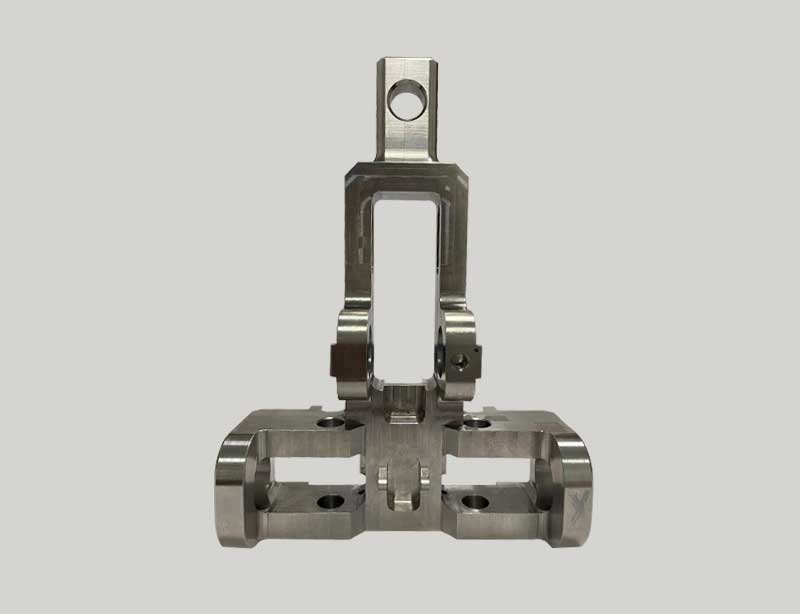
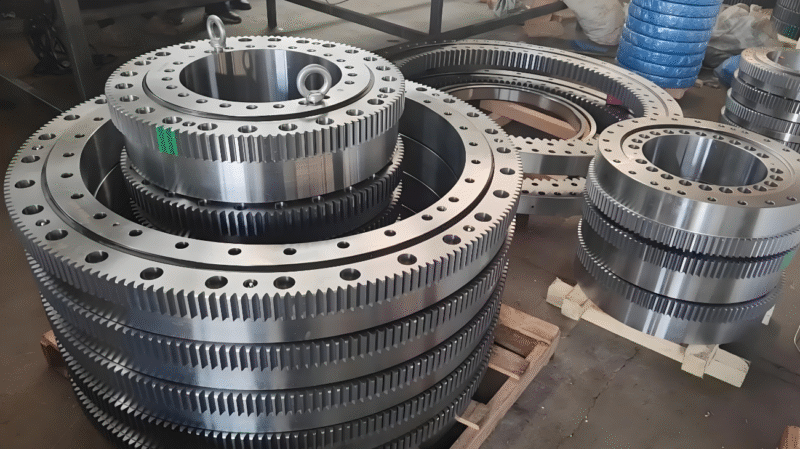
Non-standard parts processingThe process of machining parts that are customised to the specific needs of the customer. Such parts often have complex geometric shapes, with special material requirements, with unique performance requirements, so its processing technology requirements are quite high, to rely on a variety of equipment and technology to support. The following is dedicated to the main equipment required to support the processing technology of non-standard parts, as well as the role played by these equipment:
1. CNC machine tools(CNC machine)
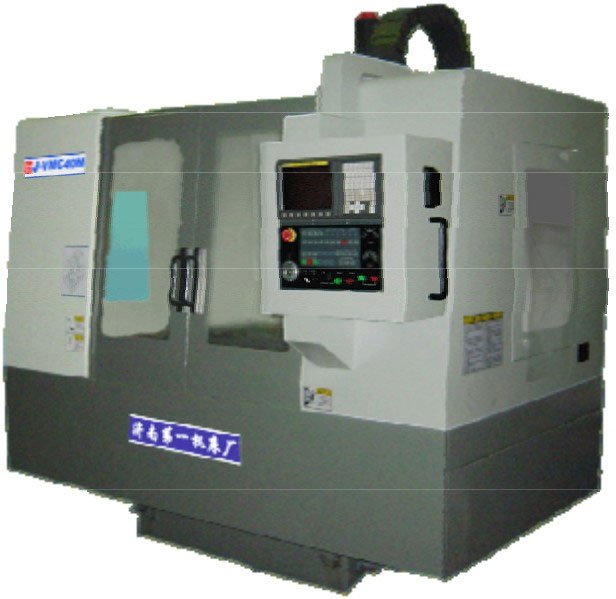
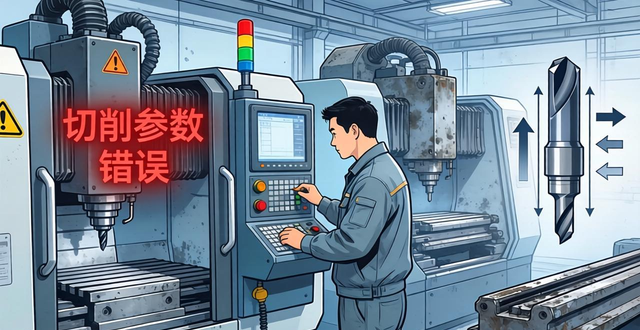
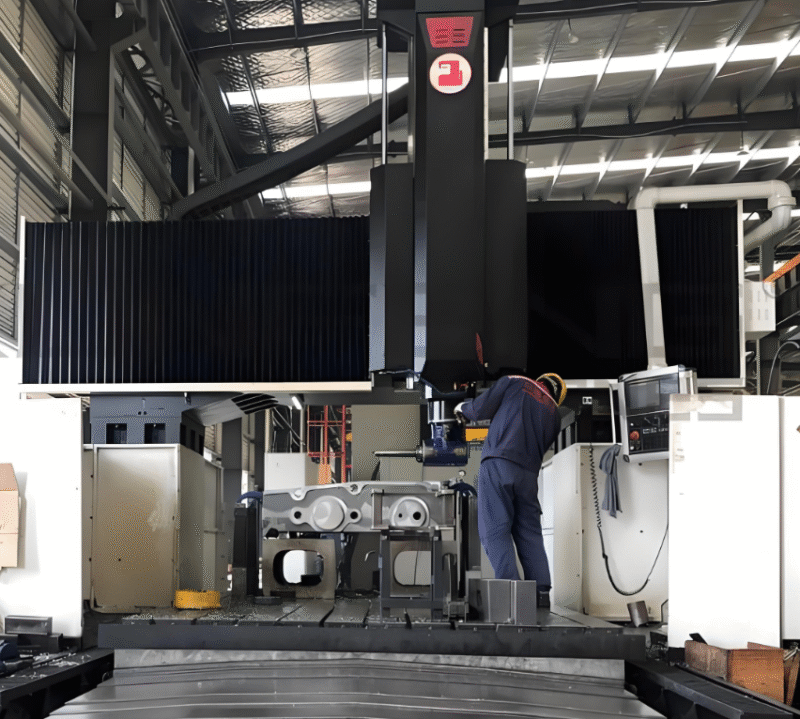
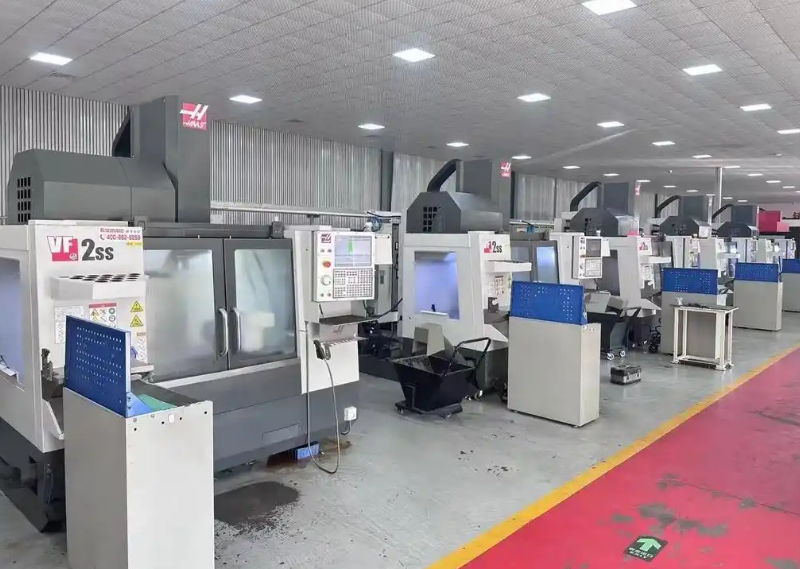
The core equipment used for non-standard parts processing is CNC machine tools, which control the movement of the tool with the help of computer programs, which can achieve high precision and high efficiency processing, and its variety, CNC lathe, CNC milling machine, CNC grinder, CNC drilling machine, etc., to meet the needs of different shapes and sizes of non-standard parts processing.
CNC lathes for the machining of rotationally symmetrical parts are capable of machining shafts and discs, with the help of a CNC system that controls the feed of the tool and the rotational speed of the tool, thus enabling the machining of complex shapes and also the machining of internal structures.
CNC milling machine for machining flat surfaces, CNC milling machine for machining curved surfaces, CNC milling machine for machining slots, CNC milling machine for machining holes and other complex geometric parts, multi-axis CNC milling machine such as five-axis milling machine to achieve a more complex spatial surface processing.
A machine used for high-precision surface machining, such as precision bearings, moulds, and other such items, is called a CNC grinder, and is capable of achieving micron-level machining accuracy to meet high requirements for surface finish and dimensional accuracy.
2. Electrical discharge machining equipment (EDM)
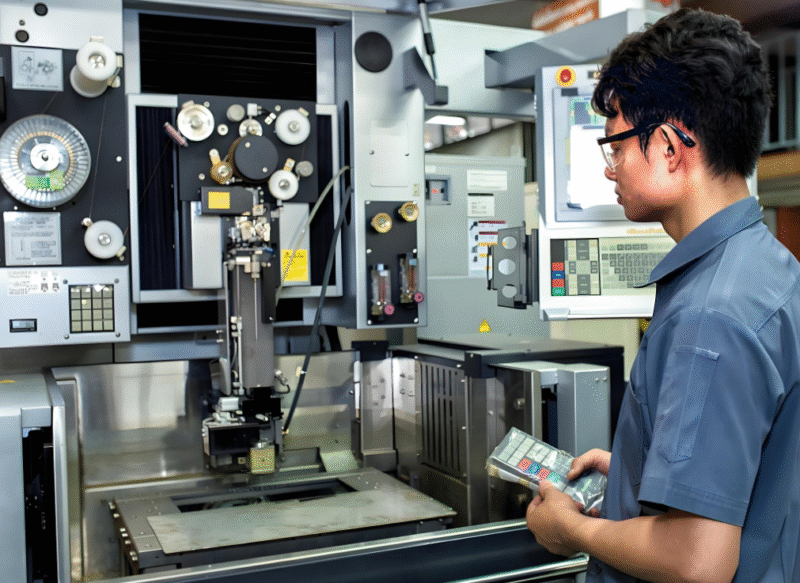
The process of removing material based on the principle of galvanic corrosion is called EDM, and it is suitable for the machining of hard materials or parts with complex shapes. The main types of equipment used for EDM include EDM wire cutting machines and EDM moulding machines.
There is such a machine, called EDM wire cutting machine, it is with the help of metal wire electrode and the workpiece generated between the discharge corrosion, so as to cut out the parts with complex shapes, it is suitable for carbide, hardened steel and such difficult to process materials for processing.
EDM machine, with the help of discharge corrosion between the electrode and the workpiece, to process the cavity or surface with the same shape as the electrode, it is suitable for mould manufacturing, but also for the processing of complex internal cavities.
3. Laser processing equipment
There exists a non-contact processing method called laser processing, which is suitable for high-precision and high-efficiency cutting, slitting, punching, welding and surface treatment, and there are laser marking machines, laser welding machines and other equipment with laser cutting.
A laser cutting machine is a machine that cuts materials with the help of a high-energy laser beam. It is suitable for precision machining of metals, plastics and ceramics. Laser cutting has the advantages of high cutting speed, small heat-affected zone and smooth cutting.
- Laser marking machine, it can be used in the parts of the surface of the permanent marking work, like text ah, pattern ah, two-dimensional code and so on. Laser marking exists in high precision, high speed and pollution-free characteristics.
Laser welding equipment: Used for welding conditions with high precision and quality, especially for welding thin-walled parts and precision parts.
4. 3D printing equipment (additive manufacturing equipment)
A processing method that builds up materials layer by layer to create parts is 3D printing technology, which is suitable for rapid prototyping of complex shaped parts as well as small batch manufacturing, with 3D printing equipment covering metal 3D printers, plastic 3D printers, and so on.
- Printers, of the metal 3D type: with the help of a laser, or an electron beam, which in turn melts metal powder and then builds it up layer by layer to create parts made of metal. It is used for high-performance, complex parts in aerospace, medical devices, and other fields.
Plastic 3D printers create parts made of plastic with the help of technologies such as FDM (Fused Deposition Moulding) and SLA (Light Curing Activity), which are used for prototyping and functional testing, as well as for small batch production.
5. Precision measuring equipment
The key tool, which is used to ensure the accuracy and quality of non-standard parts machining, is called precision measuring equipment. Commonly used precision measuring equipment includes Coordinate Measuring Machines (CMMs), as well as Optical Measuring Instruments, and Surface Roughness Meters.
- Coordinate Measuring Machines (CMM): Measurement of three-dimensional geometrical dimensions of a part with the help of a probe that contacts the surface of the workpiece to measure the shape of the part, with high accuracy and high efficiency, suitable for dimensional inspections of complex parts.
Optical measuring instrument, which uses the optical principle to carry out non-contact measurement, it is suitable for small parts, as well as high-precision surface measurement work, optical measuring instrument has a fast measuring speed, and high precision such excellent characteristics.
The surface roughness of components is measured by a surface roughness gauge, which ensures that the surface quality of the component meets the required design criteria for the purpose of the measurement.
6. Heat treatment equipment
The internal organisation of the material will be changed by heating and cooling to improve the material properties of the process is heat treatment, heat treatment equipment contains quenching furnaces, tempering furnaces, annealing furnaces, and even vacuum heat treatment furnaces and so on.
Hardening furnaces, which improve the hardness and strength of materials by means of rapid cooling, are suitable for the treatment of materials such as tool steels, as well as mould steels.
- Tempering furnaces are used to reduce the brittleness of materials by means of heating and holding operations, thereby increasing their toughness and stability.
Furnaces for heat treatment in a vacuum environment prevent oxidation of the material surface and also prevent decarburisation of the material surface, and are suitable for heat treatment of high-precision parts, and in this way, also for heat treatment of high-performance parts.
7. Surface treatment equipment
The process of improving the surface properties of a part with the help of physical or chemical methods is called surface treatment. Plating equipment, spraying equipment, polishing equipment, etc. are commonly used surface treatment equipment.
Electroplating equipment deposits a metal coating on the surface of a part by means of an electrochemical process to enhance the corrosion resistance of the part, increase its wear resistance, and improve its aesthetic appearance.
Spraying equipment is used to form a protective layer by spraying paint or powder on the surface of a part, which improves the corrosion resistance of the part, as well as its abrasion resistance and decorative qualities.
Polishing equipment that mechanically or chemically polishes the surface of a part to improve its finish and aesthetics.
8. Auxiliary equipment
The machining of non-standard parts requires auxiliary equipment to support the entire process, such as tool grinders, fixtures, cooling systems, etc.
This type of machine is called a tool grinder and has the function of grinding and dressing the tool to ensure that the sharpness and geometry of the tool are in accordance with the requirements of the process.
Fixtures, which are used to hold the workpiece in place and to position the workpiece to ensure stability and accuracy during the machining process.
This is the cooling system that cools the tool, it also cools the workpiece, it prevents excessive temperatures from being generated during machining, which affects the quality of the machining, which in turn affects the tool's lifetime.
reach a verdict
There are various types of equipment used in non-standard parts machining technology, including CNC machine tools, as well as EDM and laser machining equipment, including 3D printing equipment, precision measuring equipment, including heat treatment equipment, surface treatment equipment, and auxiliary equipment. Each of these machines fulfils its own role in ensuring that non-standard parts are processed with high precision, quality and efficiency. As technology continues to advance, the equipment used for non-standard parts processing continues to be upgraded, offering more possibilities for the manufacture of complex parts.



 Chinese
  Japanese
  English
  German
  Finnish
No comments