

![图片[1]-非标零件加工生产能够解决哪些技术难题?-大连富泓机械有限公司](/wp-content/uploads/2026/02/1770977798376_0.jpg)
Non-standard parts processingTechnical difficulties that can be solved by production
I. Overview of non-standard parts processing
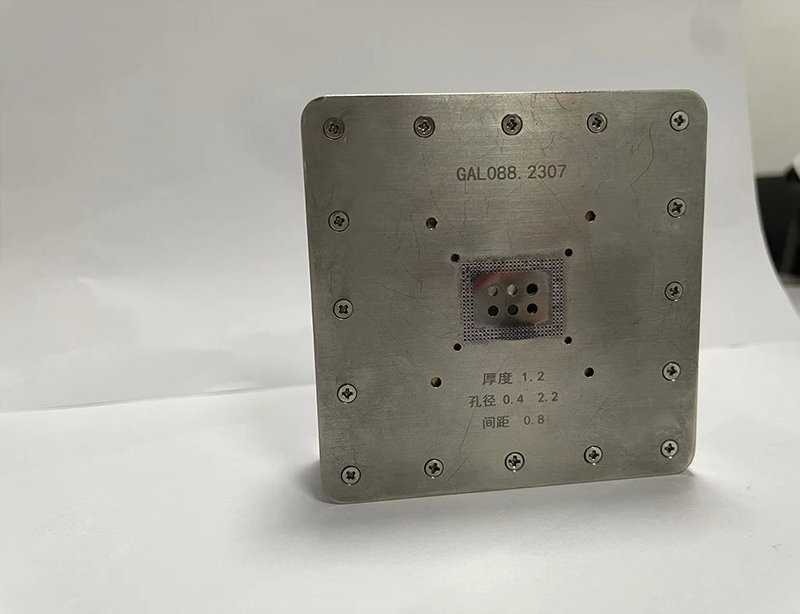
Non-standard parts machining refers to the design and manufacture of production for specific customer needs, is the kind of parts manufacturing can not be reached with standard parts. These parts generally have a unique structure, with special dimensions, as well as performance requirements, there is no way to go directly to the market procurement. Accompanied by the continuous progress of industrial technology, as well as increased demand for personalised products, non-standard parts processing in the modern manufacturing industry is playing an increasingly important role.
The core value of non-standard parts machining lies in its ability to address special technical requirements that are difficult to meet with standard parts, thus providing customised solutions for a wide range of complex engineering projects. From aviation and aerospace to medical equipment and instruments, from precision instruments to heavy machinery, non-standard parts machining technology creates the possibility for various industries to break through technical bottlenecks.
Second, non-standard parts processing to solve the main technical difficulties
1. Special materials processing challenges
Many high-end applications to use special materials, such as high-strength alloys, high-temperature-resistant materials, super-hard materials, and so on, these materials are often difficult to borrow conventional methods of processing. Non-standard parts processing rely on the following ways to solve this problem:
Special tools for development, is to the characteristics of different materials, to develop special tools, such as diamond tools, cubic boron nitride tools, in order to solve the problem of cutting difficult-to-machine materials.
We set up product manufacturing process routes as follows: We formulate distinctive processing sequences and parameter combinations based on the characteristics of the materials used, such as the step-by-step processing of products, and the use of special heat treatment technologies.
Speciality machining technology is applied to materials that are difficult to handle by conventional machining, using a variety of non-traditional machining methods such as electric discharge machining, laser machining, and ultrasonic machining.
2. Complex geometry moulding challenges
Along with the modern product design process continues to advance, more and more frequently emerge, such as complex surfaces, micro-structures and other geometric features can not be completed by conventional methods of moulding, and non-standard parts machining by virtue of a series of specific technical means to effectively solve this kind of thorny problems:
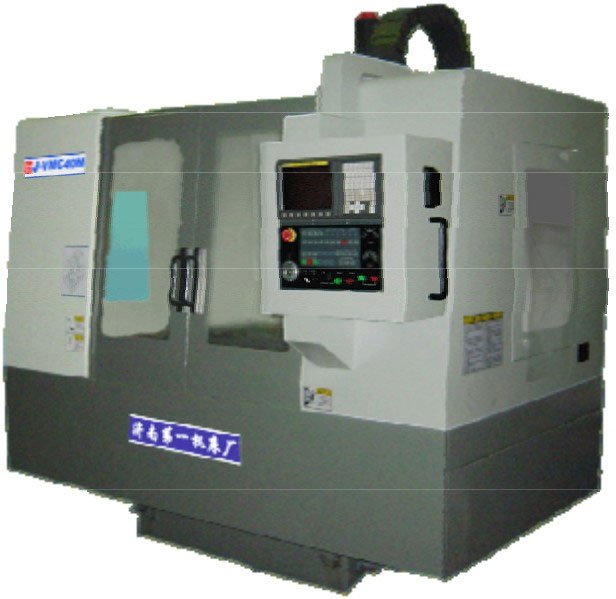
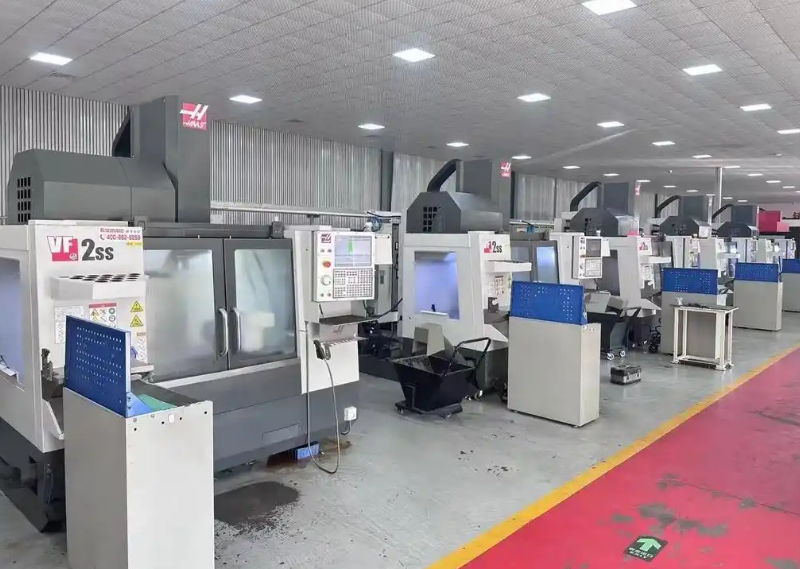
Multi-axis machining technology is a technology that achieves high-end, high-precision shaping of complex surfaces that are difficult to describe in space, using facilities such as five-axis machining centres.
The so-called composite machining technology is a technology that combines turning, milling, grinding and drilling into a single process, which is capable of completing the complete machining of complex parts in a single clamping.
In reverse engineering, the data of the physical model is firstly scanned in three dimensions and then programmed by CAM to achieve precise reproduction of complex shapes.
3. Ultra-high precision machining challenges
![图片[2]-非标零件加工生产能够解决哪些技术难题?-大连富泓机械有限公司](/wp-content/uploads/2026/02/1770977798376_1.png)
Some cutting-edge applications, such as optical components, precision instruments, etc., have extremely stringent requirements for the accuracy of the parts, and it is very difficult to achieve the required standards with conventional machining methods. Customised parts are processed in the following ways to achieve exceptional precision:
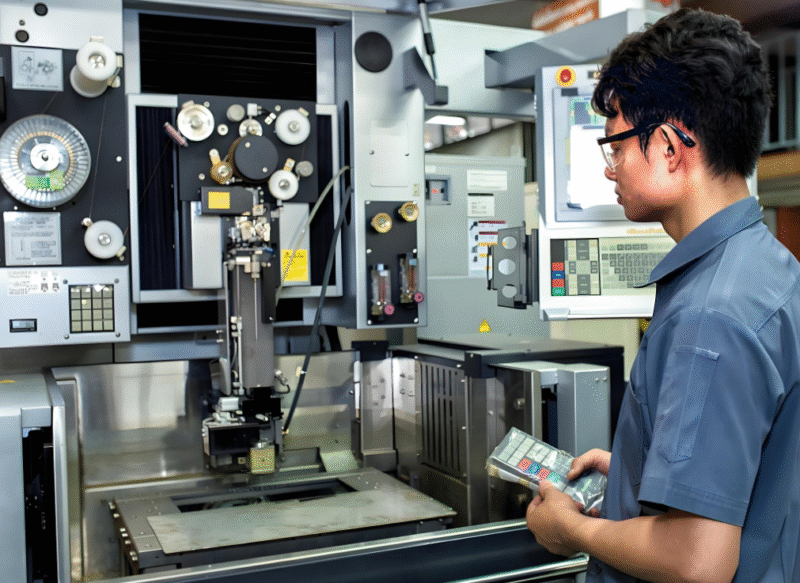
Nanoscale machining technology is implemented using ultra-precision machine tools, ambient temperature control measures, and vibration isolation initiatives to achieve nanoscale machining accuracy.
Measurement error compensation is a technological tool that eliminates all sources of error during the machining process by means of online inspection and a system for real-time compensation.
- Specialised polishing processes are: engaged in the development of advanced surface treatment technologies such as chemical-mechanical polishing, magnetorheological polishing, etc., to ultimately achieve the purpose of obtaining ultra-smooth surfaces.
4. Micro-parts machining challenges
Following the trend towards miniaturisation of products, the demand for micron and even nano-sized parts is increasing. When machining non-standard parts, the following technologies are used to solve the problems of microfabrication:
- Microfabrication technology is to develop micro tools and also microfabrication processes as a way to achieve precise machining of tiny structures.
Microfabrication technology is used to carry out EDM of microhole structures and EDM of microgroove structures with the help of microfabricated electrodes.
For photolithography and etching, the idea is to borrow from the semiconductor manufacturing process to achieve bulk reproduction of micron-sized structures.
5. Special functional surface machining challenges
Modern products of all kinds require surfaces with special functions, such as superhydrophobic surfaces, drag-reducing surfaces, biocompatible surfaces, etc. Non-standard parts processing achieves these special functions in the following ways:
Surface texturing is the creation of specific micro- and nanostructures on surfaces to impart special wettability and friction properties to the surface.
Various types of PVD coating processes have been developed to achieve special requirements such as surface hardness, wear resistance, and corrosion resistance, and various CVD coating processes have also been developed. This is a functional coating technology.
Bio-surface treatment that improves the compatibility of materials that can be used to meet the special needs of medical devices and other biological tissues by means of surface modification technology, and its operation.
Third, the direction of technological innovation of non-standard parts processing
1. Digital and intelligent processing
Along with the development process of Industry 4.0, non-standard parts processing is moving in the direction of digitalisation and is moving in the direction of intelligence:
- Digital twin technology: creation of virtual machining environments to simulate and optimise the machining process in advance
- Intelligent process planning: automatically generating optimal machining solutions using artificial intelligence algorithms
Adaptive machining systems, which guarantee the quality of machining with the help of real-time sensing and thus feedback to adjust the machining parameters.
2. Green and sustainable processing
Increased environmental requirements have prompted non-standard parts machining to move in a green direction:
- Dry machining technology: reducing or eliminating the use of cutting fluid and reducing environmental pollution
- Efficient use of energy: optimisation of processing parameters and process routes to reduce energy consumption
- Waste recycling technology: development of methods for the sorting, recycling and reuse of process wastes
3. Composite materials and new material processing technologies
As new materials continue to emerge, non-standard parts processing technology continues to innovate:
Composites processing technology, which serves to solve processing problems involving heterogeneous materials such as fibre-reinforced composites.
Smart material processing, to go for development, processing methods for shape memory alloys, and processing methods for special functional materials such as piezoelectric materials.
- Metamaterial processing: enabling the precise manufacture of metamaterial structures with special electromagnetic properties
IV. Conclusion
In the modern manufacturing industry, non-standard parts processing is an important part, it has an irreplaceable role in dealing with all kinds of special technical problems. Special material processing, complex shape moulding, ultra-high precision requirements in the field of micro-parts manufacturing category, non-standard parts machining technology continues to break through the limitations of traditional manufacturing, to the product innovation of various industries to provide solid technical support.
Due to the progress of science and technology and industrial demand presents a diversified situation, non-standard parts machining technology will continue to innovate and develop, and then solve more technical problems in the cutting-edge areas. In the future, with digital, intelligent, green features of non-standard parts machining technology will give manufacturing transformation and upgrading to be more powerful support, prompting the “Made in China” towards “China to create” to achieve the transformation.


 Chinese
  Japanese
  English
  German
  Finnish
No comments