
From rough to fine: detailsPrecision machiningThe finishing process in the
I. Introduction: How precision is made step by step
Every metal part with a mirror-like finish and precise dimensions has gone through a journey of metamorphosis from rough to fine. This process, the finishing process, is the most critical stage in precision machining. This article will provide you with a step-by-step analysis of this process, revealing the manufacturing secrets behind high-precision parts.
Roughing: laying the groundwork
Roughing is the first step in precision machining, and the main task is to quickly and efficiently remove most of the excess material to bring the workpiece close to its final shape and to reserve a uniform machining allowance for the subsequent process.5 The use of large cutting parameters in this process inevitably leaves a deeper layer of deterioration and residual stresses on the surface of the workpiece.
Semi-finishing: taking the lead
Semi-finishing is the bridge between roughing and finishing. In this stage, small diameter tools are used to reduce the contact area between the workpiece and the tool, smaller machining pitches are used to machine the workpiece closer to the final size, and a small (e.g., 0.1-0.02 mm) and uniform allowance is set aside for finish machining-5 This step is critical for controlling the heat of the cut and minimising the distortion of the workpiece-5.
Finishing: Achieving Precision
This is the process to achieve the final dimensional accuracy and surface quality of the part. Through processes such as precision cutting or high finish, high precision grinding, etc.-1, the trace allowance left by semi-finishing machining is removed, so that the part fully meets the requirements of the drawings.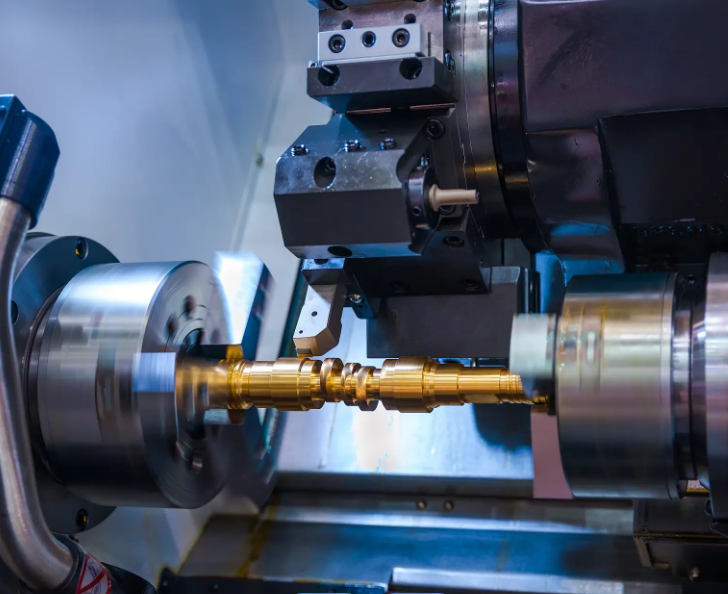
III. Beyond the norm: special finishing techniques
For some surfaces with special requirements, it is also necessary to apply more extreme machining methods:
Superfinishing: This is a process that uses soft grinding wheels (e.g. WA wheels for steel and GC wheels for non-ferrous metals-5) to finely grind the surface of a workpiece at low speeds and with low pressure. It achieves a mirror finish with a surface roughness of less than 0.1 μm and significantly improves the wear resistance and service life of the part, and is widely used in key components such as engine crankshafts, camshafts and bearing raceway surfaces-5.
Mirror Finish: Designed to produce a mirror-like lustre on metal surfaces. Depending on the final appearance required (e.g. #400, No.7, No.8), different grit sizes (e.g. No.400, No.600, No.800) will be selected for polishing, which is commonly used in areas such as medical devices, architectural decoration, and high end consumer products-5.
IV. Conclusion: the interlocking quality chain
Finishing is a systematic project in which precision machining processes such as roughing, semi-finishing and finishing are interlinked. Understanding and optimising each step of the process is the key to consistently producing high quality parts and reducing overall manufacturing costs.
Call-to-Action ★
Are you plagued by problems with surface quality or stability of your high-precision parts? We have complete process solutions from conventional to speciality finishing. Check out our success stories today to see how we've solved problems for our customers, or book a technical consultation!
 Chinese
  Japanese
  English
  German
  Finnish
Leave a Reply
You must be logged in to post a comment.