
How to choose a reliableMachining Service ProviderWhat is it? Insiders look at these 6 points
In the business of machining, choosing the right partner often means half the project is successful.
Have you ever faced such a dilemma: the drawing design is perfect, but there are always problems in the processing link? Have you ever faced the dilemma that the drawing design is perfect, but there is always something wrong in the machining process?
In fact, the root of these problems often lies in your choice of machining service provider. As the foundation of a successful project, a reliable machining partner can not only accurately reproduce your design, but also become the most solid link in your supply chain. Today, we're going to talk about the key points you should look for when choosing a machining service provider from an industry perspective.
First, don't just focus on the price, the technical ability is the hard truth
Price is important, but it should not be the only criterion for decision-making. The essence of machining is to accurately translate design intent into physical objects, which requires strong technical capabilities behind the scenes.
Equipment sophistication: Find out the brand, year, number and type of CNC machine tools (e.g. lathes, milling machines, machining centres) of the supplier. For example, manufacturers with five-axis machining centres have a natural advantage when dealing with complex curved parts-3.
Process expertise: Good processors not only know how to “turn on the machine”, they also know how to “turn on the machine”. They can review the process of your drawings, analyse whether the structural process is scientific and reasonable, and make professional suggestions on material selection, tolerance marking, etc., to avoid the quality risk of subsequent processing from the source-5.
Technical team: an experienced engineer or technician who can solve unexpected problems in the machining process of 80% or more. It is critical to understand the background and experience of the core members of the other team.
Second, the quality control system: stable quality of the “guardian”
How can we trust that each batch of product will be of the same high standard? The answer is hidden in the processor's quality control system.
Certifications: Certifications such as ISO 9001 for quality management systems, industry-specific AS9100 (aerospace) or ISO 13485 (medical devices) are an important reflection of the standardisation of a company's processes-6. These certifications mean that their production processes are well documented and their quality traceability can be traced.
Inspection capability: What kind of inspection equipment is the workshop equipped with? Is it a CMM, optical projector or ordinary calipers and micrometers? Precision testing instruments are the ultimate weapon to ensure that the accuracy of parts meets the requirements of the drawing-6.
Quality control process: from the raw materials into the factory inspection, to the processing process of the first piece of inspection, inspection, and then the final full inspection, a set of mature and strictly enforced quality control process, is the continuous output of qualified products to ensure.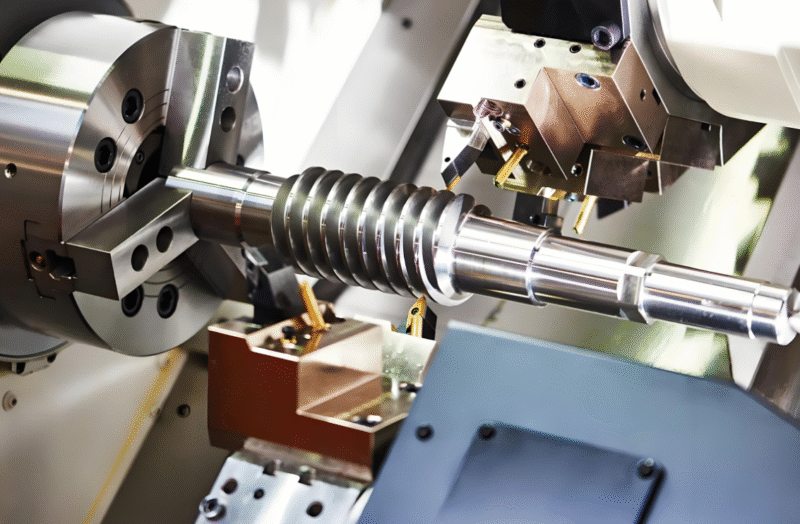
III. Experiences and cases: what was once the most telling report card
“It's better to talk about it than to do it and see it.” --This is a maxim in the machining industry.
Industry experience: Ask about service experience in your industry (e.g., automotive, aerospace, medical, consumer electronics) - 3. Machining a medical device implant and a heavy mechanical part require vastly different process knowledge and quality control points.
Success stories: Look carefully at the typical machining examples they provide, especially those that are similar to your product in terms of construction, material or accuracy requirements-1. Competent manufacturers will be happy to share their success stories (desensitised, of course), and this is the most intuitive way of proving their competence.
IV. Communication and collaboration: smooth communication is the “lubricant” of the project.”
No matter how strong the technology is, if the communication is poor, the project will struggle to move forward.
Responsiveness and professionalism: During the initial contact, look out for timely responses and smooth communication. Do they understand your technical requirements accurately and ask questions that hit the nail on the head?
Transparent communication: good partners will take the initiative to report project progress, provide timely feedback on problems encountered during processing, and negotiate solutions with you. This transparent communication mechanism can greatly reduce project risks.
V. Deliverability and punctuality: a matter of your production rhythm
“We desperately need the parts to go live, and the processor says we have to wait two weeks ......” This is a situation that no buyer wants to encounter.
Capacity Assessment: Based on the estimated demand for your product, assess whether the processor's capacity can be matched. Find out how much equipment they have, how many shifts they have, and so on.
On-time delivery record: Ask about their historical on-time delivery rate. A reliable partner should have the ability to develop and implement rigorous production schedules to ensure on-time delivery.
VI. Sustainable development and service levels: determining how far it can go
In addition to meeting current projects, the possibility of long-term co-operation needs to be considered.
Follow-up service support: Is the necessary technical support provided after product delivery? If quality problems occur, is the return or rework process clear and smooth?
Sustainability concepts: Today, more and more companies are concerned about the environment. Understanding what processors are doing to protect the environment, for example whether they are using practices such as optimising processes to minimise waste-3, can help shape the image of your green supply chain.
concluding remarks
Choosing a machining service provider is a comprehensive process that goes far beyond comparing numbers on a quotation. It's more like a strategic “purchase,” and you want a partner who understands your needs, solves your problems, and grows with your business.
Taking the time to visit sites, communicate in depth, and verify qualifications and case studies is an investment that will ultimately pay off for you through consistent product quality, smooth project collaboration, and sustained supply chain value.
 Chinese
  Japanese
  English
  German
  Finnish
Leave a Reply
You must be logged in to post a comment.