
explorationsmanufacturingHow to modernise and transform through technological innovation and green initiatives. Understand its cornerstone role in the global economy and future trends, providing in-depth insights for your business decisions.
Main article: In today's fast-moving global economy, heavy industry, the cornerstone of a nation's economic strength, is undergoing a profound modernisation. It is no longer just synonymous with steel, machinery and minerals, but an advanced field that incorporates automation, the Internet of Things and the concept of sustainability.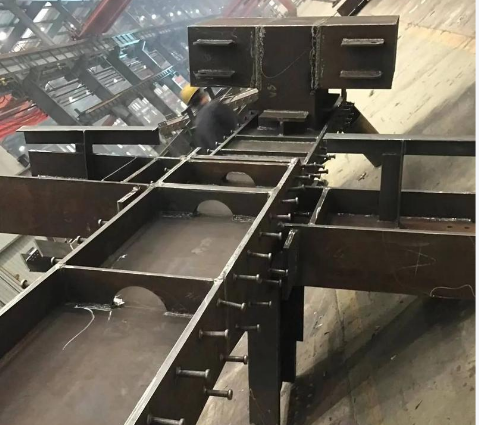
1. Heavy industry: the backbone of the national economy Heavy industry encompasses such basic industries as coal, petroleum, iron and steel, non-ferrous metals and machinery manufacturing. These industries provide indispensable raw materials and production equipment for infrastructure construction, national defence and military industries, and their level of development has a direct bearing on a country's degree of industrialisation and economic security.
2. Technology-driven modernisation and transformation The stereotype of traditional heavy industry as energy-intensive and polluting is being broken. The core of modern heavy industry is technological innovation: automation and robotics: robots are gradually replacing human labour in production lines, welding, spraying and other high-risk or precision processes, improving efficiency and safety. Industrial Internet of Things (IoT): Real-time monitoring and predictive maintenance of equipment operating status through sensors and big data analysis to minimise downtime. Digital Twins: Creating mappings of physical entities in virtual space to simulate, test and optimise production processes, thereby solving potential problems before they are put into production.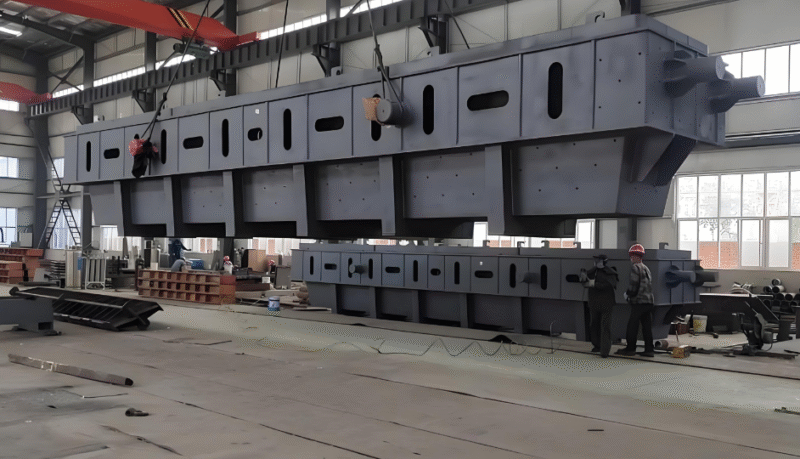
3. The path to green and sustainable development In the face of the challenges of global climate change, heavy industry is actively transitioning to green manufacturing. This includes: Energy efficiency improvements: adopting more efficient furnaces and motors, and recycling waste heat and pressure from the production process. Circular economy model: Promoting the recycling of scrap steel and non-ferrous metals to reduce dependence on virgin resources. Carbon Capture and Storage (CCS) technology application: Capturing carbon dioxide at the source of emissions and sequestering or reusing it is a key pathway for heavy industry to achieve carbon neutrality.
4. Future outlook The heavy industry of the future will be smarter, more service-oriented and greener. It will not only be a “production sector”, but also a comprehensive industrial ecosystem integrating high-end manufacturing, technical services and data value. Conclusion: The modernisation of heavy industry is a necessary step for the global economy to move to a higher stage. By embracing new technologies and sustainable development concepts, this traditional industry is taking on a new lease of life and will continue to be the core engine that drives the world forward.
 Chinese
  Japanese
  English
  German
  Finnish
Leave a Reply
You must be logged in to post a comment.