
In the era of rapid product innovation, “fast” and “accurate” are the core demands of prototyping. When your needs are for small quantities (a few to hundreds of pieces) and many varieties (multiple design versions or different parts), the traditional scale production model is no longer applicable. How can you find a machining solution that ensures quality and accuracy while controlling cost and cycle time? In this article, we will provide an in-depth analysis of the solutions available for this scenario, a deep dive into their cost components, and a practical selection strategy.
Part I: Unique Challenges and Core Requirements of Low Volume, Multi-Variety Prototyping
First, identify the pain points of such projects:
High mixing: Frequent part changeovers require reprogramming, machine setup, and tool and fixture preparation each time.
Uncertain demand: Designs can be modified at any time, requiring a highly flexible and responsive supply chain.
Cost sensitivity: Tooling and tooling costs cannot be amortised as they can in high volumes, and the cost of processing a single piece is a primary consideration.
Time pressure: Tight R&D cycles require the shortest possible lead time from drawing to hand.
Quality requirements are not compromised: prototypes are used for functional testing, assembly verification and even pre-release, and their accuracy and material properties must be consistent with the final product.
The core requirements can be summarised as: flexibility, speed, affordable precision.
Part II: Four core solutions and their application scenarios
In response to the above challenges, modern manufacturing offers several efficient solutions:
Option 1: Digital CNC machining (mainstream option)
How it works: Direct use of 3-axis/5-axisCNC machiningCentres, programmed by CAM software, cut and form directly from standard blanks (plates, bars).
Why it fits:
No tooling costs: Directly driven by digital files for frequent design iterations.
High material universality: engineering-grade materials (aluminium alloy, stainless steel, POM, etc.) that are consistent with mass production can be used, making test results authentic and reliable.
High precision: excellent dimensional accuracy and surface finish are obtained directly, reducing the need for subsequent processing.
Key to optimisation: Look for factories that use high-speed machining strategies, have quick tool change systems and automated fixturing (e.g. zero-point positioning systems) to significantly reduce changeover times.
Option 2: Sheet metal processing + CNC secondary processing
How it works: For shell and bracket parts, they are firstly undercut and bent by laser cutting / CNC punching to form the main body shape, and then CNC milling or drilling at key positions.
Why it fits:
Extremely efficient: For thin-walled parts, laser cutting is much faster than milling.
Low cost: High material utilisation and proven process.
Flexibility: Laser cutting drawings can be changed at virtually zero cost.
Key to optimisation: Design with DFM (Design for Manufacturing) in mind to minimise the need for secondary machining.
Programme III: Modular collaborative manufacturing and distributed production
How it works: Utilise online manufacturing platforms (e.g. Xometry, Protolabs, domestic cloud factories) or local flexible manufacturing clusters. Upload your design files and the platform automatically analyses the process, quotes the price and intelligently distributes it to partner factories in its network.
Why it fits: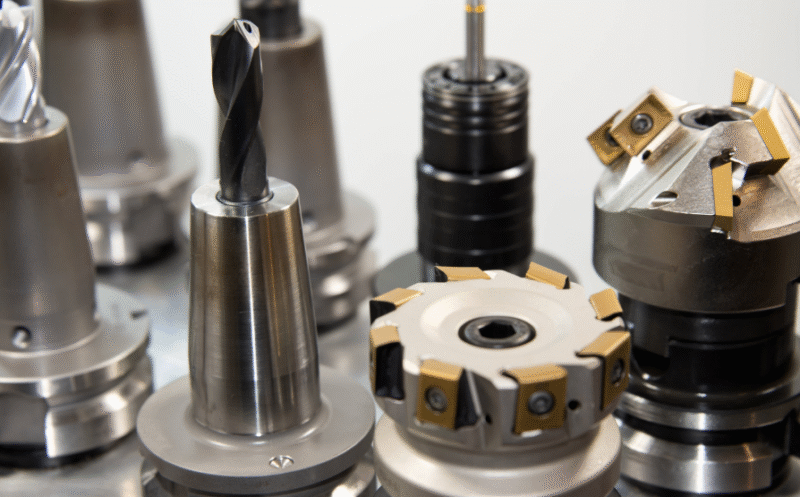
Extreme Speed: Fully digital process, extremely fast quotes (minute by minute), utilising networked capacity, guaranteed delivery.
No-touch efficiency: Ideal for standardised prototyping requirements with a clean process.
Transparency in price comparison: Quick access to multiple virtual quotes.
Note: For projects that are particularly complex, have special process requirements or require in-depth technical communication, it may be more effective to interface directly with a specialised factory.
Option IV: 3D printing + CNC finishing (hybrid option)
How it works: For exterior models or structurally complex non-load-bearing parts, industrial-grade SLA/DLP/SLS 3D printing is used to quickly obtain prototypes; for functional prototypes that require high precision, high strength, or specific materials, a “near-net-shape by metal 3D printing + CNC finishing of key features” approach is used.
Why it fits:
Coping with extremely complex geometries: This solution is economical when the part is so complex that CNC costs are prohibitive.
Accelerated Iteration: 3D printing is unrivalled for speed in verifying form and assembly relationships.
Key to optimisation: Clearly define the purpose of the prototype (whether it is a visual, assembly or functional test) and select the most economical combination of techniques.
Part 3: Deep Cost Breakdown - Where are you spending your money?
Understanding the cost components is the key to controlling your budget. A quote for a small lot of CNC machined parts usually includes:
Programming and process design (one-off): This is a fixed cost that is incurred whether 1 or 100 pieces are made. Programming by an experienced engineer optimises the toolpath and saves machining time, and this is where the value of this cost lies. Multiple varieties means multiple programming fees.
Material costs:
Cost of raw materials.
Material utilisation (nesting planning of plates/bars) is an important factor. Small and dispersed parts can be processed by plate joining to drastically reduce the cost of wasted material.
Machining man-hours cost (machine tool running cost)
Calculated at the hourly rate of the machine tool (covering depreciation of equipment, labour and electricity consumption).
The time depends on: the volume of the part (amount of material removed), the complexity of the features (number of tool changes required), and the accuracy required (whether or not slow finishing is required).
Clamping and set-up costs (per changeover): Includes time spent designing and producing simple tooling, mounting and calibrating. This is one of the main reasons for the high cost of small quantities of many varieties. The use of modular fixtures can significantly reduce this.
Post-treatment and surface treatment costs: deburring, sandblasting, anodising, plating, etc., per piece or area.
Quality Inspection Fee: Costs incurred for the first full inspection and issuance of the inspection report.
A core strategy for cost reduction:
Design optimisation (DFM): Early collaboration with process engineers to simplify processes, reduce the use of special tools, and relax non-critical tolerances.
Order and Plate Machining: Arranging several different small parts to be machined on the same plate or machine table, sharing programming and setup costs.
Selection of suitable materials and blank forms: Choose materials that are as easy to cut as possible and use standard profiles that are close to the final shape of the part (e.g., use thick plates rather than square milling).
Part 4: How to Select and Evaluate Suppliers? --Checklist for Project Managers
Choosing a good partner makes the project half successful. Please examine the following points of the supplier:
Rapid Response and Collaboration Capability: Can design for manufacturability (DFM) feedback be provided quickly?
Equipment Flexibility: Is it equipped with zero-point positioning system, quick-change tool magazine? Is the workshop clean and orderly (reflecting management efficiency)?
Level of digitisation: Are quotes based on automated CAM man-hour estimates? Is the communication process clearly digitised?
Small batch specialisation experience: Ask to see past examples of multiple small batches, not just large single parts.
Transparent cost splitting: Does the quotation clearly list all the above costs? Transparent suppliers are more trustworthy.
reach a verdict
In small-lot, multi-variety machining, the competition is not for scale, but for flexibility, speed and fine cost management capability. The secret to success lies in intelligent DFM design optimisation on the front end and choosing a professional partner with digital management tools and a flexible production system on the back end. By understanding the cost structure and utilising strategies such as collocation and modular tooling, it is entirely possible to keep prototyping costs within reason without sacrificing quality and time. For those of you looking for an agile and reliable prototyping partner for your innovative products, our specially optimised low-volume rapid prototyping lines and professional DFM consulting services may be just the answer you need. Feel free to upload your first part drawings and let us provide you with a proposal that includes a detailed process analysis and transparent cost breakdown.
 Chinese
  Japanese
  English
  German
  Finnish
Leave a Reply
You must be logged in to post a comment.