
machiningThe world of turning and milling is a symphony of skills that use different “weapons” to shape materials with precision. The terms turning, milling, drilling and grinding may be unfamiliar to non-specialists, but they are the fundamental processes that have built modern industrial civilisation. This article serves as your panoramic guide to these four core machining methods, explaining in depth their principles, characteristics and application scenarios, and revealing how they work together to transform a rough blank into a precision part.
Introduction: the “armoury” of machining”
Each machining process corresponds to a specific class of machine tools, cutting tools and motion logic designed to solve manufacturing problems with different geometries. Understanding their essential differences is the first step in part design, process planning or supplier evaluation.
Part I: The Art of Turning - Turning Machining
Core principle: The workpiece rotates and the tool feeds in a straight or curved line. Think of pottery drawing, where the blank rotates and the hand (tool) approaches to mould the shape. Turning mainly works on rotary features.
Main machine tools: lathes, CNC lathes, mill-turn centres.
Key motions: The workpiece performs the main motion (rotation) and the tool performs the feed motion (movement along the X and Z axes).
Characteristics that can be processed:
Bore: Cylindrical, conical.
End faces/steps: The end planes of a part and the transition surfaces of different diameters.
Thread: Internal and external threads (turned by synchronised movement).
Grooving and Cutting: Ring grooving or final cutting of the part from the bar.
Forming surfaces: Machining of complex rotary surfaces by means of forming tools or CNC interpolation.
Process features and benefits:
Efficient material removal: For shaft parts with a large L/D ratio, the efficiency is much higher than milling.
Excellent coaxiality and roundness: High coaxiality is guaranteed as all features are machined around the same axis in a single clamping.
Outstanding surface finish: excellent surface quality can be achieved by finish turning.
Typical application parts: drive shafts, screws, bushings, flanges, nuts, hydraulic fittings, etc.
Part II: Multifaceted Sculpting - Milling
Core Principle: The tool rotates and the workpiece (or cutter) is fed in a straight line in multiple directions. Like a sculptor using a rotating carving knife to work on a blank. Milling is the workhorse for machining complex features on non-rotating bodies.
Main machine tools: Milling machines, machining centres (vertical and horizontal), 5-axis machining centres.
Key motions: The tool performs the main motion (high speed rotation) and the workpiece table (or head) performs the feed motion (movement along X, Y, Z and more axes).
Features that can be processed (extremely wide range)
Planes: Horizontal, vertical, oblique.
Slots and cavities: Keyways, T-slots, various shapes of pits.
Complex surfaces: mould cavities, impeller blades, ergonomic surfaces (depending on multi-axis linkage).
Hole System: Although capable of drilling, it is more adept at machining multiple holes that require positional accuracy.
Craft Classification:
Face Milling: Highly efficient machining of flat surfaces using disc milling cutters with large surface area.
End Milling/End Milling: Machining of flanks, slots, contours using end mills.
Profiling: Machining of complex three-dimensional surfaces.
Process features and benefits:
Unrivalled flexibility: almost any geometry can be machined, making it a “jack of all trades” method.
High precision and complexity: Multi-axis CNC milling machines enable micron-level precision and extremely complex features.
Multiple processes in one clamping: Machining centres can automatically change tools for milling, drilling and tapping.
Typical application parts: mobile phone shells, moulds, engine blocks, brackets, precision fixtures, shaped structural parts.
Part III: Point Penetration - Drilling and Machining
Core Principle: A process specifically designed to create round holes in solid materials. The tool (drill) makes both a rotary main motion and an axial feed motion.
Main machine tools: drilling machines, lathes, milling machines/machining centres (more commonly used).
Key motion: The tool rotates and advances in a straight line.
Points to note:
Centring and deviation: Ordinary drills tend to slide when cutting, resulting in deviation of the hole position. It is usually necessary to first make a precisely positioned guide pit with a centre drill.
Hole accuracy and finish: Directly drilled holes have poor dimensional accuracy and surface finish and are usually used as a pre-machining process.
Subsequent processes: For precision holes, reaming, reaming or boring is often required after drilling to improve dimensional accuracy and surface quality.
Related Process Expansion:
Reaming: The use of a reamer to make micro-cuts to existing holes to obtain high-precision, high-finish holes.
Boring: The use of boring tools to enlarge or finish existing holes (especially large-diameter holes) and to correct deviations in hole position.
Tapping: The use of a tap to machine internal threads in a hole.
Typical applications: Holes in any part requiring bolted connections, shaft and pin positioning, fluid passages.
Part IV: The Ultimate Finishing - Grinding Processes
Core Principle: The use of a grinding wheel bonded with countless tiny, hard abrasive grains as a tool to make micro-cuts on the surface of a workpiece at very high linear speeds. This is a finishing process designed to achieve the ultimate in dimensional accuracy and surface quality.
Main machine tools: surface grinding machines, cylindrical grinding machines, internal grinding machines, centreless grinding machines, tool grinding machines.
Key movements: the grinding wheel rotates at high speed (main movement) and the workpiece moves at a lower speed (feed).
Process features and benefits:
Ultra-high precision: tolerances of IT5-IT7 and even higher (micron level).
Excellent surface finish: Ra 0.1μm or less, achieving a “mirror effect”.
Machinability of hard materials: the only or main means of machining hard materials such as hardened steel, carbide, ceramics, etc.
Main Classification:
Cylindrical grinding: Grinding the outer circle of shaft parts.
Internal cylindrical grinding: Grinding the inner bore of sleeve-type parts.
Surface grinding: Grinding of flat surfaces of parts.
Centreless grinding: Highly efficient external grinding of small shaft components without the need for a centre hole.
Typical application parts: precision spindles, piston rods, gauges, mould inserts, gear teeth, bearing races.
Part V: Collaboration - Process Route Planning for Typical Parts
A complex part rarely undergoes only one type of machining. For example, the manufacture of a precision spindle may involve the following steps:
Unloading: Sawing machine to cut the bars.
Rough ride: in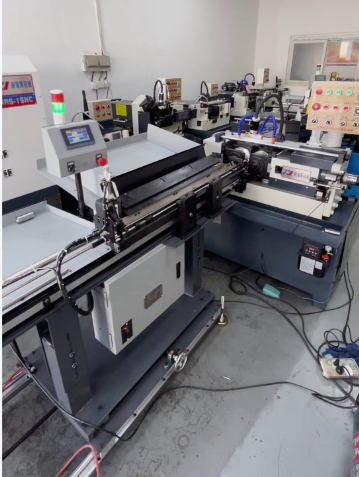 Make an approximate shape of the stepped shaft, leaving an allowance for finishing.
Heat treatment: Tempering or quenching to increase hardness.
Semi-finish turning/grinding of the centre hole: Preparation of the reference for subsequent grinding.
Cylindrical grinding/centreless grinding: Grinding of all key bearing gears and mating cylinders to achieve the accuracy and finish required by the drawings.
Milling: Machining of non-rotary features such as keyways on a milling machine or machining centre.
Clamping: Deburring, chamfering.
Conclusion: choosing the right “weapon”
Turning, milling, drilling and grinding, the four main processes that form the cornerstone of machining. The choice of which or a combination of these depends on the material, geometry, accuracy requirements, batch size and cost objectives of the part.
Choose a car for shafts and a mill for cavities.
Drill the holes first and ream the fine holes.
To be hard and light, it must be on a grinder.
Understanding these basic processes will not only help you communicate better with your manufacturing engineers, but also allow you to consider the feasibility and economics of manufacturing from the design source (DFM). When you are faced with a complex part drawing, you may want to disassemble its features and think about its “process journey”. If you have questions about the process route of a specific part, please bring your drawings to us for consultation, and our process engineers will provide you with professional process analysis from blank to finished product.
 Chinese
  Japanese
  English
  German
  Finnish
Leave a Reply
You must be logged in to post a comment.