
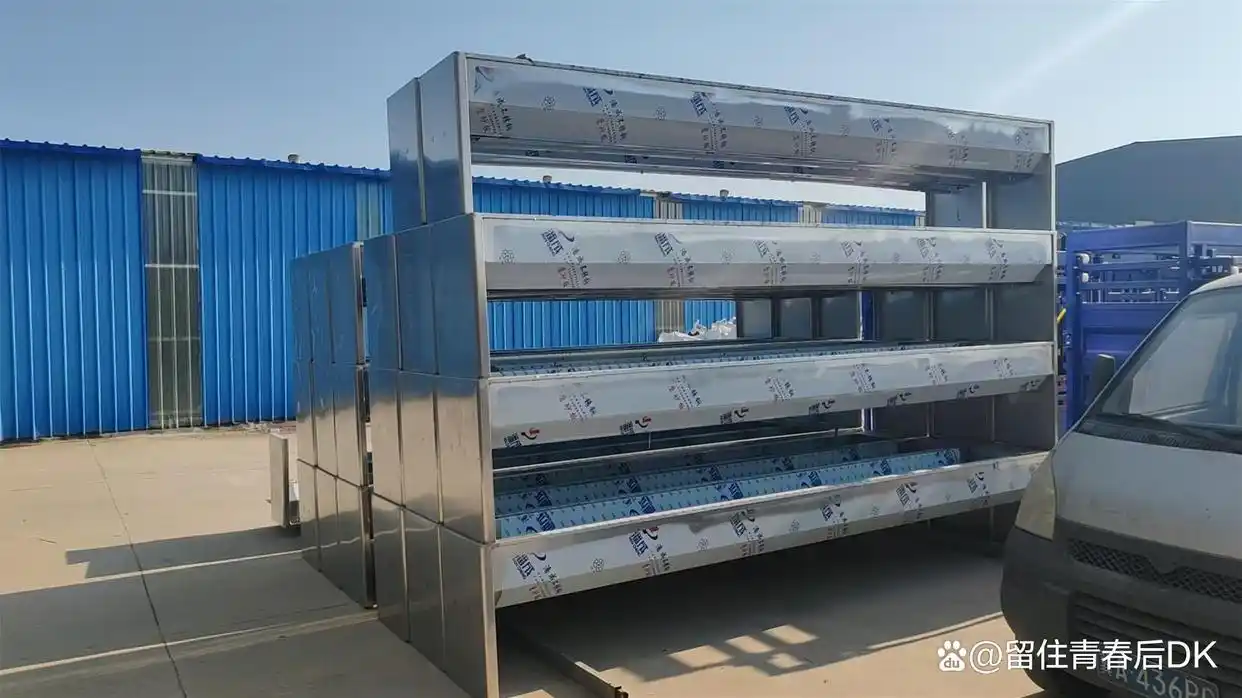
The processing of stainless steel tubes is the process of transforming stainless steel tube blanks or semi-finished products into finished tubes that meet specific dimensional, shape and performance requirements, using a series of mechanical or thermal processing methods. This process plays a fundamental role in fields such as industrial manufacturing and architectural decoration. The quality of this processing directly affects the service life and safety of the tubes. Understanding the basic principles and common methods of stainless steel tube processing helps to provide a better understanding of its applications and performance characteristics.
When processing stainless steel tubes, the key lies in altering the material’s form without compromising its inherent properties, such as corrosion resistance and high-temperature resistance. Common processing methods used in this context include cutting, bending, welding andsurface treatment, Furthermore, each process has its own specific technical considerations and corresponding applications.
One,Cutting process
When processing stainless steel tubes, cutting is an extremely fundamental step, the purpose of which is to precisely cut long tubes to the required length or to drill holes. Common cutting methods include mechanical cutting (such as grinding wheel cutting and sawing) and laser cutting. Grinding wheel cutting is suitable for tubes requiring standard precision; whilst the cost is relatively low, burrs are produced at the cut edge, necessitating subsequent grinding. Laser cutting utilises a high-energy beam to achieve high-precision, non-contact cutting; it is particularly well-suited to tubes with complex shapes or thin walls, producing very smooth cut edges and a minimal heat-affected zone. Owing to its high precision and minimal deformation, laser cutting is becoming increasingly widespread in the machining of stainless steel tubes where high standards are required. Regardless of the method employed, the end faces must be inspected for flatness after cutting to prevent any adverse effects on the positioning accuracy of subsequent processes.

During the cutting process, it is essential to pay close attention to cooling measures. This is because stainless steel has relatively low thermal conductivity, making it difficult for the heat generated during cutting to dissipate; this can easily lead to localised overheating, which may ultimately cause discolouration or deformation of the material. Selecting appropriate cutting parameters and coolant can effectively ensure the quality of the cut.
II. Bending Process
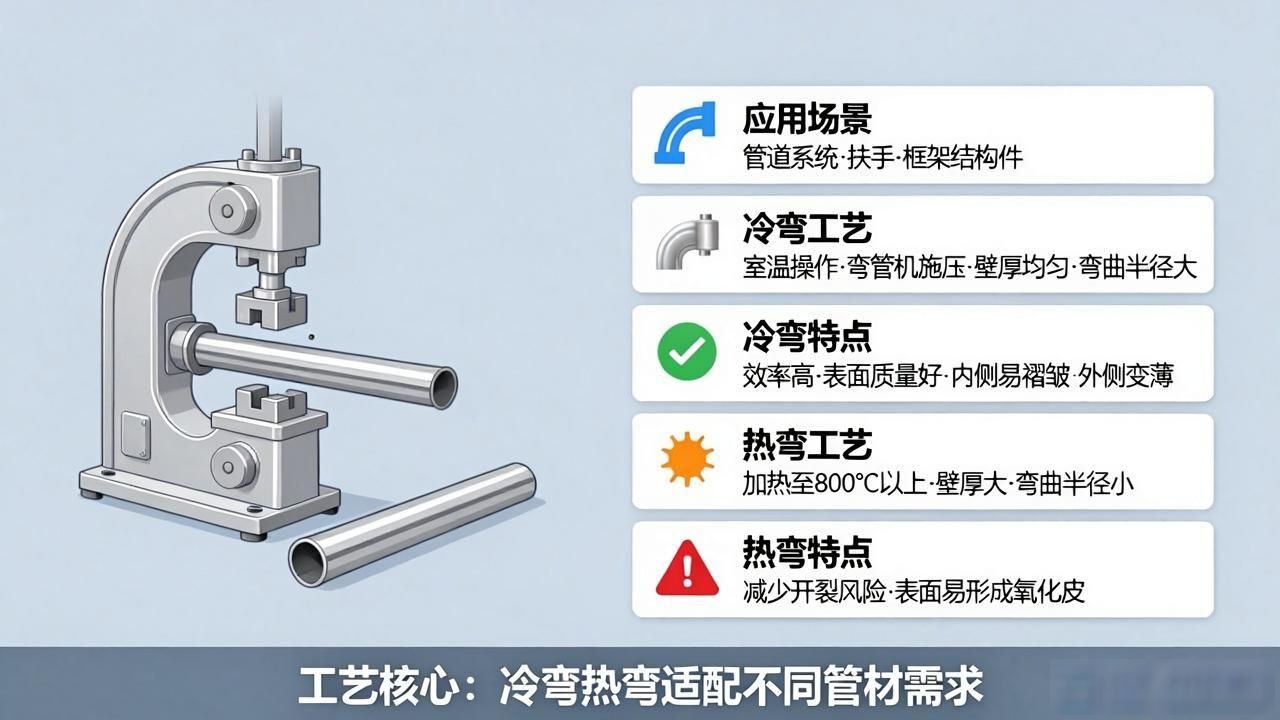
Bending is a commonly used process for shaping stainless steel tubing to specific angles; it is widely applied in pipework systems, handrails, frames and other structural components. The two main bending methods are cold bending and hot bending. Cold bending is carried out at room temperature, using a pipe bender to apply external force, causing the pipe to undergo plastic deformation; it is suitable for pipes with uniform wall thickness and relatively large bending radii. The cold bending process is highly efficient and produces a good surface finish; however, care must be taken as creasing may occur on the inner side of the bent section, or the outer side may become thinned. Hot bending is carried out as follows: the pipe is first heated to a certain temperature—generally above 800 °C—before the bending operation takes place. This method is particularly suitable for pipes with thicker walls or smaller bending radii, and its use effectively reduces the risk of cracking. However, during the heating process, the condition of the scale on the material’s surface changes, so subsequent acid pickling or polishing is required.
The key to controlling the bending process lies in compensating for springback. As stainless steel has a high modulus of elasticity, it will experience a certain degree of springback after bending; therefore, an allowance for the bending angle must be made during die design or programming. Furthermore, the bending radius should not normally be less than three times the pipe diameter, as otherwise the pipe wall is prone to buckling.
III. Welding Joint Techniques
In the processing of stainless steel tubes, welding is the primary method used to join tubes or manufacture components. Common processes include Tungsten Inert Gas (TIG) welding, Metal Inert Gas (MIG/MAG) welding and laser welding. TIG welding is particularly well-suited to the precision welding of thin-walled stainless steel tubes, as the shielding gas—argon—effectively isolates the weld from the atmosphere, thereby preventing oxidation of the weld seam. Welding quality plays a decisive role in the tube’s leak-tightness and mechanical strength, and is a critical control point in the manufacturing process. Prior to welding, the tube ends must be cleaned to remove oil and oxide layers; during the welding process, heat input must be controlled to prevent overheating, which can lead to intergranular corrosion or sensitisation.
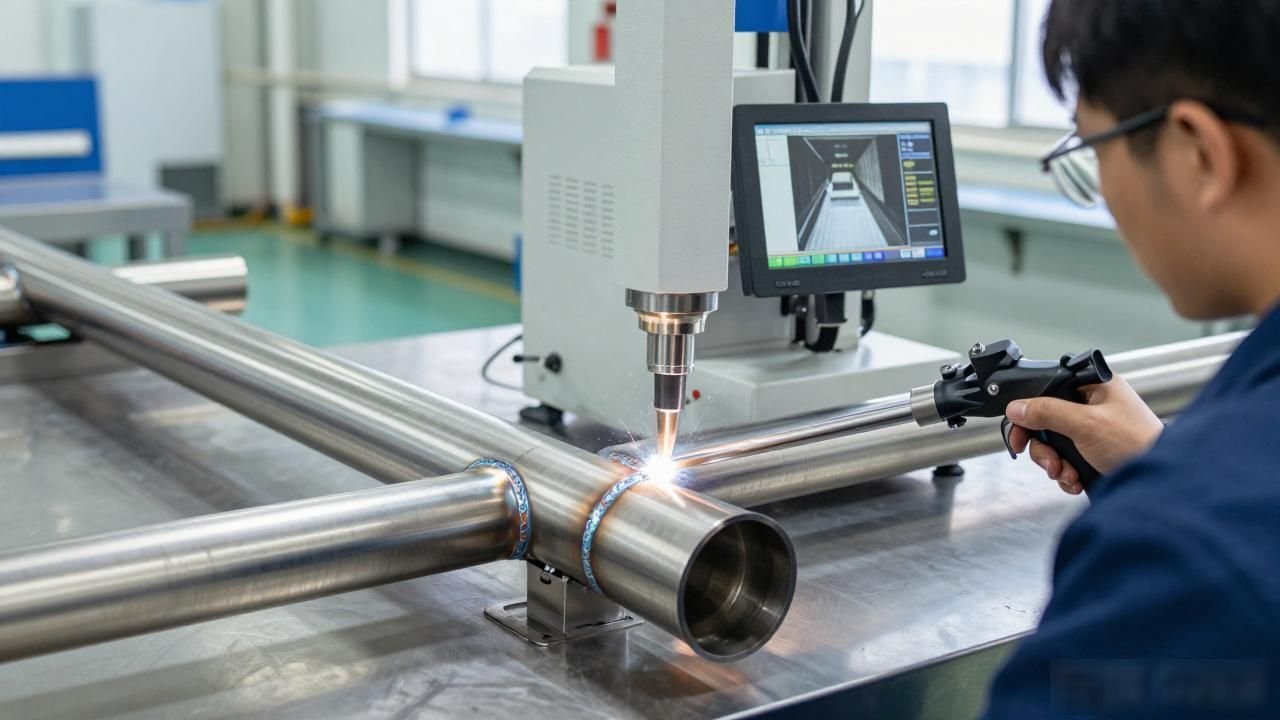
For products subject to stringent requirements—such as those in the food industry or pharmaceutical piping systems—it is necessary to carry out passivation treatment on the welds after welding has been completed, with the aim of restoring the corrosion resistance of the stainless steel surface; Non-destructive testing of welds—such as X-ray or penetrant testing—is also a crucial step in ensuring the quality of the finished product.
IV. Surface Treatment and Subsequent Processing
During the final stages of stainless steel tube processing, surface treatment is often required; this includes polishing, brushing and pickling and passivation. Polishing gives the surface of the tubing a mirror-like finish, thereby enhancing its aesthetic appeal and reducing the likelihood of substances adhering to it. Brushing, on the other hand, creates a uniform textured finish, which improves wear resistance. The purpose of pickling and passivation is to remove scale produced by welding or hot working, and to form a dense passivation film on the surface; this passivation film is key to maintaining the corrosion resistance of stainless steel. During the manufacturing process, it is also necessary to consider tolerance control; parameters such as the diameter, ovality and wall thickness deviation of the tubing must comply with the relevant standard requirements (such as GB/T or ASTM standards).
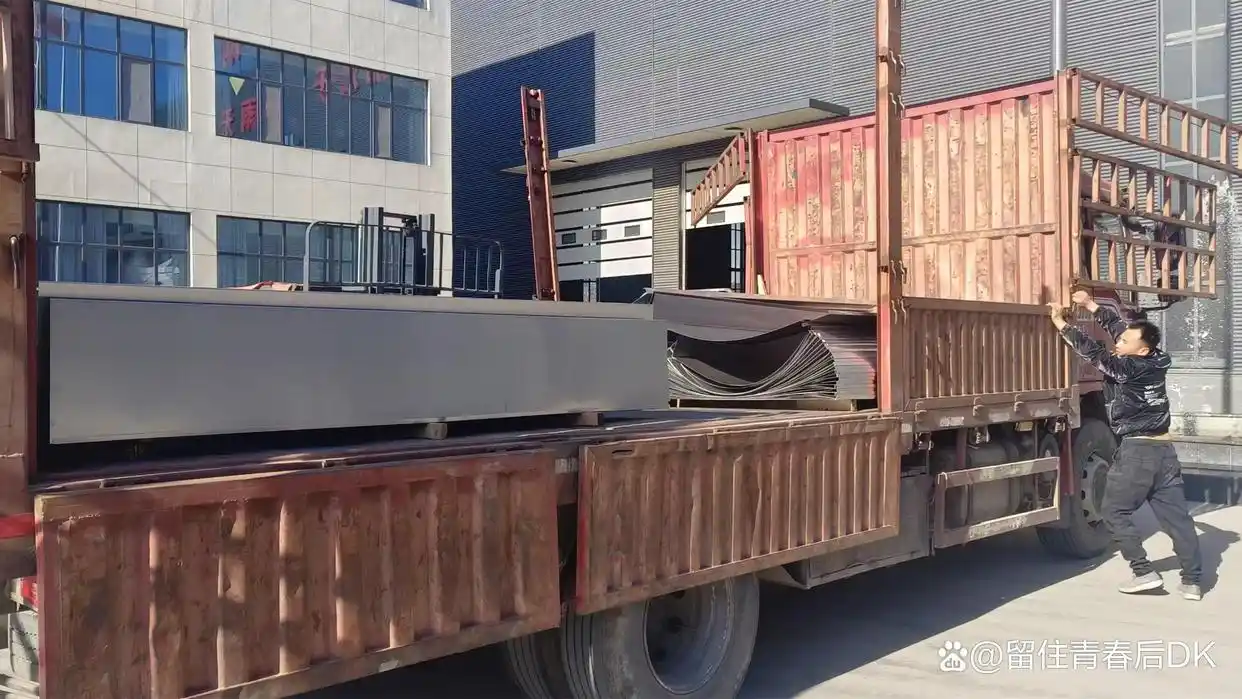
Generally speaking, the processing of stainless steel tubes is a comprehensive technical activity involving a variety of manufacturing methods and key aspects of quality control. The cutting, bending, welding and surface treatment stages are all interrelated, The selection of process parameters at each stage will have a corresponding impact on the performance of the final product. A thorough understanding of this fundamental knowledge enables one to make sound judgements when selecting materials and carrying out processing operations, thereby avoiding common defects and ensuring that the finished tubular products meet their intended application requirements. With the continuous advancement of automation and digitalisation, the processing of stainless steel tubes is steadily progressing towards higher precision and greater intelligence; however, its core principles have always centred on the compatibility between material properties and processing techniques.
 Chinese
  Japanese
  English
  German
  Finnish
Leave a Reply
You must be logged in to post a comment.