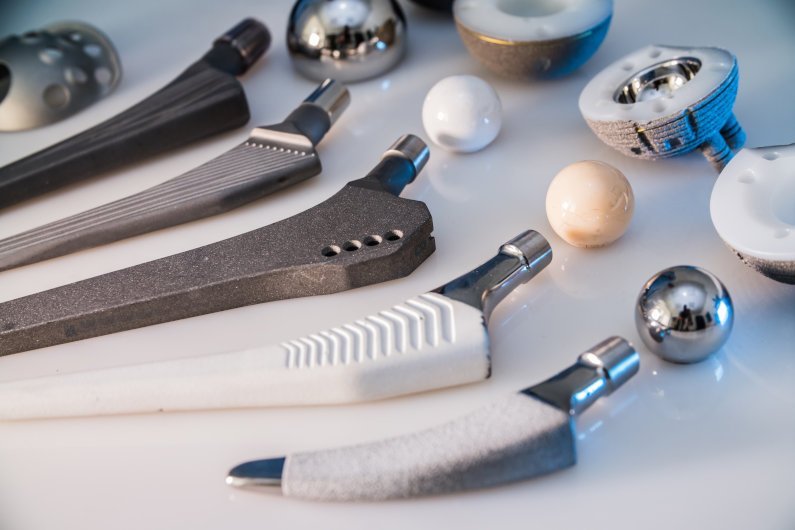


1. Hip replacements and knee implants
In the case of body implants, such as knee implants and hip replacements, as with any other machined medical hardware, a high level of precision and accuracy is required. If a minor error occurs during the manufacturing process, the patient's life and well-being can be significantly affected.
![图片[1]-CNC加工医疗零件制造的7个应用-大连富泓机械有限公司](/wp-content/uploads/2026/02/1771727078242_0.jpg)
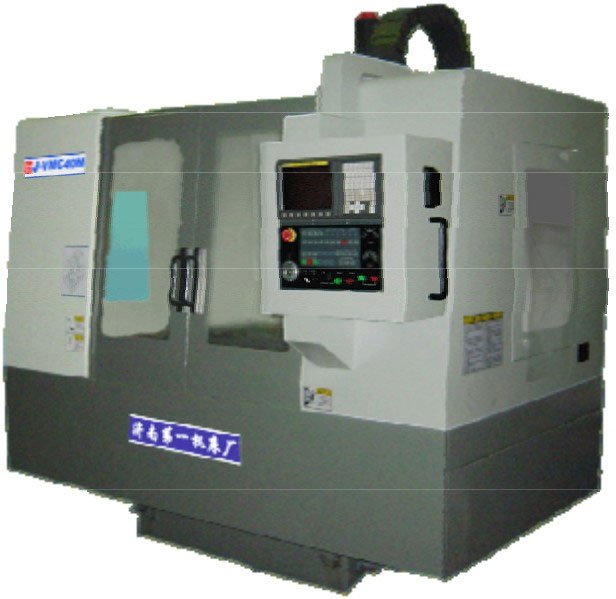
Swiss CNC machines, useful for making parts precisely targeted to patients, can achieve tolerances as small as 4 μm.CNC machiningAfter receiving a request from an orthopaedic surgeon, the centre creates a CAD model and recreates the body part with the help of reverse engineering and CNC technology.
The medical industry mandates that these implants be made from biocompatible materials, such as PEEK and titanium, which are challenging to machine because of the excessive heat they generate during the process, and the use of coolants is generally prohibited due to contamination concerns, a challenge that CNC machine tools are helping to address because of their compatibility with a wide range of materials.
2. Production of surgical tools
High-precision and professional tools are required for complex surgical operations, the scope of these instruments covers from simple scalpels, scissors, extended to complex robotic arms for minimally invasive surgery, a variety of these tools must be manufactured with high precision, cnc machining in the production of various types of medical surgery surgical tools required in this matter, plays an extremely critical role.
The ability of digitally controlled machines to achieve complex geometries and tight tolerances makes them ideal for the production of complex surgical tool designs, for example, robotic-assisted surgical instruments can be machined using CNC technology to ensure the highest level of precision, allowing surgeons to perform complex operations with greater accuracy and less frequent complications.
3. Electronic medical equipment
Numerous medical devices, such as MRI scanners, heart rate monitors and X-ray machines, are equipped with thousands of CNC-machined electronic components, examples of which include switches, buttons and levers, as well as electronic housings and enclosures.
![图片[2]-CNC加工医疗零件制造的7个应用-大连富泓机械有限公司](/wp-content/uploads/2026/02/1771727078242_1.jpg)
![图片[3]-CNC加工医疗零件制造的7个应用-大连富泓机械有限公司](/wp-content/uploads/2026/02/1771727078242_2.png)
Unlike implants and surgical tools, these medical devices do not need to be biocompatible because they do not come into direct contact with the patient's internal systems. However, the manufacture of these parts is still largely under the supervision and control of multiple regulatory agencies.
Failure to act in accordance with the standards set by these regulatory bodies can result in substantial fines for the machine shop and, in some cases, even imprisonment. There have been instances where medical professionals involved have had their licences to practise medicine revoked. Therefore, it is important that you choose your medical equipment manufacturer wisely.
4. Customised prostheses
Individualisation is becoming increasingly important in healthcare, and nowhere is this more evident than in the field of prosthetics, where patients require prosthetic devices that fit their anatomy perfectly, but traditional mass production techniques often fail to meet their needs.
The field of prosthetics is being transformed by cnc machining, which is able to produce customised devices based on the unique physiological characteristics of each patient. With the help of 3D scanning and CAD modelling, cnc machines are able to produce prosthetics with intricate details and highly accurate dimensions to ensure optimal functionality and comfort for the patient.
Using CNC technology, prostheses can be produced with high precision, ensuring comfort and functionality.
5. Small orthopaedic hardware
Orthopaedic devices such as plates, screws and rods are widely used in the medical field to repair or replace damaged bones and joints. Given the key role these devices play in the rehabilitation process, it is essential that they are manufactured with the highest level of precision and quality.
In the manufacture of these orthopaedic instruments, cnc machining plays an extremely important role. cnc technology is able to process complex and variable geometries with high precision, which is particularly suitable for the production of these devices, and cnc machining is able to process a wide range of biocompatible materials, including titanium and stainless steel, which are commonly used in orthopaedic instruments.
6. Medical equipment prototypes
![图片[4]-CNC加工医疗零件制造的7个应用-大连富泓机械有限公司](/wp-content/uploads/2026/02/1771727078242_3.png)
It is critical to ensure that prototypes are created for testing and validation prior to mass production of any medical device. CNC machining offers a fast and cost-effective solution for producing prototypes of medical devices. With the ability to quickly generate multiple iterations of a design, engineers are able to test and improve the device to ensure that it is safe, effective, and meets regulatory requirements.
In the fast-paced world of medical device development, this capability is critical, and the ability to get new products to market quickly may be a significant competitive advantage.CNC machining has the ability to produce small quantities of prototypes, which allows manufacturers to minimise waste and save on material costs during the development process.
7. Dental tools and implants
Dentists everywhere rely on it for precision treatment, and cnc machining is key to giving quality dental care by creating custom dental tools and implants, with advanced CNC technology that is ideal for manufacturing durable instruments such as drills, scalers, probes, and forceps that are essential for all types of surgeries.
![图片[5]-CNC加工医疗零件制造的7个应用-大连富泓机械有限公司](/wp-content/uploads/2026/02/1771727078242_4.jpg)
These instruments need to be manufactured with the durability to withstand the process of sterilisation and to ensure patient safety, CNC's approach to manufacturing is repeatable, with stringent quality control measures to ensure that each tool meets the strict standards and requirements.
Dental implants provide a long-term solution for missing teeth, and this is achieved by using CNC manufacturing technology to make precise customisations, and these implants are created based on digital scans, which ensures a precise and personalised fit for each patient. cnc machining has revolutionised the production of dental restorations, which in turn has led to an improvement in the outcome of the treatment.
Through the effective use of materials such as titanium and zirconium oxide, CNC technology enables precise modifications to be made with outstanding efficiency and effectiveness.



 Chinese
  Japanese
  English
  German
  Finnish
No comments