
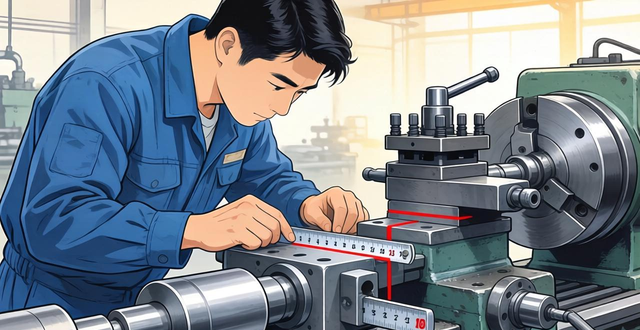
There is a processing method, is in the prefabricated hole above, with the help of cutting tools to make it bigger, this method is called boring, boring this work it, a moment can be carried out on the boring machine, a moment can be carried out on the lathe.
I. Boring Overview
BoringWhen the precision is quite high, in the case of fine boring, the dimensional accuracy can reach IT8 to IT7, and the diameter of the hole can be controlled within the accuracy of 0.01MM. If it belongs to the category of fine boring, then the processing accuracy can reach TT7 to IT6, and the surface quality is good. For general boring, the surface roughness Ra value is between 1.6 and 0.8 μm.
II. Boring processing mode
There are three different ways to process a bore.
(1) Workpiece rotation, tool feed motion
Boring on the lathe, most of them belong to this boring method, its process characteristics are, after processing the axis of the hole, and the axis of rotation of the workpiece to maintain consistency, the roundness of the hole, how, mainly depends on the rotary accuracy of the machine tool spindle, the hole of the axial geometry of the error how, mainly depends on the tool feed direction, relative to the axis of rotation of the workpiece positional accuracy, the boring method is suitable for machining, and the external surface of the coaxial degree requirements of the hole. This boring method is suitable for machining holes with coaxial requirement.
(2) The tool rotates and the workpiece makes a feeding motion.
The spindle of the boring machine drives the boring tool to rotate, and the table drives the workpiece to make a feeding motion.
(3) Tool rotation and feed motion
Through the use of this boring method to carry out boring, the length of the boring bar will appear to change, in this case its deformation of the force will also change, the greater the length of the boring bar, the spindle due to its own weight induced bending deformation is also greater, and then the processed hole axis will appear corresponding bending, close to the spindle box of the place of the hole is larger, and once away from the spindle box, the hole will become smaller, and ultimately the formation of tapered holes, this type of boring is only suitable for processing shorter holes. This type of boring is only suitable for processing shorter holes.
Boring steps
1. Boring tool installation
If the work adjustment adopts the principle of eccentricity, then the installation of the boring tool working part is extremely important, after the installation of the boring tool, be sure to pay attention to observe the boring tool's main cutting edge on the plane, whether it is with the boring head of the feed direction in the same horizontal plane? Only when installed on the same level, can ensure that several chip edges in the normal processing cutting angle.
2.Boring tool test boring
According to the requirements given by the manufacturing process, the boring tool should be adjusted and reserved 0.3 to 0.5mm of allowance, for expansion and matching boring holes, according to the initial hole allowance to complete the adjustment of the rough boring allowance, rough boring allowance needs to be less than or equal to 0.5mm, and the subsequent fine boring machining allowances must be guaranteed and meet the requirements.
After the boring tool is installed and loaned out, a test boring is required to verify that the boring tool is tuned to meet the rough boring requirements.
3. Boring requirements

Before the boring process, we should carefully check the tooling, but also check the positioning reference of the workpiece, and to see whether the positioning elements are stable and reliable.
What is the diameter of the initial hole to be machined, as measured by calipers? How much machining allowance is left?
In the boring process to carry out before, to go to check the equipment, the equipment referred to here is the spindle, to check its repetitive positioning accuracy, but also to check its dynamic balance accuracy, to see if these two are able to meet the process of processing and manufacturing the requirements put forward by the punctuation mark.
In horizontal boring, the dynamic runout value of the gravity overhang of the boring bar must be checked during the test boring period, and the cutting parameters must be corrected reasonably, so as to reduce the impact of centrifugal shear vibration caused by machining.
According to the rough boring step, reasonable allocation of boring allowance, rough boring allowance of about 0.5mm is appropriate, followed by semi-fine boring step, semi-fine boring allowance of about 0.15mm, and then carry out the fine boring step, fine boring allowance is also about 0.15mm, to avoid semi-fine boring due to the excessively large amount of allowance generated by the phenomenon of the knife, which affects the precision of fine boring allowance adjustment.
Difficult to be machined materials, for high-precision boring, its tolerance is less than or equal to 0.02 mm, can add a fine boring step, boring the margin of not less than 0.05 mm, in order to prevent the machining surface of the phenomenon of elasticity of the tool.
Boring tools in the tool setting, you need to pay attention to, to prevent the working part of the boring tool, that is, the insert and the tool holder, and the impact of the tool block, otherwise it will damage the insert, but also damage the tool holder guide groove, and will let the boring tool adjustment value has a change to affect the accuracy of the hole diameter machining.
Boring process, pay attention to maintain sufficient cooling to increase the effectiveness of the lubrication of the machining area, thereby reducing the cutting force ah.
In each machining step, the chip removal operation is carried out rigorously, so as to avoid the chip mixing into the secondary cutting and the precision of the hole diameter machining and the surface quality is affected.
In the boring process, to always check the tool that is the degree of wear and tear of the insert, and to replace it in a timely manner, in order to ensure the quality of the hole processing; and in the fine boring of this step, is strictly prohibited to replace the insert, which is to prevent errors. After the completion of each step of processing, must be strictly to implement the process of quality control requirements, to carefully test the actual processing out of the hole, but also to make a good record, so that it is convenient to analyse, adjust and improve the boring process.
IV. Main issues in boring
1. Tool wear
In the boring process, the tool continues to cut, easy to wear and breakage phenomenon, will reduce the hole processing has the dimensional accuracy, resulting in an increase in the value of surface roughness; at the same time, the fine-tuning feed unit calibration presents anomalies, resulting in adjustment errors, so that the processing of the hole diameter deviation, and even lead to product quality failures.
2. Changes in blade edge wear
3. Processing errors
The machining error generated by the boring process will be reflected in the size, as well as the shape and position of the hole after the completion of the hole processing, as well as changes in surface quality, and its main influencing factors include the following:
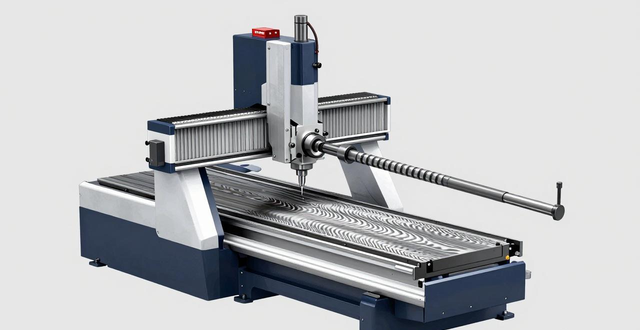
Excessive cutterbar length-to-diameter ratio or excessive overhang.
Blade material does not match the workpiece material.
Boring dosage is not reasonable.
Residual adjustments are not reasonably allocated.
Initial hole hole offset leads to periodic changes in the margin.
The workpiece material has high rigidity or low plasticity, and the tool or material has a tendency to give way.
V. Processing skills
There are a few tricks to the boring operation, and here are some suggestions:
1, boring tool for installation, and boring axis line in the coaxial state, this is to ensure that after the boring of the dimensional accuracy, as well as shape accuracy.
2, such as the installation of a good boring tool, have to check the boring head of the main cutting edge, to see if it is with the boring head of the feed direction in the same horizontal plane, the purpose of doing so is to ensure that the cutting edge with the boring axis of the coaxiality.
3, test boring this process to be completed before the previous process, its purpose is to be adjusted to the amount of boring tool to be adjusted, but also to verify the accuracy of the size and shape of the boring accuracy.
4, in the boring process, pay attention to the feed rate and cutting rate adjustment, so as to adapt to different cutting conditions and processing needs.
5, when processing, need to pay attention to observe the chip situation, according to the actual situation, the amount of cutting to be adjusted, and at the same time to adjust the use of coolant.
6, for the different materials of the workpiece, to select the appropriate amount of cutting, but also to choose the appropriate boring tool materials, in order to ensure the quality of processing and efficiency.
7, after the completion of processing, to immediately clean up the boring tool and workpiece, the purpose is to ensure that the cleanliness of the tool and workpiece and maintenance conditions.
The above are tips and suggestions for boring operations and are for reference only. In the process of actual operation, it is necessary to adjust and optimise the improvement according to the specific situation.
 Chinese
  Japanese
  English
  German
  Finnish
Leave a Reply
You must be logged in to post a comment.