
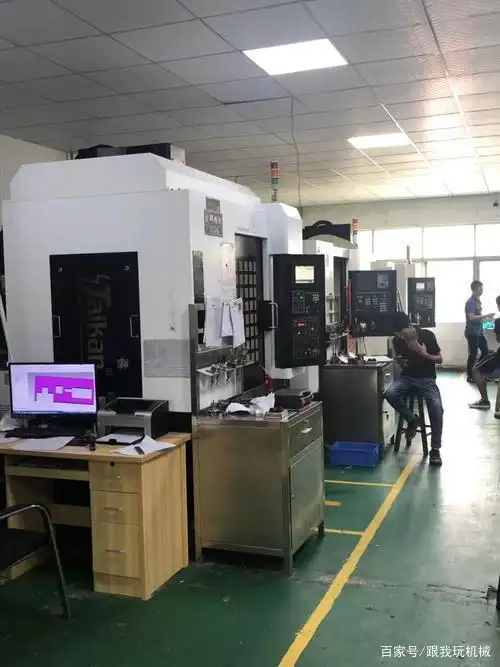
We usually refer toProcessingThese can be categorised into two types: material removal and material addition. Most of us employ material removal processes, although material addition does occur as well; this is generally referred to as forming, such as in injection moulding, which is an additive process. Our focus here is on subtractive processes, which are predominantly machining operations. In these processes, cutting tools are used, and these tools are classified as consumables.
In traditional machining, the machining of square workpieces is usually carried out using a milling machine, which has a unique function: it performs machining from the side using side cutters. The milling cutter can also carry out down-milling operations, that is, drilling holes, which is generally referred to as ‘hole drilling’. What about a lathe? It is primarily used for round shafts, or for boring internal bores in shafts; these internal bores are usually quite large, at least large enough to accommodate the cutting tool. Cutting threads on a shaft presents a technical challenge. Of course, one end of a centre pin can also be used to drill the centre hole in a shaft.
Operating a lathe is relatively straightforward, and operating a milling machine is similarly straightforward; however, with a milling machine, the key challenges lie in controlling the feed rate and understanding the properties of the material—otherwise, it is very difficult to achieve good results. Selecting the right cutting tools is a skill that is not easily mastered and requires a great deal of experience. On a lathe, the key lies in mastering the art of sharpening; a well-sharpened tool will make the work twice as effective with half the effort, whereas a poorly sharpened one renders all the effort wasted and futile.
But what we are discussing at this very moment ismill-turnmachine tools; this piece of equipment is quite outstanding. In terms of unit processing costs, whether for lathe-typeCNC, Whether it is a CNC milling machine or a CNC lathe, it offers significant advantages; compared with a five-axis CNC machine, it also has the advantage of being more cost-effective. The parts it is primarily capable of machining are mainly items such as flanges.

CNC machines differ fundamentally from conventional machine tools; they offer superior control over feed rates and automatically change tools in accordance with pre-set toolpaths, thereby reducing the time spent on manual labour. In terms of precision, the outcome is not affected by the operator’s skill level; the machined components are of the very highest standard, both in terms of finish and accuracy, Therefore, to increase machining speed, CNC is the obvious choice, whilst the precision of the machined parts is closely linked to the precision of the machine itself.
I’ve heard that some CNC machines are capable of selectively activating cutting compensation based on tool temperature—which is extremely intelligent. I’ve also heard that some machines are equipped with tool monitoring functions that can detect tool wear and apply compensation accordingly. If standard CNC machines demonstrate intelligence during machining, then five-axis CNC machines are even more intelligent. This is primarily due to their spatial degrees of freedom: whilst there are only six degrees of freedom in three-dimensional space, a five-axis machine possesses five of these, which is generally sufficient to cover the machining of most curved workpieces.
CNC turning-milling combination machines already possess some of the capabilities of a full 5-axis machine, although their structure differs from that of a true 5-axis machine. Their greatest advantage is that they reduce the need for re-positioning the workpiece during machining. As we are all aware, once a part has been set up for a single machining operation—after tool setting and reference alignment—it is generally possible to complete the machining of one face. However, when machining another face, the part must be removed, repositioned using a different face, and the tool re-aligned, This amounts to one, or even two, additional positioning operations. Consequently, any errors arising during tool setting are transferred to the part’s dimensional accuracy.
As for CNC programming techniques, there are two main areas of focus. Firstly, when designing toolpaths, these should be optimised as far as possible to minimise idle time on the machine, thereby achieving a higher utilisation rate; secondly, with regard to machine operation, tool setting and tool changing must be carried out in a logical and appropriate manner; only then can the machine tool be utilised to its full potential.
 Chinese
  Japanese
  English
  German
  Finnish
Leave a Reply
You must be logged in to post a comment.