


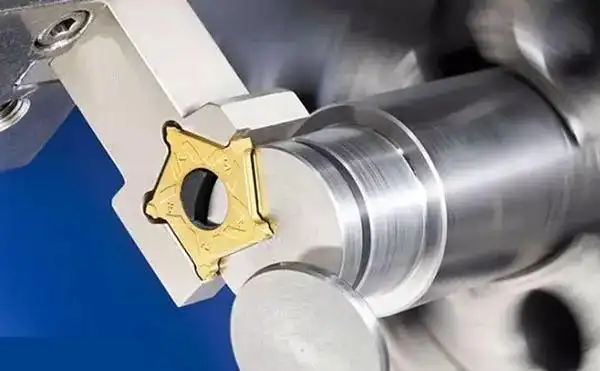
Machining error full analysis: 9 major root causes and countermeasures
01 Error and accuracy of the “twin faces” of the smaller the machining error, the higher the degree of compliance, the higher the machining accuracy. Both actually describe the same thing - just a different perspective. In other words, the size of the error directly determines whether the part can meet the standard!
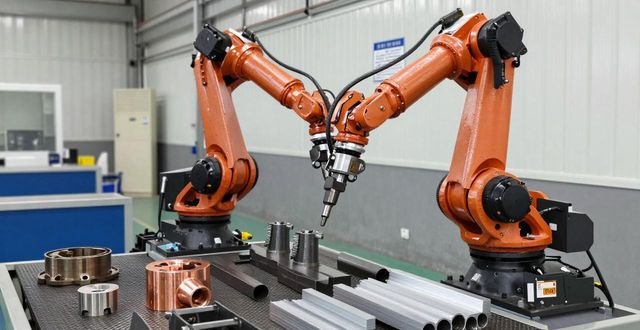
Robotic arm turning and milling composite machining, CNC machining, component machining
Robotic arm turning and milling, CNC machining, component machining: Bafang Resources brings together a wide range of suppliers, buyers and manufacturers specialising in robotic arm turning and milling, CNC machining and component machining.
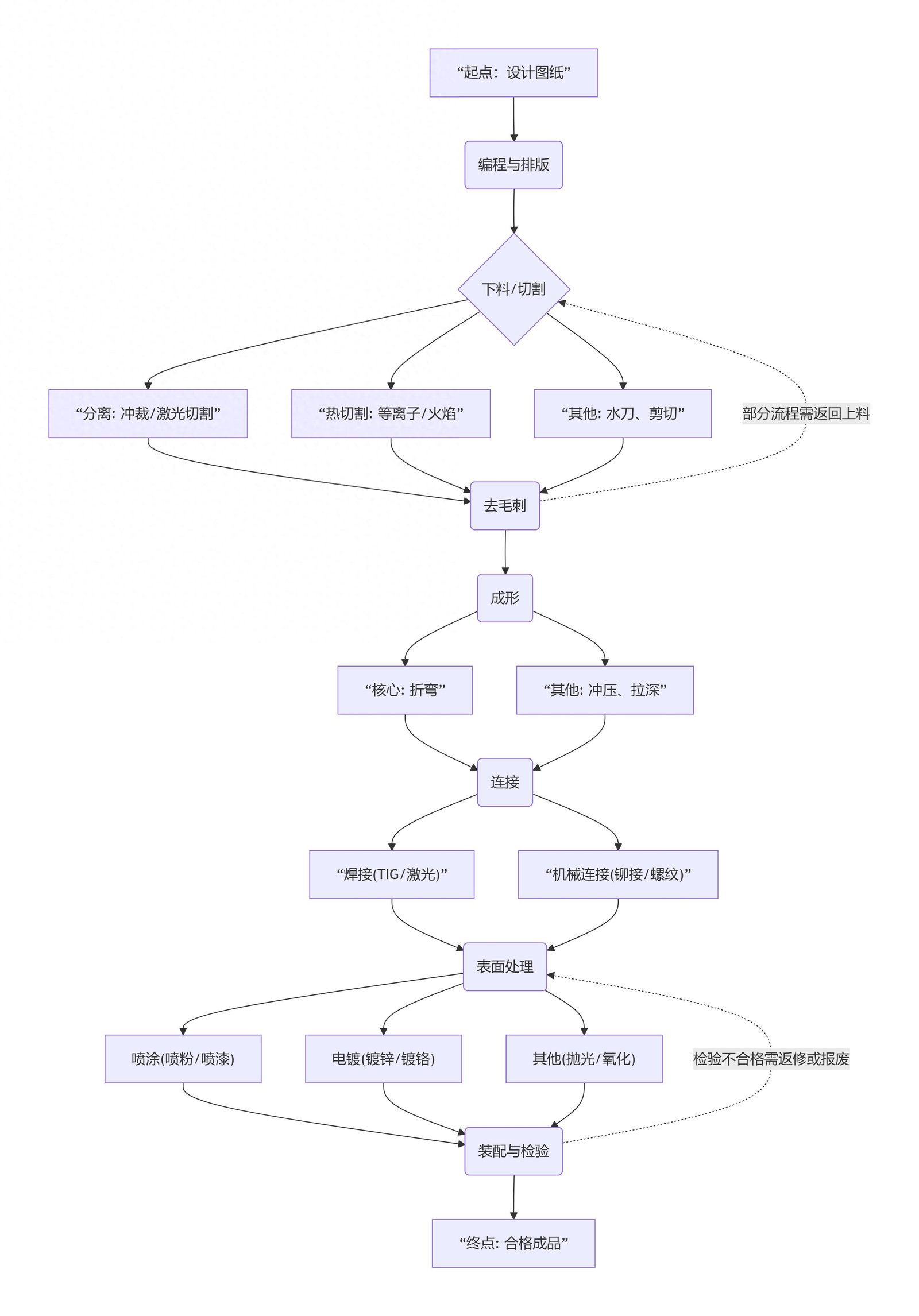
A single diagram explaining the entire sheet metal fabrication process: the journey from drawing to finished product
A single diagram illustrates the entire sheet metal fabrication process: the journey from drawing to finished product. A flat sheet of metal, after undergoing a series of precise and orderly transformations, ultimately becomes the machine housings, cabinets or complex components we see everywhere in our daily lives; the journey behind this is far more meticulous than one might imagine.
Repair method of deformation of main beam of overhead travelling crane
The main girder structure of overhead travelling crane will be deformed by various factors in the process of long-term application, and the deformation problem can not be completely avoided, for the deformation of the main girder structure.
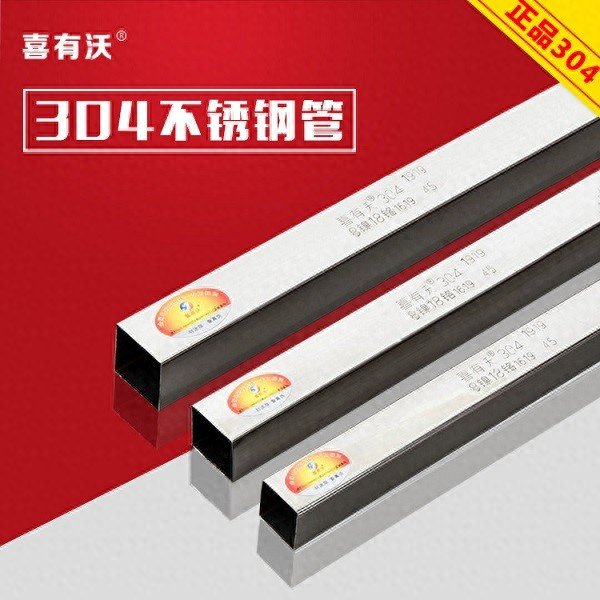
What is the difference between polished 304 stainless steel pipe and brushed 304 stainless steel pipe?
Polished and brushed are actually the processing treatment requirements for the surface roughness of 304 stainless steel pipe. Today we will share with you what is the difference between 304 stainless steel polished pipe and 304 stainless steel brushed pipe?
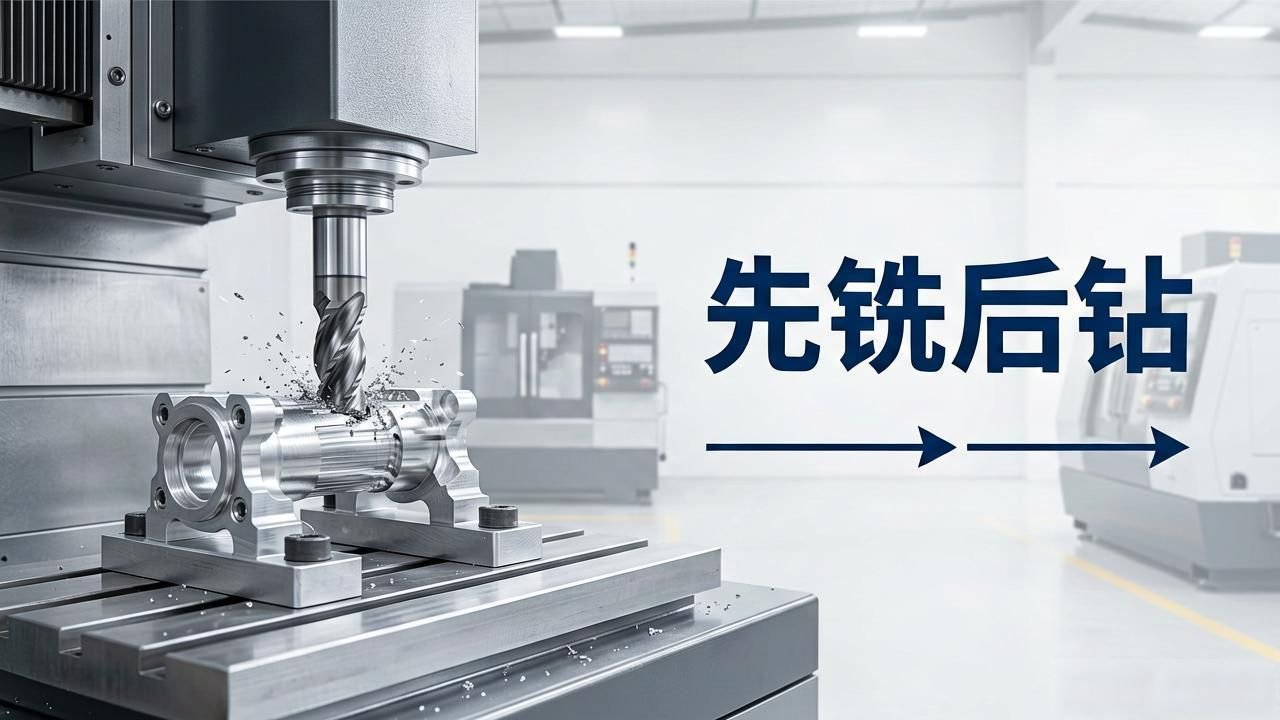
How much do you know about CNC machining?
Today, our editor will guide you through the ins and outs of CNC machining—please read on! To establish the role of CNC machining and draw up a CNC machining plan:
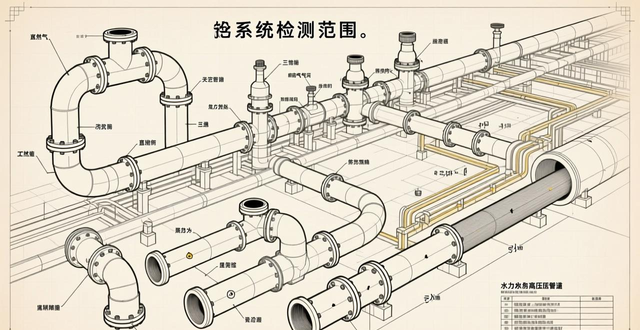
High Pressure Seal Testing Organisation, High Pressure Seal Inspection Report
12. Overall system sealing function test: Under simulated or near-actual working conditions, the entire pressure system (including vessels, pipelines, valves, instrumentation joints, etc.) is subjected to an integrated sealing performance test to assess the leakage level of the system in the linkage state.10
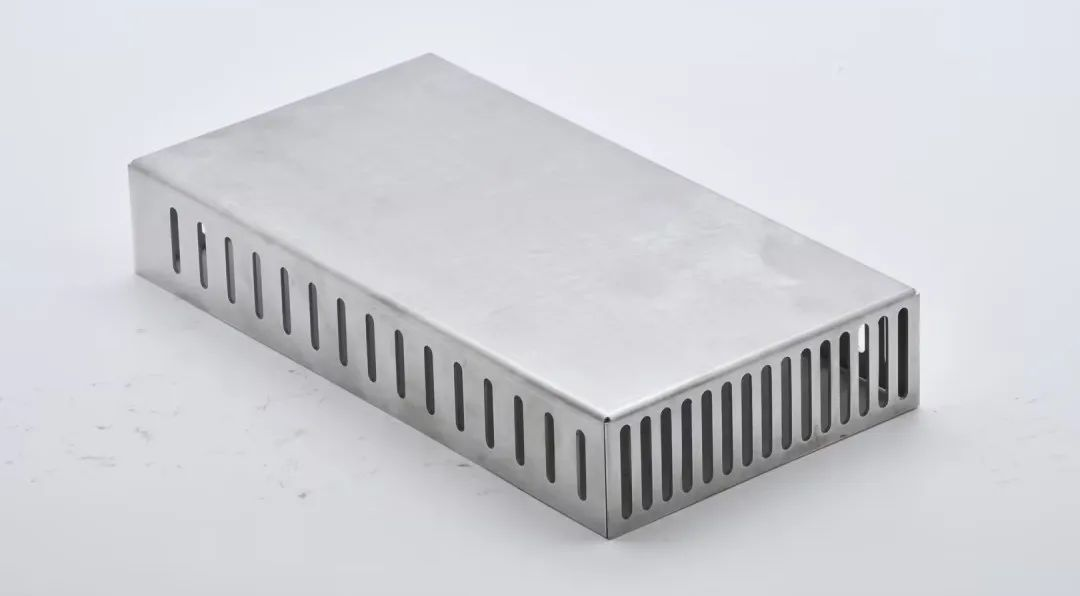
Jiali Chuang Sheet Metal Fabrication Guide — An Introduction to Bending
Before discussing the processes, let us first consider what problems these manufacturing processes—including CNC machining, sheet metal working, stamping, injection moulding and, more recently, 3D printing—primarily address. Setting aside the specific technical details, let us look at the bigger picture
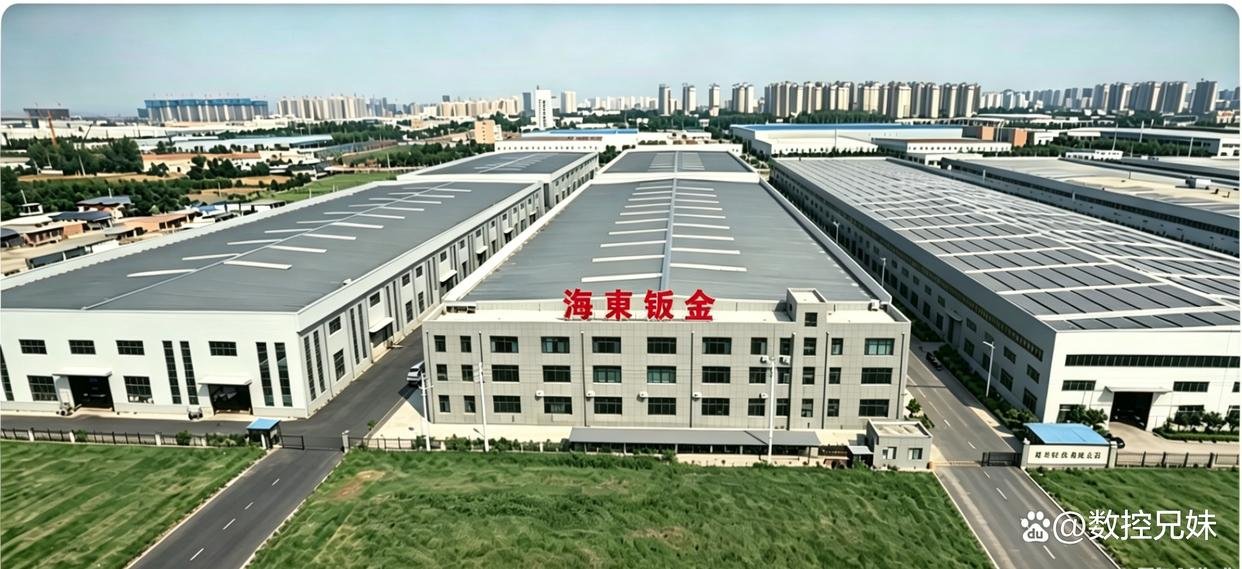
Rigorous quality control + rapid delivery: a sheet metal service provider trusted by customers both at home and abroad
Anyone in the manufacturing sector knows that there are two things to be most wary of when sourcing suppliers: firstly, inconsistent quality, where components installed in equipment frequently malfunction, ultimately damaging the reputation of the manufacturer’s own finished products; and secondly, repeated delays in delivery, where, when rushing to meet order deadlines, key components fail to arrive on time, leaving the entire workshop at a standstill.
 Chinese
  Japanese
  English
  German
  Finnish