
The surface layer is artificially formed on the surface of the substrate material and its mechanical, physical and chemical properties are different from those of the substrate, this formation is calledsurface treatmentProcess technology, surface treatment is designed to achieve corrosion resistance, wear resistance, decorative or other special functional requirements of the product, as far as the metal castings are concerned, we are more commonly used surface treatment methods are mechanical grinding, chemical treatment, surfacehot treatment (e.g. of metal), sprayed surfaces, etc.
I. Surface heat treatment
Surface quenching
Does not change the chemical composition of the steel, does not change the heart of the steel organisation, in this case, the use of rapid heating, the surface layer of austenitising, and then quenching, as a way to strengthen the surface of the parts, which is the surface quenching, is a heat treatment method.
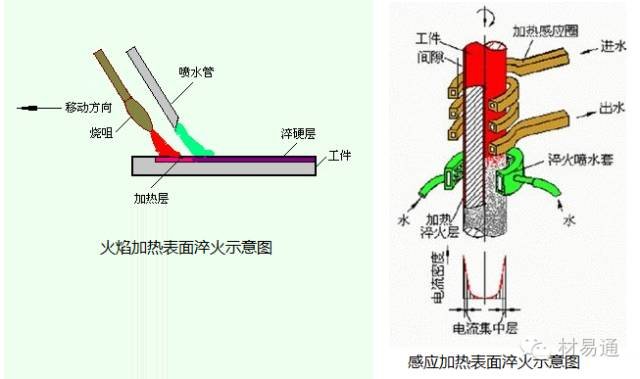
The main methods used for surface heat treatment are flame quenching and another type of induction heat treatment. The usual heat sources used include flames such as oxy-acetylene or oxy-propane, as well as induced currents, in addition to lasers and electron beams.

induction heating
This is a method of generating large eddy currents on the surface of the workpiece through the use of alternating currents so that the surface of the workpiece can be rapidly heated.
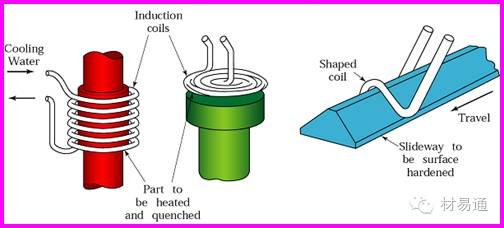
Induction heating is divided into:
1. High-frequency induction heating, frequency 250-, hardened layer depth 0.5-2mm;
2. Medium frequency induction heating, frequency 2500-, hardened layer depth 2-10mm;
3. Industrial frequency induction heating, frequency 50Hz, depth of hardened layer 10-15mm.
Flame heating
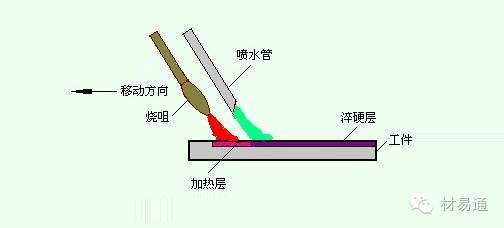
The use of acetylene flames to directly heat the surface of the workpiece is inexpensive, however, the quality is difficult to control.
laser heating
The method of heating the workpiece with a laser of high energy density is highly efficient and has good quality.
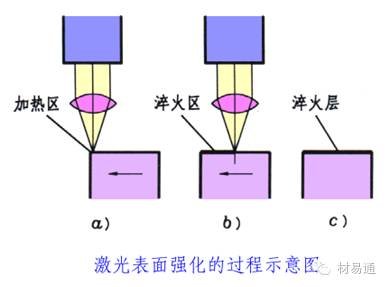
Laser surface enhancement can be divided into laser phase change enhancement, laser surface alloying, and laser cladding.
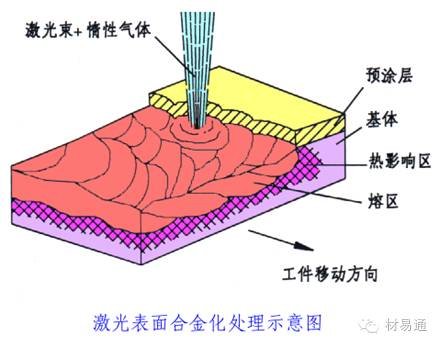
It is mainly used for those who want to carry out local strengthening of the parts, such as blanking die, and crankshaft, and cam, including camshafts, including spline shafts, precision instrument guides, high-speed steel cutting tools, but also gears, and even combustion engine cylinder liner, etc., that is, the use of laser surface strengthening.
Bluing and phosphating
turn blue
The process of heating steel or steel parts to the right temperature in a situation that includes air and water vapour or chemicals to form a blue or black oxide film on the surface is also known as blackening.
Often used in precision instruments, in optical instruments, in tools, in hardness blocks, and in standard parts in the machinery industry.
phosphide
A process, known as phosphating, in which a workpiece, i.e. steel or aluminium or zinc, is immersed in a phosphate solution, i.e. a solution in which certain acid phosphates are the main ingredient, and which is then deposited on the surface of the workpiece, resulting in the formation of a crystalline phosphate conversion film that is insoluble in water.
Phosphating is widely used in anti-corrosion technology, metal cold deformation processing industry.
II. Chemical surface heat treatment
Chemical surface heat treatment
Chemical heat treatment of the workpiece, is to place it in a specific medium, the first heating and heat preservation, so that the medium has the activity of the atoms can penetrate into the surface layer of the workpiece, which can then change the surface layer of the workpiece chemical composition, as well as the organisation, and ultimately also change its performance, which is actually a heat treatment process.
With the surface hardness and toughness of the acquisition of methods of chemical heat treatment exists in this way, and surface quenching to carry out a comparison, chemical heat treatment will not only be changed on the surface of the steel organisation, and will change its chemical composition, according to the penetration of the elements of the different, chemical heat treatment can be divided into carburisation, nitriding, multi-dimensional co-penetration, seepage of other elements of the categories of chemical heat treatment covers the decomposition of the process, absorption, The process of chemical heat treatment covers decomposition, absorption and diffusion, which are the three basic processes.
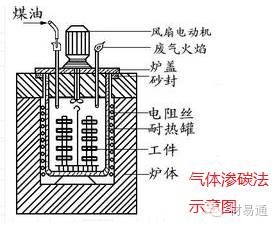
Commonly used chemical heat treatments:
Carbonitriding, nitriding (known as nitriding), carbon-nitriding (known as cyaniding and nitrocarburising), etc. are distinguished. Sulphurizing, boriding, aluminising, vanadizing, chromating, etc. are also distinguished.
Bluing and phosphating can be classified as surface treatments and are not considered chemical heat treatments.
Carburising and Nitriding
comparative
carburisation
nitrides
goal
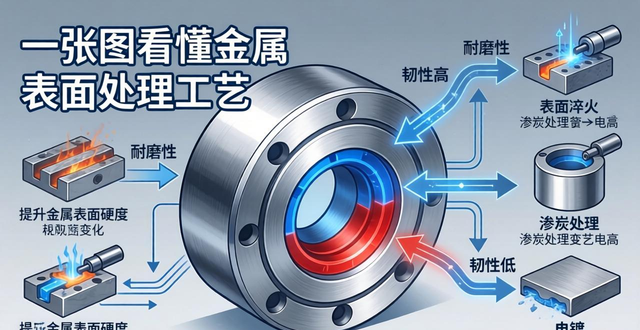
The surface hardness of the workpiece is increased, the wear resistance is improved, and the fatigue strength is increased while maintaining good toughness in the heart.
Improve the surface hardness, wear resistance and fatigue strength of the workpiece, and improve corrosion resistance.
material
Low carbon steel containing 0.1-0.25%C. High carbon reduces the toughness of the heart.
It is a medium carbon steel containing Cr, Mo, Al, Ti and V.
Common methods
Gas carburisation, solid carburisation, vacuum carburisation
Gas Nitriding, Ion Nitriding
temp
900 to 950°C
500 to 570°C
Surface Thickness
Generally 0.5 to 2mm
Not more than 0.6~0.7mm
vantage
-
The temperature is in a lower state, the hardness shows a higher situation, wear resistance also shows more excellent, fatigue resistance is also higher, corrosion resistance has a better situation, do not need to carry out heat treatment again, can avoid the deformation and other defects brought about by heat treatment.
drawbacks
-
Complex process, high cost, thin nitride layer
use
Such mechanical parts, like gears, shafts, camshafts, etc., are widely used in aircraft, automobiles, and tractors.
Some parts need to meet the requirements for wear resistance and high precision, while others need to have heat, wear and corrosion resistance. There are also parts that are resistant to heat, wear and corrosion, such as small shafts for instruments, light-duty gears, and important crankshafts.
III. Surface deformation strengthening
Surface deformation strengthening
A surface strengthening process that involves plastic deformation of a steel part at room temperature to increase the surface hardness and create a favourable distribution of residual compressive stresses is known as surface deformation strengthening. This process is simple and inexpensive, and is an important process for improving the fatigue resistance and extending the service life of steel parts.
shot peening
To the surface of the parts spraying a large number of high-speed movement of the projectile, this behaviour is like a myriad of small hammers hammering the metal surface, through this way, can make the surface layer and the sub-surface layer of the parts to produce a certain amount of plastic deformation, and thus achieve the reinforcement, which is the shot peening technology.
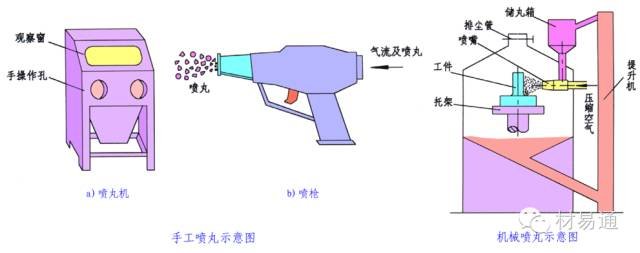
Application: Parts with more complex shapes, after grinding, plating and other processes.
rolling
The use of free-rotating hardened steel rollers, the processed surface of the steel parts to be rolled, so that it produces plastic deformation, the surface of the steel parts of the rough peaks flattened, the formation of a favourable residual compressive stress, which improves the wear resistance of the workpiece, as well as fatigue resistance.
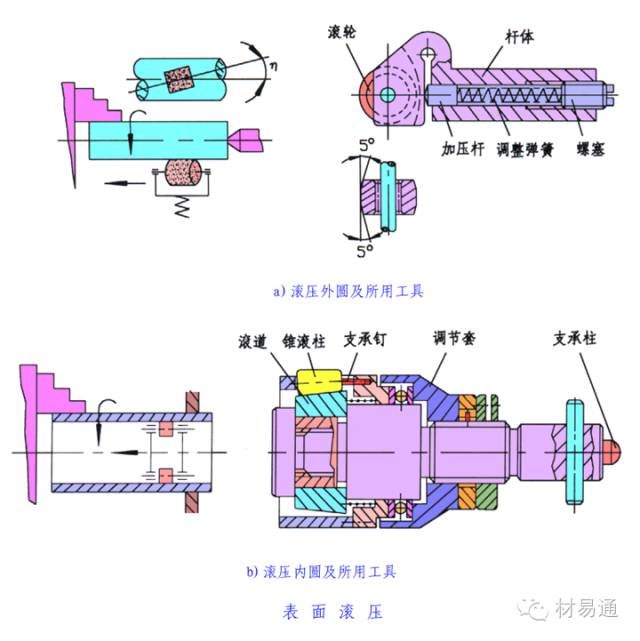
Applications: Cylindrical surfaces, conical surfaces, flat surfaces and other parts with relatively simple shapes
Surface polishing (squeezing or extruding)
The operation of squeezing a steel ball, slightly larger in diameter than the bore, or other shaped expanding tool, through the machined bore of a workpiece at room temperature to obtain an accurate, polished, and enhanced surface is called surface expansion.
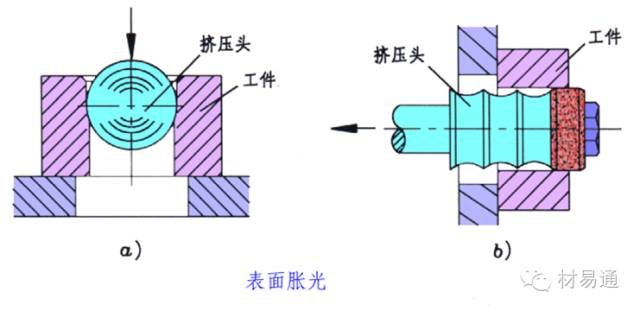
IV. Surface Cladding Reinforcement
Surface Cladding Reinforcement
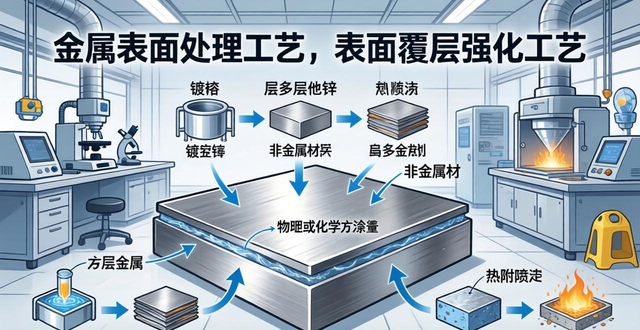
One type of surface strengthening process is called surface cladding, which involves physically or chemically coating the surface of a metal with one or more layers of other metals or non-metals.
Purpose: To improve the wear resistance, corrosion resistance, heat resistance or surface decoration of steel parts.
Metal spraying technology
There is such a process, it is to heat the metal powder, heated to a molten or semi-molten state, and then, using a high-pressure airflow, so that it is atomised, and then sprayed on the surface of the workpiece to form a coating, which is known as thermal spraying process.
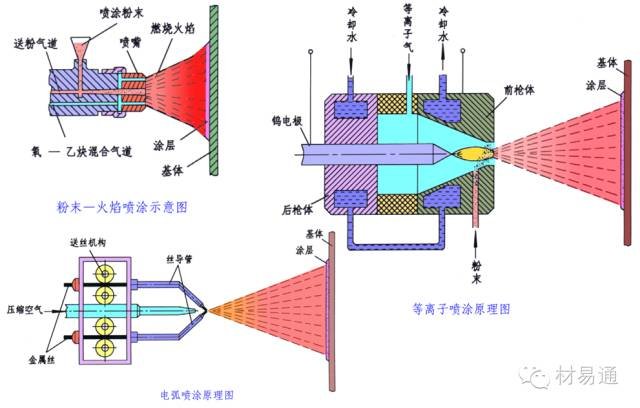
Wear resistance, corrosion resistance, heat resistance and insulating properties of materials can be improved with the help of thermal spray technology.
It is used in a wide range of fields, including aerospace and atomic energy, as well as in cutting-edge technologies such as electronics, and in virtually all areas.
metal plating
The surface of the base material is coated with a metal layer, or with multiple layers of metal plating, which significantly improves wear resistance, corrosion resistance, heat resistance, or other special properties. There is a method of electroplating, a method of chemical plating, a method of composite plating, a method of penetration plating, a method of hot-dip plating, a method of vacuum evaporation plating, a method of spray plating, a method of ion plating, and a method of sputtering.
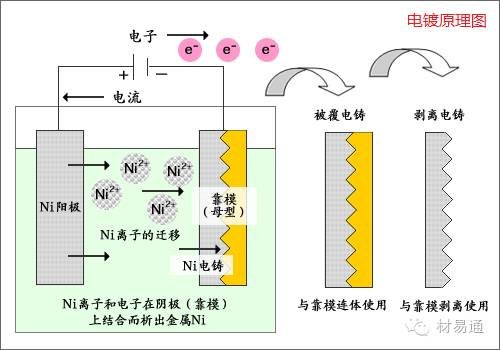
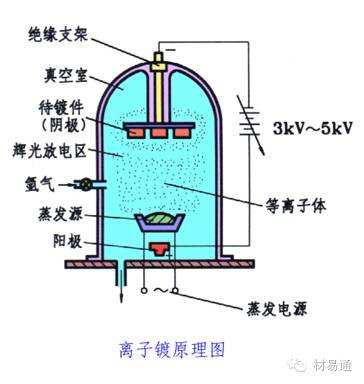
Metal Carbide Cladding ~ Vapour Deposition Method
Vapour phase deposition is a new type of coating technology that involves the physical or chemical deposition of vapour-phase substances containing deposition elements onto the surface of a material to form a thin film.
Depending on the principle of the deposition process, the vapour deposition technology can be divided into two categories: physical vapour deposition (PVD) and chemical vapour deposition (CVD).
Physical Vapour Deposition (PVD)
The technique of physically transforming materials into atoms or molecules or ionising them into ions under vacuum and depositing a thin film on the surface of the material by a gas-phase process is called physical vapour-phase deposition.
Physical deposition techniques mainly include three basic methods: vacuum evaporation plating, sputter plating, and ion plating.
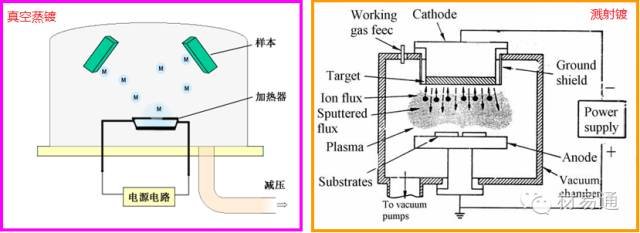
Physical vapour deposition has a wide range of applicable substrate materials, membrane layer materials are also extremely wide range of characteristics, its process is simple, save materials, there is no contamination, the film layer obtained, the film base adhesion is very strong, the thickness of the film layer is uniform, the texture is dense, the number of pinholes and other advantages.
Used in the mechanical field to prepare wear-resistant films, used in the aerospace field to prepare corrosion-resistant films, used in the electronics field to prepare heat-resistant films, used in the optical field to prepare electrically conductive films, used in the light industry and other fields to prepare insulating films, to prepare optical films, to prepare magnetic films, to prepare piezoelectric films, to prepare lubricating films, to prepare superconducting films.
Chemical Vapour Deposition (CVD)
Chemical vapour deposition is a method in which a mixture of gases interacts with the surface of a substrate at a certain temperature to form a thin film of a metal or compound on the surface of the substrate.
The chemical vapour deposition film has a fair wear resistance, corrosion resistance, heat resistance and special properties such as electrical and optical properties, which have been widely used in the field of machinery manufacturing, aerospace, transport and coal chemical industry, because, for some reason, it has been widely used in the field of machinery manufacturing, aerospace, transport and coal chemical industry, because, for some reason, it has been widely used in the field of machinery manufacturing, aerospace, transport and coal chemical industry.
V. Surface cleaning and decoration
burnish
Polishing is a finishing process for the surface of the part, usually only a smooth surface can be obtained, and can neither improve nor even maintain the original machining accuracy, with the difference in pre-machining conditions, the Ra value after polishing can reach 1.6 to 0.008 mm.
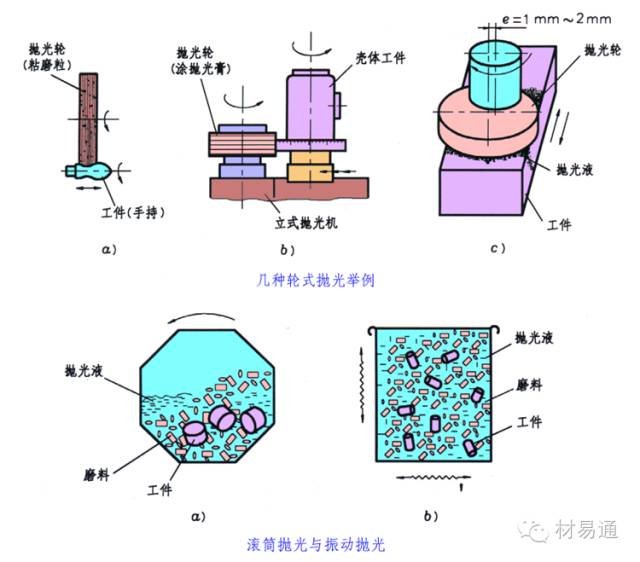
mechanically polished
Includes wheel polishing, drum polishing and vibratory polishing.
chemically polished
Take a metal part and immerse it in a special chemical solution to polish the surface of the part by taking advantage of the fact that the raised parts of the metal surface dissolve faster than the depressed parts.
electrochemical polishing
Electrochemical polishing is similar to chemical polishing, the difference is that it is also necessary to pass direct current, the workpiece should be connected to the anode, the anode will be generated to dissolve, it is also with the help of the raised parts of the surface of the metal faster than the depression of the parts of the dissolution of this phenomenon to carry out the polishing operation.
livery (on airline or company vehicle)
Painting process
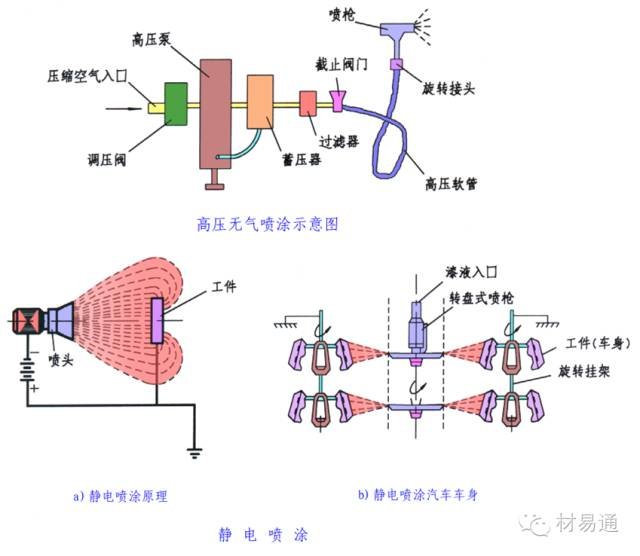
In the coating process, there are some common types, including organic brush coating, automatic dip coating, and hand spraying, where the so-called hand spraying and high-pressure airless spraying kind of way included, in addition to spraying, curtain spraying, fluidised bed coating, roller coating, electrostatic spraying and so on.
 Chinese
  Japanese
  English
  German
  Finnish
Leave a Reply
You must be logged in to post a comment.