
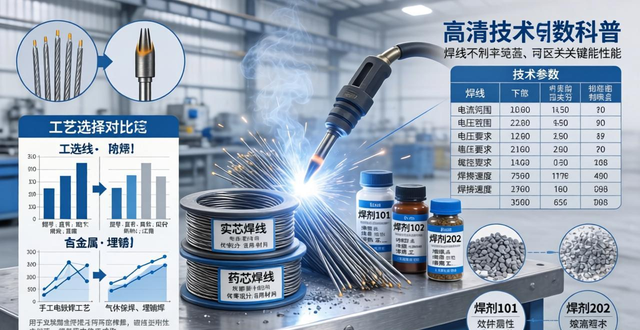
Modern industry is widely used in the important material is stainless steel, in this situation its welding processing technology is particularly important. Different application scenarios and needs, applicable welding process is not the same, choose the right welding method, not only can improve work efficiency, but also to ensure the quality of welding. Lion Machinery Manufacturing (Wuxi) Co., Ltd. will introduce five common stainless steel welding process in detail, using this way to help you know which process is more suitable for your needs.
I. Manual arc welding (MMA)
Manual arc welding, also called MMA welding by some people, is a way of carrying out welding with the help of a hand-operated arc welding electrode. It corresponds to various styles of stainless steel workpieces and has the advantage of easy equipment and flexible operation. During welding, an electric arc is generated between the electrode and the workpiece, which locally heats the electrode and the workpiece to a molten state, forming a molten pool. Following the movement of the arc, the liquid metal in the molten pool gradually cools and crystallises, thus forming a weld.
**Merit**:
- Smaller heat-affected zones make it easier to ensure weld quality.
- The equipment is simple, flexible in operation and can adapt to different welding positions and plate thicknesses.
**Disadvantages**:
- Lower productivity and higher skill requirements for welders.
- Poor labour conditions and the possibility of harmful gases and spatters during the welding process.
**Application Scenarios**:
- It is suitable for stainless steel workpieces that require high welding quality but are not produced in large batches.
- Particularly suitable for welding thin plates and small workpieces.
Two,tig welding(TIG welding)
Argon arc welding, also known as TIG welding, is the arc welding method, with inert gases as a protective gas, like argon is, in the welding, argon from the torch nozzle spray, in the arc around the formation of inert gas protective layer, to avoid oxygen, nitrogen, etc. in the air to the weld to bring oxidation and nitrogenation, the electrode produces an arc so that the weldment and filler metal melting, so that they merge a piece of the formation of the weld.
**Merit**:
- Good protection, the alloying elements are not easily damaged, and the weld is beautifully shaped.
- High welding quality, good heat resistance and mechanical properties of the welded joints.
- Suitable for stainless steel workpieces of various thicknesses, especially suitable for thin plate welding.
**Disadvantages**:
- The process is cumbersome and costly.
- The depth of fusion is shallow, the melting speed is slow, and the production efficiency is relatively low.
**Application Scenarios**:
They are suitable for workpieces made of stainless steel where the quality of the weld seam is of the utmost importance, such as piping in the chemical industry and in food processing facilities.
- Particularly suitable for applications where high precision welding is required, such as pipe fittings in the aerospace sector.
III. Gas-shielded welding (MIG/MAG welding)
Shielded gas welding, which covers fusion electrode gas shielding, or MIG welding, and tungsten inert gas shielding, or MAG welding, is a method of welding in which the quality of the weld is enhanced by the use of gases to isolate the air. When welding, inert gases or gas mixtures are used as a protective ring that covers the weld area and prevents the weld from being oxidised.
**Merit**:
- Fast welding speed and high productivity.
- Consistent welding quality and relatively low cost.
- Suitable for stainless steel workpieces of various thicknesses, especially suitable for welding of medium and thick plates.
**Disadvantages**:
- The control of the melting pool is more difficult and requires a high level of operational skill.
- High requirements on the purity and flow rate of the protective gas.
**Application Scenarios**:
It is used for the production of a large number of workpieces made of stainless steel, such as in the field of automotive manufacturing, machine building and other industries.
It is particularly suitable for applications where there is a need for efficient welding, as in the case of pipe welding in large steel structures.
IV. Submerged arc welding
A method of welding by burning an arc under the flux layer is submerged arc welding, when welding, granular flux covers the surface of the weldment, the arc burns under the flux layer, which melts the weldment and the wire, and because the flux has a protective effect, the weld is of good quality, while at the same time, the welding current is relatively large, and the welding efficiency is very high.
**Merit**:
- Good weld quality and excellent mechanical properties.
- Fast welding speed and high productivity.
- Suitable for stainless steel workpieces of various thicknesses, especially suitable for welding thick-walled welded pipes.
**Disadvantages**:

- Higher requirements for wire and flux selection.
The welding position is limited to flat welding only and there is no way to directly observe the position of the arc in relation to the bevel.
**Application Scenarios**:
- Suitable for welding of large stainless steel structural parts, such as pressure vessels and pipelines.
Especially suitable for those with high quality welds, such as oil pipelines, and natural gas pipelines, for this kind of words and so on.
V. Laser welding
Laser welding is a method of welding by means of the high energy density of the laser beam. During the welding process, the laser beam is directed onto the surface of the weldment, causing the material to melt or vaporise instantaneously, while at the same time, an auxiliary gas is used to blow the melted or vaporised material away, thus achieving a weld.
**Merit**:
- High welding precision and speed.
- Welded seams are of superior quality, with a flat and beautiful appearance, free of porosity and other defects.
- Small heat-affected area and low degree of deformation.
**Disadvantages**:
- Expensive equipment with stringent requirements for workpiece preparation and positioning.
- The operation is technically demanding and requires specialised personnel for operation and maintenance.
**Application Scenarios**:
- Suitable for welding stainless steel workpieces with high precision and complex shapes.
It is particularly well suited for applications such as tube welding in the aerospace sector, where high demands are placed on productivity and high quality welds are also required.
reach a verdict
To ensure the quality of welding and improve production efficiency, the choice of appropriate stainless steel welding process is extremely critical. Manual arc welding, suitable for small quantities, with high quality requirements of the workpiece. Argon arc welding, suitable for high-precision, thin plate welding. Gas shielded welding, suitable for mass production, and has high requirements for the efficiency of the occasion. Submerged arc welding, suitable for thick-walled welded pipes and large structural parts welding. Laser welding, suitable for high-precision, complex shape of the workpiece welding.
For practical applications, the material of the workpiece should be taken into account, the size factor should not be omitted, the shape factor should also be taken into account, and the production requirements should not be ignored. At the same time, the welding procedure must be strictly adhered to, the safety regulations must also be followed, in order to ensure that the welding quality and production safety can be realised. With the help of reasonable selection of welding technology, with strict control of the welding process, can significantly improve the quality of stainless steel welding process, and enhance its efficiency.
 Chinese
  Japanese
  English
  German
  Finnish
Leave a Reply
You must be logged in to post a comment.