
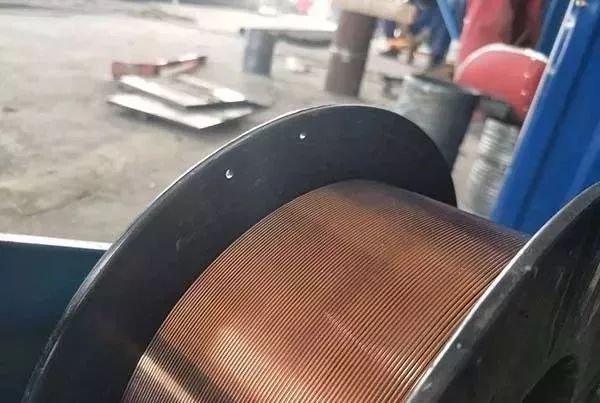
cemented carbide weldingPerforming single-sided welding to achieve a double-sided finish is a rather challenging task; during the welding process, the correct setting of the welding current will affect the finalWelding qualityThis has an impact; the correct setting of the welding voltage will also affect the final cooking results.

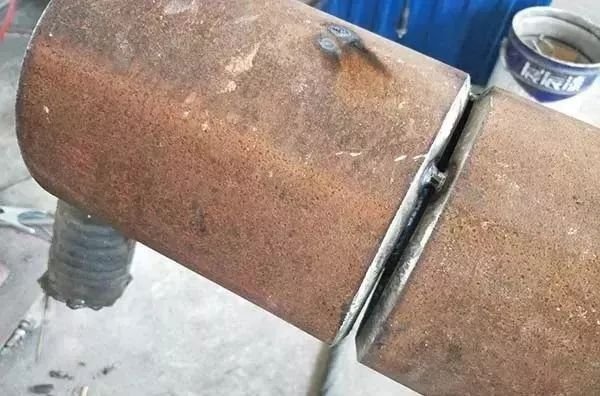
Gap of 3–4 mm
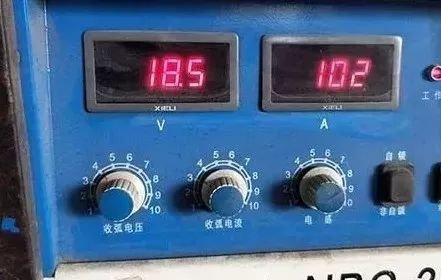
Current and voltage
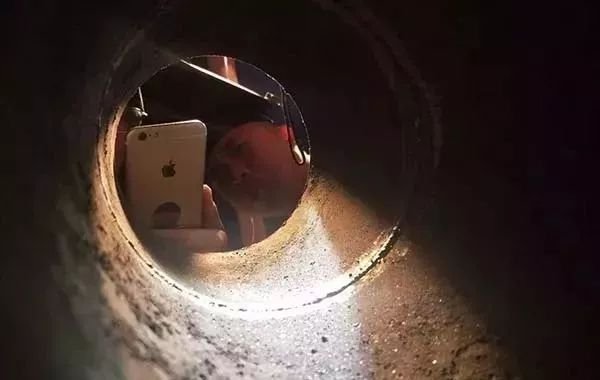
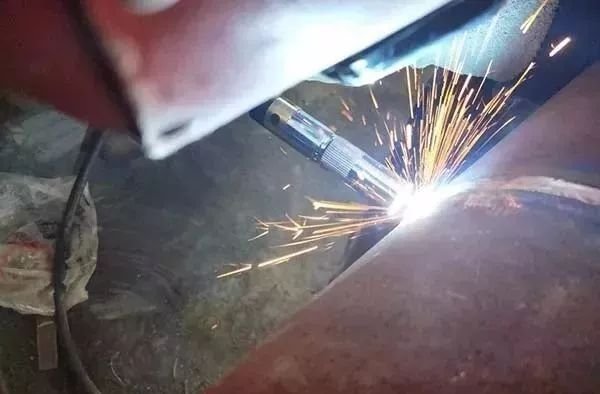
Hands-on on-site welding
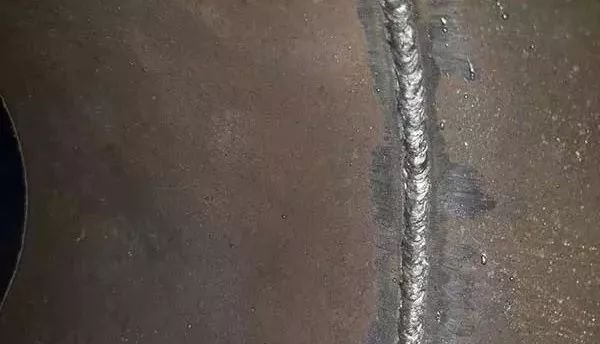
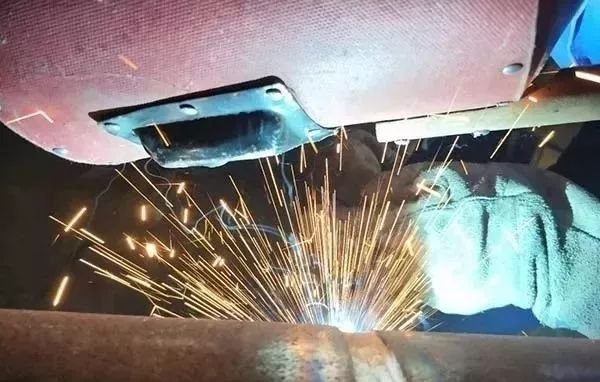
If the welding current is high, this can improve production efficiency and increase penetration depth; however, it is more likely to cause undercut, and may also lead to burn-through, resulting in increased distortion of the workpiece and greater spatter, as well as a higher tendency for porosity. When performing vertical welding, the molten pool is difficult to control, making the formation of weld spatter more likely.
If the welding current is too low, this can cause the arc to become unstable, thereby reducing the depth of penetration, which in turn makes it easy for defects such as lack of fusion and poor fusion to occur.
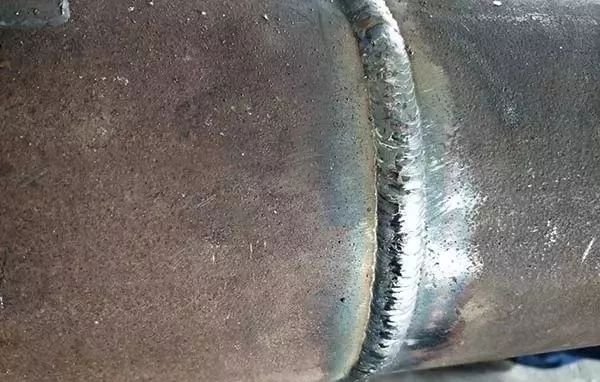
The appropriate welding current must be selected based on a comprehensive assessment of factors such as the thickness of the plate, the type of joint, the welding position, the type of welding wire and the wire diameter. This is how it should be approached.
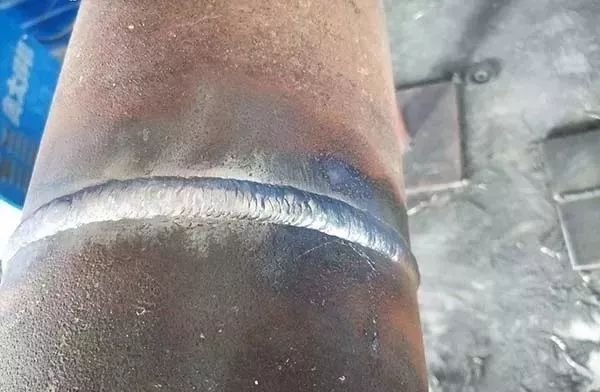
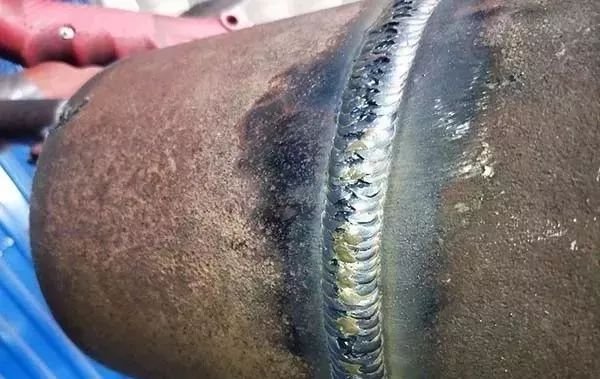
The effect of welding speed on weld quality is also particularly significant.
If the welding speed is too high, the temperature of the molten pool will fail to reach the required level, which can easily lead to a range of defects such as lack of penetration, lack of fusion and poor weld bead formation.
If the welding speed is too slow, this will result in the high-temperature period being prolonged, thereby increasing the width of the heat-affected zone. It will also cause grain coarsening in the weld joint, leading to a deterioration in mechanical properties, and will increase the amount of distortion in the workpiece, which is highly undesirable for the weld.
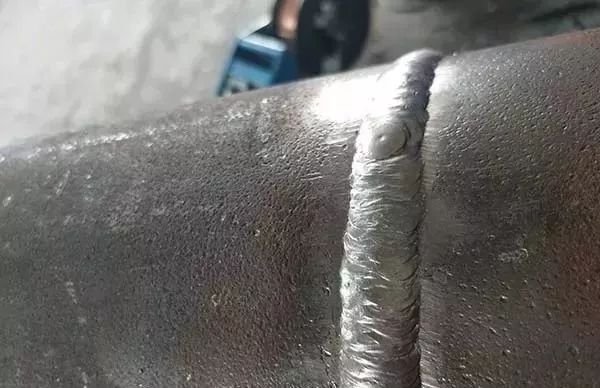
The choice of the number of weld passes also has a certain impact on the quality of the weld.
When performing multi-pass welding on low-carbon steel and low-alloy steel of lower strength grades, if the thickness of each pass is excessive, this will have an adverse effect on the ductility of the weld metal, which is primarily manifested in cold bending.
In the case of gas-shielded arc welding, if the thickness of each weld pass is too great, the welding process becomes difficult to control, spatter increases, and metal fusion is poor. However, the thickness of each pass must not be too small either, otherwise it will result in poor fusion on both sides of the weld, won’t it?
It is generally recommended that each layer be 3–5 mm thick.
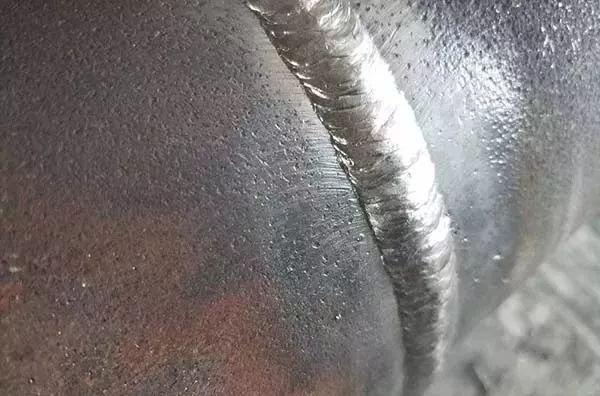
The wire stick-out refers to the distance the welding wire extends from the nozzle to the workpiece.
During the welding process, as the length of the wire protruding from the torch increases, the resistance of the preheated wire rises sharply and the melting rate of the wire accelerates, thereby increasing the welding speed.
If the wire stick-out is too long, the wire will overheat and melt in sections; this will result in an unstable welding process and increased spatter. Furthermore, the weld bead formation will deteriorate, whilst the protective effect of the shielding gas on the molten pool will also be reduced.
Conversely, the welding current increases, short circuits occur more frequently, and the distance between the nozzle and the workpiece is constantly reduced, causing spatter to clog the nozzle. This obstructs the flow of the shielding gas, ultimately leading to the formation of porosity.
Experience has shown that a wire stick-out length of approximately 10 times the wire diameter is most suitable.
The flow rate of CO₂ gas has a direct impact on the effectiveness of the molten pool protection.
If the welding current is high, the welding speed is fast and the wire stick-out is long, the corresponding gas flow rate will also be high. Conversely, the gas flow rate will be lower.
If there is air movement in the surrounding environment, the gas flow rate should be increased. If the effects of the air movement become significant, welding operations should be suspended.
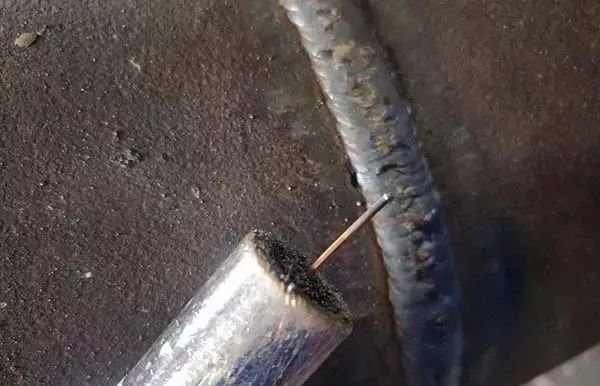
If the volume of the molten pool is too large, it becomes difficult to control when welding on one side to achieve a double-sided bead. When welding in the overhead position, the bead is prone to caving in, making it impossible to form a convex profile; in the horizontal position, it is prone to sagging; and in the vertical position, it is prone to forming weld spatter.
A melt hole size within a range of 0.5 to 1 millimetre on either side of the fusion groove is considered suitable; if it is too large, it is difficult to handle and prone to forming weld spatter, whilst if it is too small, proper formation on the reverse side cannot be guaranteed.
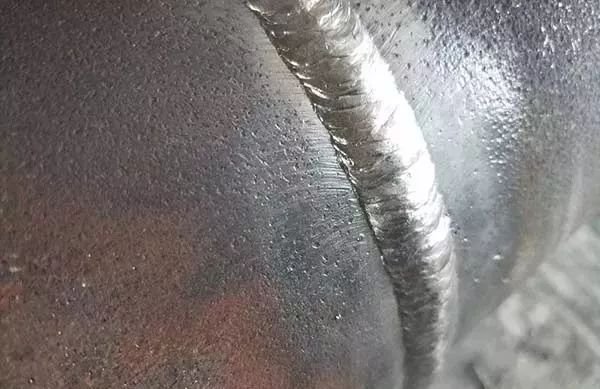
The width of the back side of the weld and the weld bead height are determined by the size of the molten pool; generally speaking, it is considered appropriate for the diameter of the molten pool to be 1 to 2 millimetres larger than the gap.
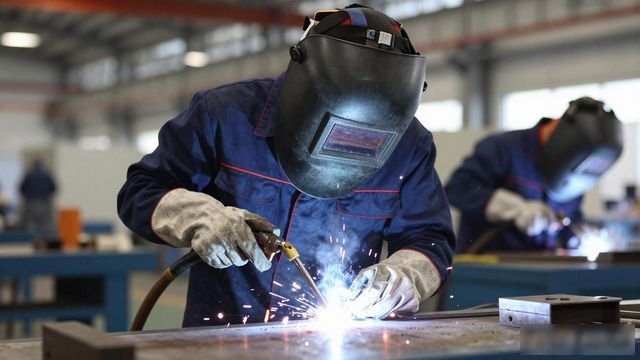
If, whilst welding, you notice that the crater is particularly large, this indicates that the temperature of the molten pool is too high. In this case, you should extinguish the arc quickly and allow it to remain extinguished for a slightly longer period to reduce the temperature of the molten pool, before resuming normal welding.
If the molten pool is too small, the welding speed must be reduced; only once a suitable molten pool has formed can normal welding proceed.
When performing the root pass during continuous arc welding with a second shielding gas, if the molten hole is too large, the welding torch should be swung towards a position behind the molten hole to reduce the temperature at the leading edge of the molten pool; if the molten hole is too small, the procedure is the opposite.
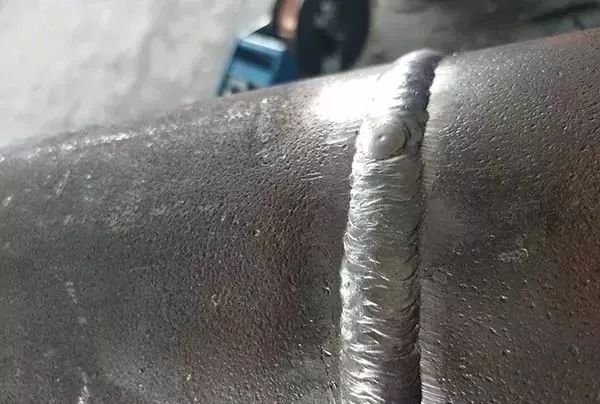
Filling layer
Before welding, remove any spatter and slag from the base weld layer and grind down any uneven areas.
When performing the fill pass, the lateral oscillation of the welding torch should be slightly greater than during the root pass. At the same time, as the torch moves from one side of the groove to the other, the speed should be increased slightly to prevent the weld bead from becoming convex.
The arc will linger for a short while at the two grooved sections to ensure sufficient penetration, whilst keeping the weld bead flat and slightly concave.
During the filling pass, the weld bead is approximately 1.5 to 2 millimetres lower than the base metal; this prevents the edges of the groove from melting, thereby ensuring that the groove remains clearly visible during the cover pass and laying a solid foundation for the final weld.
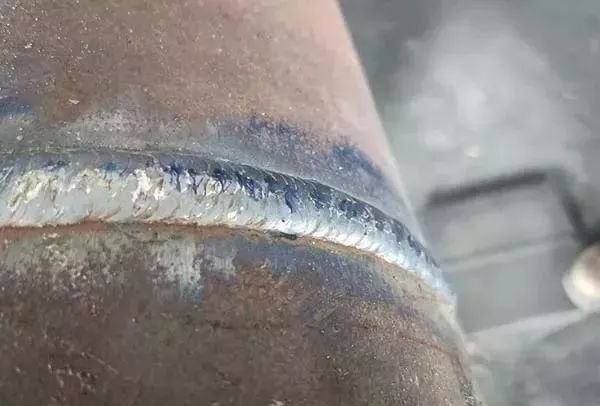
Top layer
Before welding, remove any spatter and slag produced during the build-up pass, and grind down any uneven areas. The oscillation of the welding torch is slightly greater than during the build-up pass.
When performing a sawtooth-shaped oscillation, ensure that the amplitude remains consistent, and move upwards or forwards at a constant speed. Observe the melting conditions on both sides of the groove to ensure that the edge of the molten pool extends beyond the edges of the groove on both sides, with the overhang not exceeding 2 millimetres, to prevent undercutting and spatter.
Control both the nozzle height and arc termination simultaneously to prevent arc pits, cracks and porosity.
Please note:
When performing single-sided welding with double-sided formation during the first pass, the weld bead formed at the end of the weld is relatively thick; in such cases, it is not advisable to proceed directly to the joint operation.
Therefore, before re-striking the arc at the joint, the weld metal at the end of the previous weld should be thinned down and ground to form a bevel; the arc should then be struck at the top of the bevel. Once the arc has been struck, move the arc evenly and smoothly towards the bottom of the bevel, whilst performing uniform oscillation.
 Chinese
  Japanese
  English
  German
  Finnish
Leave a Reply
You must be logged in to post a comment.