
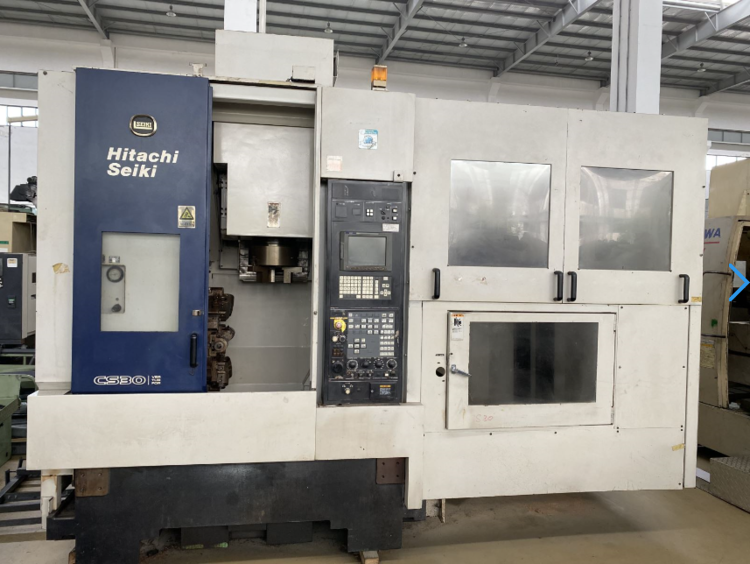
Against this backdrop, composite machining technology has emerged. Generally speaking, composite machining is a generic term describing a machining technique that enables different processes or distinct machining methods to be carried out on a single machine tool. Composite machining technology primarily manifests in two distinct forms: the first involves the integration of different machining methods based on energy or motion; the second is a composite model centred on the principle of process consolidation, with mechanical machining as the dominant process., Mill-Turn MachiningIt is one of the processing methods that has seen extremely rapid development in this field in recent years.

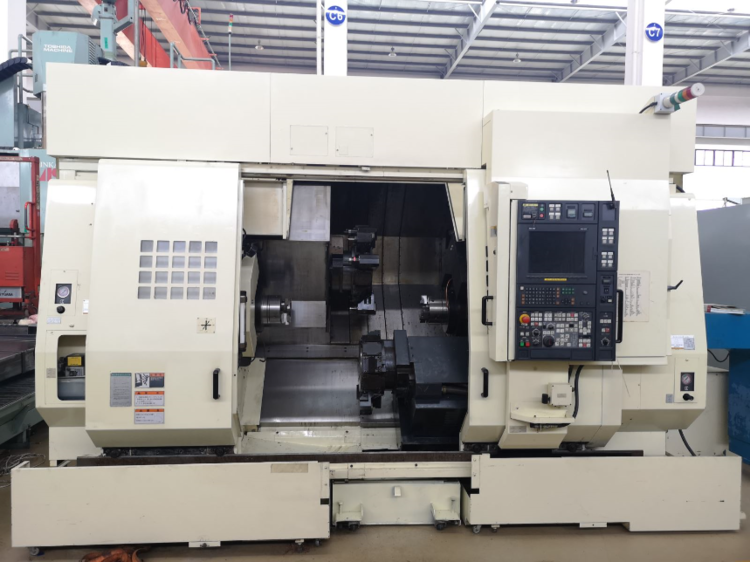
There is no clear international definition of a multi-tasking machine tool; the field is currently undergoing a process of innovation and development. Multi-tasking machining is also referred to as complete machining or multi-functional machining. In the early days, machining centres were referred to as multi-tasking machines; however, with the continuous development and advancement of multi-tasking technology, today’s multi-tasking machines differ fundamentally from those previously described. Multi-tasking machines are capable of performing multiple machining operations on a workpiece in a single set-up, thereby reducing machining time, machining accuracyThis has led to improved performance, making it popular with users. CNC turning-milling centres are a major type of multi-function machine tool; they typically perform face milling on a CNC lathe, drilling and tapping, and slot milling, whilst also performing other milling operations. They combine turning, milling and boring functions, enabling the ‘single-setup, complete-processing’ concept to be realised.
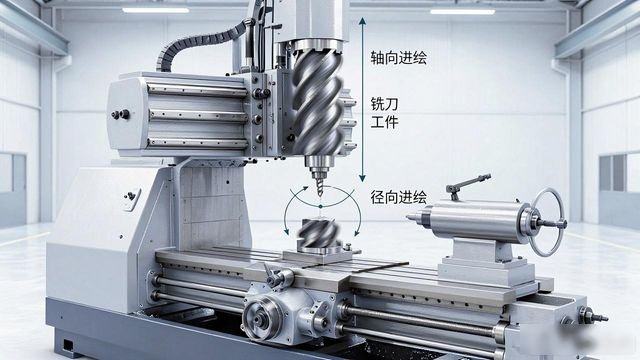
In turning-milling composite machining centres, there are four fundamental movements: the rotation of the milling cutter, the rotation of the workpiece, the axial feed of the milling cutter, and the radial feed. Depending on the relative position of the workpiece’s axis of rotation to that of the cutting tool, turning-milling operations can be broadly categorised into axial turning-milling, orthogonal turning-milling and general turning-milling. Of these, axial turning and milling and orthogonal turning and milling are two widely applied turning and milling methods. In axial turning and milling, as the rotational axes of the milling cutter and the workpiece are parallel to each other, it is capable of machining not only external cylindrical surfaces but also internal bore surfaces. In orthogonal turning and milling, the milling cutter is perpendicular to the workpiece’s axis of rotation; consequently, it is unable to machine internal bores when the bore diameter is relatively small. However, when machining external cylindrical surfaces, as there are no restrictions on the longitudinal travel of the milling cutter and larger longitudinal feeds can be employed, efficiency is relatively high during this process.
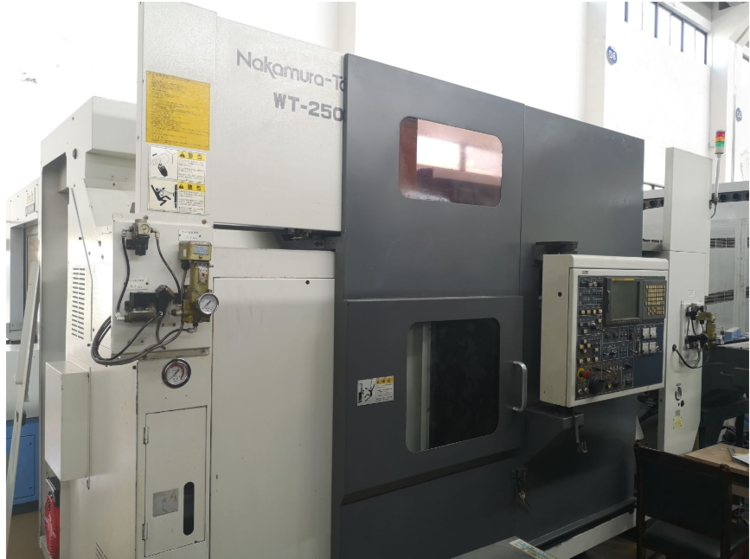
Reducing the number of clamping operations improves machining accuracy, as fewer clamping operations prevent the accumulation of errors caused by changes in the positioning reference. At the same time, most turning-milling combination machines are equipped with in-process inspection capabilities, enabling the on-the-spot monitoring of key manufacturing data and precision control, thereby enhancing the machining accuracy of the product. The high-strength, monobloc bed design enhances the machine’s heavy-duty machining capabilities for difficult-to-machine materials. Equipped with an automatic feeding system, the machine enables continuous, uninterrupted loading, effectively achieving assembly line operations with a single machine.
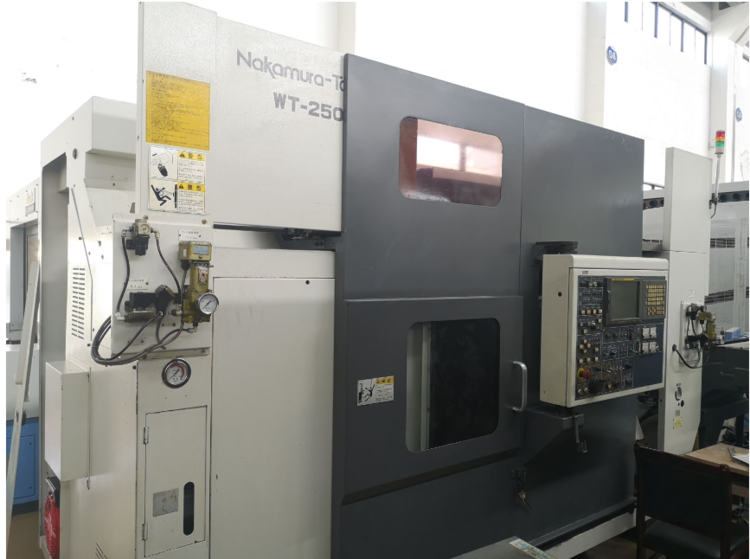
By reducing the footprint and lowering production costs, its compact and aesthetically pleasing design optimises space utilisation and facilitates maintenance and repairs, ensuring the utmost customer satisfaction; Although the unit price of turning-milling composite machining equipment is relatively high, the shortening of the manufacturing process chain, the reduction in the number of machines required per product, and the decrease in the number of tooling fixtures, workshop floor space and equipment maintenance costs effectively lower overall fixed asset investment, production operating costs and management costs.
With the rapid development of social production, scientific and technological progress has also accelerated. Mechanical products have become increasingly sophisticated and complex, and there is a constant need for design modifications. This is particularly true in sectors such as aerospace, shipbuilding and the defence industry, where mechanical components are required to meet exceptionally high precision standards, feature highly complex geometries, and are produced in small batches. When machining such mechanical components, it is often necessary to modify or adjust the equipment; conventional machine tools are unable to cope with this, whereas thoseautomaticHowever, conventional machine tools are unable to meet these requirements. To address these issues, a new type of machine tool has emerged, namelyCNC machine tools. This new type of machine tool offers numerous advantages, such as high adaptability, high machining accuracy and consistent machining quality, as well as benefits in terms of production. It integrates technological achievements from the fields of computer science, automatic control, servo drives, precision measurement, and innovative mechanical structures, among others; it represents the future direction of CNC machine tool development.
 Chinese
  Japanese
  English
  German
  Finnish
Leave a Reply
You must be logged in to post a comment.