
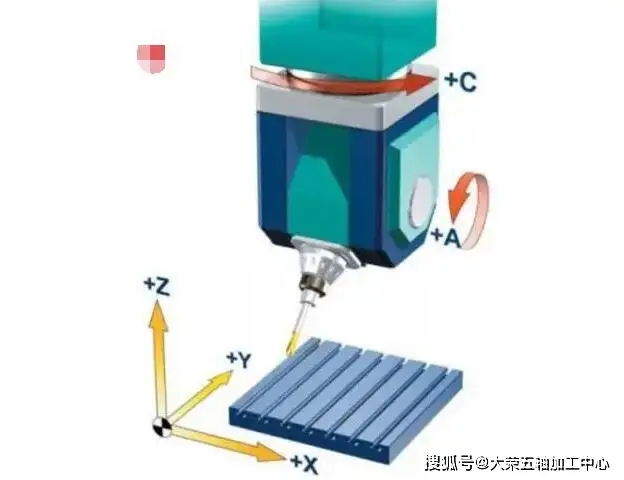
In the view of many people, it is generally believed that three-axis machining centres, compared to5-axis machining centre, the price is lower, and its machining accuracy is not as high as that of a five-axis machine; in fact, these are all views based on unfounded speculation, with no understanding of the actual production capabilities of the machine tool. In terms of actual manufacturing precision, three-axis machining centres are far superior to five-axis machining centres in many respects. After all, compared to five-axis machining centres, three-axis machines have only three linear axes—X, Y and Z—and their structure is simpler. When machining workpieces, the direction of the spindle remains fixed, their range of motion is more limited, and programming is relatively straightforward; However, at first glance, it features two additional rotary axes compared to a three-axis machine. In other words, in addition to the three linear axes (X, Y and Z), a five-axis machine incorporates two of the three rotary axes (A, B and C) that rotate around the X, Y and Z axes respectively.

Dual-swivel-head five-axis machining centre
When discussing the fundamental difference between three-axis and five-axis machining centres, the key distinction lies in their machining capabilities. A five-axis machining centre is capable of performing the machining processes of a three-axis machining centre; however, conversely, a three-axis machining centre cannot perform the machining processes of a five-axis machining centre. This demonstrates that the addition of two rotational axes in a five-axis machine grants it significantly greater machining capabilities. The advantages of five-axis machining centres are primarily centred on the following key points:
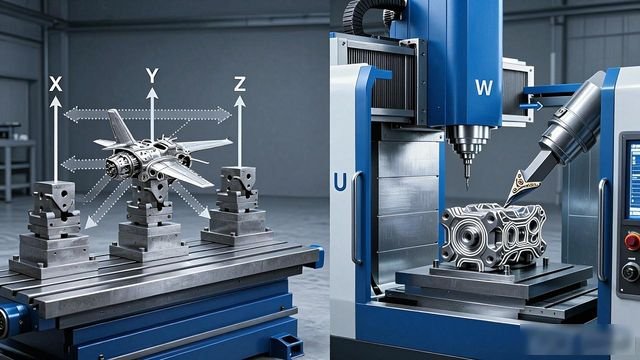
1. The cutting tool can approach the workpiece from any direction. This is because five-axis machine tools have two rotary axes, enabling the machining of all surfaces other than the mounting surface in a single set-up, thereby reducing the number of set-ups required. For machining operations that demand high efficiency and precision, reducing the number of set-ups offers dual benefits. On the one hand, it saves time, reduces the workload on operators and improvesprocessing efficiency; furthermore, it minimises errors and misalignments caused by clamping, thereby ensuring clamping accuracy.
2. Ensures that the cutting tool remains in optimal condition and improves cutting conditions: as a five-axis machining centre is used, the cutting tool can approach the workpiece from any direction, thereby enabling it to cut the workpiece at the most suitable angle. Similarly, both machining efficiency and quality are enhanced.
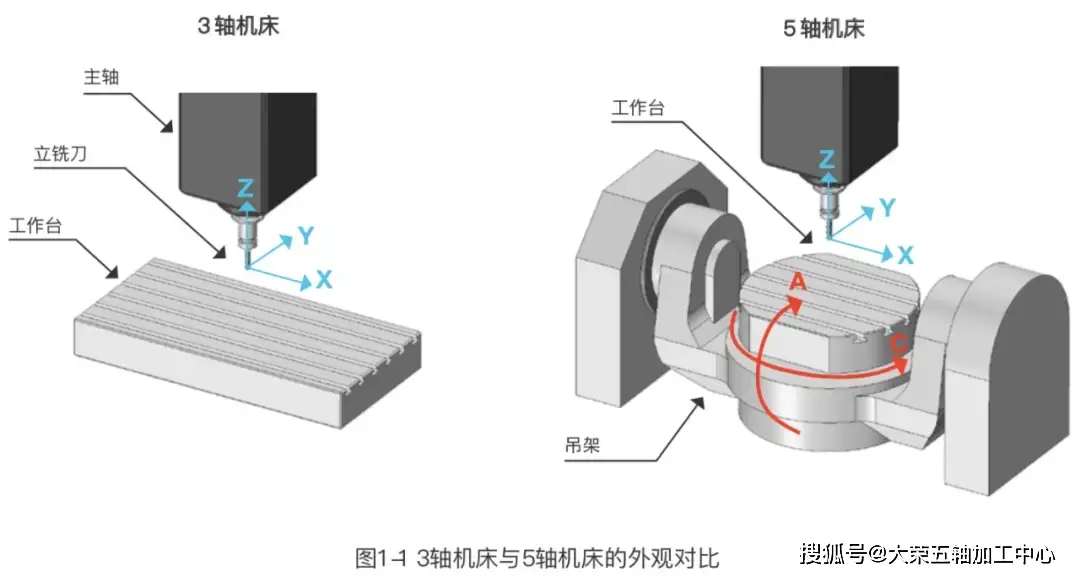
A Comparison of Three-Axis and Five-Axis Machining Centres
3. A five-axis machining centre features two rotary axes; as a result, the cutting tool can approach the workpiece from any direction, allowing for flexible and varied machining paths. This effectively prevents interference issues during the machining process.
4. Shorter development cycles: Five-axis machining centres offer great flexibility, thereby enabling more efficient production of machined parts, which in turn leads to improved quality and increased efficiency—a natural consequence of these advancements.
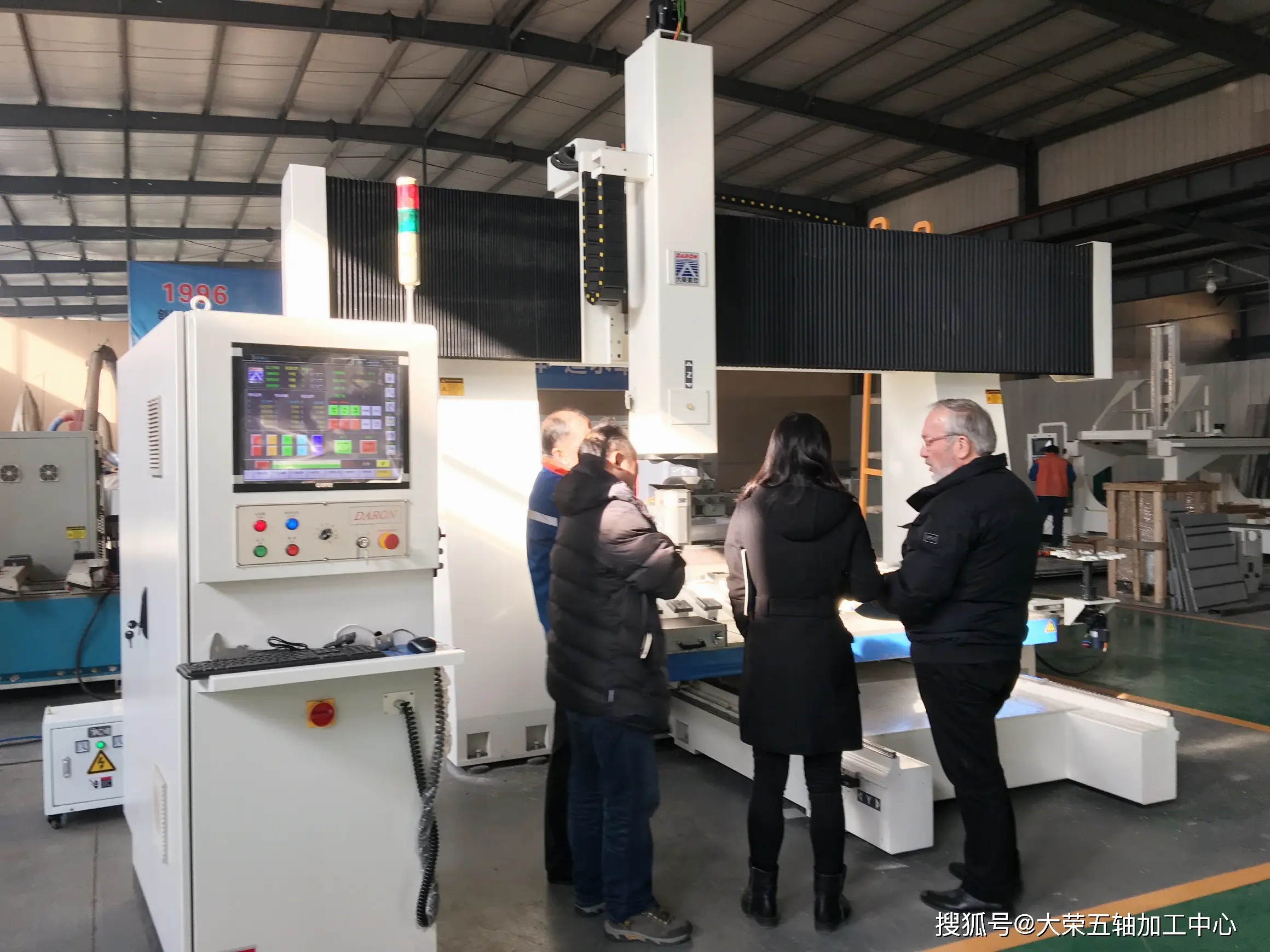
5-axis machining centre
The presence of rotary axes in DaRong’s five-axis machining centres enables the machine’s cutting tools to approach the workpiece from any direction, thereby offering a range of advantages that result in a significant improvement in both machining efficiency and quality. Among these, the RTCP function stands as a core technological feature of five-axis machining centres. It serves not only as the key technology distinguishing “true five-axis” from ‘pseudo-five-axis’ systems, but also as a crucial indicator of the technical standard of five-axis CNC machine tools. Some high-end CNC systems abroad, such as Fanuc, Fidia and NUM, already incorporate RTCP functionality; however, their core algorithms remain proprietary. In China, there are several CNC manufacturers, such as Huazhong, Guangshu, Kede and Darong CNC, which have now all achievedRTCP function.
 Chinese
  Japanese
  English
  German
  Finnish
Leave a Reply
You must be logged in to post a comment.