
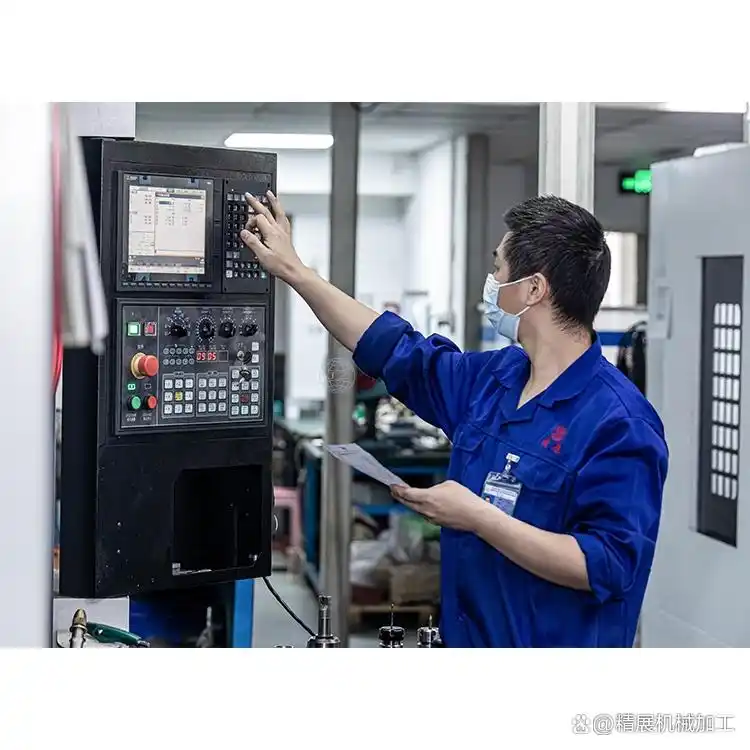
A method of machining using computer-controlled numerical control (NC) machine tools isCNC machiningThis refers to computer numerical control (CNC) machining, which is widely used in the manufacture of components across various industries. It utilises pre-programmed machining programmes to control machine tools to perform cutting operations along specified paths, thereby machining the workpiece. The following section will discuss CNC machining’sprocessLet me introduce it.

Firstly, carry out the design and draw up the manufacturing process
Before commencing CNC machining, the first step is to design the product and establish the machining process. During this process, the designer uses CAD (Computer-Aided Design) software to carry out the product design in accordance with the product’s requirements and functions. Subsequently, process engineers develop the machining process based on the product’s shape, materials and machining requirements; this involves selecting suitable cutting tools, cutting parameters and cutting paths, amongst other factors.
Secondly, write the machining programme
At the heart of CNC machining lies the machining programme, which encompasses the machine tool’s motion commands, cutting parameters and cutting paths, amongst other details. To write this machining programme, CAM (Computer-Aided Manufacturing) software is used to convert the product’s design files into a machining programme. When writing a machining programme, factors such as the material’s machinability and the rationality of the process must be taken into account to ensure the efficiency and quality of the machining process.
Next, proceed with machine tool set-up and tool clamping
Before commencing CNC machining, the workpiece must be mounted and clamped onto the machine tool, and a suitable cutting tool must be selected for the machining operation. This involves the process of machine tool clamping, which secures the workpiece to the machine tool; this must take into account the workpiece’s shape, dimensions and machining requirements. There is also the process of tool clamping, which involves mounting the cutting tool on the machine tool; it is essential to select the appropriate tool type and specifications, as well as to ensure it is fitted correctly. The accuracy and stability achieved through machine tool clamping and tool clamping have a significant impact on machining precision and efficiency; therefore, they must be carefully adjusted and inspected.
Next, carry out the machining operations
Once the workpiece has been clamped in place and the cutting tool has been fitted, CNC machining operations may commence. The operator inputs the prepared machining programme into the CNC machine tool controller; the machine then performs the cutting operation according to the paths and speeds specified in the programme, guided by the controller’s instructions. During the machining process, the operator must monitor the machining status and adjust the cutting parameters and cutting tools in a timely manner to ensure machining quality and efficiency.
Finally, carry out machining inspections and finishing operations
Following the completion of CNC machining, the workpiece must undergo inspection and finishing. Inspection is carried out using measuring instruments and equipment to check dimensions, shape and surface roughness, in order to verify that the workpiece meets the requirements. Finishing involves a range of processes, such as trimming, grinding or polishing, carried out on the workpiece with the aim of eliminating any machining defects that may be present and improving the workpiece’s precision and surface quality.
In summary, the CNC machining process comprises the following steps: design and formulation of the machining process, programming, machine tool and tool set-up, machining operations, as well as inspection and reworking. Each step requires precise execution and strict control to ensure the efficiency of the machining process and the quality of the workpieces.
Across various industries, the development of CNC machining has provided solutions for the high-precision, high-efficiency manufacture of components. Compared with traditional manual methods and conventional machining, CNC machining offers the following advantages:
1. High precision
In CNC machining, the precise control provided by CNC machine tools, combined with the high-speed rotation of the cutting tools, enables the production of high-precision parts, achieving machining accuracy at the sub-millimetre level or even finer, thereby meeting the requirements of complex parts.
2. High efficiency
CNC machining utilises computer programming and automated control to enable automatic, continuous machining, thereby significantly improving efficiency, reducing the time and workload required for manual operations, and boosting both production efficiency and output.
3. Flexibility
CNC machining allows for flexible processing tailored to different product needs and design requirements. To machine different parts, one simply needs to modify the machining programme and adjust the cutting tools; this avoids the complexity associated with traditional machining, where equipment changes are often required.
4. Repeatability
By writing machining programmes and implementing automated control, CNC machining is able to achieve precise cutting paths and machining parameters, thereby ensuring consistency and repeatability in the machining process. It is not dependent on the operator’s skill level or experience, and also reduces the impact of human factors on machining quality.
5. Versatility
CNC machining can perform a wide range of machining operations, such as milling, turning, drilling and tapping. A single CNC machine tool can carry out multiple machining tasks, thereby reducing capital expenditure and floor space requirements.
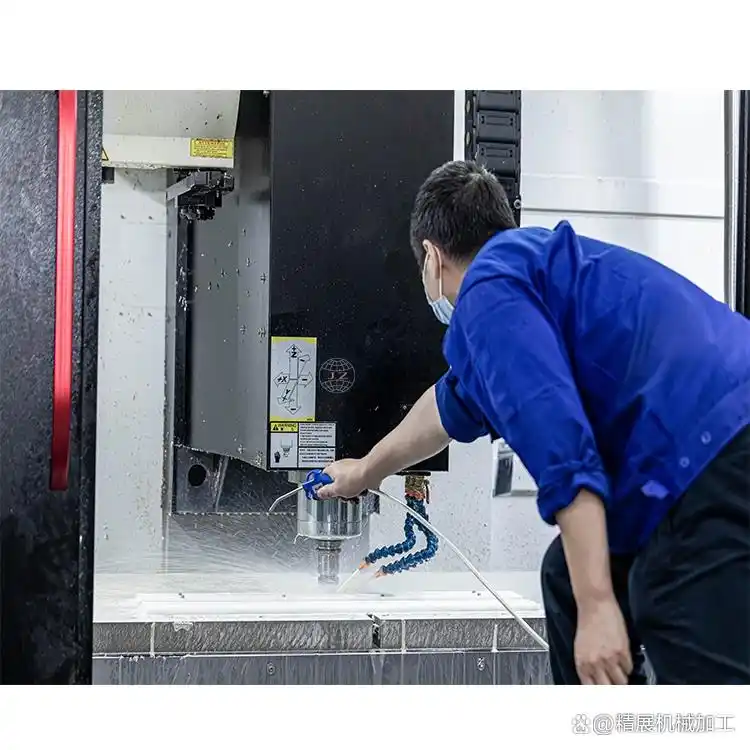
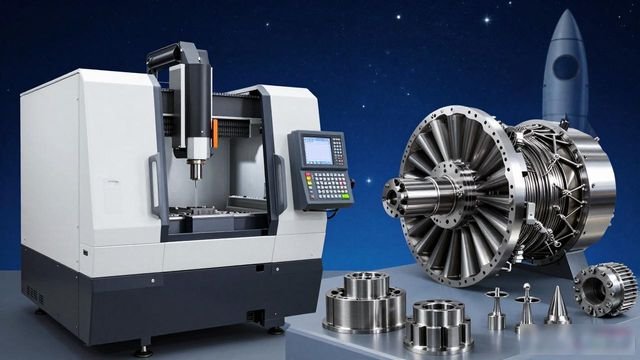
To summarise, CNC machining provides a highly efficient, high-precision, flexible, repeatable and versatile solution for parts manufacturing, and as such has found widespread application across various industries; For instance, it is utilised in sectors such as aerospace, the automotive industry, electronics, medical equipment and mould manufacturing, each of which has its own specific applications.
In the aerospace sector, CNC machining can produce complex-shaped aerospace components, such as turbine blades, engine parts and aerospace structural components. Given that CNC machining offers high precision and repeatability, it ensures that components meet the required quality and performance standards.
In the automotive manufacturing sector, CNC machining is used to produce components for car engines, chassis parts, and various bodywork components, amongst others. CNC machining enables parts to meet high standards of precision and strict requirements for consistency, thereby enhancing the overall performance and safety of the vehicle.
In the electronics sector, CNC machining can be used to manufacture electronic components, as well as printed circuit boards and enclosures, amongst other items. As CNC machining offers high efficiency and flexibility, it is able to meet the rapid development requirements of electronic products, as well as their production needs.
Within the field of medical equipment, CNC machining can be used to produce components for medical devices, manufacture artificial joints and produce dental equipment, amongst other things. The high precision and repeatability of CNC machining ensure the quality and safety of medical equipment.
Within the field of mould manufacturing, CNC machining can be used to produce a wide variety of mould types, such as injection moulds, die-casting moulds and stamping dies, to name but a few. Given the versatile nature of CNC machining, it is capable of producing complex mouldsHigh precision machining.
Overall, the development of computer numerical control (CNC) machining has provided various industries with solutions for manufacturing parts that are characterised by high efficiency, high precision and flexibility. By using computer programmes to control machine tools to achieve automated machining, it has significantly improved production efficiency and product quality.
One of the advantages of CNC machining is its high precision. As it is controlled by computer programmes, it is capable of extremely precise machining, thereby meeting micron-level accuracy requirements. This enables the precise machining of parts that demand the highest levels of accuracy, such as gears and threads; the precise fit of these components is of paramount importance, making high-precision machining essential.
Furthermore, CNC machining offers a high degree of flexibility; by changing different cutting tools and adjusting machining paths, it is possible to produce a wide variety of parts with complex shapes. Moreover, the production of different products can be achieved simply by modifying the programme, without the need to redesign or manufacture entirely new tooling.
CNC machining offers repeatability; once the correct machining programme and parameters have been set, the machine tool can operate continuously whilst maintaining consistent machining quality, without the need for manual intervention. This is of paramount importance for high-volume production, as it ensures that every part meets the specified dimensional standards and quality requirements.
In addition, CNC machining equipment is highly versatile; by selecting different cutting tools and machining methods, it can perform a wide range of machining operations, such as drilling, milling, cutting and turning, thereby meeting the diverse manufacturing requirements of various components. This has made CNC machining a widely used manufacturing process.
All in all, CNC machining is a solution for parts manufacturing that is characterised by high efficiency, precision, flexibility and reliability. As technology continues to evolve, CNC machining will play an increasingly important functional role across various related industries, thereby driving the progress and development of the manufacturing sector.
 Chinese
  Japanese
  English
  German
  Finnish
Leave a Reply
You must be logged in to post a comment.