
Nobel Platinum Smart Manufacturing, precision partsHow can we improve efficiency during mass production?production efficiencyas well as reducing costs. If you view mass production as a never-ending cycle of “divide and rule”, you’re certainly not alone in thinking that. Of course, machine operators, who are tasked with loading blanks, machining them and repeatedly unloading finished parts, may find changeovers to be a monotonous task—one that sometimes even seems never-ending.
However, the use of appropriate equipment for mass production or batch processing can save manufacturers money and free up machine operators. Furthermore, if carefully planned, a mass production strategy can facilitate unmanned production or lead to ‘manufacturing extinction’, which would further increase the cost savings achieved by manufacturers.
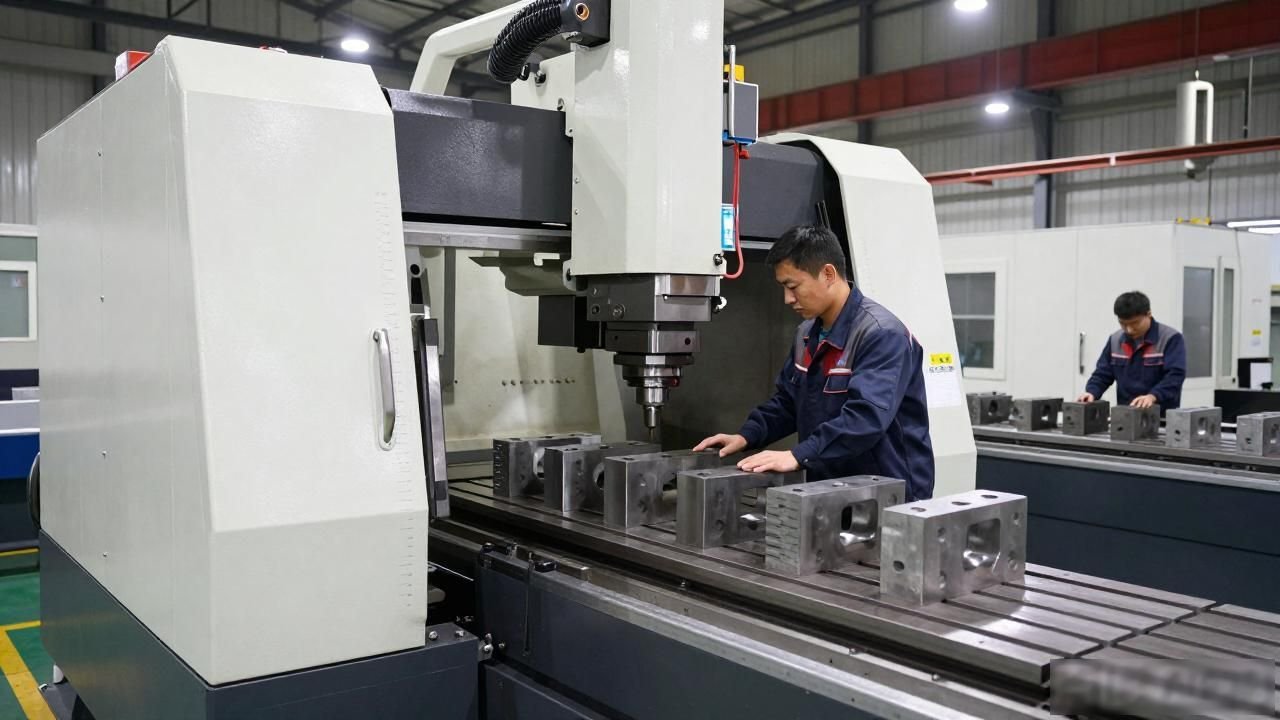
Use vacuum suction cups to secure the sheets in batches during processing.
Mass-producing “Ideals”

Some milling machines have very large beds, which are utilised to the full; this reduces the need for operator intervention, because these milling machines can accommodate several large “blanks” and produce an entire batch within a cycle time equivalent to the length of an operator’s shift. Consequently, an operator can load a batch onto the machine in the morning, then attend to other tasks during the day, whilst the automated machine works throughout the day to produce the required parts. Towards the end of the shift, the operator removes the completed batch, cleans the machine, and sets up another batch so that it can run unattended throughout the night.

So, when the operator returns to work the following morning, what they do is remove the batch produced by the machine overnight and then start another batch. This approach allows a single operator to realise the benefits of a two-shift system. This is precisely the principle behind “lights-out” production: the machines continue to run throughout the night after everyone has gone home. Of course, this scenario reflects the “ideal” state of batch processing; the reason for this is that it allows the machine to operate unattended for most of the working day and throughout the night. This may not be suitable for your specific machining application, but the closer you get to this ideal, the more efficient and cost-effective your machining operations will become – wouldn’t you agree?
It should be noted that achieving maximum efficiency or “ideal” conditions will increase the role of machinery in the process, whilst at the same time reducing the need for operator supervision. Consequently, manufacturers striving to achieve this ideal must utilise suitable machinery and identify alternative labour functions to fill the gap left by the reduced role of operators in production.
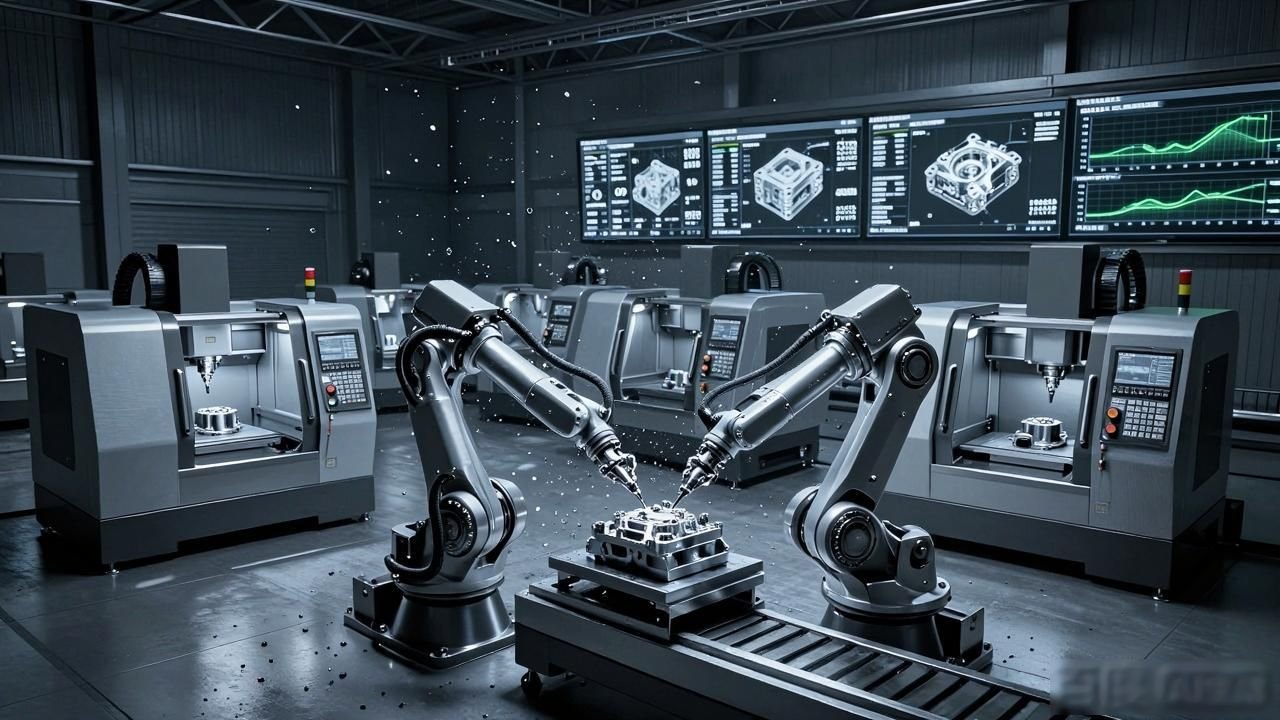
The Theory of Unmanned/Lights-Out Production
Assuming an 8-hour working day, with labour costs at approximately US$0.40 per minute and the cost of a single machine at approximately US$0.20 per minute, the total cost per minute would be US$0.60 if you assigned one operator to each machine. If a two-shift system is implemented, the cost per minute for the machine would be just US$0.10, whilst labour costs would remain at US$0.40 per minute. Although this represents a saving, it does not maximise the impact on the manufacturer’s bottom line… in fact, even greater savings are possible. During the second shift, by setting up a machine to operate without operator intervention, the reduction in labour costs brings the machine’s cost down to just US$0.05 per minute.
Even though labour costs are beyond the control of manufacturers, companies can still achieve significant cost savings through batch processing, whereas the production costs for an individual operator are twice as high, without any additional labour costs. This approach can be extended to “lights-out” production (unattended machining cycles), thereby further reducing machine costs. Any form of batch machining offers advantages over one-off production, representing a “set and forget” approach that maximises the cost-effectiveness and efficiency of machines designed for automation. Machining centres with large work areas (beds) offer potential for automation, providing a comprehensive solution for batch processing that has a direct and positive impact on manufacturers’ bottom line.
 Chinese
  Japanese
  English
  German
  Finnish
Leave a Reply
You must be logged in to post a comment.