
1. Causes of deformation
Put simply, during the welding process, the steel is heated and melts; due to thermal expansion and contraction, the steel undergoes uneven contraction as it cools, which in turn causes this phenomenon.
2.Welding distortionFactors influencing
There are numerous factors that can influence welding distortion; broadly speaking, these can be categorised into three main areas: materials, structure and process.
01
This is primarily due to the physical properties of the material itself, in particular the effects exerted by the material’s coefficient of thermal expansion, yield strength and modulus of elasticity. The greater the material’s coefficient of thermal expansion, the greater the amount of welding distortion; as the modulus of elasticity increases, welding distortion decreases; whereas a high yield strength results in higher residual stresses, leading to increased distortion. As the coefficient of thermal expansion of stainless steel is greater than that of carbon steel, for materials of the same thickness, stainless steel tends to exhibit greater welding distortion than carbon steel.
02
In the design of welded structures, the influence of welding distortion is of paramount importance; the general principle is that as the degree of restraint increases, residual welding stresses increase accordingly, whilst welding distortion decreases correspondingly.
03
3) Process factors
The primary factors influencing the process include the welding method, the heat input (i.e. current and voltage), the positioning or clamping of the components, the welding sequence, and the use of welding fixtures. Of these, the welding sequence has the most significant influence.
3. Control of Welding Distortion
1) Design measures
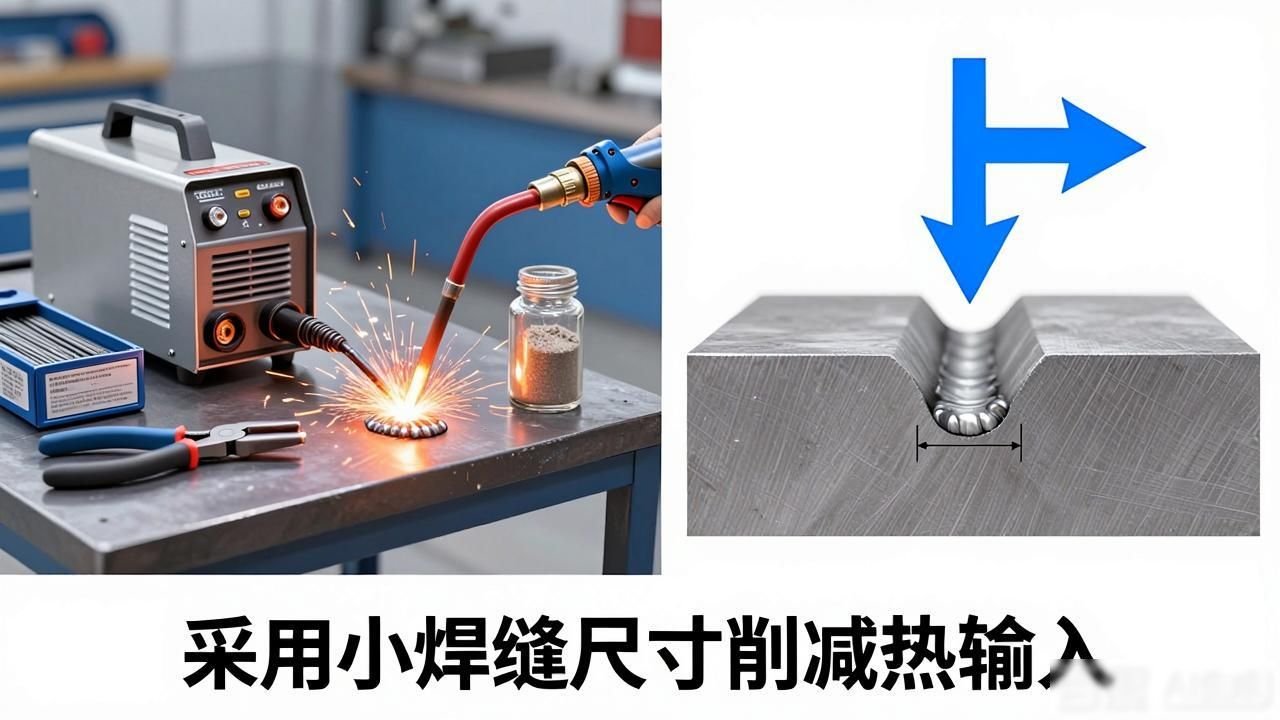
Rational selection of the size and form of the weld

When ensuring that a structure has sufficient load-bearing capacity, one should, where possible, use smaller weld dimensions in order to minimise the impact of welding heat input on the material’s properties.
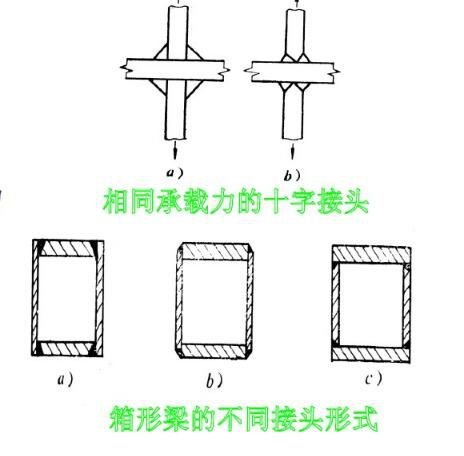
Reasonable choice of length and number of welds
Where permitted, select extruded sections and stamped parts; in areas with numerous and densely spaced welds, a cast-welded composite structure may be used, thereby reducing the number of welds. Furthermore, moderately increasing the thickness of the wall panels to reduce the number of ribs, or replacing the ribbed structure with a profiled structure, can prevent structural deformation in thin-walled panels.
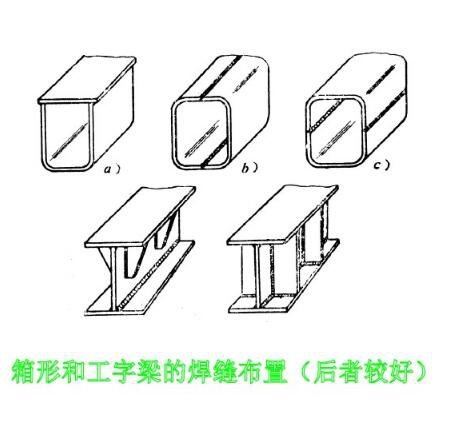
Reasonable arrangement of welding seam position
Where possible, welds should be positioned symmetrically about the neutral axis of the cross-section, or so that they are as close as possible to the neutral axis, as this approach is highly effective in reducing the flexural deformation of columns and beams.
inverse distortion method
The use of counter-deformation to control weld distortion is the most commonly used welding method.
allowance method
When cutting out parts, the actual length or width of the parts should be made slightly larger than the design dimensions to compensate for the shrinkage of the welded assembly; this method is effective in preventing shrinkage-induced deformation of the welded assembly.
rigid fixing
By using clamps or rigid jigs to secure the workpieces as firmly as possible, it is possible to effectively control angular distortion in the components to be welded, as well as their bending distortion.
① Secure the workpiece to a rigid platform (suitable for rigid clamping when joining thin sheets)
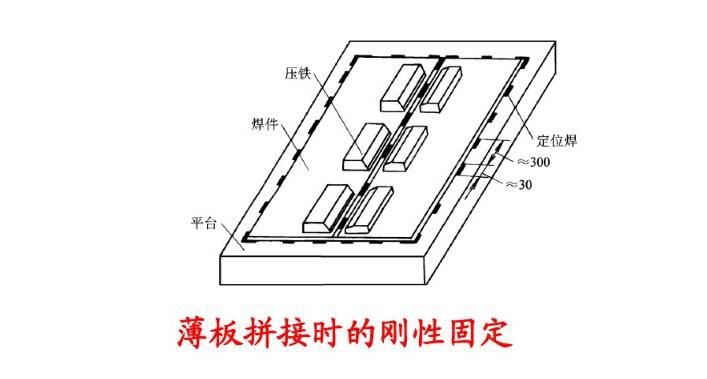
This allows the welded components to be assembled into a structure with greater rigidity or a symmetrical configuration, which is suitable for controlling structures such as T-beams.
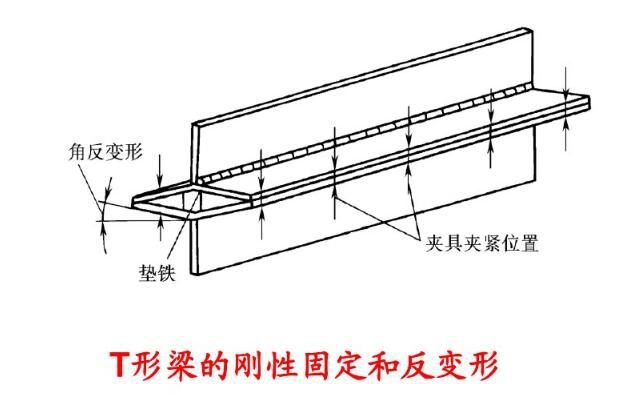
③ Use welding fixtures to increase the structural rigidity and constraint
④ Use temporary bracing to increase structural restraint.
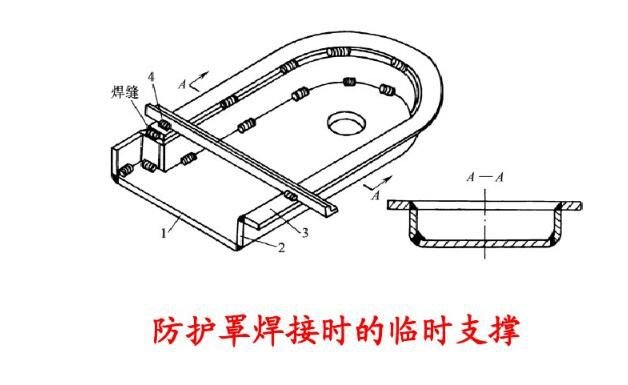
Selection of a reasonable assembly welding sequence
The assembly sequence has a significant effect on the distortion of the welded structure.
Where conditions permit, large and complex welded structures should be divided into a number of structurally simple components, which are then welded separately before final assembly takes place.
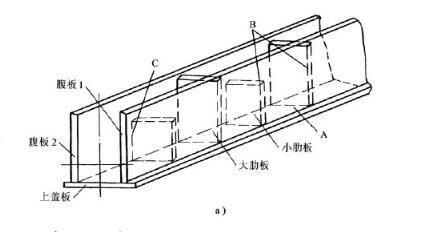
② The weld being applied should be close to the neutral axis of the structural section.
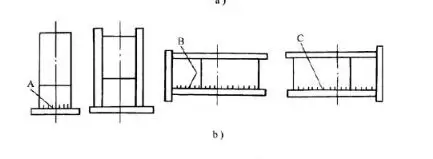
③ For the structure with non-symmetrical arrangement of weld seams, the side with less weld seams should be welded first during assembly welding.
(iv) Structures with symmetrically arranged weld seams shall be welded symmetrically by an even number of welders.
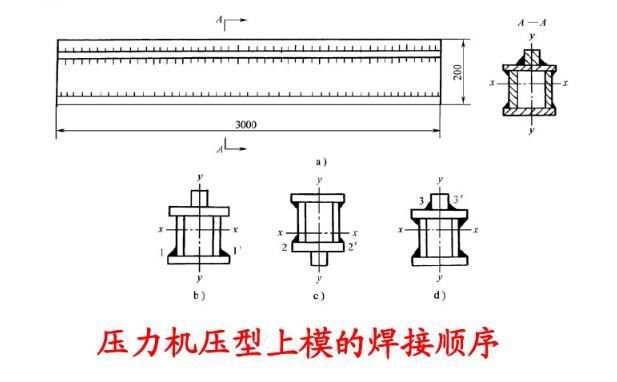
⑤ When welding long welds—that is, those measuring 1 metre or more in length—welding may be carried out in the direction and sequence shown in Figure 12, with the aim of minimising post-weld shrinkage deformation.
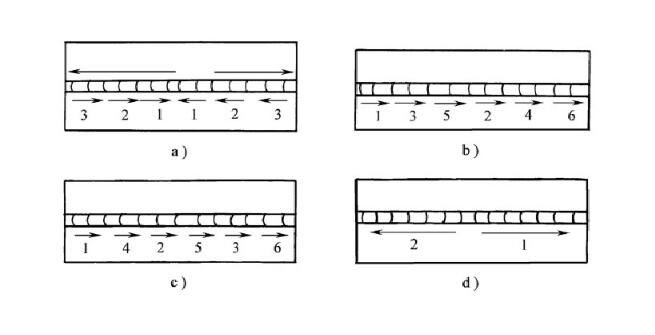
With regard to welding distortion, care must be taken when selecting welding methods, and the same applies when choosing welding process parameters. Where possible, methods and parameters that minimise heat input should be selected to prevent excessive welding distortion caused by high welding parameters or certain welding methods. It is also important to gain practical experience and draw conclusions from it.
 Chinese
  Japanese
  English
  German
  Finnish
Leave a Reply
You must be logged in to post a comment.