
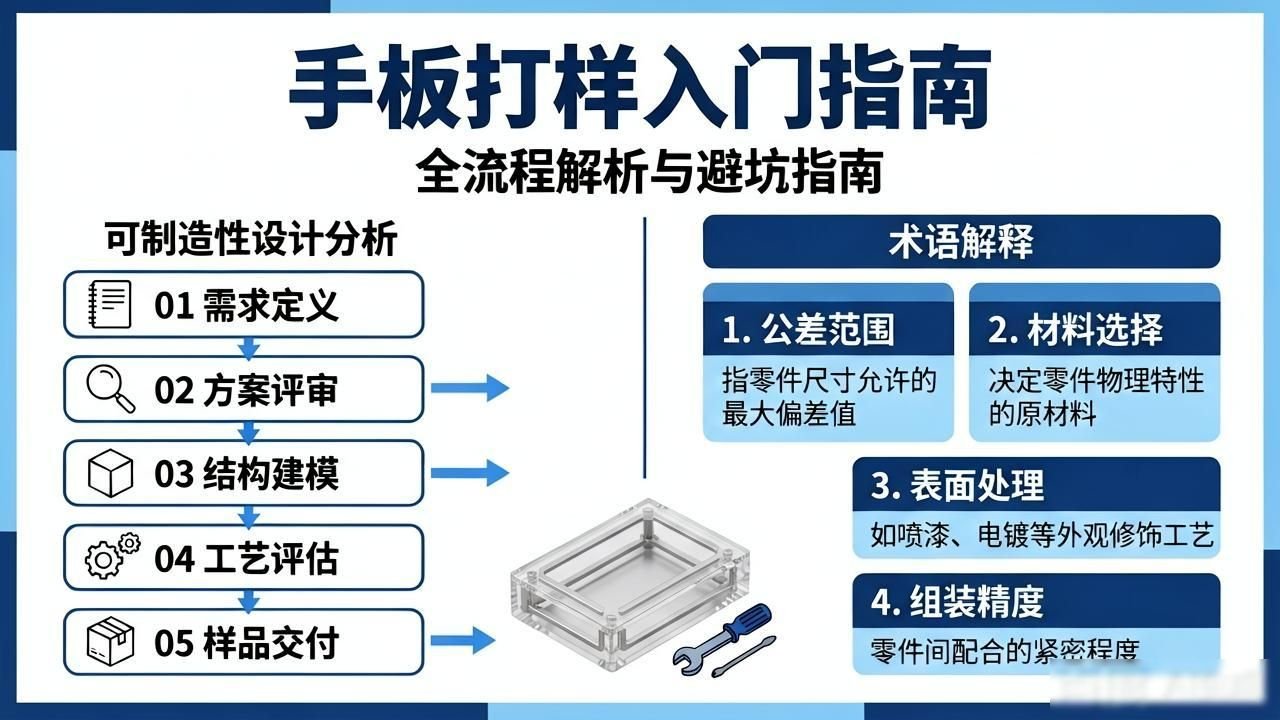
Abstract: Are you completely unsure where to start when producing a prototype for the first time? This article begins with a definition of the concept of prototyping, moves on to explore industry terminology, and then covers the entire prototyping process, finally addressing common pitfalls. Through these four distinct dimensions, it provides readers with little prior knowledge a practical introductory guide to help you quickly get started with prototype manufacturing.
What is a prototype? An article that explains it all
In the manufacturing sector, the term “prototype” is mentioned on a daily basis; yet many people encountering it for the first time are completely at a loss as to what it means. Put simply, a prototype refers to a small number of samples produced using methods such as CNC machining or 3D printing, prior to the product entering mass production via moulding.
Its core functions fall into three categories: firstly, to verify the appearance—that is, to assess whether the design is aesthetically pleasing and feels comfortable to the touch; secondly, to verify the structure—namely, whether the parts can be assembled together and whether the snap-fits function correctly; and thirdly, to verify functionality—that is, whether the product can withstand the expected forces and whether any interference will occur. In industries such as mobile phones, automotive, household appliances and medical devices, the cost of producing a single set of moulds can easily range from tens of thousands to hundreds of thousands; should any design issues arise, the entire investment would be wasted. Consequently, prototype production is an indispensable step in the product development process.
I would like to take this opportunity to clarify a common source of confusion: “shouban” and “shouban” are not the same thing. ‘Shouban’ refers to figurines of anime characters, whilst ‘shouban’ refers to industrial prototypes. Although they are pronounced the same, they belong to two entirely different industries.
Essential Terminology for the Prototyping Industry
When you first come across a prototype and hear terms such as “CNC”, “SLA” and “replica moulding”, you may well be at a loss. Below is a quick reference guide to the most commonly used terminology:
Definitions of Terms
CNC prototypes
Prototypes machined using CNC machine tools offer high precision and a wide choice of materials
3D-printed prototypes / SLA
Fabricated layer by layer using methods such as light curing or sintering; suitable for complex structures
Moulding/Re-moulding
First, produce a prototype using a CNC machine, then use a silicone mould to make multiple copies; this is suitable for small batches.
Proofing
The entire process of producing a sample is equivalent to ”making a prototype”.”
DFM

for, Design for Manufacturability Analysis
Tolerance
The permissible range of dimensional tolerances for prototypes is generally limited to ±0.1 mm
reprocess
Surface treatment processes such as painting, polishing and screen printing following machining
Delivery time
The lead time from order placement to delivery is typically 3–5 working days for standard prototypes.
The complete process for prototype production
A clear process can help you manage your time and costs more effectively. The standard prototype production process is divided into the following steps:
The first step is to provide 3D drawings. The 3D files supplied to the prototype manufacturer must be in STP or IGS format; STL format is also acceptable, provided the dimensions are clearly labelled. The more standardised the drawings are, the more accurate the quotation will be.
1. Step 2: DFM analysis and quotation; 2. The prototype manufacturer will analyse your drawings; 3. assess the feasibility of the manufacturing process, 4. such as where the walls are excessively thin, 5. where it is not possible to make cuts, and so on, 6. after which they will provide a quotation and delivery time, 7. this step typically takes between 1 and 4 hours.
Step 3: Programming and material preparation. Once the quotation has been confirmed, the programming engineer will write the CNC machining programme, whilst the warehouse team will prepare the required sheet metal or bar stock.
The fourth step is CNC machining, which is by far the most crucial stage. Depending on the complexity of the part, machining times can vary from a few hours to one or two days. Complex parts may require clamping from multiple angles and turning over several times.
The fifth step is post-processing, which includes deburring, grinding and polishing, as well as spray painting and screen printing, amongst other processes. This step has the greatest impact on the visual quality of the prototype.
Step 6: Quality inspection and dispatch. First, check the key dimensions and appearance against the drawings; once the items have been approved, they are packed and dispatched. We usually use SF Express or Depon for delivery; if the items are bulky, they must be crated.
The 5 pitfalls beginners are most likely to fall into
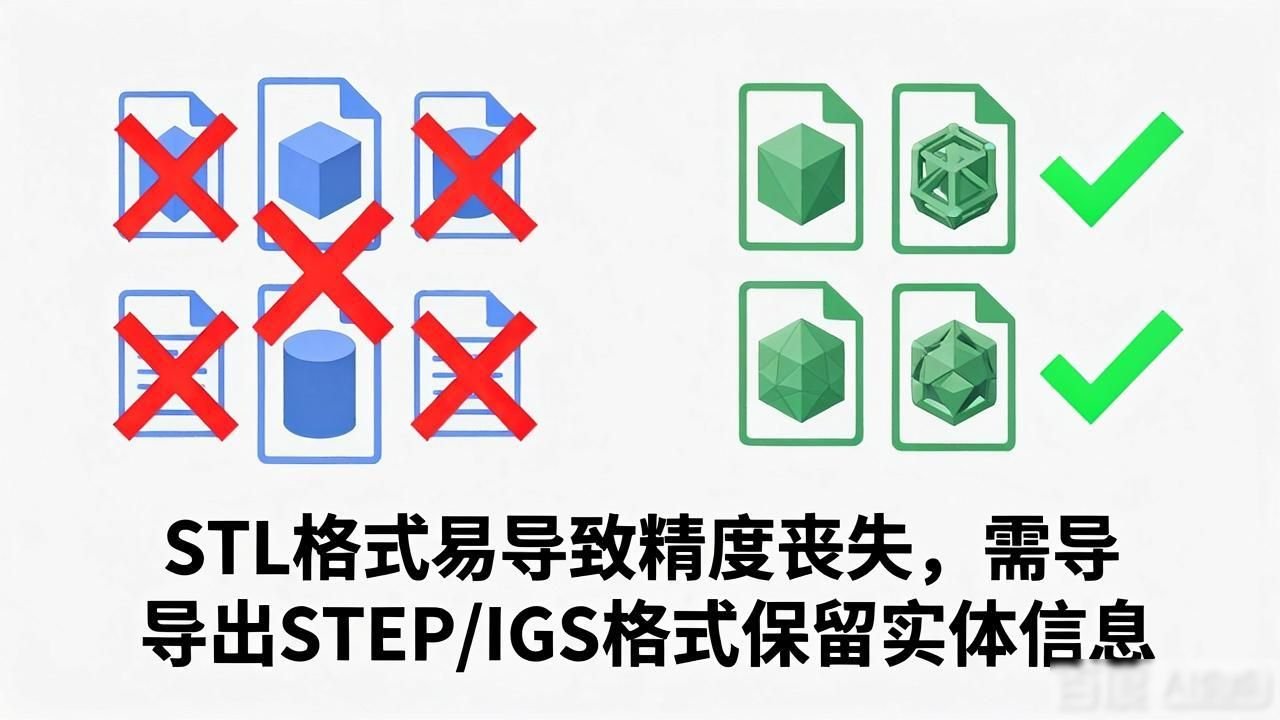
Pitfall 1: Issues with drawing formats – many people have sent us a collection of STL files, resulting in a complete loss of precision. It is essential to export files in STEP or IGS format in order to preserve the solid model information.
Pitfall 2: Wall thickness is too thin. In an effort to reduce weight, the wall thickness was set at 0.5 mm; however, this is simply impossible to machine using CNC. For plastic prototypes, the wall thickness should be greater than or equal to 1 mm, whilst for metal prototypes, it should be greater than or equal to 0.8 mm.
Pitfall 3: Failure to take the tool radius into account. The right-angled internal corner is beautifully designed, but as the milling cutter is circular, a fillet radius of at least R1 mm must be left at the internal corner.
Pitfall 4: Ignoring material shrinkage. Different materials have different shrinkage rates; PP shrinks by between 1.5 per cent and 2 per cent, whilst ABS shrinks by approximately 0.5 per cent. If you intend to proceed with moulding and injection moulding, this difference must be taken into account in advance.
Pitfall 5: Extremely tight deadlines — phrases such as “I need it tomorrow” are the last thing a prototype manufacturer wants to hear. A reasonable lead time is between 3 and 5 working days; whilst rush orders are feasible, they may compromise quality and can double the cost.
How do I choose the right prototype manufacturer for me?
There are prototyping workshops of all sizes everywhere—so how do you find a reliable one? Here are a few practical tips:
Compared to pure intermediaries, those who own their own CNC machine tools are far more reliable when it comes to inspecting the equipment. It is best to visit the site in person or ask them to provide photographs of the equipment.
If you want to see case studies, ask the supplier for examples of previous projects similar to your product. Just because they have experience with automotive components does not necessarily mean they are skilled at producing medical components; industry experience is crucial.
Look at the communication: a good prototype manufacturer will offer DFM suggestions at the quotation stage, rather than simply ploughing ahead blindly according to the drawings. Whether they can point out issues in your drawings is the most direct indication of their level of professionalism.
Pay attention to the details; once the samples arrive, check the key dimensions, inspect the surface quality and remove any burrs. When working together for the first time, it is advisable to produce a simple prototype to gauge the standard of work.
Mingmei Prototyping provides a full-cycle service, from DFM analysis through to manufacturing and delivery. First-time clients are entitled to a free drawing review and manufacturing advice, helping you to minimise the learning curve.
Are you ready to start making a prototype, but not sure where to begin?
Mingmei Prototyping offers a free drawing review service, as well as DFM analysis, helping you to avoid manufacturing risks right from the outset.
Contact the engineering team to receive one-to-one technical support
 Chinese
  Japanese
  English
  German
  Finnish
Leave a Reply
You must be logged in to post a comment.