
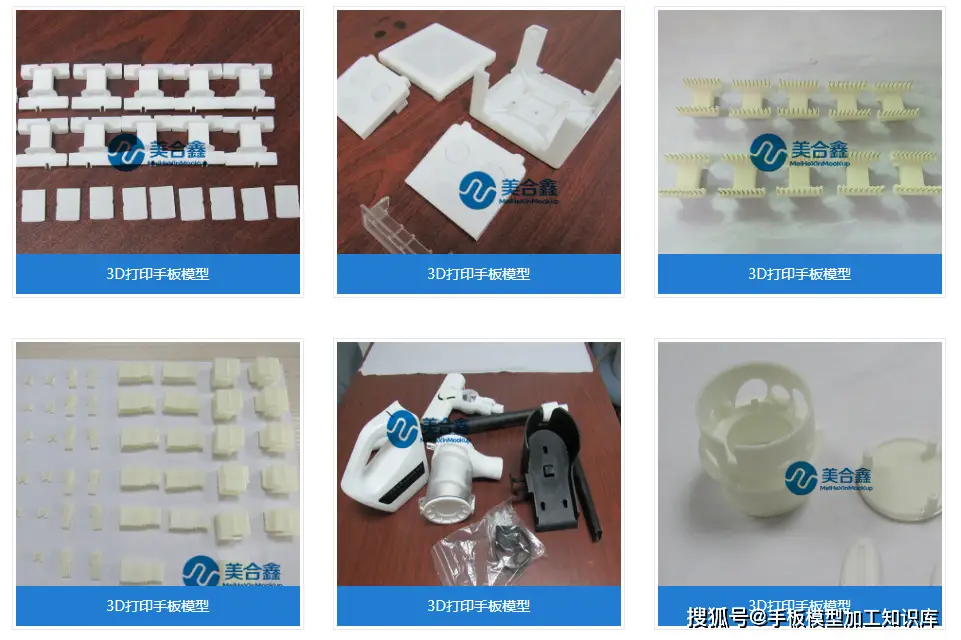
existPrototype modelsWithin this industry, the choice of manufacturing process plays a decisive role in the accuracy, cost, lead time and performance of prototypes; it is, in fact, a crucial aspect of a company’s R&D decision-making. After decades of development, prototype manufacturing has evolved to rely primarily on CNC precision machining,3D printingRapid prototyping,Vacuum CastingThese are the three core manufacturing processes. Each of these processes has its own advantages and disadvantages, fulfils its own specific role, and is suited to different scenarios and prototype production requirements. For businesses, only by accurately understanding the characteristics, differences and application limits of these three processes can they select the optimal solution, thereby maximising the value of the prototype model. In this article, we will conduct an in-depth analysis of the three core prototyping processes based on four distinct dimensions: process principles, strengths and weaknesses, material compatibility, and application scenarios, thereby providing comprehensive guidance and support to professionals within the industry.
I. CNC Precision Machining: The “Gold Standard” for High-Precision Prototypes”
CNC precision machining, regarded as the “gold standard for high-precision prototypes”, is the most widely used and mature process in the prototype modelling industry. Its core principle involves generating G-code via computer programming to control three-axis, four-axis and five-axis CNC machining centres, to perform precise cutting on block-shaped blanks made of materials such as plastic and metal, gradually removing excess material until the prototype model is finally formed to meet the design specifications.
Key strengths:
This is what ultimate precision looks like, CNC machiningAccuracy can range from ±0.02 to 0.05 millimetres; some five-axis machines offer even greater precision, achieving accuracy as high as ±0.01 millimetres. As the option offering the highest precision in prototype manufacturing, and, thanks to its high precision, is perfectly suited to meeting the ultra-high precision requirements of the aerospace, automotive and medical device sectors, amongst others.
With a wide variety of materials available and an extremely broad range of applications, it is compatible with almost all commonly used prototyping materials, including plastics such as ABS, PC, POM and acrylic, as well as aluminium alloys, stainless steel, copper and titanium alloys. It performs particularly well when processing high-strength, high-hardness metals, offering advantages that 3D printing cannot match; this is what sets it apart.
Significant advantages: As CNC prototypes are machined from solid material, their structural strength, mechanical properties, heat resistance and corrosion resistance are identical to those of mass-produced products. This enables them to undergo rigorous functional validation, including assembly testing, strength testing and environmental testing, straight away.
Following machining, the surface finish is of a very high standard, and post-processing is relatively straightforward; it is easy to achieve various effects such as high-gloss, matt, sandblasted and electroplated finishes. There is no difference in appearance or texture compared to products intended for mass production, and the surface texture is excellent.
Weaknesses and shortcomings:
Costs are relatively high; this is due to the substantial investment in equipment, the considerable time required for programming, and the very low material utilisation rate, which ultimately results in the cost of single-unit, small-batch prototypes being higher than that of 3D printing.
Due to their complex structures, components featuring internal cut-outs, complex curved surfaces, irregularly shaped cavities, and fine, deep holes present extreme difficulties during CNC machining, and in some cases cannot be machined at all.
The production cycle is relatively long, with the processes of programming, fixturing, rough machining and finish machining being complex and labour-intensive; the production cycle for complex prototypes generally takes between two and five days.
Use cases:
Firstly, CNC machining is the preferred method for producing high-precision, high-strength, large-scale metal prototypes. Secondly, it is primarily used for structural components in new energy vehicles, engine parts and gearbox housings. Furthermore, it is used for precision components in medical devices and surgical instruments. It is also utilised for components in aerospace vehicles and structural parts for satellites. Additionally, it is used for industrial equipment housings and robotic arm joints. Finally, it is employed for mid-frames and casings in consumer electronics, where extremely high standards of precision, strength and surface finish are required.
II. 3D Printing Rapid Prototyping: The “King of Efficiency” for Complex Structural Prototypes”
3D printing, also known as additive manufacturing, is a revolutionary prototyping technique that has emerged over the past decade. Its core principle is based on the concept of “layered build-up”, whereby a 3D model is sliced into layers, after which methods such as laser, hot melt or photopolymerisation are used to to build up the material layer by layer, thereby forming the desired shape. The mainstream 3D printing technologies currently used in the prototyping industry include SLA (stereolithography), SLS (selective laser sintering), FDM (fused deposition modelling) and MJF (multi-jet fusion), amongst others.
Key strengths:
There are no limits to the structure; it is not constrained by machining processes, and can easily produce complex structures that cannot be machined using CNC, such as openwork structures, thin-walled structures, irregular curved surfaces, structures with internal flow channels, porous structures, and integrated assembled components, amongst others; it is perfectly suited to creative designs and the requirements of complex products.
With extremely high speed, no programming, no clamping and no tool changes required, it can print automatically once the 3D model has been imported, Simple prototypes can be produced within a few hours, whilst complex ones can be delivered within 1–2 days. Its efficiency far surpasses that of CNC machining, making it the ideal choice for rapid prototyping and urgent requirements.
The cost per unit for small batches remains low and is within manageable limits; there is no need for tooling, and material utilisation is high. This method is particularly suitable for small-scale prototypes ranging from 1 to 10 units, and can significantly reduce a company’s research and development costs.
The design process offers a great deal of flexibility, including support for personalisation and the ability to develop multiple versions in parallel; this allows designers to give free rein to their creativity without having to worry about manufacturing constraints.
Weaknesses and shortcomings:
The accuracy indicated by the figures is on the low side, as follows: the typical accuracy of 3D printing is approximately ±0.1 to 0.2 millimetres; this is lower than that of CNC machining, and the layer lines are clearly visible, meaning the surface requires careful polishing as a post-processing step.
There are differences in performance: 3D-printed parts have a layer-by-layer structure, and their mechanical properties are slightly inferior to those of machined parts; their heat resistance is also slightly lower, as is their strength, and some high-performance materials are not compatible with them.
There are size limitations, as these are dictated by the moulding capacity of the equipment; consequently, large-scale prototypes need to be split into sections and reassembled, and this process of splitting and reassembly can affect the overall accuracy and strength.

Use cases:
3D printing is the preferred choice for complex structures and small-batch production, used for rapid prototyping and visual validation of prototypes. It is primarily applied in the design of consumer electronics and smart wearable devices; complex robotic joints and bionic structures; medical device casings and personalised implants; cultural and creative products, sculptural ornaments and toys; as well as 3D-printed prototype models for early-stage design validation, aesthetic evaluation, trade fair displays and patent applications.
III. Vacuum Casting (Silicone Moulding): A “Cost-Effective Solution” for Small-Batch Trial Production”
There is a process for producing small-batch prototypes known as vacuum casting, also referred to as silicone moulding. The core process involves first creating a prototype using CNC machining or 3D printing, then encasing the prototype in silicone to create a flexible mould, after which liquid materials such as PU, ABS or soft rubber are injected into the mould under vacuum conditions. Once the materials have cured, the part is demoulded, and finally undergoes post-processing to produce the replicated component.
Key strengths:
For small-batch production runs of between 10 and 1,000 units, the costs are significantly lower than those of CNC single-piece machining and 3D printing. With low moulding costs and high replication efficiency, this method is well-suited to market testing and small-batch trial production, offering a low-cost solution for small production runs.
Extremely efficient: a single silicone mould can produce between twenty and fifty pieces; with a short production cycle, batch production can be completed in two to three days, enabling rapid fulfilment of small-batch orders.
There is a wide variety of materials available: these include replicable hard plastics, soft rubbers, transparent materials and heat-resistant materials, amongst others. Their feel and texture are similar to those of mass-produced products, and they are suitable for both assembly and functional testing.
It offers a high level of detail reproduction; the silicone mould is highly flexible, enabling it to perfectly replicate the prototype’s fine textures, text and details such as grooves, resulting in a replica that is highly consistent with the prototype.
Weaknesses and shortcomings:
There are limitations to the accuracy; the accuracy of the replication generally falls within a range of approximately ±0.1 to 0.3 millimetres. This level of accuracy is lower than that of a CNC machining centre, and slight errors may occur during batch replication operations.
Silicone moulds have a limited service life; they are short-lived and can generally only be used between twenty and fifty times. If large-scale production is required, the moulds will need to be replaced frequently.
Performance is average: The performance of the moulding material lies between that of 3D printing and CNC machining; its heat resistance and strength are lower than those of solid materials, and it is not suitable for testing applications requiring exceptionally high performance.
Use cases:
The preferred method is vacuum casting, which is suitable for small-batch trial production of 10 to 1,000 units, as well as for market testing and product roll-out. Its main applications include small-batch trial production of household appliance casings and digital accessories; batch production of automotive interior components and automotive aftermarket parts; mass production of medical device casings and medical consumables; small-batch market launches of cultural and creative products and toys; market testing of new corporate products, the production of exhibition samples, and bespoke customer orders.
 Chinese
  Japanese
  English
  German
  Finnish
Leave a Reply
You must be logged in to post a comment.