
arrange in order
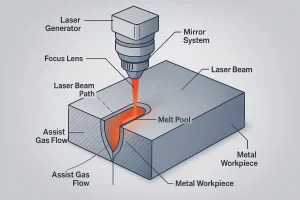
Laser Cutting: Principles, Advantages and Industrial Applications
Learn about how laser cutting works, its advantages in terms of precision, material properties, and a cost comparison with plasma and waterjet cutting – a key process in modern CNC manufacturing.
 49 days ago
A Brief Analysis of the Laser Cutting Process
Lasers have been used for cutting since as early as the 1970s. In modern industrial production, laser cutting is widely used for processing materials such as sheet metal, plastics, glass, ceramics, semiconductors, textiles, wood and paper. In the coming years,
2 months ago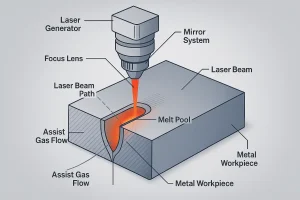
Laser Cutting: Principles, Advantages and Industrial Applications
Learn about how laser cutting works, its advantages in terms of precision, material properties, and a cost comparison with plasma and waterjet cutting – a key process in modern CNC manufacturing.
44 days ago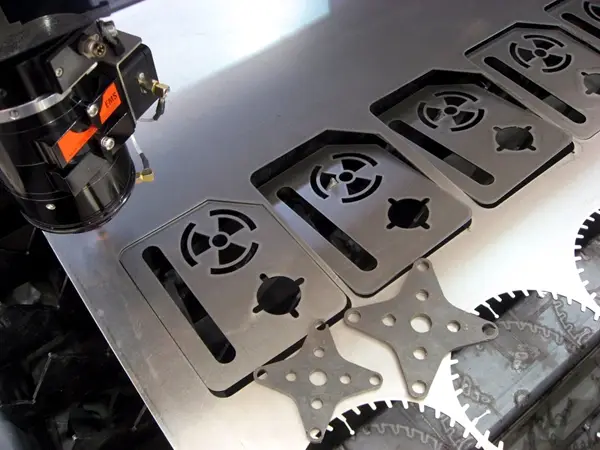
A Comprehensive Guide to Laser Cutting: A Practical Guide from Principles to Applications
Flame cutting uses oxygen as the auxiliary gas; it enhances efficiency through the energy released by the oxidation of the metal, making it suitable for processing thick steel plates; fusion cutting utilises inert gases such as nitrogen, resulting in smooth, oxidation-free cut edges.
43 days ago Chinese
  Japanese
  English
  German
  Finnish