

![图片[1]-你知道碳钢和不锈钢有什么区别吗?-大连富泓机械有限公司](/wp-content/uploads/2026/02/1772191301607_0.jpg)
High-end kitchen knives are often made from high-carbon steel due to its wear-resistant properties, which means it will stay sharper for longer.
Steel is found in all kinds of products, from aerospace to kitchenware. This variety of applications requires a material with multiple functions, and steel is just the one to fit the bill.
There is something called “steel” which actually describes an entire family of metal alloys with hundreds of application-specific grades, however, most people would divide steel into two main categories, carbon steels and steel alloys.stainless steels.
Carbon steel is identical to stainless steel in terms of iron and carbon as the basic components. However, their main difference lies in the alloy content, for carbon steel, its alloy content is less than 10.5%, however, stainless steel must contain 10.5% or more chromium. It is this essential difference that accounts for the unique physical properties of carbon and stainless steels.
Steel Composition
The basic elements of steel are iron and carbon. Typically, steel with a high carbon content is hard and brittle, while steel with a low carbon content is ductile and tough.
Of course, it's rarely that easy to add alloying elements such as chromium, molybdenum, nickel, manganese, or silicon to improve corrosion resistance or get a better balance between strength and toughness.
carbon steel
![图片[2]-你知道碳钢和不锈钢有什么区别吗?-大连富泓机械有限公司](/wp-content/uploads/2026/02/1772191301607_1.png)
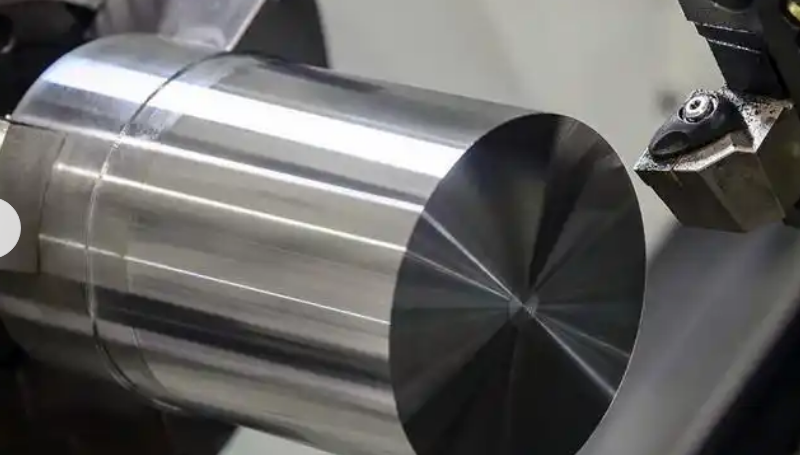
Iron with a carbon content between 0.12 and 2.001 TP3T constitutes carbon steel. A broader definition includes alloy steels with a maximum alloy content of 10.51 TP3 T. Even when the carbon content is in the range of less than two percentage points, the physical properties, especially hardness, vary greatly.
When people talk about carbon steel, they are generally talking about high carbon steel used for knives and tools. High carbon steels are very hard, which makes them very resistant to wear and tear and maintains their shape, and they are able to withstand a lot of force before deformation occurs, however, hard metals are also brittle, and high carbon steels are more prone to cracking than to bending when subjected to extreme tensile stresses.
Mild steel is more common than high carbon steel because, firstly, it is cheaper to produce, secondly, it is more ductile and thirdly, it is easier to manufacture. Mild steels tend to deform rather than break under stress, and this good ductility makes them easy to machine and weld. They are often used in automotive body panels, bolts, clamps, seamless tubes and plates.
stainless steels
![图片[3]-你知道碳钢和不锈钢有什么区别吗?-大连富泓机械有限公司](/wp-content/uploads/2026/02/1772191301607_2.jpg)
Stainless steel is used in chemical plants and also in food factories due to the fact that stainless steel has the property that it can function in humid environments and will not rust.
Stainless steel contains iron, contains carbon, and also contains a chromium content of at least 10.5%. Chromium is critical as it reacts with oxygen to form a passivated layer that protects the steel from corrosion. This protection reduces the likelihood of stainless steel rusting, which is important for outdoor site furnishings such as bollards that are installed in wet environments. The higher the chromium content, the better the corrosion resistance.
When buying appliances as well as other large items, it is important to look for stainless steel grades. Not all steels are created equal. Stainless steel with a minimum chromium content of 10.5 per cent is much cheaper and less durable than stainless steel with 16 per cent chromium, and the difference is reflected in the cost of maintenance and longevity.
Carbon Steel & Stainless Steel Knives
![图片[4]-你知道碳钢和不锈钢有什么区别吗?-大连富泓机械有限公司](/wp-content/uploads/2026/02/1772191301607_3.png)
Home cooks often choose stainless steel knives. Professionals often choose high carbon steel.
What is the case with stainless steel knives? It is much more common and easier to store. Martensitic stainless steel is often used for cutting edges. These stainless steels are harder compared to other grades. However, they are not as prone to breakage as the harder high carbon steels, and they are not easily damaged whether they are thrown inside a dishwasher or hit against a marble.
For home cooks who are not engaged in precision knife work, this is generally sufficient. In such cases, rust prevention is helpful in maintaining the sharpness of the blade. Iron oxide on the cutting edge can cause the knife to become dull in the same way that wear does.
Chefs, the professional kind, usually favour high carbon steel knives, although there are exceptions! These knives can be sharpened to an extremely sharp edge and are generally more hard-wearing than stainless steel. Even with regular use, the high carbon grade maintains a finer edge. Metal is brittle if it's particularly hard, yo: once the impact is too high, the metal doesn't bend but breaks. This means that high-carbon blades are less likely to deform on impact, and thus won't lose their edge in a series of warps. Instead, they will maintain a nice, clean line, and when they break, they break apart.
Hard steel like this is taken care of with more care, oiled before storage to prevent rusting, rinsed after use in very salty or acidic conditions, and resurfaced on stone (not steel), these maintenance steps make high carbon steel more of a pleasure for the high end or professional chef who slices paper than for the average home chef for whom precision is more important than ease of maintenance. It's more like a pleasure.
Should I choose carbon steel or stainless steel?
There is a difference between carbon steel and stainless steel in general, however, it is not necessarily more advantageous than the other, it all has to do with the specific use of the situation, there are strengths and weaknesses of each material, the focus is on making the steel fit the requirements given by the work to achieve the final fit.
high carbon steel
stainless steels




 Chinese
  Japanese
  English
  German
  Finnish
暂无评论内容