

Under normal conditions, CNC milling as well as turning belong to two different kinds ofProcessingIn the past, each of these processes utilised two different types of machine tools, namely the milling machine and the lathe. However, with the advancement of technology, these two processes can be integrated into the same machine. Nowadays, milling and turning are called mill-turn machining.
This article will introduce the working principle of mill-turn machining, describe its common configurations, explain its advantages, and illustrate its areas of application.
What is CNC mill-turn machining?
A process that combines CNC milling with CNC turning is CNC mill-turn machining. In order to understand this concept better, let's first look at the differences between milling and turning.
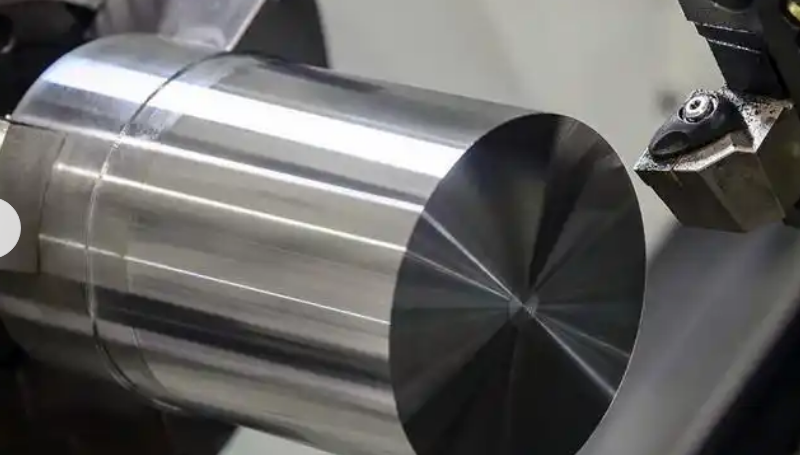
Firstly, there is a machining process called CNC milling, which involves computer control, and rotating cutting tools. In this process, the workpiece is held stationary and then the tool is moved to gradually remove material from the workpiece. On the other hand, in CNC turning, the workpiece is kept rotating while the tool is kept stationary and the material is removed to achieve the desired shape.
Until now, these two processes have been carried out independently of each other. Now, the two processes can be integrated and performed simultaneously on high-precision turning and milling machines, making it possible to produce a wide range of geometries in a variety of materials, including metals and plastics, with a high degree of precision.
Principle of operation of mill-turn machining centres
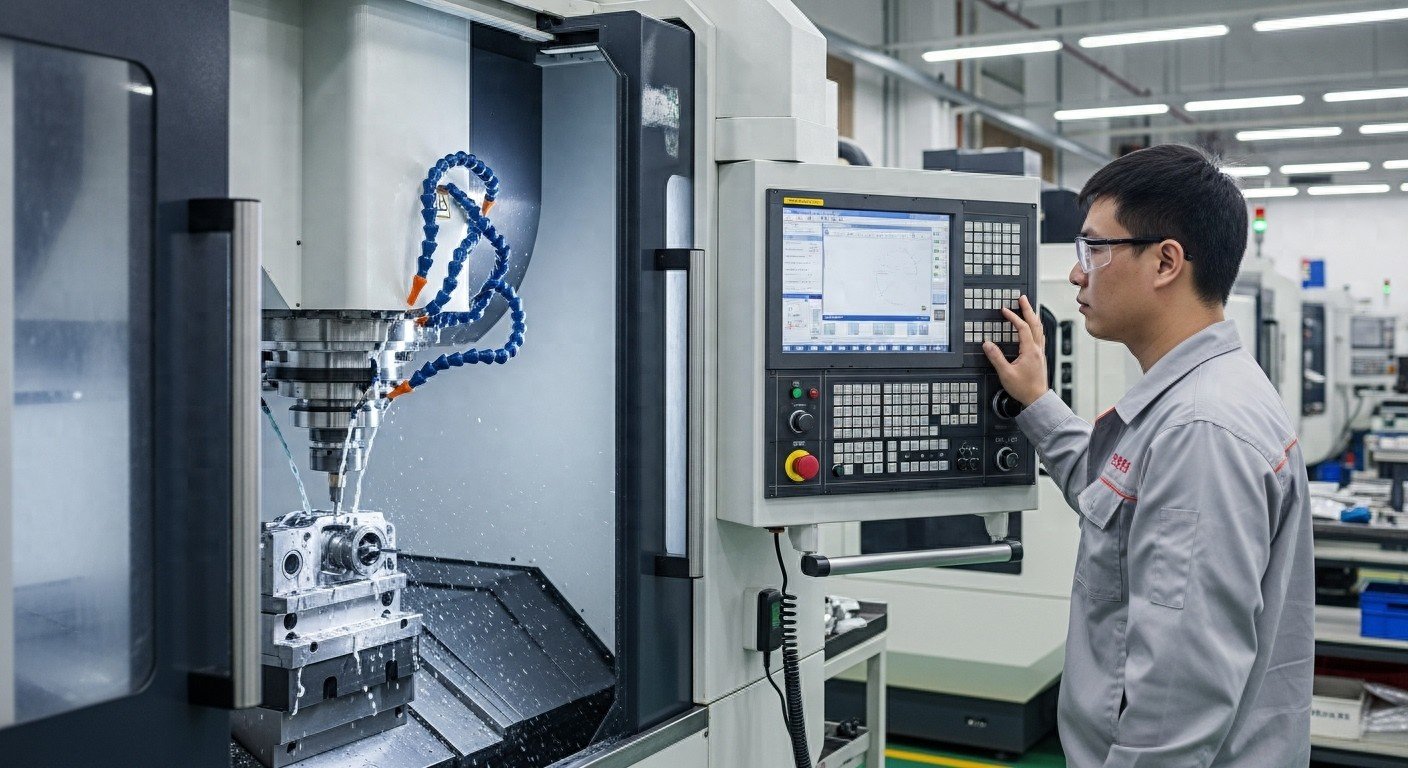
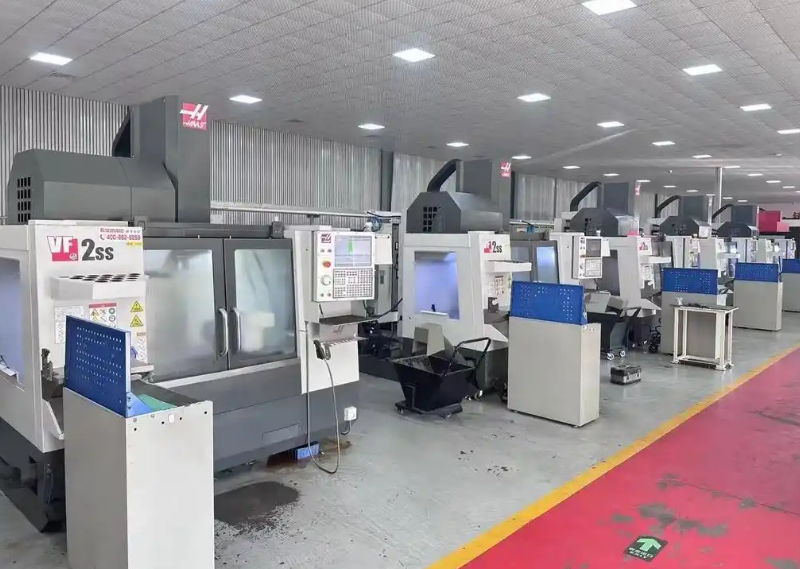
For milling and turning, CNC mill-turn machines are able to carry out both tasks at the same time. In other words, CNC turning and milling centre can simultaneously the work of the milling machine and lathe work to be completed, the following is the CNC turning and milling centre working principle of an overview.
The first step is to upload the machining program for the turning and milling part, and the CNC turning and milling centre proceeds to process the workpiece. The first process is the turning process, where various cutting tools are used to remove material from the rotating workpiece. The purpose of this stage is to initially machine the workpiece into a round part.
After the turning process, the machine tool rotates the cutting tool to keep the workpiece in a fixed position, then the tool removes the material from the workpiece, and this is the milling phase, which is aimed at machining flat and irregular surfaces.
Mill-turn parts produced by mill-turn machining centres are highly precise, accurate and fast. In addition, the machine has the flexibility to machine a wide variety of shapes in a wide variety of materials.
Common Configurations of CNC Turning and Milling Centres
CNC milling and turning centres can be divided into two configurations depending on how the machine clamps the workpiece. They are.
Horizontal CNC turning and milling centre
CNC turning and milling centres, where the spindle is oriented horizontally, as in CNC machining centres, so that the workpiece is fixed horizontally and the cutting tools protrude from the side of the tool holder.
The strength of this structure is not as strong as the vertical structure, because it is not possible to stabilise the workpiece in the fixture by gravity when it is acted upon, so this structure is extremely rare in the application of large and heavy workpieces.
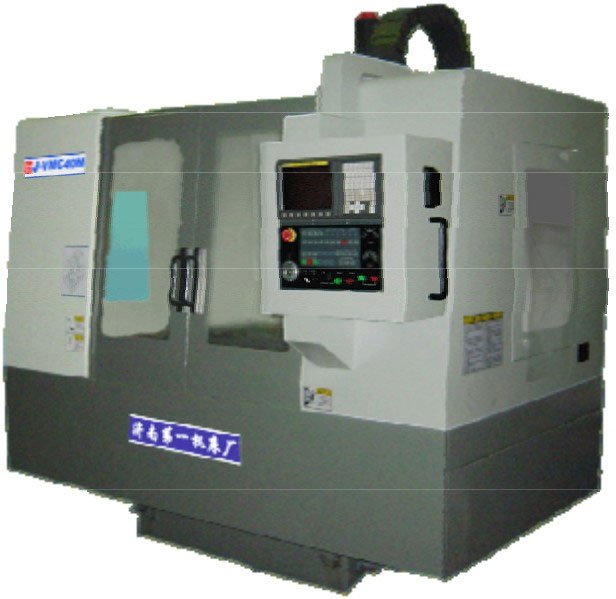
Vertical CNC mill-turn machining centre
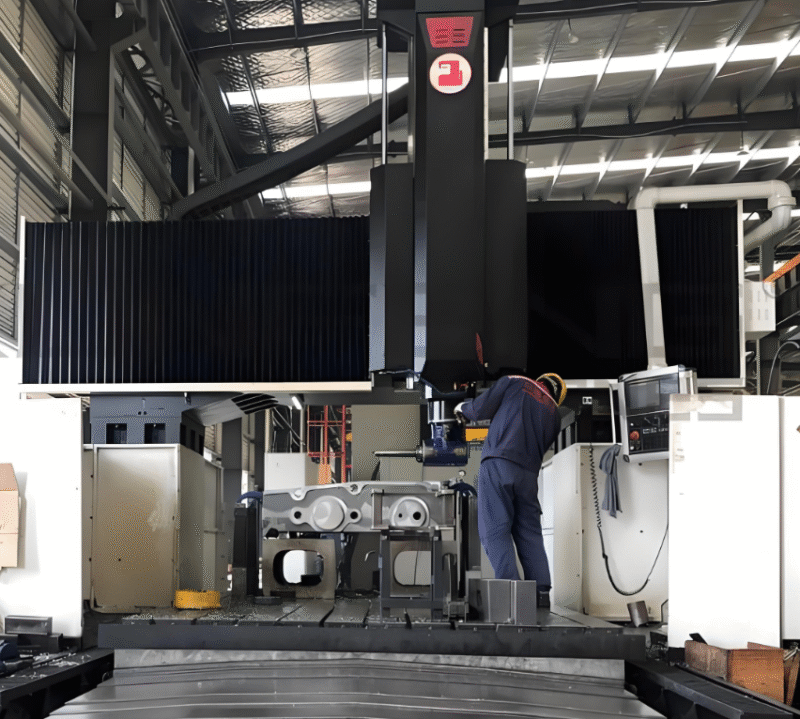
In a vertical CNC mill-turn machine, the spindle is placed horizontally and the workpiece is clamped vertically. In this configuration, the direction of the cutting tool is very similar to that of the tool holder. Because of the effect of gravity, vertical CNC turning centres are stronger and more stable than horizontal CNC turning centres.
This configuration is useful when machining large workpieces, but it is also particularly useful when machining heavy workpieces, as gravity helps to hold these large materials securely in the fixture.
Advantages of CNC mill-turn machining
CNC programme-controlled turning and milling parts, in many industries, is becoming more and more common. The reason for such a trend, mainly based on CNC milling and turning this way, compared with the traditional kind of individual milling and turning machine tools, there are a number of advantages of the reason. Next, we will launch the introduction of some of the advantages.
Machining of complex parts
There are limits to the geometric complexity that conventional machining tools can handle, and in addition to this, machinists may need to move parts from one machine to another when machining certain complex parts.
Why is this problem solved by CNC mill-turn machining centres? It is because of its ability to process complex geometries without the need to transfer tooling. This not only improves the quality of the product, but also improves the efficiency of producing many complex products.
Increased speed
Compared to the traditional machinist's approach of placing the workpiece on a lathe to complete the turning operation and then mounting the workpiece on a milling machine to start the milling operation, one of the main selling points of a mill-turn machining centre is the speed advantage it offers in carrying out the execution of the operation.
However, since the CNC mill-turn centre is able to carry out both processes simultaneously, the machinist only needs to set up the workpiece once and does not need to move it until the process is complete, which results in faster production and quicker lead times.
Higher precision
![图片[1]-车铣复合加工:CNC零件的有效解决方案-大连富泓机械有限公司](/wp-content/uploads/2026/03/1772364090435_4.png)
ordinarilyCNC machine toolsMost are extremely precise, as are CNC milling as well as CNC turning operations. However, CNC turning and milling centres are a little more precise. This happens mainly because the machinist does not have to set up the raw material, i.e. the workpiece, more than once during the entire operation. This is not the same as dealing with milling and turning operations on separate machines, as the operator still has to adjust and move the part after one of the operations is done.
The high accuracy and repeatability of CNC milling and turning machines are even more significant benefits when manufacturing parts with extremely tight tolerances. With such parts, even the slightest error during the movement and readjustment of the part can cause the entire process to fail.
Integrated handling of processing tasks
CNC mill-turn machines are capable of turning as well as milling, and they can be programmed to perform a wide range of different tasks, which suggests that these machines can be used in a wide range of different machining projects on the manufacturing side.
In addition, some of the tasks that a machinist would otherwise perform, such as loading workpieces, dismantling parts, probing, etc., can also be fully automated and performed by the machine tool. As a result, the operator has more time to devote to other tasks, thus increasing the productivity of the industry in general.
Application of CNC turning and milling technology
Aerospace: CNC mill-turn machines can help manufacture aircraft and satellite components.
Get Quality Turning and Milling Services at WACKER
CNC mill-turn machining is becoming increasingly popular in the manufacturing industry, however, the advantages of this service can be maximised only if it is carried out correctly and by the right professionals.
At WACKER Rapid Prototyping, we have expert machinists, as well as engineers, who can help you obtain high-quality mill-turn parts. At the same time, we offer a full range of CNC machining services at affordable prices with fast delivery times. Just upload your CAD files and get DfM feedback!
reach a verdict
Advances in technology have made it possible to synchronise these two operations with the help of CNC mill-turn machines. In addition to the relatively high production rates, CNC milling and turning centres ensure that complex parts are produced with a high degree of precision and accuracy. As a result, CNC turning and milling centres are widely used in many industries today.




 Chinese
  Japanese
  English
  German
  Finnish
暂无评论内容