
Machine performance, tool quality, workpiece material, machining process and many other factors, will have an impact on the accuracy of milling machining, in different cases, there are differences in the level of accuracy that can be achieved, the following will be from theDimensional accuracyThe three aspects are introduced, namely, shape accuracy and surface roughness:
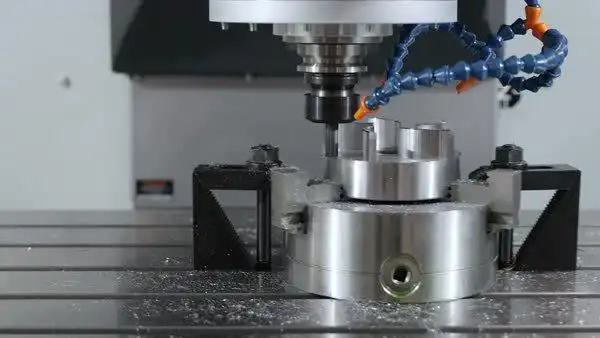
CNC Milling
Dimensional accuracy
The general milling process will be carried out on the ordinary milling machine, and its dimensional accuracy can reach the level of IT9 - IT11 under normal conditions, with corresponding scope of application, for example, for the sites where the accuracy requirement is not very high, like the roughing process of some simple mechanical parts, and for the processing of mould shapes where the accuracy requirement is not very high. IT ( ) belongs to the category of standard tolerance grades, where the larger the grade number, the larger the tolerance range and the lower the state of accuracy. Under this accuracy scale, the dimensional error fluctuates roughly from tens of microns to hundreds of microns.
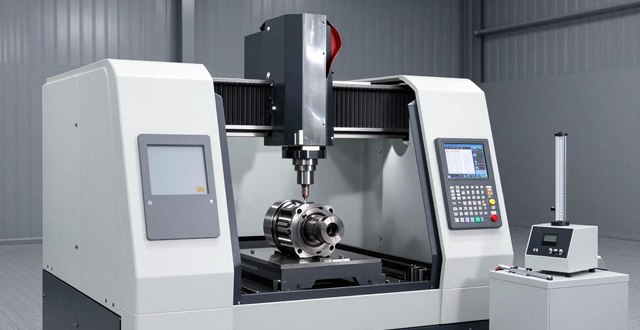
If a high-precision CNC milling machine or machining centre is used, together with high-quality cutting tools, reasonable machining process and accurate measurement and compensation means, precision milling can be carried out, and the dimensional accuracy can reach IT6 - IT8 level, which is sufficient to meet the needs of most precision mechanical parts and moulds, such as some key parts of automobile engines, cavities of precision moulds, etc. At IT6 - IT8 level, the dimensional error is generally between a few microns and several tens of microns. This level of accuracy is sufficient to meet the needs of most precision machine parts and moulds, such as certain key components of automobile engines, cavities of precision moulds, etc. At the IT6 - IT8 level, the dimensional error is generally between a few microns and tens of microns.
Extremely precise milling: rely on ultraprecision machiningWith the use of special tools and advanced control technology, the dimensional accuracy achieved by milling can even reach the sub-micron (less than 1 micron) level, moving into the high precision range of IT2 to IT5. Exceptionally fine milling is mainly used for high-precision parts in aerospace, optics and electronics, such as blades for aero-engines and moulds for optical lenses.
Shape Accuracy
Flatness, ordinary milling, its control of flatness is measured per length, the error will not exceed 0.05 - 0.1mm, precision milling, flatness to achieve the situation is per length error in the range of 0.005 - 0.02mm or so, after ultra-precision milling, flatness error can be further reduced to the micron level.
Straightness, when ordinary milling, its straightness is usually, in each length, the error is generally between 0.03 to 0.08 mm. Precision milling, straightness can be improved to, each length, the error is 0.003 to 0.01 mm. Ultra-precision milling, the straightness error can be controlled within a very small range, so as to meet the requirements of high-precision linearity.
Roundness and cylindricity, when milling rotary parts or parts with round features, the roundness and cylindricity error generated by ordinary milling is around 0.02 to 0.05 mm, precision milling can make the roundness and cylindricity error drop to 0.002 to 0.01 mm, and ultra-precision milling can control the roundness and cylindricity error at the level of sub-microns to meet the needs of processing high-precision round parts. High-precision round parts processing needs.
surface roughness
For general milling such as this, the surface roughness is usually in the range between Ra3.2 and Ra12.5μm. Such a surface quality is suitable for applications where the surface finish is not very demanding, such as for mechanical parts that only need to fulfil a basic function.
Precision milling is the optimisation of tool geometry and cutting parameters, as well as the machining process, to achieve a surface roughness of Ra0.8 - Ra3.2 μm, which meets the assembly and use requirements of the majority of machine parts and moulds, such as the surface machining of gears and shafts. surface machining of gears and shafts.
With ultra-precision milling, special tools and machining processes are used to further reduce the surface roughness until it reaches Ra0.1 - Ra0.8 μm or even lower. The high surface quality obtained by ultra-precision milling is often used in applications with extremely high demands on surface properties, such as optical lenses and the forming surfaces of high-precision moulds.
 Chinese
  Japanese
  English
  German
  Finnish
Leave a Reply
You must be logged in to post a comment.