
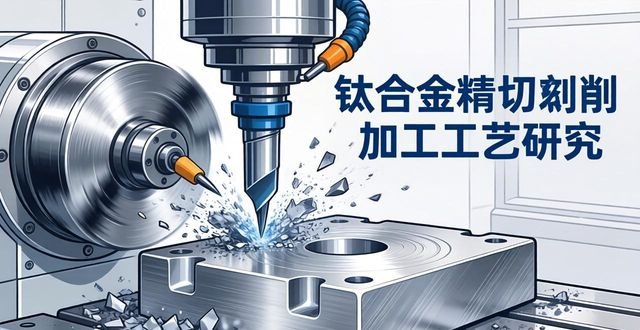
titaniumprecision machiningprocess research
Titanium alloys are used in the aerospace industry, in automotive manufacturing, and in medical devices because of their excellent mechanical properties and corrosion resistance.
There are a wide range of applications in the field of titanium alloys. However, the precision machining process of titanium alloys is used to prepare titanium alloys with high precision and high quality.
This thesis will focus on the precision machining of titanium alloys, and will explore how the process parameters affect the quality of the machining, which is a very important key.
Impact.
I. Properties of titanium alloys
Titanium alloy has low density properties, it has high strength, it has excellent corrosion resistance, it also has good biocompatibility and other special properties, which make it.
An ideal structural material, however, during the preparation of titanium alloys, it is very likely that certain problems will surface, such as the tendency to form knives.
The wear condition exists in the tool, which is extremely difficult to process, and is also prone to chip accumulation and so on. Therefore, for titanium alloy precision machining process to carry out research, which is to reach.
Efficient and high-quality preparation of titanium alloy parts is of great significance.
II. Titanium alloy precision machining process
Generally speaking, titanium alloys for cutting, often use carbide tools, only because titanium alloys have their own high thermal stress, and then there are titanium alloys of elastic modulus , tools.
Special attention should be paid to the material and process design, the coating of the tool has a great influence on the cutting quality, as does the geometry of the tool.

Make a sound. Research has shown that precision machining of titanium alloys can be enhanced by using high speed cutting and high feed rates.
Efficiency and reduced machining difficulty.
2.EDM
Titanium alloys are machined by EDM, a non-contact machining method, which is suitable for the preparation of titanium alloys with complex shapes and high hardness.
The parameters of the process of machining parts with objects by EDM cover the voltage at the time of discharge, as well as the energy generated by the discharge and the period of the pulse run. Studies have shown that the fit.
By reasonably selecting the EDM parameters, the machining speed can be increased and the machining accuracy can be improved. In addition, the EDM of titanium alloy in terms of.
Surface modification and composite processing are possible.
3.Precision Milling
An efficient titanium machining method used to prepare complex three-dimensional shaped parts is precision milling, precision milling.
The key to machining is to pick the right tool for the job and to determine the right conditions for machining. Titanium alloys have a high temperature tolerance for shear stress and high hardness, which can lead to.
This leads to wear of the tool, which in turn leads to an increase in the cutting forces, so that the selection of the tool and the optimisation of the cutting parameters are of particular importance.
III. Problems and solutions in the process of titanium alloy precision machining
1. Cutting lubrication
The cutting of titanium alloys is prone to high temperatures, which results in an increase in cutting forces and an increase in the number of machined parts.surface qualityThere has been a decline. Going to fix that.
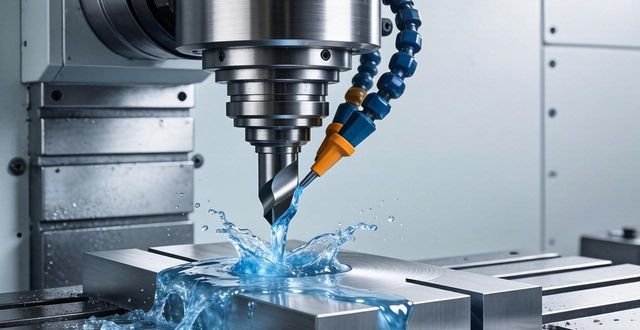
The solution to this problem is to apply the right amount of cutting fluid to cool the cutting area and lubricate the cutting area to reduce the problems caused by thermal influences.
2. Chip handling
When cutting titanium alloys, the resulting chips can lead to build-up in the cutting zone, which in turn affects the quality of the machining.
The solution to this problem is to ensure that the cutting area is clean by adopting a suitable chip evacuation device with an appropriate chip disposal strategy.
and smooth discharge of chips.
3. Surface quality
Due to the high hardness of titanium alloys and the difficulty of cutting them, scratches often appear on the surface during machining, and the roughness increases as a result.
The solution to this problem is to optimise the tool coating by using appropriate cutting parameters and to adopt machining strategies to improve the machining table.
The quality of the surface.
Summary:
The key to preparing high-precision titanium alloy parts is the titanium alloy precision machining process, titanium alloys have characteristics, and processing.
Difficulty places more stringent requirements on the selection of process parameters, and the plotting of cutting tools. The machining process has to be selected appropriately.
Optimisation of the process parameters results in improved machining efficiency as well as improved machining quality. Next, future research directions include tool materials, as well as coatings.
design, improvement of machined surface quality and optimisation of chip handling.
 Chinese
  Japanese
  English
  German
  Finnish
Leave a Reply
You must be logged in to post a comment.