

The application of turning-milling composite machining in China’s aerospace manufacturing sector is relatively recent; for the machining of complex rotary components for large aircraft, appropriate methods should be adopted.Mill-Turn MachiningThe centre, combined turning and milling processes, CNC programming, cutting tools and cutting parameters are the key issues that must be addressed to achieve high-efficiency machining of complex rotary components for the aerospace industry.
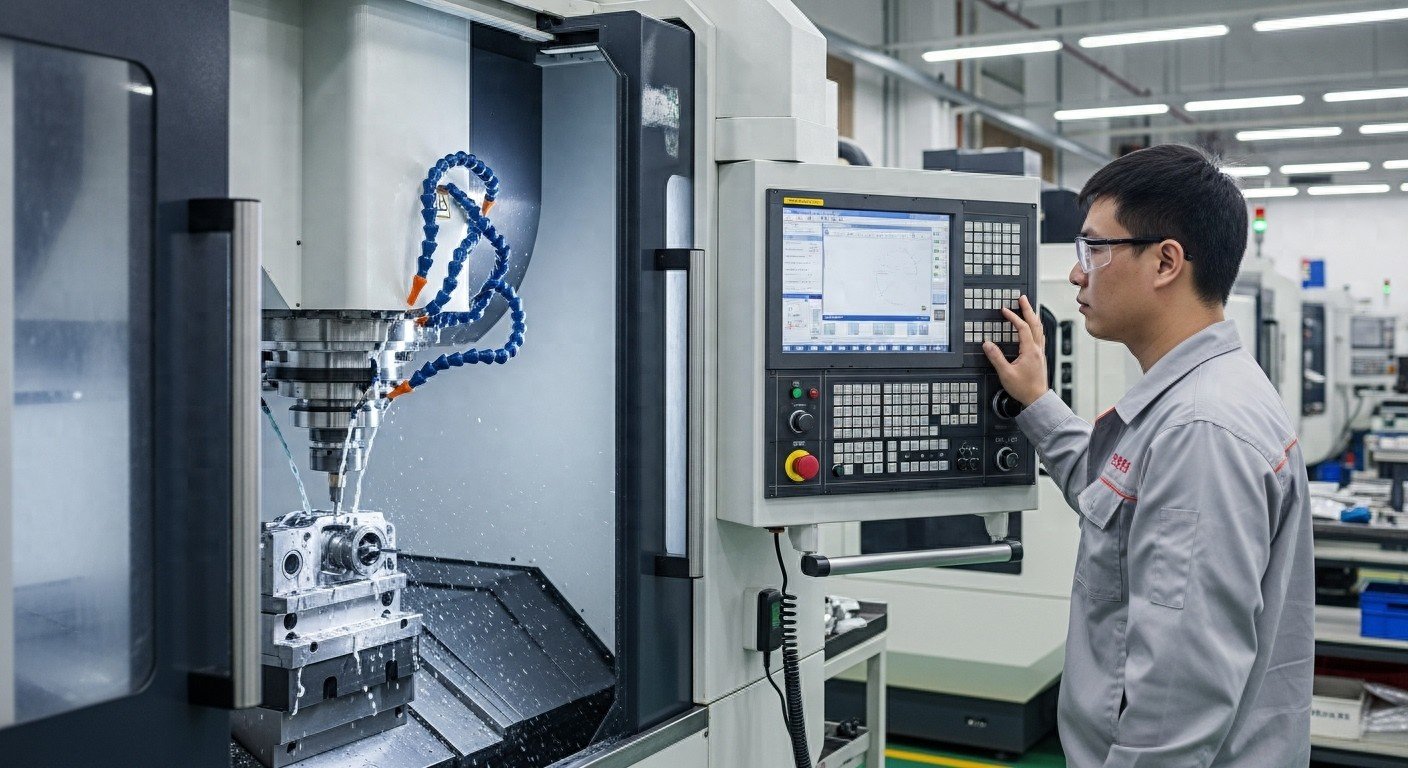
Combined turning and milling machines involve several fundamental movements: the rotation of the milling cutter, the rotation of the workpiece, the axial feed of the milling cutter, and the radial feed of the milling cutter. Depending on the relative position of the workpiece rotation axis and the tool rotation axis, turning-milling operations can primarily be classified into axial turning-milling, orthogonal turning-milling and general turning-milling; Among these, axial turning and milling and orthogonal turning and milling are two widely applied turning and milling methods; in axial turning and milling, as the milling cutter and the workpiece’s rotational axes are parallel, it is capable of machining not only external cylindrical surfaces but also internal bore surfaces; in orthogonal turning and milling, as the milling cutter and the workpiece’s rotational axes are perpendicular, it is unable to machine internal bores when the bore diameter is relatively small; however, when machining external cylindrical surfaces, as the longitudinal travel of the milling cutter is unrestricted and a larger longitudinal feed rate can be employed, it is therefore more efficient when machining external cylindrical surfaces.
Combined turning and milling has the following characteristics:
1. Use a high-precision built-in spindle;
2. The freely movable control panel improves operational efficiency;
3. This machine model is primarily designed for high-volume production, handling the manufacture of various small parts as well as the high-speed machining of complex components, and is capable of performing a wide range of machining operations.
4. In particular, for processes that are intricate, involving long and complex operations, it is possible to achieve one-off machining to form the final shape, and an automatic feeding system can be fitted to improve efficiency.
5. Materials: Machinable materials, copper, iron, aluminium alloys, stainless steel, Teflon, etc.
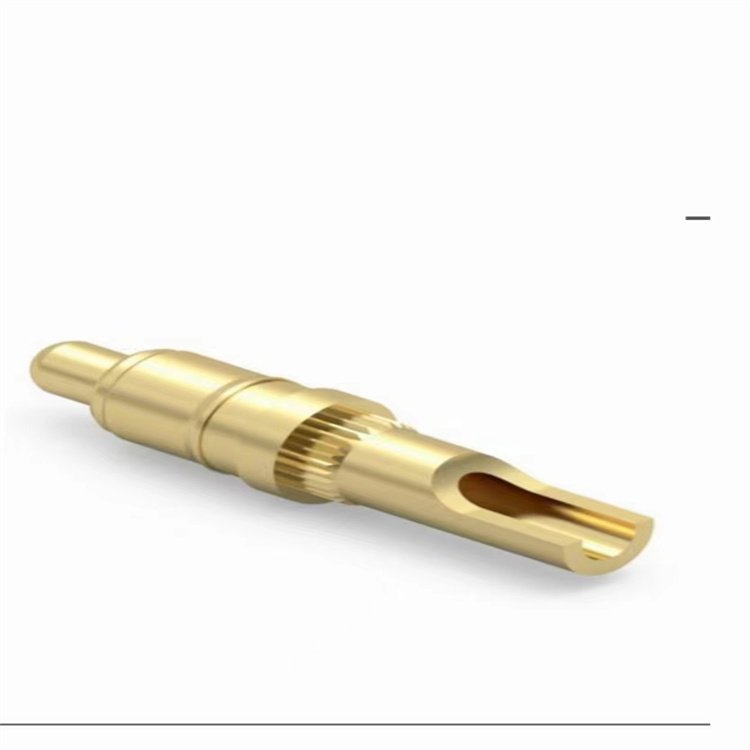
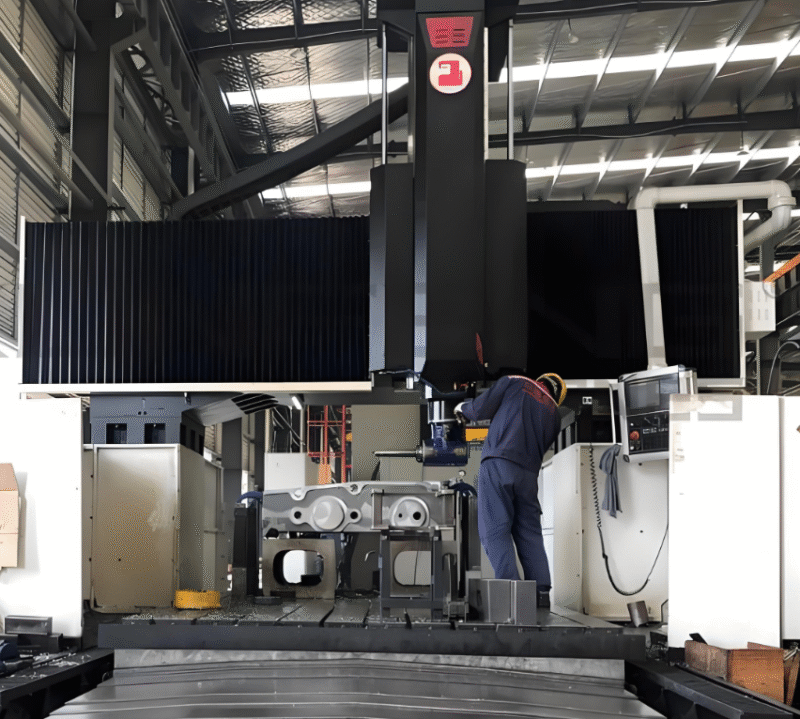
![图片[1]-精密黄铜件紫铜件车铣复合加工CNC加工 五金零件加工厂-大连富泓机械有限公司](/wp-content/uploads/2026/05/1779708409226_2.jpg)
Combined turning and milling has its own specific applications and advantages; the main points are set out below.
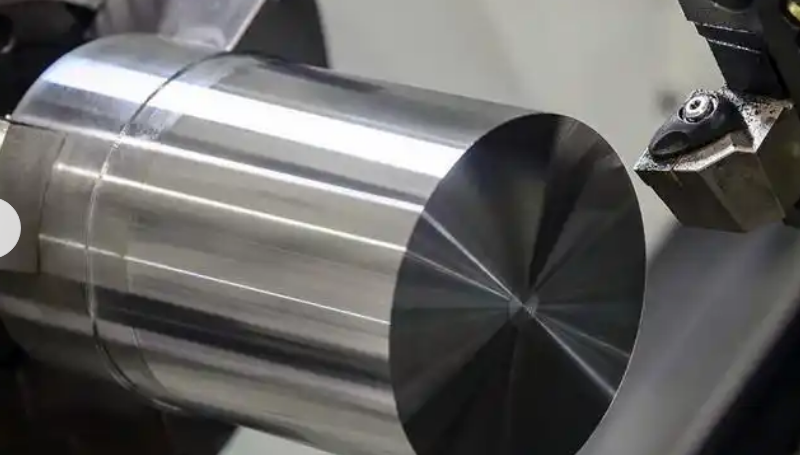
1. When machining various grooves or performing undercut finishing, the machining of discontinuous surfaces results in intermittent cutting. In conventional turning operations, the impact loads generated by this process are detrimental to machining, leading to poor surface finish and premature tool wear. In turn-mill composite machining, the tool used is a milling cutter, and milling involves intermittent cutting under conditions of cyclically varying loads.
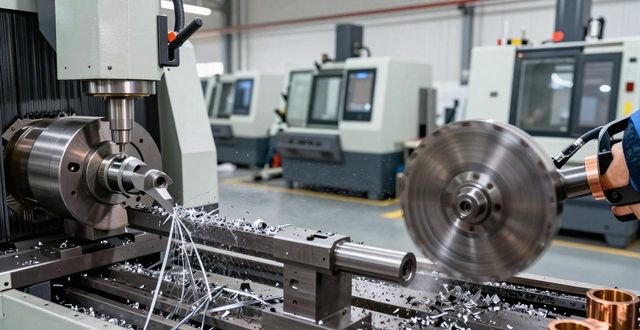
2. When the material is machined into long chips, chip formation presents a particularly challenging situation in turning operations; finding the appropriate chip-breaking groove for the turning tool is no easy task. In contrast, the milling cutters used in turn-mill composite machining produce short chips, which significantly improves chip control.
3. Taking the machining of crankshafts and spindles with eccentric journals as an example, during the turning process, workpieces such as crankshaft journals and eccentric cams their eccentric mass can generate unbalanced forces, which in turn adversely affect the machining process. However, turning-milling combined machining, utilising low workpiece speeds, mitigates these adverse effects. The introduction of turning-milling composite machining into manufacturing not only resolves machining challenges but also significantly increases output. By adopting this relatively new machining method, coupled with suitable modern machine tools and correctly selected cutting tools, productivity can be substantially enhanced. Although CNC machine tools have been widely accepted and utilised, the development of metal-cutting machine tools remains overly traditional. specific machine tools have developed according to their individual functions, such as turning, milling and drilling. If machining centres capable of holding rotary tools such as milling cutters or drill bits could be integrated for CNC turning operations, then by reducing the number of times a workpiece needs to be clamped and the number of transfers between machines, downtime could be reduced and machining efficiency improved. This drive for increased efficiency has spurred a revolution in the retrofitting of traditional CNC lathes with rotary power heads, thereby enabling combined turning and milling operations. Today’s modern multi-tasking machines are equipped with a B-axis that allows the tool to rotate and move, along with sophisticated control systems and cutting-edge CAM software, enabling the workpiece to complete the main machining tasks in a single clamping operation.
There are two main types of turning-milling composite machining: contour machining, where the workpiece and tool axes are parallel, and face machining, where the workpiece and tool axes are perpendicular. Contour turning-milling is similar to the method of machining the inner and outer contours of rotating workpieces using helical interpolation milling. Surface-machining-type turning-milling composite machining can only process external surfaces. Although turning-milling composite machining appears very similar to turning—as simple as using a rotating milling cutter for turning—these two machining methods have fundamental differences. The cutting speed in turn-mill composite machining is determined by the spindle speed of the milling cutter, unlike in conventional turning where the cutting speed is defined by the workpiece speed; in turn-mill composite machining, the workpiece speed is solely related to the feed rate.
Our factory has always adhered to the business philosophy of “Quality First, Customer First, Integrity in Business, and Win-Win Cooperation”, embodying a corporate spirit of “Pragmatism and Innovation”, and upholding a service philosophy of “Integrity as the Foundation and Excellent Service”. We warmly welcome new and existing customers from all over the country to visit us in person or contact us by telephone to discuss business opportunities!




 Chinese
  Japanese
  English
  German
  Finnish
No comments