
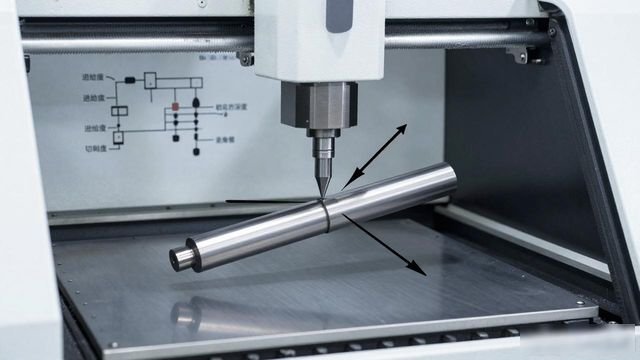
Micro and miniature componentsProcessingexplore
Abstract: This paper provides a detailed overview of the categories of micro and miniature components, their manufacturing processes, and design requirements.
I hope this will serve as a useful guide and reference for readers.
Keywords: micro- and small-scale components; classification; machining processes; design
1.
Foreword
the kind of extremely fine detail involved in micro- and small-scale structural componentsmachiningThe machining process differs from that used for standard parts; its process parameters.
The development of this machining process hinges on whether it can efficiently produce high-quality small parts at low cost. Fine-cutting is one such process.
It is essential to adhere to standard processing requirements and procedures.
2.
Categories of micro- and mini-mechanical components
2.1
Micro and miniature shaft components
Firstly, micro and miniature shaft components fall within the category of micro and miniature parts; secondly, they are one of the typical components frequently encountered in micro-machining equipment.
These components are primarily used to support minute transmission parts, to transmit torsional torque, and to withstand external loads.
In terms of their function, the machining of micro and miniature shaft-type components requires high rotational accuracy and surface finish.
the quality of the surface finish; consequently, research into the machining of micro and miniature parts has become increasingly important. During the machining of micro and miniature shaft-type parts,

When dealing with parts with a high aspect ratio, it is not possible to use a centre to support the workpiece during the machining process, resulting in radial cutting forces during machining.
Under these conditions, it is extremely easy for the micro-sized shaft components being machined to become bent or deformed, which in turn causes the workpiece to warp.
In the case of machining such miniature shaft-type components, in addition to the typical characteristics inherent to shaft-type components, they also possess...
Where features such as micro-planes, micro-grooves and micro-pores are present, it is not possible to achieve this through a single turning operation.
The machining of micro and miniature shaft-type components requires the use of other machining methods.
2.2
Micro- and nano-scale 3D structural components
Micro and miniature three-dimensional structural components tend to have relatively complex structural features; they are not merely simple rotationally symmetrical shapes.
and its planar characteristics; given the complexity of its structural characteristics, as well as the unique manufacturing characteristics of the part itself, in addition to...
This increases the difficulty of machining the part; during the machining process, the machining operations must be planned appropriately in accordance with the part’s specific machining characteristics.
manufacturing processes, and then select micro-machining equipment that is relatively compact, highly precise and flexible for the machining operations.
2.3
Micro and miniature flat parts and gear parts
Small, compact plate-like components, the primary structural feature of which is a flat surface; however, they also encompass a range of other structural characteristics.
These include stepped surfaces, micro-holes, micro-grooves, and surfaces with irregular contours, amongst others. They are similar to micro- and nano-scale three-dimensional structural components.
By comparison, micro and miniature flat parts have a relatively simple structure and are machined using relatively straightforward methods, such as micro-milling and.
Micro-drilling technology is capable of meeting the technical requirements of such components, thereby enabling the machining of micro-sized plate-type parts.
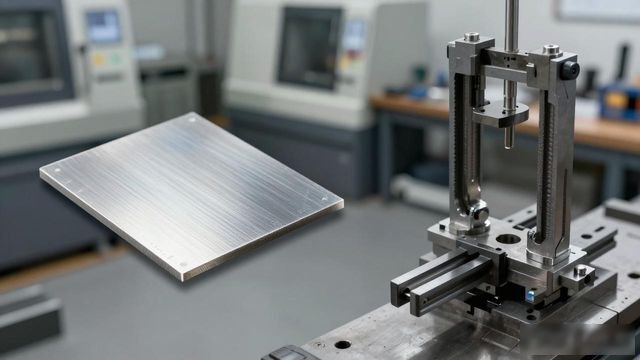
If micro and miniature board-type components are particularly thin, care must be taken when machining them to consider the clamping method in order to avoid issues during clamping.
The micro-jig exerts excessive force on the part, causing it to deform. Challenges and key considerations in the machining of micro-gears.
The machining of the tooth profile is crucial, as the precision of this machining directly affects the accuracy of the meshing between the gears, as well as the performance of the assembly once it is complete.
Currently, two micro-machining methods are employed in this field, namely micro-form milling and micro-rolling, both of which have proven effective.
The machining of micro and miniature gears is carried out using the micro-form milling process; during this process,
When machining micro and miniature gears, the manufacturing accuracy of the forming tool itself has a significant impact on machining accuracy; furthermore, given the machining system...
Due to the effects of rigidity, the method of workpiece clamping, and system vibration, errors occur in the profile of the machined gear teeth.
There is a considerable difference, and the tooth profile is significantly distorted. Compared with micro-milling, the micro-rolling method is based on the form.
In the forming process of castings, during machining, several cutting edges of the rolling tool perform continuous cutting on the workpiece.
It offers superior performance to micro-milling in terms of both machining efficiency and quality.
3.
Process requirements for micro- and nano-scale components
3.1
When machining raw materials, the aim is to minimise the stock removal. In the process of fine machining, the amount of material removed with each tool pass is relatively small.
The amount of material to be removed will not be excessive; consequently, this reduces the degree of machining deformation caused by cutting forces, thereby ensuring that the tool delivers reliable performance when in use.
With regard to machining accuracy, the total amount of material removed is determined by the condition of the blank at the start of machining; if the machining allowance on the blank is too large,
 Chinese
  Japanese
  English
  German
  Finnish
Leave a Reply
You must be logged in to post a comment.