
于Precision machiningWithin this field, precision and quality are the core elements used to assess whether a product meets the required standards. To improve the precision and quality of professional precision machining, it is necessary to consider several key aspects. Below, Shilihe shares with you the key aspects that can enhance the precision and quality of professional precision machining.
I. AdvancedProcessing equipment
High-precision machine tools
The foundation of precision machining lies in high-precision machine tools, Modern CNC machine tools boast extremely high positioning accuracy and repeatability, enabling machining errors to be kept within an extremely narrow range. For example, some high-end five-axis machining centres can achieve positioning accuracy of ±0.005 mm or even higher; such high-precision machine tools ensure that the geometric shape and dimensional accuracy of parts are effectively maintained during machining.
Precision measuring instruments
As it is essential to ensure machining accuracy, precision measuring instruments are absolutely indispensable. A coordinate measuring machine (CMM) is capable of measuring the three-dimensional dimensions of parts, with a measurement accuracy of micrometre level. During the machining process, the regular use of measuring instruments to inspect parts enables the timely detection of machining errors, allowing for prompt adjustments. For example, when machining high-precision aeroengine blades, measuring instruments can detect minute deformations on the blade surface, enabling appropriate corrective measures to be taken.
II. High-quality processing materials
Purity and uniformity of the material

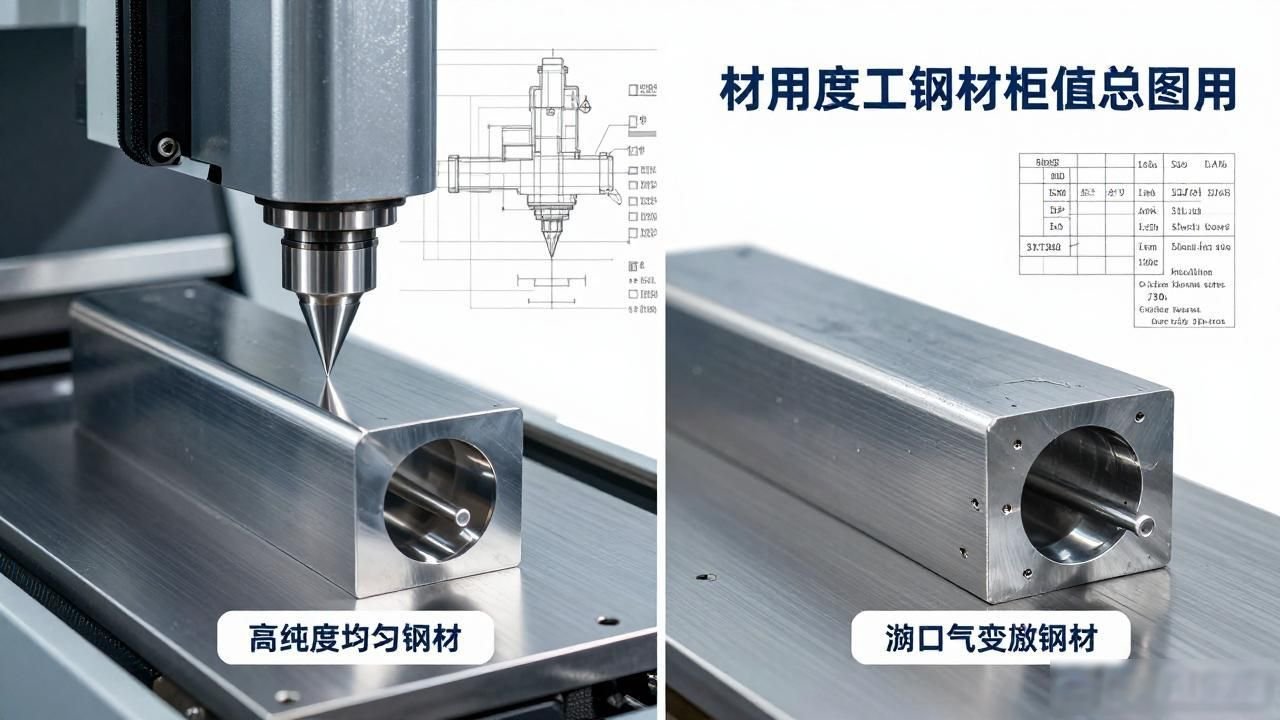
In terms of machining accuracy and quality, the purity and uniformity of the material being machined have a significant impact; High-purity and uniform materials exhibit more stable physical and chemical properties during the machining process. For example, in precision mould machining, the use of steel with high purity and a uniform microstructure can reduce the tendency for deformation and cracking during machining, thereby improving the machining accuracy and service life of the mould.
Compatibility between materials and processing techniques
Different machining processes impose different requirements on materials; the material and the machining process must be well matched. For example, for parts requiring high-speed cutting, materials with good machinability should be selected. This helps to prevent various issues during the machining process, such as excessive tool wear and increased surface roughness, thereby ensuring machining accuracy and quality.
III. Highly qualified operators
Expertise and Skills
Operators must possess sound technical knowledge as well as extensive machining experience; They must be familiar with the principles of various machining processes, understand their characteristics and scope of application, and be able to select the appropriate machining method based on part requirements. For example, when machining complex-shaped precision parts, operators must master the principles of multi-axis simultaneous machining in order to programme appropriate machining sequences, thereby ensuring the machining accuracy of the parts.
Sense of Responsibility and Commitment to Quality
For operators, a sense of responsibility and quality awareness are equally crucial factors. During the machining process, they must adhere strictly to operating procedures and pay close attention to every detail of the machining process. For example, when carrying out highly precise grinding operations, operators must approach each grinding action with the utmost care to ensure uniform grinding, thereby achieving the desired surface finish.
IV. Scientific Processing Techniques and Management
Optimised manufacturing processes
Careful planning of the machining process is a key means of improving precision and quality; this must be carried out in a scientific and rational manner. Every stage—from the selection of raw material blanks, through the arrangement of the machining sequence, to the determination of cutting parameters—requires meticulous planning and design. For example, when machining shaft-type components, the sequence of roughing, semi-finishing and finishing operations must be arranged appropriately, and suitable cutting depths, feed rates and cutting speeds must be selected, thereby effectively minimising deformation during the machining process and improving the cylindricity accuracy of the shaft.
Strictquality management
Establishing a rigorous quality management system is of paramount importance for improving machining accuracy and quality. Throughout the machining process, quality control must be carried out at every stage, including the inspection of raw materials, spot checks during the machining process, and 100 per cent inspection of finished products. At the same time, quality data must be analysed to promptly identify the root causes of quality issues and resolve them, thereby continuously improving the consistency of machining quality.
To improve the precision and quality of specialised precision machining, it is necessary to address several key factors, including machining equipment, materials, operators, machining processes and management. All these factors must be taken into account in order to achieve high-quality results in the field of precision machining.
 Chinese
  Japanese
  English
  German
  Finnish
Leave a Reply
You must be logged in to post a comment.