
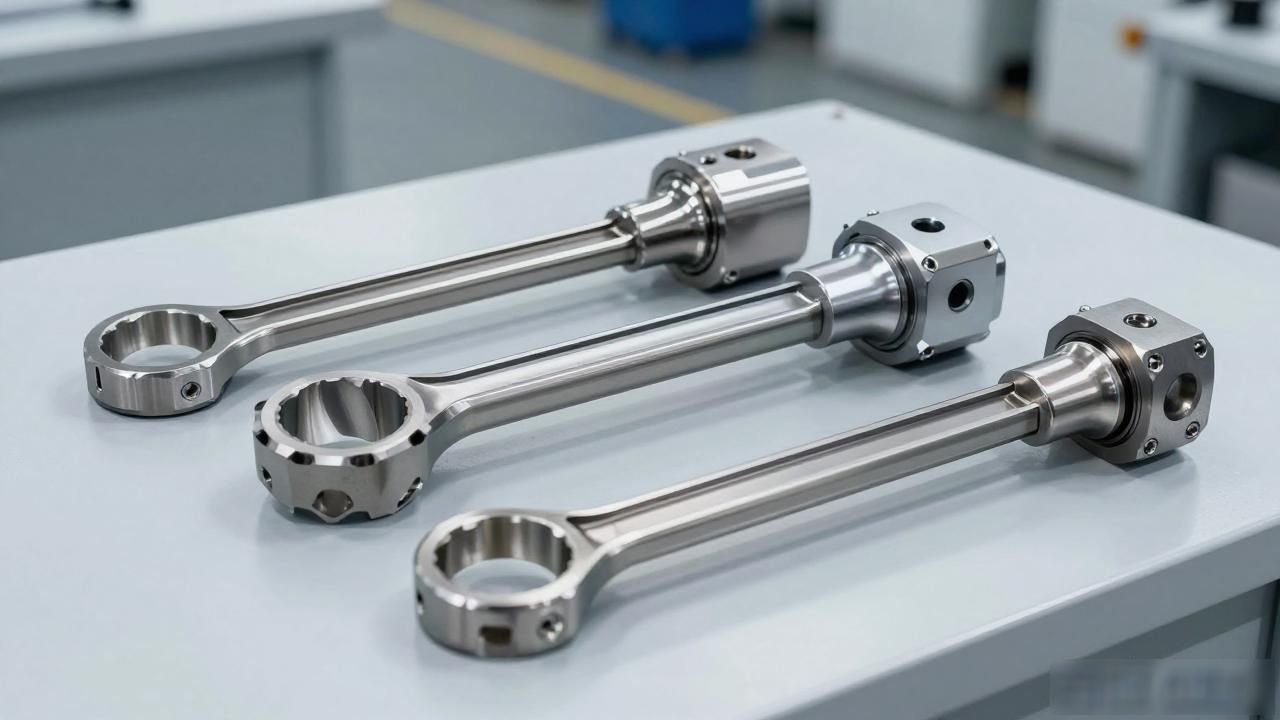
The division of labour in the machining of core components for industrial robots—four-axis, analysis, five-axis, full, three-axis—is all covered here.
The domestic robotics sector has experienced explosive growth in recent years, with the emergence of Yushu Technology’s quadrupedal robot dog and the mass production of humanoid robots gaining widespread attention. Six-axis industrial robotic arms have become commonplace across many industries, yet industry discussions invariably focus on aspects such as AI control, servo drives and gearbox technology. However, very little attention is paid to the manufacturing process. Even the most perfect 3D drawings are useless without high-end multi-axis machining processes; without them, the technology will forever remain at the laboratory prototype stage, unable to achieve stable commercialisation and thus confined to the laboratory.
According to the standard classification in the robotic machining industry, four-axis machining centres and five-axis machining centres have become essential equipment in the supply chains of Yushu and other major robotic arm manufacturers; there is a clear division of labour between the two, and neither can be replaced by the other.
️Large-scale batch production of semi-finished joint housings for five-axis robotic machining
1. Regarding industrial robotic arms manufactured by Heyushu Robotics, which components absolutely require the use of 4/5-axis CNC machines? Is that the case? Is that the situation? Is that the scenario?
Core structural components for humanoid robots, quadruped robots and multi-axis robotic arms share extremely strong common characteristics: they feature irregular curved surfaces, multi-angle inclined holes, thin-walled lightweight cavities and multiple spatial assembly reference points. As repeated repositioning during machining on three-axis machine tools results in the accumulation of significant positioning errors, such machines are only capable of machining simple cover plates and flat brackets. The core precision components of the entire machine, accounting for approximately 60%, must be machined using four- or five-axis machining; whilst the remaining 40%—comprising decorative casings, sheet metal guards and standard fittings—can be produced via die-casting, injection moulding, three-axis machining or laser cutting.
(1) Certain high-precision core components, such as gearbox housings and bearing housings, must be machined using five-axis simultaneous machining, and these components are crucial to the robot’s precision.
The hip, knee and shoulder joints of the Yushu G1 humanoid robot and the Go1 quadruped robot, as well as the various joints of industrial robotic arms, are all equipped with harmonic and RV reducers. Their housings feature irregular rotary structures, with inclined surfaces, angled mounting holes and complex internal cavities distributed throughout. Three-axis machine tools can only perform single-sided milling; for inclined holes and undercut features, repeated disassembly and realignment are required. Each clamping operation results in a positioning deviation of 5–10 μm; the accumulation of these errors directly leads to excessive joint clearance, operational vibration and abnormal noises. Five-axis machining enables the completion of inclined surface boring in a single set-up; it can also perform curved surface milling and internal cavity machining in a single set-up. All hole systems share the same reference, with coaxiality stably controlled within ±0.005 mm, with positional accuracy consistently maintained within ±0.005 mm. This equipment is essential for the mass production of joints for robot brands such as Yushu; mass production workshops are generally equipped with cradle-type five-axis machining centres, as well as vertical five-axis machining centres.
Multi-surface articulated fork frame, ankle joint / lumbar joint housing
The hip and ankle joint mounts of the Yushu robot, as well as the end-effector of its robotic arm, feature arc-shaped mating surfaces with multiple angular gaps and negative-angle undercut cavities; their topologically optimised, biomimetic weight-reduction structures are highly complex and intricate. With a three-axis tool orientation fixed, machining interference is highly likely to occur; five-axis machining, however, allows the workpiece to be positioned flexibly, enabling the tool to enter at the optimal angle. This eliminates tool change marks, significantly reducing the need for manual grinding, whilst also preventing thin-walled components from being ground to the point where their original precision benchmarks are compromised.
Dexterous Hand Micro-Joint Mount
These compact, humanoid-shaped, dexterous finger components feature multiple layers of angled holes densely packed within a confined space. Given the stringent positional accuracy requirements, they can only be manufactured in a single operation using five-axis machining, thereby ensuring precise and smooth gripping movements.
(2) Four-axis (indexing fourth axis) – primarily for the mass production of general-purpose connecting rods
When it comes to the long skeletal linkages in the thighs, calves and upper and lower arms of Yushu robots, the industry generally opts for machinery equipped with three axes plus a fourth indexing axis for production; these are the workhorse models in terms of value for money. These long rods are rotated and indexed by the fourth axis, enabling the machining of all mounting holes and weight-reduction grooves in a single operation, thereby facilitating the mass production of standardised linkages. Industry mass production data indicates the following: among leading robot manufacturers, the equipment mix in machining workshops is approximately 40.1 per cent five-axis, 35.1 per cent four-axis and 25.1 per cent three-axis machines. Four-axis machines are typically used for general-purpose long components, whilst five-axis machines are specifically employed for high-precision, complex and irregularly shaped parts.
(3) The three-axis system can only be used as a secondary component (accounting for approximately 30%–40% of the total unit)
The following parts do not require four- or five-axis machining, making them easier to machine:
Clear Comparison Table of the Roles of Four-Axis and Five-Axis Machining
Model
Robot parts
Mass production positioning
Yushu / Applications of Robotic Arms
4-axis
(Three axes + indexing rotary axis)

Long connecting rods, simple joint housings of the cylindrical type, and parts with a single plane of rotation
High-volume, standardised structural components: the key to cost reduction
Linkages for robotic dog limbs; standard arm sleeves for robotic arms
5-axis simultaneous movement
Gearbox housing, non-standard articulated fork bracket, multi-curved surface mount, dexterous gripper base
High-precision critical components, small-batch precision parts
Shells for human hip, knee and shoulder joints; lumbar joint housing
Standard 3-axis
Flat cover plates, simple straight brackets, fittings without angled holes
Low-cost secondary components
Equipment covers, quick-fit mounting plates
II. CNC 5-axis machining: tackling the three key pain points in robot manufacturing
Whether it is Yushu’s humanoid prototype, which is evolving at a rapid pace, or industrial robotic arms produced in large volumes, the core value of five-axis machining lies in solving industry challenges that three-axis machining simply cannot overcome:
Eliminate cumulative errors caused by multiple set-ups and maintain the minimum required repeatability
During three-axis machining, machining a set of joint housings requires at least four to six disassembly and reassembly cycles; the deviations caused by repeated positioning can result in joint play after the robot has been assembled, and the repeatability of positioning fails to meet standards; In contrast, with five-axis machining, all milling, boring and drilling operations can be completed in a single clamping. By establishing a unified machine reference, this ensures from the outset that the reducer and bearings fit tightly together, resulting in smooth and stable robot movement whilst running, carrying loads and performing precision operations.
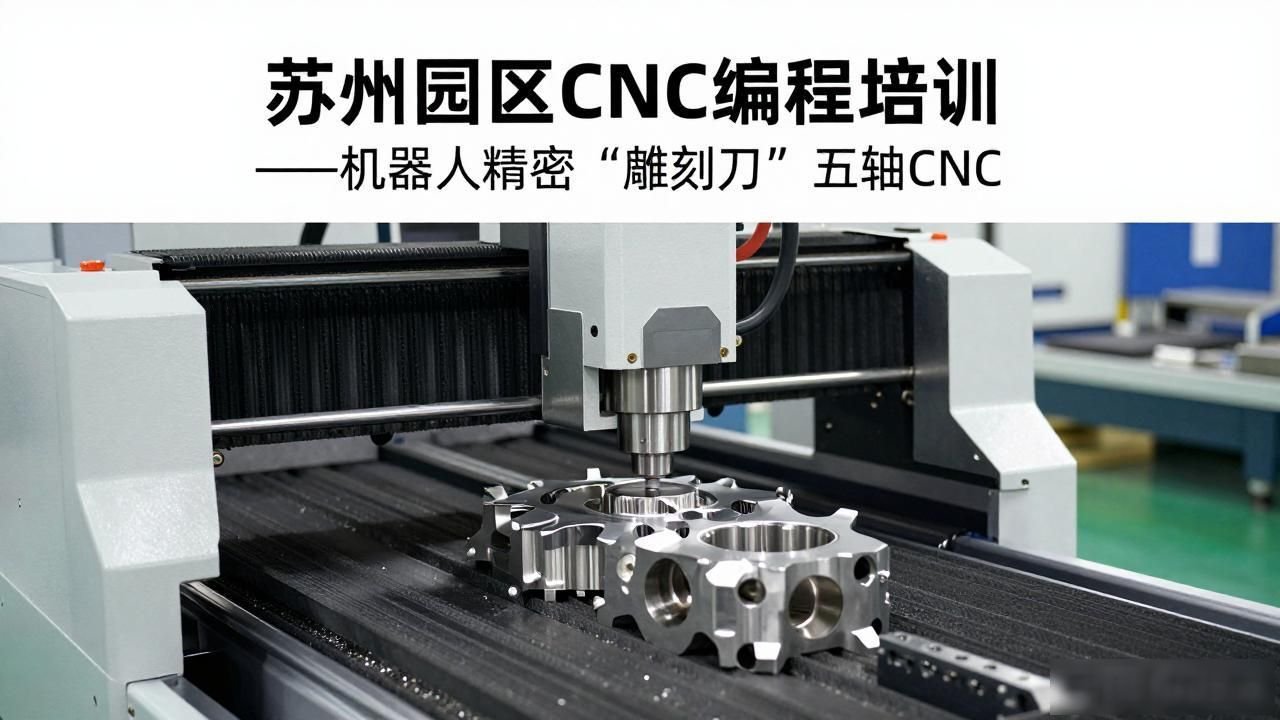
Optimised for lightweight, thin-walled biomimetic structures to minimise machining deformation
The core structural components of the robot are mostly made from 7075 aluminium alloy, with wall thicknesses of just 1 to 2 millimetres; whilst striving for lightweight construction, they must also withstand the impacts caused by jumping and high-speed movement. With a five-axis system, short, rigid cutting tools can be selected to minimise cutting vibrations and tool deformation. At the same time, this eliminates the need for multiple clamping operations, thereby preventing clamping stresses that cause part springback, and significantly improving the yield rate in mass production.
Flexible adaptation to high-frequency iterations, shortening the prototype validation cycle
Every year, Yushu Robotics introduces innovations and develops several new versions with entirely new layouts; the standard production model in the humanoid robotics sector is “multiple specifications, small batches and rapid model changes”. Five-axis machining offers exceptional flexibility and adaptability; it merely requires adjustments to the toolpaths for 3D models, eliminating the need to invest significant manpower and resources in remaking numerous specialised jigs and fixtures. As a result, the efficiency of developing preliminary product designs and conducting small-batch trial production is significantly higher than that of three-axis multi-process machining, significantly reducing the time required for new products to progress from R&D to market launch.
III. Correcting a Common Misconception: Having a five-axis machine tool does not necessarily mean that it can produce robot parts that meet the required standards
Many machining workshops blindly purchase five-axis machinery, yet fail to secure subcontracting orders from major manufacturers such as Yushu and robotic arm manufacturers; the crux of the matter is that a comprehensive process system is absolutely essential.
Yushu Technology has achieved commercial-scale mass production of quadrupedal and humanoid robots, underpinned by a mature supply chain and a five-axis machining system. The falling prices and increasing prevalence of domestically produced industrial robotic arms are likewise inseparable from the mature support provided by the domestic five-axis precision machining supply chain. The current state of the industry is clear: if subcontracting manufacturers wish to secure orders for core robot joints, four-axis machining is the entry-level configuration, whilst five-axis capability is a mandatory requirement; without five-axis equipment, they can only undertake low-value-added, simple auxiliary components.
IV. Mutual Empowerment: The Robotics Industry and Five-Axis Machining Complement Each Other
The boom in humanoid and quadruped robots is creating a virtuous cycle with the domestic five-axis machining industry:
Previously, core structural components for high-end robots had long relied on precision machining from overseas; at present, domestic five-axis machining factories have achieved full-chain substitution. At the same time, multi-skilled technical personnel proficient in three-dimensional design, five-axis programming and robotic machining processes have become a scarce resource in the smart manufacturing industry.
We are amazed by the spectacular displays of the Yushu robot’s incredibly agile leaps and the industrial robotic arm’s flawlessly precise operations; whilst our attention is often focused on the algorithms, motors and gearboxes, it is all too easy to overlook what lies hidden behind the components—precision manufacturingStrength.
A five-axis CNC machine is like a robot’s precision “carving tool”
To machine each drawing—featuring biomimetic structures—to a tolerance of the micrometre level; without the infrastructure of a mature, multi-axis machining centre, even the most advanced robotic designs cannot be put into mass production.
The continued expansion of the humanoid robot industry has opened up entirely new opportunities for the development of five-axis CNC precision machining.
 Chinese
  Japanese
  English
  German
  Finnish
Leave a Reply
You must be logged in to post a comment.