
Vol. 22, No. 1 Electronic Process Technology
January 2001
21
New process and new technology
Machining of eccentric parts on a latheprocess research
Lin, Hu
(Fortieth Institute of Electronics, Ministry of Information Industry, Anhui, China)
Bengbu prefecture level city in Anhui
)
Abstract: The main problem when machining eccentric parts on a lathe is that the eccentric part adds an extra centrifugal force to the spindle, and in order to eliminate this centrifugal force.
The authors carried out and implemented a comprehensive study of common eccentric parts and proposed a standard model that includes counterweights, which successfully concluded a unified process for machining eccentric parts.

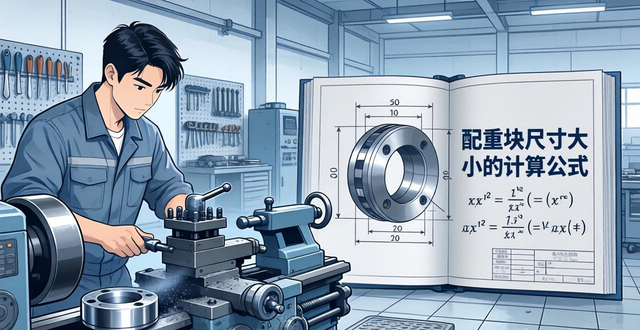
Opening the loading mode, the calculation formula for the size of the counterweight block is derived, which greatly improves the speed of tooling design and shortens the tooling design cycle.
The centre of mass, associated with the moment of inertia, is modelled, involving the counterweight block, using standard volume splitting.
Classification number: TG68
Literature identification code: A
The serial number of the manuscript is: 1001 minus 3474, which corresponds to 0021 to 03 in issue 1 of 2001.
of Part on Lathe
PENG Lin, HU Jie
(40th of MII.,
, China)
This thesis is a study of the forces that compel us to do so, and for that reason, it is a study.
What you have provided seems to be less complete and contains some errors, and it is not quite possible to understand exactly what it means, so it is difficult to rewrite it as required. Please check and add what is complete and correct.
Your content seems incomplete and confusing, not quite clear and precise semantics for rewriting. Please add a complete, clear and accurate equation suitable for rewriting.
sign is and of is .
Code: A
This is not a sentence yah, please provide the correct sentence for rewriting.
In industrial production, due to the correlation or relationship between positional and dimensional accuracy, the majority of metal cutting machines available in almost all establishments are small and medium-sized lathes.
Sometimes, because of equipment constraints, process considerations, etc., milling, planing and grinding machines are often used, however, these machines are relatively few in number and are usually lathes.
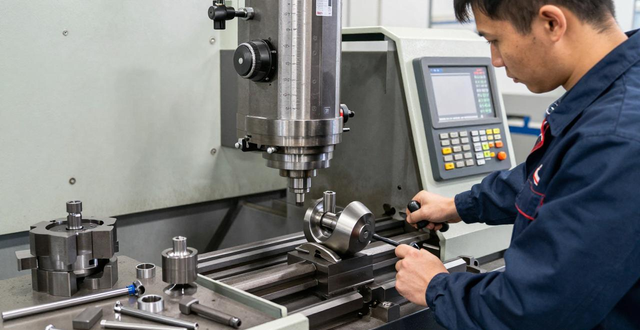
The machining of eccentric parts to be carried out on a lathe is not a large number, but eccentric parts are quite common in daily production and are targeted.
Fewer master workers generally use the method of constantly adding counterweights.
 Chinese
  Japanese
  English
  German
  Finnish
Leave a Reply
You must be logged in to post a comment.