

The feedback device that detects speed and displacement and feeds the information back to form a closed-loop control consists of a combination of measuring elements and corresponding circuits. Some of the accuracy requirements are not very high.CNC machine toolsIt is called an open-loop system because it does not have a feedback device.
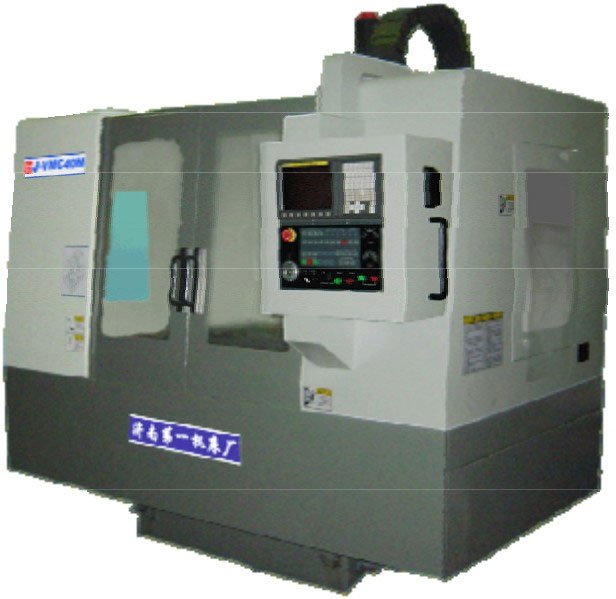
5、Machine tool body
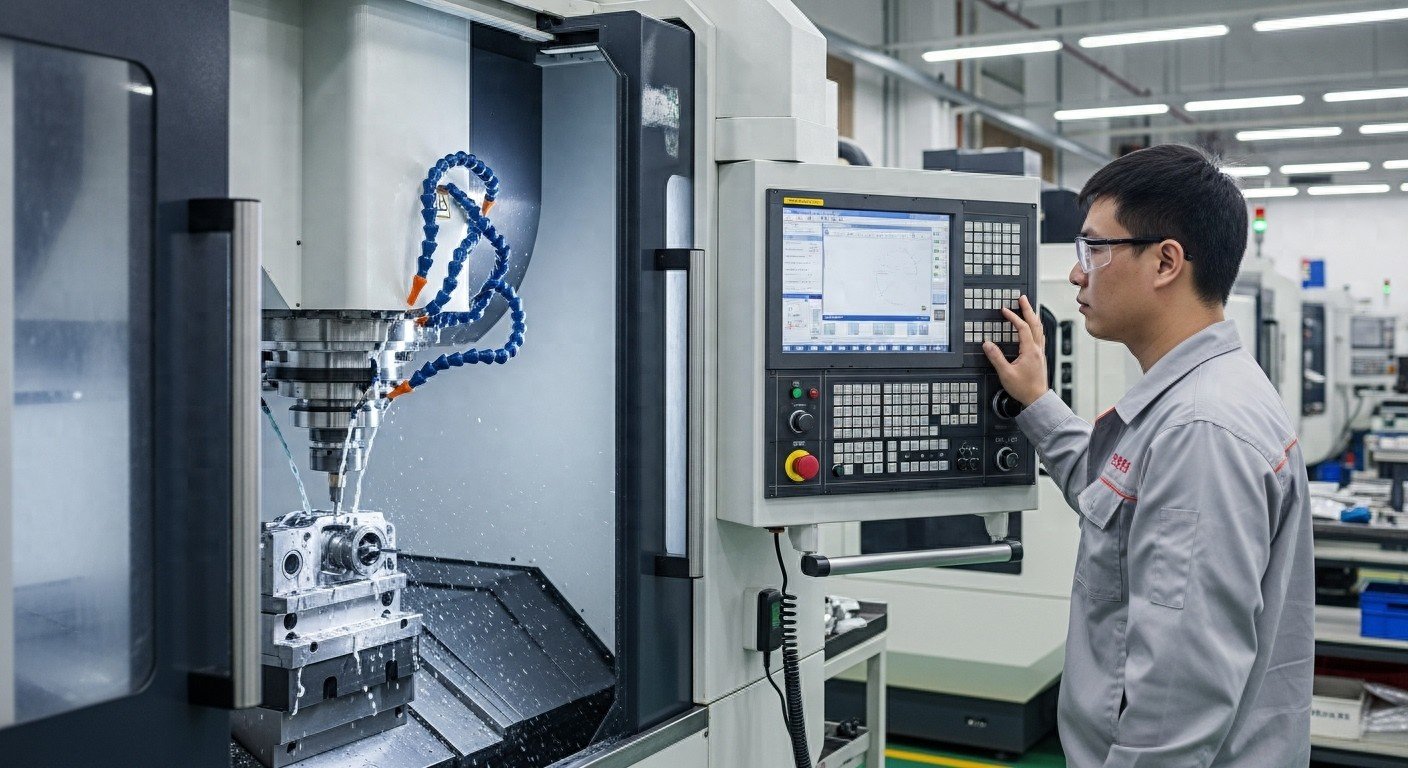
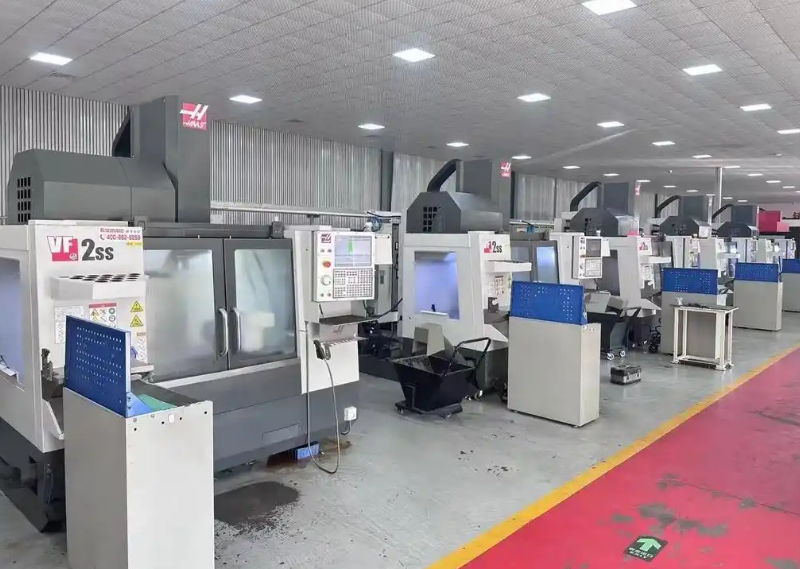
The entity of a CNC machine tool is the body of the machine, which is the mechanical part that is used to complete the actual cutting process, which covers the bed, and also the base, with the table, including the saddle, and the spindle.
CNC machiningCharacteristics of the process
CNC numerical controlProcessingFollow the laws of machining cutting, and ordinary machine tool machining process is more or less the same, it is the computer control technology used in the field of machining automated processing, high processing efficiency, high precision features, the processing process has unique features, the process is more complicated, step by step arrangement of detailed and intensive.
The selection of tools, cutting parameters to determine the design of the knife process route is included in the CNC CNC machining process.CNC CNC machining process is the basis of CNC programming is the core, only reasonable process can be programmed with high efficiency CNC program, can be programmed with high quality CNC program. Measure the standard of good and bad CNC program is: the minimum processing time, the minimum tool loss, the best results of the processed workpiece.
CNC machining process belongs to the overall processing of the workpiece process category, exactly one of the processes, it must be with other processes before and after each other, in order to ultimately coincide with the overall machine or mould assembly requirements, so that the quality of parts can be processed to meet the standards.
The process of CNC machining, roughly, is distinguished in this way, including the roughing of this link, as well as the roughing of this link, but also covers the semi-finishing and finishing and many other steps.
CNC programming for CNC
CNC programming is the whole process of moving from the drawing of a part to obtaining a CNC machining programme. It has the main task of calculating the tool position points, also known as points, or CL points for short, during the machining process. The CL point is generally taken as the intersection of the tool axis and the tool surface, and in multi-axis machining, the tool axis vector has to be given.
In the CNC machine tool, according to the requirements of the workpiece drawings and then in accordance with the machining process, the amount of movement of the tool and the components, as well as the speed, and the sequence of action, coupled with the spindle speed, as well as the direction of rotation of the spindle, the cutterhead clamping, cutterhead loosening, as well as cooling, and other operations, through the form of the required CNC code compiled into the programme form, and then input to the machine tool special-purpose computers. Subsequently, the CNC system is compiled based on the input instructions, then operated, and then after logical processing, various signals and instructions are output to control various parts in accordance with the specified displacement and sequential action, so as to process a variety of different shapes of workpieces. Therefore, the compilation of the programme has a great impact on the performance of the CNC machine tool.
Must represent a variety of different functions of the instruction code, in the form of a programme input to the CNC machine tool numerical control device, the numerical control device will carry out arithmetic processing, and then send out pulse signals to control the operation of the various moving parts of the CNC machine tool, in order to complete the cutting process of the parts.
Currently, there are two standards for CNC programmes, one is ISO (International Organisation for Standardisation) and the other is EIA (Electronic Industries Association), which is the ISO code adopted in China.
As a result of technological advances, CNC programming for 3D is often rarely done by hand, but rather with commercialised CAD/CAM software.
The core of the computer-aided programming system is CAD/CAM, which has the function of data input/output, but also can carry out the calculation of machining trajectory, as well as editing the machining trajectory, can set the process parameters, can realise the machining simulation, will carry out the post-processing of CNC program, and also has the function of data management.
Nowadays, in our country, the user is very popular, with powerful CNC programming software exists, UG,, CAXA and so on. Each software for CNC programming principles, graphics processing and machining methods are all similarities and differences, but each has its own characteristics.
Steps for CNC machining parts
1. Analyse the drawing of the part to know the general situation of the workpiece, covering the geometry, and the material of the workpiece, as well as the process requirements.
2, to determine the parts of the CNC machining process (processing content, processing route)
3. Perform the necessary numerical calculations (calculation of coordinates of base points and nodes)
4、Prepare the programme sheet (it will be different for different machine tools, comply with the user manual)
5. Programme verification (input the programme into the machine tool and carry out graphical simulation to verify the correctness of the programming)
6. Processing of workpieces (good process control can be extremely effective in saving time and improving the quality of processing).
7, if the workpiece to carry out testing, if qualified, so that it flows into the next process, if it is not qualified, then, with the help of quality analysis to find the cause of the error and seek to correct the way, this is the acceptance of the workpiece as well as the quality of the error analysis.
History of CNC machine tools
After the end of the Second World War, most of the manufacturing production is carried out with the help of manual operation, when the workers understand the drawings, to operate the machine tool by hand, and then to be processed parts, through such a way to produce products, the cost is relatively high, the efficiency is relatively low, and the quality is not up to the same degree of assurance.
At the end of the 1940s, an American engineer named Parsons (John) conceived the idea of punching holes in a cardboard card to represent the geometry of the part to be machined, and using the card to control the movement of the machine tool, which, at the time, was just an idea.
In 1948, Parsons showed his idea to the U.S. Air Force, the U.S. Air Force has seen, showed great interest, because the U.S. Air Force was looking for an advanced processing methods, looking to solve the aircraft profile sample processing problems, given the complex shape of the sample plate, the precision requirements of the general equipment is difficult to adapt, the U.S. Air Force immediately commissioned and sponsored the U.S. Massachusetts Institute of Technology (MIT) to carry out research, to develop this machine controlled by cardboard. To develop this machine tool controlled by hard cardboard, finally in 1952, MIT and Parsons collaborated to successfully develop the first demonstration machine, to 1960, the simpler and more economical point control drilling machine, as well as linear control CNC milling machine to achieve faster development, so that CNC machine tools in various sectors of the manufacturing industry gradually to be promoted.
The history of CNC machining, has been up to more than half a century, NC numerical control system, but also from the earliest analogue signal circuit control began to develop, and then become extremely complex integrated machining system, programming, but also from the manual development, the evolution of intelligent, powerful CAD / CAM integrated system.
In China, the development of CNC technology is relatively slow, for most of the domestic workshop, there are backward equipment, personnel lagging behind the technical level, the concept also reflects the short board and other circumstances resulting in poor processing quality, processing efficiency is not high, but also often delays in the delivery of the problem.
1, the first generation of NC system was introduced in 1951, its control unit is mainly composed of a variety of valves as well as analogue circuits, the first CNC machine tools were introduced in 1952, has been developed from the milling machine or lathe to the machining centre, which has become the key equipment of modern manufacturing.
2. The second generation of NC systems was produced in 1959, and it was mainly composed of individual transistors as well as other components.
3. The third generation of NC systems was introduced in 1965, which used integrated circuit boards for the first time.
4, in fact, in 1964, the fourth generation of NC system has been developed, which is very familiar with the computer numerical control system, also known as CNC control system.
5. In 1975, the NC system adopted a microprocessor with powerful functions, and the NC system applied by this microprocessor was the fifth generation of the NC system.
6, the sixth generation of the NC system, the use of the current integrated manufacturing system, that is, MIS, and the use of DNC, and also the use of flexible machining system, that is, FMS.
Trends in CNC machine tools
1. High-speed
Accompanied by the high-speed development of the automotive industry, accompanied by the high-speed development of the defence industry, accompanied by the high-speed development of the aviation industry, accompanied by the high-speed development of the aerospace industry, as well as aluminium alloys and other new materials are used for CNC machine tool processing, high-speed requirements have become increasingly high.
a. Spindle speed, the machine tool is used in the kind of spindle, that is, the spindle motor, which has a maximum spindle speed of / min such a situation.
b. With a resolution of 0.01µm, a maximum feed rate of 240m/min can be achieved, and accurate machining of complex surfaces is possible.
c. In terms of operation speed, the rapid development of microprocessors has ensured the development of CNC systems in the direction of high-speed and high-precision, which has led to the development of 32-bit and 64-bit CPUs, and the frequency has been increased to hundreds of megahertz and thousands of megahertz. Because of this significant increase in computing speed, it is possible to obtain feed speeds of up to 24 to 240 m/min at resolutions of 0.1 µm and 0.01 µm.
d. Tool change speed: nowadays, those advanced foreign machining centres, the tool exchange time, generally speaking, has been in almost 1 second or so, which is high, has reached 0.5 seconds. A German company, the tool magazine designed as a basket style, is to the spindle as the axis, the tool is in the circle where the arrangement, it is from the knife to the knife tool change time is only 0.9 seconds.
2. High precision
It is no longer limited to the static geometric accuracy of the CNC machine tool accuracy requirements, machine tool motion accuracy, thermal deformation of the machine tool, as well as the vibration of the monitoring and compensation of the increasing attention.
a. Improve the CNC system control accuracy, first of all, the use of high-speed interpolation technology, followed by a small program segment to achieve continuous feeding, in order to make the CNC control unit refinement, and then the use of high-resolution position detection devices to improve the position detection accuracy, and finally the position of the servo system using feed-forward control and non-linear control and other methods.
b. The use of error compensation technology, the use of reverse gap compensation technology, the use of screw pitch error compensation technology, the use of tool error compensation and other technologies, for the thermal deformation of the equipment to carry out comprehensive compensation, for the equipment to carry out comprehensive compensation of spatial error.
c. Adopt the grid method to check, so as to improve the accuracy of the motion trajectory of the machining centre, and predict the machining accuracy of the machine tool with the help of simulation, so as to ensure the positioning accuracy of the machine tool as well as the repetition positioning accuracy, so as to maintain its performance in a long time in a stable state, and to be able to achieve a variety of machining tasks under different operating conditions, and at the same time to ensure the machining quality of the parts.
3. Functional complexity
Multi-axis linkage CNC machine tools are more and more welcome by large enterprises, because of modern machining requirements continue to improve, composite machine tools can be achieved on a machine tool or as far as possible to complete a variety of elements from the blank to the finished product processing, according to the structural characteristics can be divided into process composite and process composite two types of machining centres can be completed turning, milling, drilling, hobbing, grinding, laser heat treatment, and other processes, and can be completed on complex parts of the All processing.
4. Intelligent control
Along the trajectory of the forward development of artificial intelligence technology, in view of the need to reach the manufacturing industry to present a flexible production and manufacturing to achieve automation of such development needs, the degree of intelligence of CNC machine tools continue to be in the process of improving. Specifically in the following aspects are reflected:
a. Process adaptive control technology;
b. Intelligent optimisation and selection of machining parameters;
c. Intelligent fault self-diagnosis and self-repair technology;
d. Intelligent fault playback and fault simulation techniques;
e. Intelligent AC servo drives;
f. In the manufacturing process, there is an intelligent 4M CNC system, which integrates the measurement part, the modelling part, the machining part and the machine operation part, the 4Ms, in the same system.
5. Openness of the system
a. Openness to future technologies, as the interface between software and hardware is based on widely recognised standard protocols that can be adopted, accommodated and made compatible for the new generation of common software and hardware.
b. We are open to the special requirements of users, including updating products, expanding functions, but also to provide a variety of combinations of hardware and software products with different combinations, in order to meet the requirements of special applications.
c. With regard to the construction of CNC standards, there exists a standardised programming language which, on the one hand, provides ease of use for the user and, on the other hand, reduces the consumption of labour directly related to operational efficiency.
6. Parallelisation of drives
Able to achieve multi-coordinate linkage CNC machining, with assembly functions, but also has a variety of characteristics of measurement, but also more able to meet the requirements of complex special parts processing, and parallel machine tools are regarded as “since the invention of CNC technology in the machine tool industry's most significant progress”, as well as “a new generation of the 21st Century CNC Machining Equipment of the 21st Century”.
7. Polarisation (miniaturisation and miniaturisation)
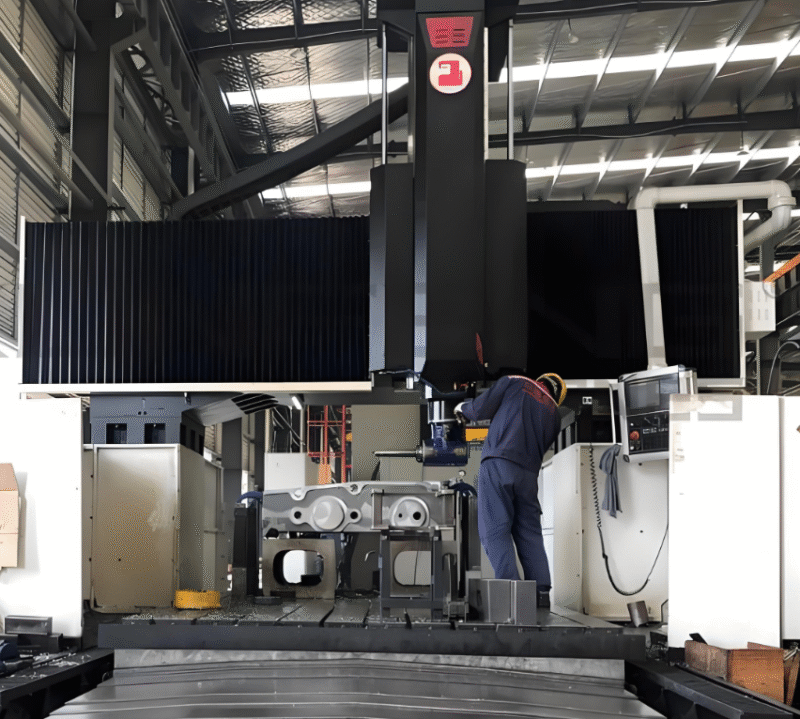
The development of national defence, the need for large-scale and good performance of CNC machine tools support, the development of aviation, also need large-scale and good performance of CNC machine tools support, the development of aerospace industry, the same need for large-scale and good performance of CNC machine tools support, energy and other basic industrial equipment large-scale, or the need for large-scale and good performance of CNC machine tools support. Ultra-precision machining technology is a strategic technology of the 21st century, the need to develop new manufacturing processes and equipment to adapt to the micro-small size and micro-nanometer machining accuracy, micro-nanotechnology is also a strategic technology of the 21st century, the need to develop new manufacturing processes and equipment to adapt to the micro-small size and micro-nanometer machining accuracy.
8. Networking of information interactions
Can reach the network resource sharing, but also be able to do remote monitoring and control of CNC machine tools, as well as remote diagnosis and maintenance of punctuation.
9. Greening of processes
In recent years, machine tools continue to appear, these machine tools do not use coolant, or less coolant, can achieve dry cutting, semi-dry cutting, with energy-saving and environmentally friendly features, the general trend of green manufacturing prompted the accelerated development of a variety of energy-saving and environmentally friendly machine tools.
10. Application of multimedia technologies
Multimedia technology, combined with computer, audio and video and communications technology in one, so that the computer now has a comprehensive treatment of sound, text, images and video information capabilities. Can achieve integrated information processing, intelligent, for real-time monitoring system, for production site equipment troubleshooting, for production process parameter monitoring, so there are significant application value.



 Chinese
  Japanese
  English
  German
  Finnish
No comments