

Shenzhen Ruitong Precision Machinery Co.
Can be customised, the material is peek, product specifications have a variety of, also supports customization, the use level of industrial, not imported, the goods number is peek shaped parts, the mode of transport is logistics, the note description is customized according to the need, the processing level of the extrusion level, the characteristics of the level of the high temperature and corrosion resistance.
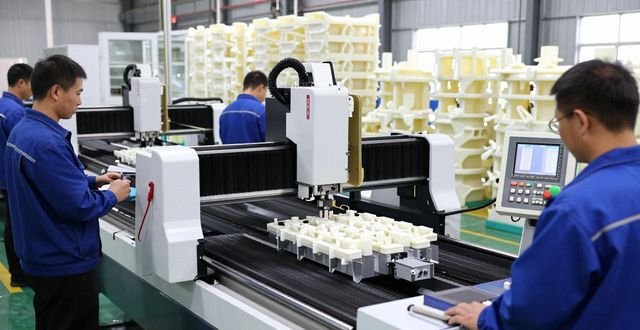
2.5-dimensional CNC machining, is a type of machining, it is between two-dimensional and three-dimensional, mainly used for the processing of plane or simple surface, it has a wide range of applications in the manufacturing industry, the following are its main areas of application as well as characteristics:
-
### **Application area**
1. **Mould manufacturing**
Processing of the planes involved in moulds, which are used for contours; also for simple surfaces, such as the existence of some of these moulds, like stamping moulds, such as injection moulds, and so on.
- Ideal for the manufacture of mould parts that require high precision.
2. **Parts processing**
- Used for machining flat parts such as flanges, gaskets, gears, etc.
- Ideal for mass production of small and medium-sized parts.
3. **Electronics industry**
- Machining of flat or simply curved parts such as PCB boards, electronic housings, heat sinks, etc.
4. ****
In the manufacture of aircraft components, such as wing skins and supports, there are corresponding requirements in terms of precision and surface quality.
5. **Automotive manufacturing**
- Machining of body panels, engine parts, chassis components, etc.
6. **Instruments**
- Manufacture of surgical instruments, implants, device housings, etc.
7. **Art and design**
- Used for engraving, relief carving and other artwork, suitable for flat or shallow curved designs.
-
### **Features**
1. **Nature**
- More than 3D machining, suitable for mass production.
2. **High accuracy**
- Capable of high-precision surface and contour machining.
3. **Low cost**
- Equipment and programming costs are lower than 3D machining, making it suitable for projects with limited budgets.
4. **Ease of use**
- Relatively simple programming and operation, suitable for beginners or simple tasks.
5. **Limitations**
- Unable to handle complex curved surfaces and three-dimensional structures, suitable for flat or shallow surface machining.
-
### **advantage**
In the field of flat surface machining, 2.5-dimensional CNC machining can achieve volume and realisation rates at relatively low cost.
- Suitable materials for processing include metal, plastic, wood, etc.
-
### **summary**
2.5-dimensional CNC machining has an important role to play in the manufacturing industry, especially for flat or simple curved surfaces. It strikes a good balance between efficiency, cost and accuracy and is used in many industries.
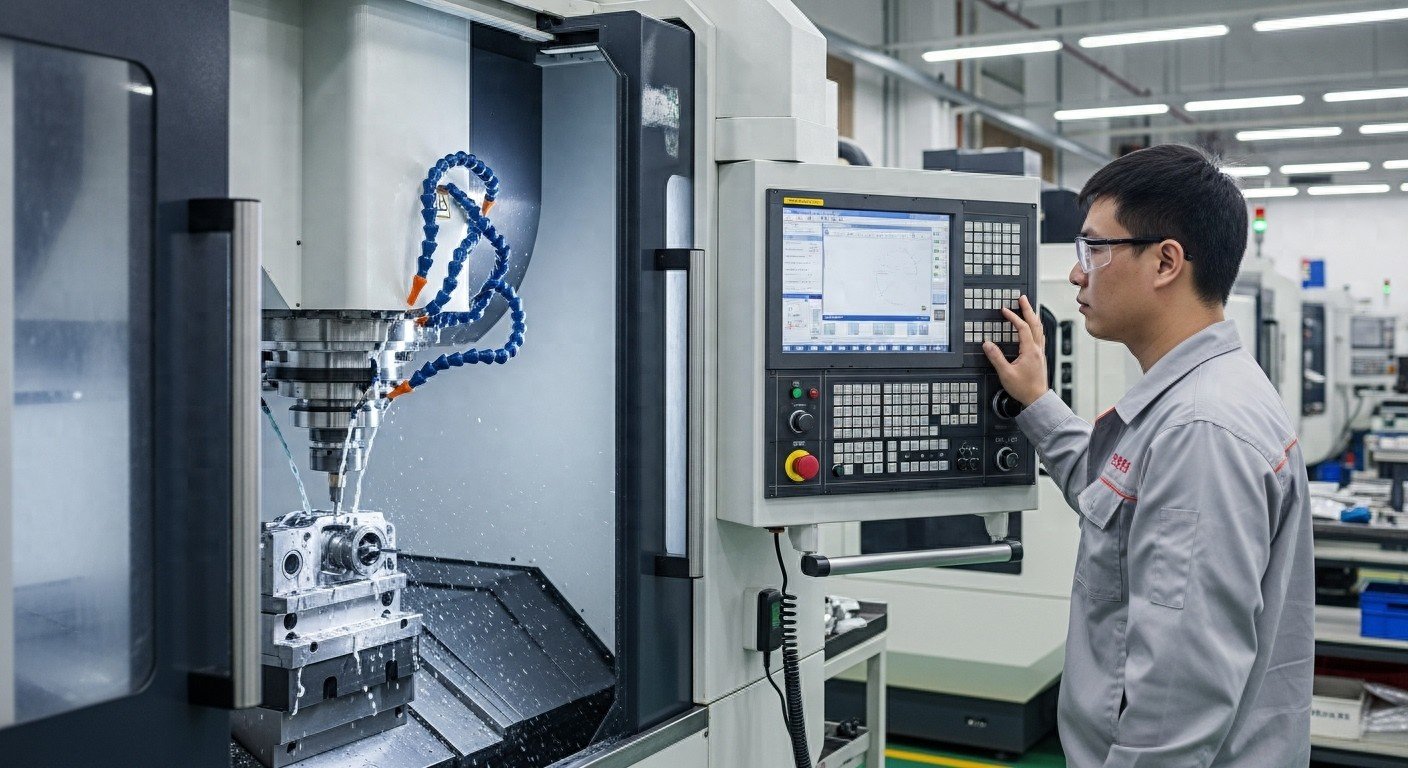
Four-axis CNC, also known as computer numerical control machining, is a manufacturing technology that adds a fourth axis to the traditional three-axis X, Y, and Z, usually the A or B axis, which is a rotary axis. It uses this type of machining to achieve more complex parts, thus improving machining efficiency and accuracy. The following are the main functions and applications of 4-axis CNC machining:
### 1. **Multifaceted processing**
A 4-axis CNC can complete the machining of multiple surfaces in a single mounting, which reduces the frequency of re-positioning of workpieces and ultimately improves machining accuracy and efficiency.
- For example, it is possible to machine the front, sides and back of a part in one process.
### 2. **Complicated surface machining**
Four-axis CNCs, which work in conjunction with rotary axes to produce complex surfaces and contours, such as spiral grooves, cams, and impellers.
- This is particularly important for the machining of complex parts in areas such as, automotive manufacturing.
### 3. **continuous processing**
The 4-axis CNC is capable of continuous rotary machining and is suitable for workpieces that require continuous cutting, such as cylindrical parts and gears.
- This type of processing reduces downtime and increases productivity.
### 4. **High-precision machining**
With 4-axis linkage, CNC machines are able to achieve higher precision machining, which reduces human error and also reduces clamping errors.
- This is important in areas such as precision parts and mould making.
### 5. **Reduced wear and tear**
The 4-axis CNC can be used to optimise paths and adjust the machining angle to reduce wear and tear, thus increasing life expectancy.
- It also reduces vibration during machining and improves machining quality.
### 6. **Automated production**
The 4-axis CNC can be integrated with an automation system that includes robots, conveyor belts, and so on. In this way, automated production can be achieved, which can reduce human intervention and thus improve production efficiency.
### 7. **Highly flexible**
The 4-axis CNC has the ability to flexibly adjust the machining paths for different machining needs, as well as the angle, which makes it suitable for machining a wide range of complex parts.
- For example, parts with features such as inclined holes, bevelled surfaces, spiral grooves, etc. can be machined.
### 8. **Reduced processing time**

Since the 4-axis CNC is capable of machining multiple surfaces in a single clamping, it reduces the time required for repositioning and clamping the workpiece, thus shortening the overall machining time.
### 9. **Widely used**
4-axis CNC has a wide range of applications in many fields, including automotive manufacturing, mould manufacturing, instruments, electronic equipment, etc. It is particularly suitable for processing parts with complex shapes and high precision requirements.
### 10. **Enhanced processing capacity**
Four-axis CNCs have the ability to machine parts that are difficult to handle with conventional three-axis CNCs, such as parts with complex curved surfaces, as well as parts with inclined surfaces and parts with helical configurations, thus enhancing the machine's machining capabilities.
### Summary:
CNC machining with four axes, with the addition of rotary axes, has significantly increased the machining capacity of the machine and improved its flexibility, which in turn allows it to handle more complex parts, reducing machining time and wear and tear, and improving productivity and machining accuracy. It is playing an increasingly important role in modern manufacturing, especially in areas that require high precision and complex shapes.
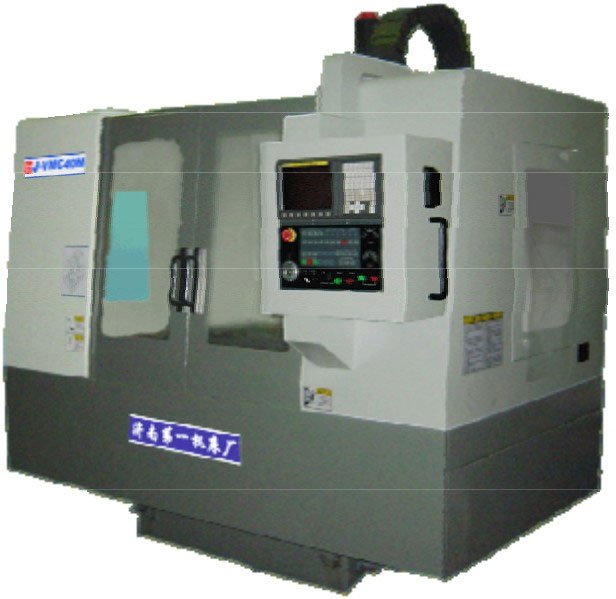
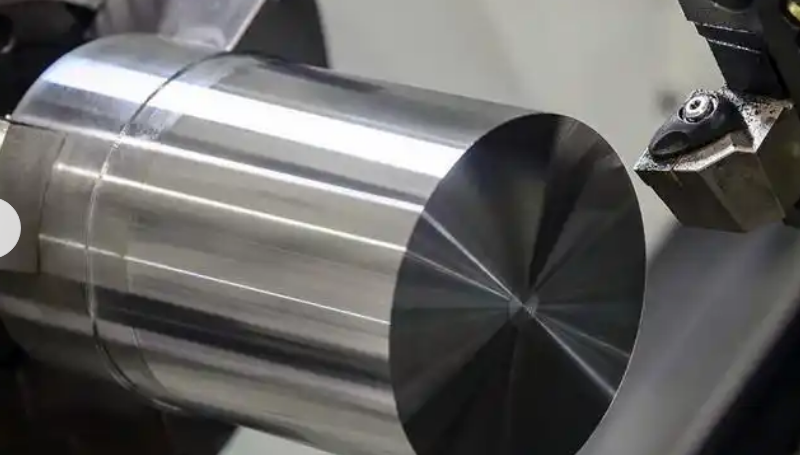
The technology that carries out precision machining by controlling the machine tool through a computer programme is numerically controlled lathe (CNC) machining, which has these key features.
### 1. **High accuracy and consistency**
CNCs for machining, with digital control, can achieve high machining precision, generally to the micron level, or even higher.
- Good consistency in repeated processing due to programme control, suitable for mass production.
### 2. **Highly automated**
CNC lathes are capable of automating complex machining jobs, cutting down on manual intervention and increasing productivity.
The machine is able to automatically carry out changeover operations, perform workpiece clamping and select machining paths with the help of pre-programmed programmes.
### 3. **Machining of complex shapes**
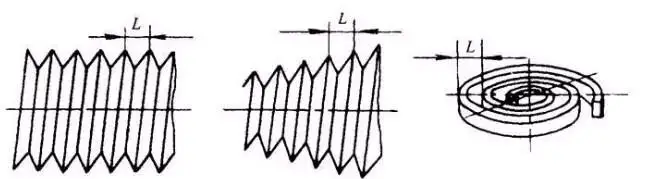
CNC lathes are capable of machining complex geometries such as curved surfaces, tapers, threads, etc. Complex structures that are difficult to achieve with conventional machines can be easily perfected with CNC.
Provides support for multi-axis linkage, as in the case of 3-, 4-, and 5-axis, to achieve more complex machining requirements.
### 4. **Highly flexible**
By modifying the machining programme, it is possible to quickly switch between machining tasks, thus adapting the machining to the needs of different workpieces.
- Suitable for small-lot, multi-variety production mode.
### 5. **High productivity**
- CNC machining allows for continuous operation, reducing downtime and increasing productivity.
- Fast machining speeds and the ability to perform multiple processes simultaneously shorten production lead times.
### 6. **Reduction of human error**
The machining process is controlled by a programme, which reduces errors caused by human operation and thus improves the quality of machining.
### 7. **Adapted to a wide range of materials**
CNC lathes are capable of working with a wide range of materials, including metals, such as steel, aluminium and copper, as well as plastics and composite materials.
### 8. **Traceability**
- Machining programs can be saved and reused for easy traceability and optimisation of the machining process.
### 9. **Reduced labour intensity**
Operators, who are mainly responsible for programming and monitoring, are less labour-intensive and work in a relatively safe environment.
### 10. **Higher initial cost**
CNC equipment is expensive, as is programming software, however, in the long run, its performance reduces overall production costs, as does its accuracy.
### 11. **Technical support required**
It requires a certain level of technical knowledge and experience to operate and maintain CNC equipment, which covers programming, as well as selection and maintenance of the equipment.
### 12. **Environmental protection and energy conservation**
Modern CNC equipment is generally designed to be energy efficient, with the ability to reduce energy consumption and material waste.
In conclusion, CNC lathe CNC machining, with its high precision, high productivity and high flexibility, occupies a very important position in the modern manufacturing industry, and is widely used in many fields, such as automotive, moulds, electronics and so on.
The specialised use of computer numerical control (CNC) technology to process plastics in a way that ensures a high degree of refinement is called CNC machining of plastics, and it is programmed to achieve control over the operation of the machine tool to achieve various operations such as cutting, drilling, milling, and engraving of plastic workpieces, etc. Below are the main features and application areas of CNC machining of plastics. The following are the main functions and applications of plastic CNC machining.
-
### 1. **High-precision processing**
CNC machining, which is capable of achieving micron-level accuracy, is the case for plastic parts that require high dimensional accuracy.
- Ideal for machining complex geometries, ensuring consistency and accuracy of workpieces.
### 2. **Complex shape processing**
Complex 3D shapes can be processed, curved surfaces can be handled, and internal structures can be created to meet diverse design needs.
- Ideal for making moulds, prototypes, custom parts, etc.
### 3. **Multiple plastic material processing**
It is suitable for colourful many different plastic materials, such as the kind of ABS, and PC is polycarbonate, plus PMMA that is acrylic, in addition to POM is also known as steel, as well as nylon, and then there is PTFE is also known as Trojan and so on.
- Ability to adjust machining parameters according to material characteristics to ensure quality.
### 4. **Small volume production**
- Ideal for small batch or customised production, no need to open moulds, drop and time.
- For rapid prototyping and product development.
### 5. **Surface treatment**
CNC machining enables a smooth surface finish to be achieved, thus reducing the need for subsequent polishing or sanding.
- Support surface decoration process such as engraving and lettering.
### 6. **Multifunctional processing**
- Supports a wide range of machining operations such as milling, drilling, cutting, threading, etc.
- Multiple processing steps can be done on one machine, raising the rate.
### 7. **Rapid prototyping**
- Combined with CAD/CAM software, it is possible to quickly convert designs into solid workpieces.
- Shorter product development cycles and faster market response.
### 8. **Cost-effectiveness**
CNC machining has a cost advantage over traditional injection moulding for small batches of parts, as well as for complex parts.
- Reduced material waste and improved resource utilisation.
### 9. **Widely used**
- **Electronics industry**: processing of insulated parts, housings, connectors, etc.
- **Industry**: Production of instruments, accessories and consumables.
- **Automotive industry**: production of lightweight plastic parts.
- **Consumer goods industry**: manufacture of toys, household goods, decorative pieces, etc.
- ****: Machining high-performance plastic parts.
### 10. **Environmental protection and sustainability**
- Use of recyclable plastic materials to reduce environmental impact.
- Support green manufacturing by reducing waste through precision machining.
-
In short, plastic CNC machining with its high precision characteristics, as well as the characteristics of flexibility, but also the advantages of versatility, and thus developed into an important technical means of plastic parts manufacturing, and is widely used in a number of different industries and in many fields.
Five-axis CNC, or Computer Numerical Control, is a manufacturing technology that allows for simultaneous machining operations in five different axes. Compared to traditional three-axis CNC machining, this mode of machining offers greater flexibility and precision, and is able to cope with more complex geometries, here are some of the key features of five-axis CNC machining:
1. With regard to the processing of complex shapes.5-axis CNC machiningIt is capable of handling surfaces with complex qualities, as well as complex geometries such as turbine blades, moulds, components, etc., which are difficult to achieve in conventional 3-axis machining.
2. 5-axis CNC for machining, can be in multiple axes at the same time and simultaneous implementation of machining operations, which can reduce the number of times the workpiece is clamped, can improve productivity, but also can reduce the error caused by multiple fixturing.
3. 5-axis CNC machining has been shown to improve machining accuracy by controlling the path more accurately and reducing interference with the workpiece, resulting in improved surface quality.
4. 5-axis CNC machining can significantly reduce machining time and increase productivity by using multiple axes simultaneously.
5. Promote the reduction of wear and tear, 5-axis CNC machining can achieve the reduction of wear and tear through the optimisation of the path, to achieve a longer service life, and to achieve the reduction of production costs.
6. Five-axis CNC machining enables more efficient use of materials and reduces waste, which is particularly critical when machining expensive or scarce materials, and through which material utilisation can be improved.
7. With 5-axis CNC machining, designers are able to design and manufacture more complex and innovative products with greater design freedom, thus increasing design flexibility.
8. For different materials, such as metals, plastics, composites, etc., 5-axis CNC machining has the ability to adapt to their machining requirements, and this ability reflects the characteristics of adaptability.
9. Machining is highly automated and 5-axis CNCs can be combined with automation systems to achieve highly automated production processes, reducing manual intervention and improving productivity and consistency.
10. **Multi-tasking**: 5-axis CNC machining centres are generally equipped with a number of attachments that can carry out a number of types of machining tasks together, such as milling, and drilling, in addition to tapping and so on.
5-axis CNC machining technology, which is widely used in automotive manufacturing, in the field of machinery, and also in the field of mould making, is part of the modern manufacturing industry.
Five-axis CNC machining, is a high-precision CNC machining technology, but also a high-efficiency characteristics of CNC machining technology, which is suitable for complex surface machining needs, it applies to have a multi-angle machining needs, it applies to have a multi-faceted machining needs, its scope of application is very broad, covering a variety of industries, covering a variety of fields, mainly contains the following Several aspects:
### 1. ****
Turbine blades, for example, belong to the category of complex parts machining, which usually also includes engine parts machining, as well as fuselage structural parts machining and so on.
High precision is required, and the part has high demands for accuracy and surface quality, which 5-axis CNC machining is capable of meeting.
### 2. **Automotive Manufacturing**
- **Mould manufacturing**: e.g. automotive cover part moulds, interior part moulds, etc.
The machining of components ranges from engine blocks to gearbox housings and steering system parts.
### 3. **Instrument **
- **High precision parts**: e.g., dental implants, surgical instruments, etc.
When machining complex shapes, machines generally require complex geometries, and 5-axis CNC machining can achieve high precision and complex shapes.
### 4. **Energy sector**
- **Turbine components**: e.g. gas turbine blades, hydraulic turbine blades, etc.
- **Nuclear energy equipment**: e.g., nuclear reactor components, pressure vessels, etc.
### 5. **Mould Manufacturing**
- **Complex moulds**: e.g. injection moulds, die-casting moulds, stamping moulds, etc.
In terms of high-precision machining, mould manufacturing has high requirements for precision and surface quality, and 5-axis CNC machining can achieve high-precision machining of complex surfaces.
### 6. **Shipbuilding**
- **Hull components**: e.g. propellers, rudder blades, hull structural parts, etc.
Five-axis CNC machining can be used to achieve complex curved surfaces for many components in shipbuilding.
### 7. **Precision machinery**
- **High-precision parts**: such as precision instruments, optical equipment, and precision transmission parts.
For precision mechanical parts, which often have complicated geometric shapes, 5-axis CNC machining can achieve high precision and meet the requirements of complex shape objects, and then meet the needs of complex shape processing.
### 8. **Electronics industry**
Precision parts include mobile phone shells such as parts ah, and electronic connectors of this species type which, as well as semiconductor equipment parts and other such objects it.
Complex structures with multiple refined micro-sized parts exist in many parts in the electronics industry, and 5-axis CNC machining enables the practice of high-precision and complex structures of the machining of the period.
### 9. **Art and design**
- **Complex sculptures**: e.g. works of art, decorative objects, architectural models, etc.
Five-axis CNC machining enables the realisation of design requirements, which involve complex parts, and also personalised parts with punctuation.
### 10. **Industry**
- **High-precision parts**: e.g., system components, parts, components, etc.
There are a number of bits and pieces in the industry that have complicated constructions and the stringent conditions required for accuracy, and 5-axis CNC machining is the way to go to meet these aspects.
### Summary
5-axis CNC machining is suitable for those parts and components that require high precision, for parts and components with complex shapes, for parts and components to be machined at multiple angles, widely used in the field of automotive manufacturing, widely used in the field of equipment, widely used in the field of energy industry, widely used in the field of mould manufacturing, widely used in the field of shipbuilding, widely used in the field of precision machinery, widely used in the field of electronics industry, widely used in the field of art and design and other and more areas. electronics industry, art and design and many more. Its high efficiency and flexibility make it a vital processing technology in modern manufacturing.



 Chinese
  Japanese
  English
  German
  Finnish
No comments