

machiningVibration and control studies in
Vibration is a problem that cannot be avoided during machining, and it can have an impact on the quality of machining, on the life of tools, and onprocessing efficiencyThe effects of vibration in machining are discussed in this paper. In this paper, the effects of vibration in machining are investigated and corresponding vibration control methods are proposed. The effects of vibration in machining are analysed, including the effects on machining accuracy, surface quality and efficiency. The commonly used vibration control methods in machining are discussed, and through the research in this paper, effective control methods can be given for the vibration problems in machining to improve the quality and efficiency of machining, which has certain practical application value.
Keys: machining; vibration and control; research
1 Effects of vibration in machining
1.1 Effect of vibration on machining accuracy
In machining, the impact of vibration on machining accuracy is an important issue. Firstly, vibration can cause changes in the relative position of the machining equipment and the workpiece, thus affecting the machining accuracy. Secondly, vibration can cause small deflections of the machining tool, resulting in dimensional deviations. In addition, vibration will cause unstable changes in cutting force, which will have an impact on machining quality. Therefore, reducing the impact of vibration on machining accuracy is of great significance in improving machining accuracy.
1.2 Effect of vibration on machining quality
In machining, vibration not only affects machining accuracy, but also plays a key role in the quality of the machined surface. Changes in cutting forces caused by vibration can cause ripple marks to appear on the machined surface, affecting the finish and roughness of the machined surface. In addition, vibration can cause micro-cracks on the machined surface, reducing the surface strength and wear resistance of the workpiece. Therefore, reducing the impact of vibration on machining quality is of great significance to improve the machining surface quality.
1.3 Effect of vibration on machining efficiency
The impact of vibration on machining efficiency is another important issue in machining. Vibration can cause machining tools to oscillate and shake, which increases the chances of wear and damage to the tool. At the same time, vibration also causes the cutting process to become unstable, which affects machining efficiency and cycle time. In addition, vibration will also make the processing of interruptions, which greatly increases the processing time and cost. Therefore, reducing the impact of vibration on machining efficiency is very important for improving machining efficiency.
2 Vibration control methods in machining
2.1 Active vibration control technology
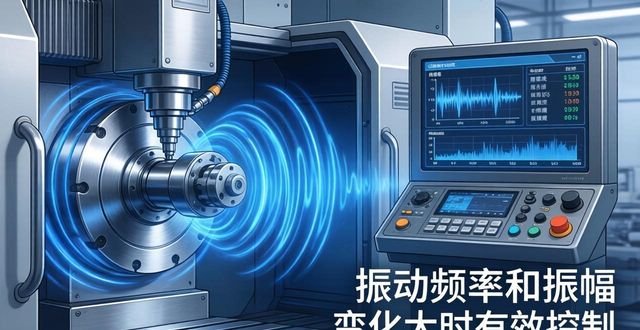
Reducing vibration by actively intervening in the system is known as active vibration control. The core concept is to use sensors to monitor vibration signals in real time, and then use controllers to adjust the system in real time to offset or reduce the impact of vibration. Active vibration control technology generally covers vibration sensors, controllers and actuators.
To collect vibration signals from mechanical systems, vibration sensors are used, such as acceleration sensors, velocity sensors, and displacement sensors, all of which can be used for vibration monitoring. Secondly, the controller, as the core component of active vibration control technology, can calculate the control commands in real time based on the vibration signals collected by the sensors and send them to the actuators. Finally, the actuator follows the controller's instructions to make real-time adjustments to the system to counteract or reduce the effects of vibration.

Active vibration control technology with strong real-time characteristics, which can achieve effective control in the case of large changes in vibration frequency and amplitude, and the control effect is good. However, the active vibration control technology has certain limitations, which covers the problem of high system cost, and the complexity of the controller design and other conditions. Therefore, in the actual application of the time to consider the characteristics and needs of the system, and then select the appropriate active vibration control technology programme.
2.2 Passive vibration control technology
Passive vibration control technology with the role of reducing the vibration response of the system, is to increase the system damping, mass or stiffness and other parameters to achieve the method, the core concept is to introduce some kind of passive components in the system, so as to absorb or disperse vibration energy, and thus reduce the amplitude of the vibration, a common passive vibration control technology includes dampers, mass blocks and vibration absorbing materials, and so on.
In passive vibration control technology, one of the commonly used methods is the damper, which is used to dissipate the vibration energy by introducing damping elements such as viscous dampers, liquid dampers, etc. into the system to reduce the vibration response of the system. Secondly, mass block technology is used to reduce the vibration amplitude by adding mass blocks to the system to change the vibration characteristics of the system. Finally, the vibration absorbing material technology uses the properties of vibration absorbing materials to install vibration absorbing materials in the system to absorb vibration energy and reduce the vibration response of the system.
Passive vibration control is a simple, reliable and cost-effective technique that is suitable for situations where the frequency and amplitude of vibrations vary little. However, passive vibration control technology has certain limitations, such as the need to modify the system structure, can not achieve real-time control and other issues. Therefore, it is important to fully consider the characteristics and needs of the system in order to select the appropriate passive vibration control technology.
2.3 Hybrid vibration control technology
Combine active vibration control technology and passive vibration control technology, in order to give full play to the advantages of both, and then realise a more effective control method of mixed vibration, this is the hybrid vibration control technology, the core idea of this technology is to introduce active control and passive control elements into the system at the same time, by virtue of the integrated to regulate and achieve the effective control of vibration, the mixed vibration control technology can fully Hybrid vibration control technology can fully utilise the real-time and accuracy highlighted by active control technology, while at the same time leveraging the simplicity, reliability and low-cost features of passive control technology.
In order to realise the hybrid vibration control technology, it is necessary to fully consider the characteristics and needs of the system, select the appropriate active and passive control components, and also design a reasonable control strategy. After reasonable design and adjustment, in different vibration frequency and amplitude changes, hybrid vibration control technology can achieve more effective vibration control effect, with high practical value.
Vibration control methods in machining to carry out in-depth research, to be analysed, so that we can fully exert the advantages of different vibration control technology, and then put forward targeted technical solutions to effectively deal with vibration problems in machining, improve processing quality and efficiency. Hybrid vibration control technology will become an important trend in the future development of vibration control in machining, with broad application prospects.
3 Application of vibration sensing technology in machining
3.1 Principle and Classification of Vibration Sensors
There is a kind of sensor, called vibration sensor, that is a kind of can sense the object vibration, but also can change the vibration signal into the electrical signal of the sensor, its principle is based on the object vibration displacement, speed or acceleration change. According to its principle of operation and measurement parameters are not the same, vibration sensors can be divided into two categories of contact and non-contact. Contact vibration sensors with the help of direct contact with the object to be measured to sense the vibration signal, including piezoelectric, strain and electromagnetic sensors, etc.; non-contact vibration sensors are to sense the vibration signal around the object to be measured, including laser interference, laser Doppler and fibre optic sensors. In practice, there are different types of vibration sensors, they have their own characteristics and scope of application, according to the specific needs to carry out the selection and application.
3.2 Vibration signal acquisition and analysis methods
The acquisition and analysis of vibration signals is one of the key applications of vibration sensing technology in machining. In the acquisition of vibration signals, common methods include direct measurement by transducers, and the use of vibration accelerometers, with the help of data acquisition systems to convert vibration signals into digital signals for recording and analysis. The analysis of vibration signals, mainly covering the frequency domain analysis, time domain analysis and order analysis and other methods, by virtue of the frequency, amplitude and phase of the vibration signal characteristics to be analysed, can reveal the vibration of the mechanical system in the operation process, to the subsequent vibration control to provide a key basis.
3.3 Case Study of the Application of Vibration Sensing Technology in Mechanical Processing
Since vibration sensing technology is widely used in machining, it will be analysed in detail with practical examples.
3.3.1 Application of vibration sensing technology in CNC lathes
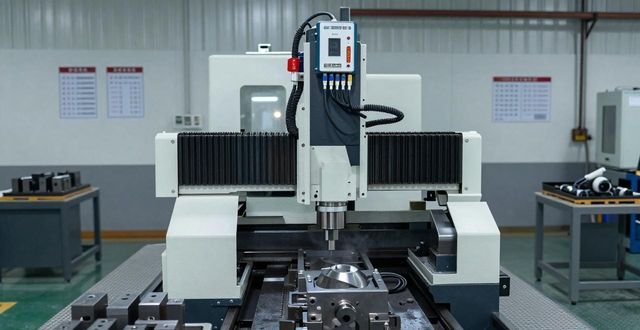
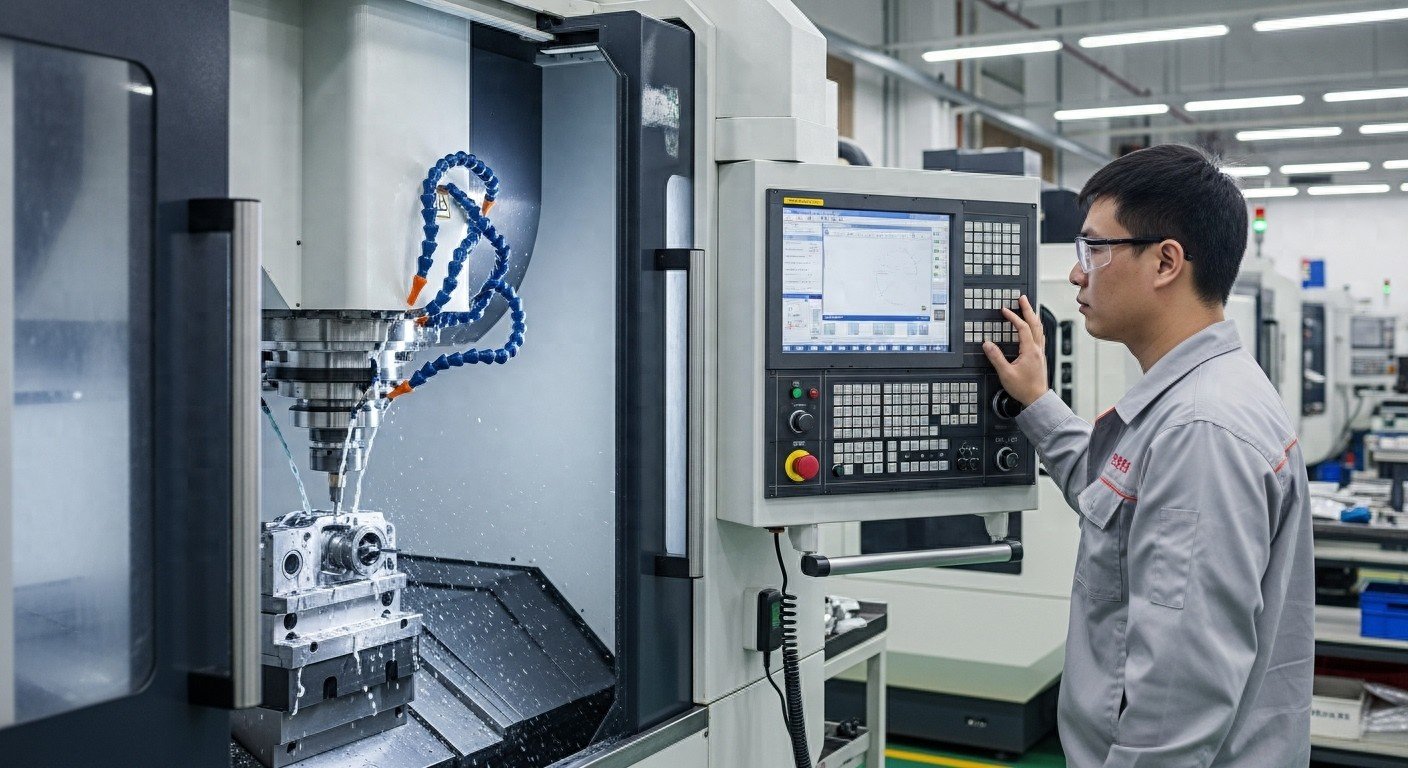
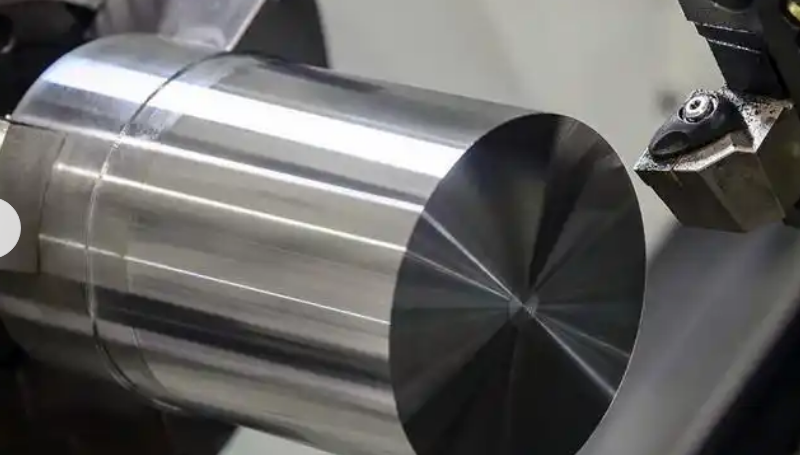
CNC lathe machining, vibration sensing technology can be used to monitor the relative vibration between the tool and the workpiece, with the help of vibration signal acquisition and analysis, real-time monitoring of the vibration status of the machining process, timely discovery of problems in the machining and be adjusted to improve machining accuracy and surface quality. At the same time, vibration sensing technology can also be used to detect the dynamic balance of the spindle of the CNC lathe, the spindle to carry out dynamic balance adjustment, reduce the vibration to the impact of machining accuracy, to ensure machining quality.
3.3.2 Application of Vibration Sensing Technology in Grinding Processes
In the grinding process, vibration sensing technology can be used to monitor the relative vibration between the grinding tool and the workpiece during the grinding process, through the collection and analysis of vibration signals, real-time monitoring of the vibration in the grinding process, timely adjustment of the grinding parameters and the state of the grinding tool to reduce the vibration on the surface quality of the processing of the impact produced by the processing efficiency and product quality.
concluding remarks
In the machining process, vibration problems for processing accuracy, for surface quality, as well as for processing efficiency have a certain degree of impact, for these quite significant impact, this paper puts forward a variety of vibration control methods, which covers the active control and passive control technology, the practice has proved that the application of vibration control technology in the CNC machine tools can effectively and efficiently improve the quality of machining, and to be able to Extend the service life of tools, and has a certain application prospects, in the future, vibration control technology will play a more and more important role in the field of intelligent manufacturing, to achieve efficient, accurate, intelligent machining business to give technical aspects of the foothold in the support of the guarantee.
Sandy Kou, an exploration of ultra high-speed lifts in terms of noise as well as vibration control, presented in 2023 in the field of building development.
The exploration and application of project-based teaching methodology in Power Drag Control Circuitry and Skills Training, conducted by Zhen Li, 2023, range 54 to 54.
Guo Kongming, Jiang Jun carried out a study on the control of independent modal space vibration of cantilevered sandwich panels, which is dated 2023, and the results are embodied in Issue 34, from page 55 to 60.
-The full text is complete. -The full text is complete.



 Chinese
  Japanese
  English
  German
  Finnish
No comments