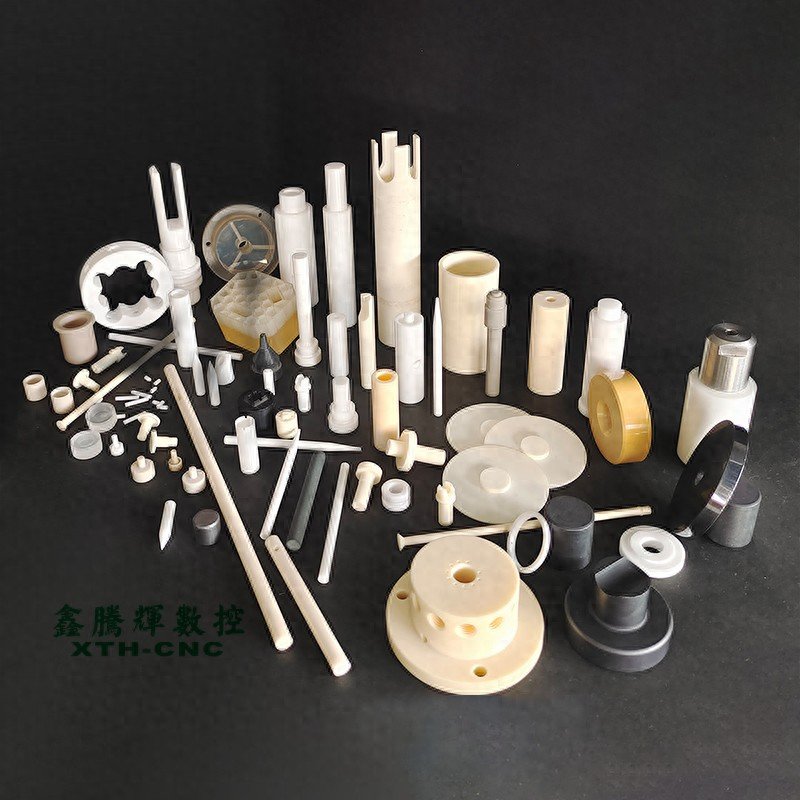


于high-end manufacturingScope, ceramic materials because of high temperature resistance, corrosion resistance, high hardness, good insulation and so many excellent characteristics, thus becoming an indispensable core material in aerospace, medical and health, semiconductor, new energy and many other industries. However, with the continuous upgrading of technology in many industries, the more complex the structural requirements for ceramic parts, especially with all kinds of complex surfaces of the ceramic parts, the difficulty of machining is far more than the ordinary plane or simple contour parts, which has become a limitation of high-end ceramic products to achieve mass production and to promote the quality to be improved by the bottleneck of the critical. Traditional processing methods, in the face of complex curved ceramics, there will often be a lack of precision, low efficiency, poor surface quality and many other aspects of the problem, but the emergence of five-axis linkage ceramic engraving and milling technology, completely breaking such a predicament, into the processing of complex curved ceramics of the most appropriate solution.
The characteristics of the ceramic material itself, and the complexity of the surface structure, both of which are superimposed together, so that the processing of complex surface ceramics have problems, and then called the industry problems. Ceramic material has its own brittle, lack of toughness of the situation, in the processing process is very easy to appear chipping, cracking and breakage and other types of problems, and at the same time, complex surfaces often have irregular curvature, for the surface articulation has a high demand for the profile accuracy requirements are extremely demanding and so on, the traditional three-axis engraving and milling equipment can only achieve X, Y, Z three linear direction of movement, the inability to flexibly adjust the angle between the tool and the workpiece. The relative angle between the tool and the workpiece, when facing the more complex curved surface, only with the help of multiple clamping, step-by-step processing to be completed, which will not only bring into the clamping error, resulting in the surface articulation is not smooth enough, the accuracy can not meet the standard, but also greatly reduce the machining efficiency and increase production costs.

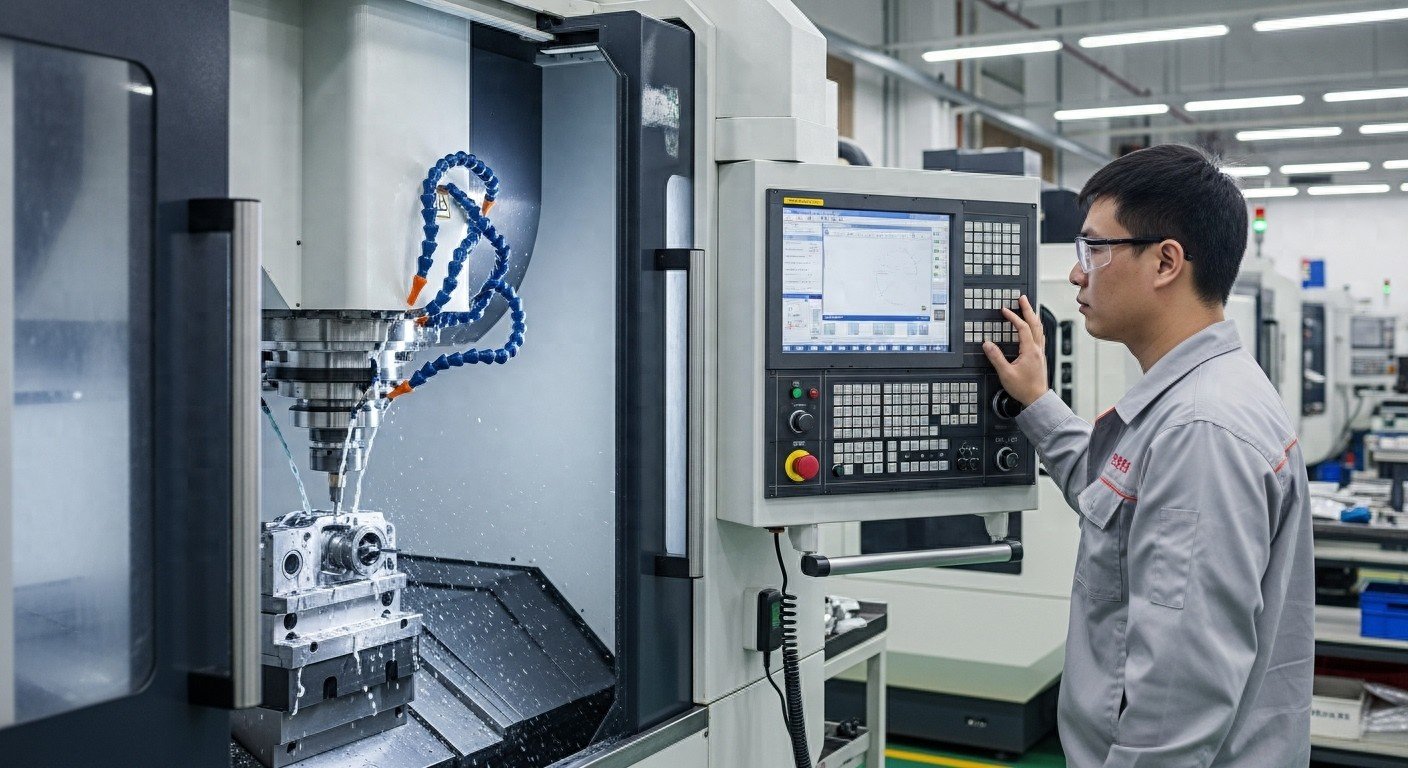
The core advantage of the five-axis linkage ceramic engraving and milling technology is that it breaks through the traditional three-axis equipment movement limitations, in the X, Y, Z three linear axes on the basis of the addition of two rotary axes, and to achieve a multi-dimensional, omni-directional relative motion between the tool and the workpiece. This feature allows the tool can always fit each point of the complex surface at the optimal angle, without the need for multiple clamping to complete the entire surface integration processing, fundamentally solving the traditional machining method pain points, so that the complex surface ceramics of high-precision, high-efficiency machining has become a reality, to have the potential to do so.
Many people may wonder why 5-axis linkage can easily cope with complex surfaces when they are also ceramic engraving and milling. In fact, the answer is very simple, the key value of five-axis linkage exists in the “flexible adaptation” and “precise control”. Traditional three-axis equipment for complex surface machining, the trajectory of the tool that movement is fixed straight line or a simple arc, there is no way to adjust the angle in real time according to the curvature of the surface changes, resulting in the cutting angle between the tool and the surface is not reasonable, either there will be cutting is not sufficient, the surface of the knife marks, or will be due to the cutting force is too large, resulting in the ceramic chipping. Five-axis linkage equipment in operation, with the help of two rotary axis synergy, can make real-time adjustments to the attitude of the tool, so that the tool cutting along the tangent direction of the surface, in this way, not only can reduce the cutting force, to prevent the ceramic material from breaking, and can ensure that the surface has a smoothness and precision of the contour, so that the machined surface not only meets the requirements of the design, but also has an excellent surface quality.
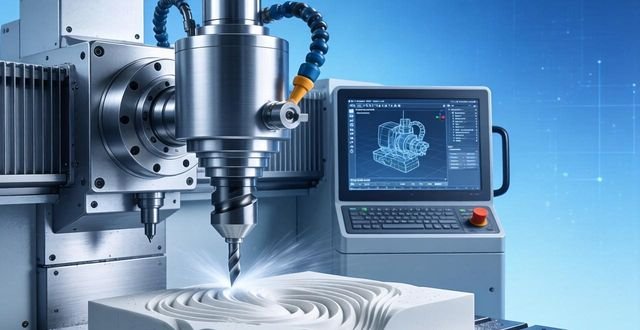
In addition to the advantages of the motion mode, five-axis linkage ceramic engraving and milling equipment in its control system and processing technology, for the processing of complex curved ceramics to carry out special optimisation initiatives. It is equipped with a high-precision attribute of the CNC system, will accurately analyse the complex geometry of the three-dimensional design model of the exterior, can automatically generate the most preferred machining paths by itself, to achieve precise control of every detail of the surface. At the same time, the system also has the ability to provide real-time feedback and error compensation, which can monitor the tool's trajectory and cutting status in real time during the machining process, correcting the machining errors in a timely manner to ensure that the machining accuracy of the surface is always maintained within the range of high standards.
In the processing technology here, five-axis linkage ceramic engraving and milling using a targeted cutting strategy, which combines the characteristics of ceramic materials, cutting speed, feed, depth of cut and other key parameters to be optimised to effectively reduce the risk of brittle ceramic material breakage. For example, in the processing of complex curved surfaces with large changes in curvature, the equipment will automatically adjust the feed rate, moderate deceleration in the region of large curvature, in order to ensure the smoothness of the cutting process; in the surface connection, with the help of accurate path planning, to achieve seamless connection, to prevent the emergence of defects, such as steps, burrs and so on. In addition, the five-axis linkage equipment can be used with special tools for ceramic machining, which further improves the machining efficiency and improves the surface quality, so that the processing of complex curved ceramics will no longer be limited by the characteristics of the material.
High-end manufacturing industry continues to develop, the application of complex surface ceramics more and more extensive scene, aerospace field of ceramic deflector and turbine blades, medical field of ceramic artificial joints and implants, semiconductor field of ceramic package, new energy field of ceramic heat dissipation module, all of these are complex surface of the surface of the machining accuracy and even the surface quality to give a very high demand. Five-axis linkage ceramic engraving and milling technology has a unique advantage, it can be perfectly adapted to the needs of the high-end scene for the industry to give high-quality ceramic parts with complex surfaces, and to promote the industry technology for upgrading and development.
Compared with the traditional processing methods, five-axis linkage ceramic engraving and milling can be carried out on complex curved ceramics processing, in terms of precision has made a qualitative leap, in the surface quality also has a qualitative improvement, but also can greatly improve the processing efficiency, and reduce production costs. Traditional three-axis equipment to process a complex surface ceramic parts, often need to carry out a number of clamping, but also after a number of procedures, both time-consuming and laborious, and the yield is relatively low; however, five-axis linkage equipment to achieve a clamping, integrated processing, greatly shortening the machining cycle, reducing the clamping error, the yield has also been significantly improved. For enterprises, this means that they can reduce production investment, improve production efficiency, and thus enhance market competitiveness.
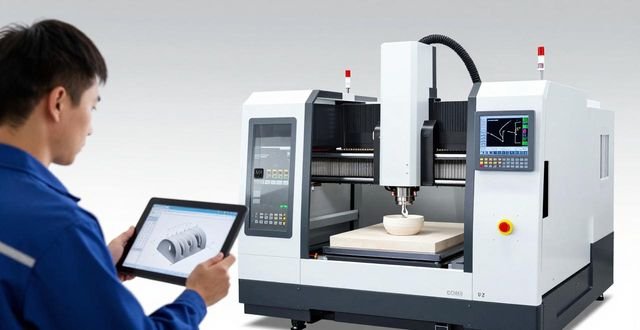
Some people may think that five-axis linkage equipment in the operation of this aspect is quite complicated and high threshold, however, in fact, along with thenumerical control technologyContinuously upgraded, today's modern five-axis linkage ceramic engraving and milling equipment has reached a high degree of intelligence. The operator only needs to import the three-dimensional design model of the complex surface, then the equipment will be able to complete the path planning, parameter setting and machining process, and does not require complex manual operation. At the same time, the equipment is also equipped with a complete safety protection system and fault warning function, can effectively guarantee the safety and stability of the processing process, thereby reducing the intensity of the operator's work.
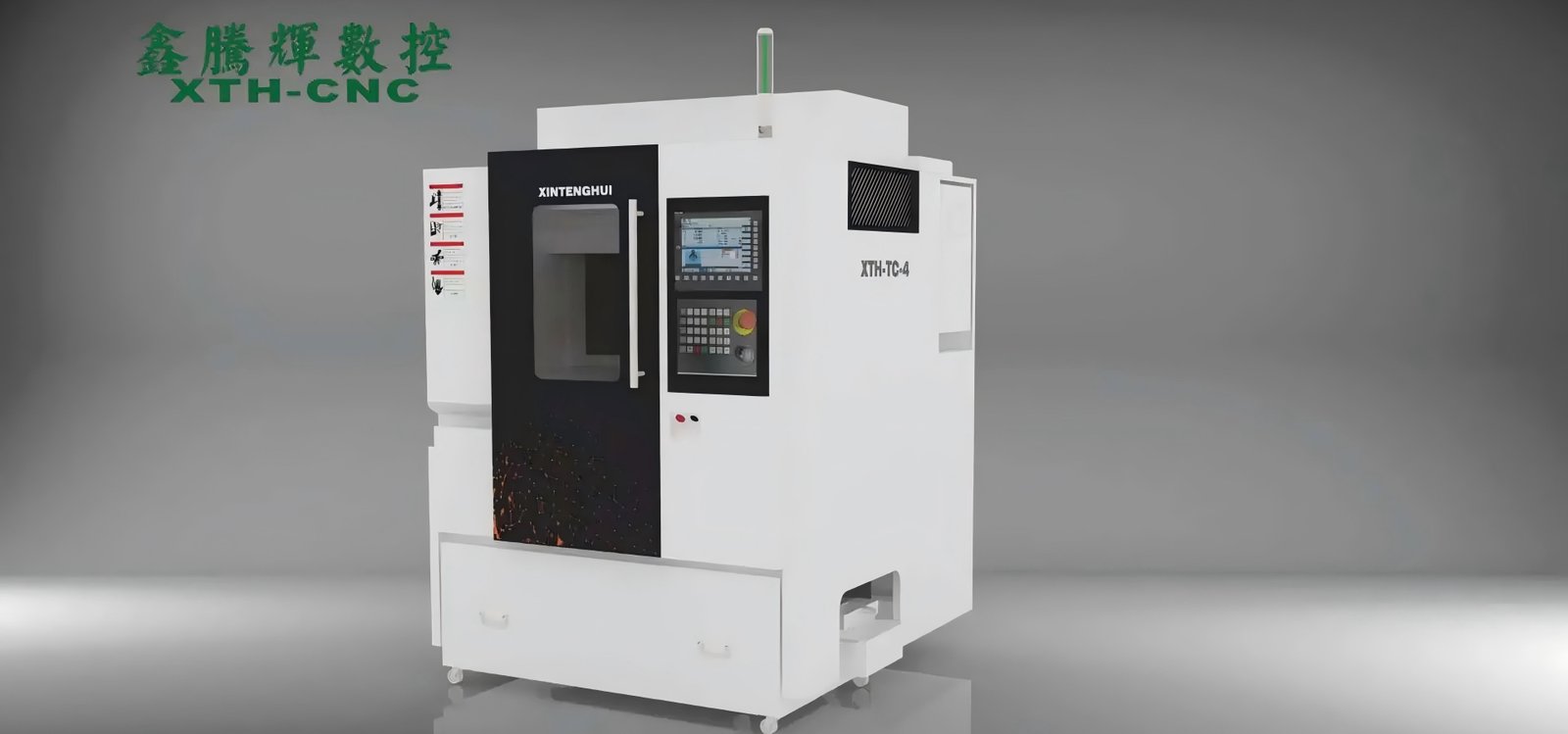
The development of the industry is a major trend, high-end manufacturing for complex surface ceramics demand will only increase, the processing accuracy and efficiency requirements will also be more and more improved. Five-axis linkage ceramic engraving and milling technology, as the core key to break the complex surface ceramic processing problems, not only promote the ceramic processing industry's technological innovation, but also for the development of various high-end manufacturing industry to give strong support. Whether it is the pursuit of high precision medical parts, or the pursuit of high reliability of aerospace parts, five-axis linkage ceramic milling can rely on its precision, high efficiency, stability advantages, perfect to meet the needs of enterprises to achieve product upgrading, to seize the market opportunity.
In the future, as technology continues to iterate and upgrade, five-axis linkage ceramic engraving and milling equipment will be more intelligent characteristics, more efficient qualities, more accurate characteristics of the direction of the development, and further breakthroughs in complex surface ceramic machining technology bottlenecks, expanding the boundary of the range of ceramic material applications. For those engaged in high-end ceramic processing enterprises, the introduction of five-axis linkage ceramic engraving and milling technology, not only to enhance the processing capacity of the key initiatives, but also to adapt to industry trends, to achieve long-term development of the inevitable choice. In the complex surface ceramic processing of this track, five-axis linkage technology is leading the industry towards higher quality, more efficient development of a new stage.



 Chinese
  Japanese
  English
  German
  Finnish
暂无评论内容