

Sheet metal workingThe Overall Structure and Practical Value of the Process Flow
The sheet metal fabrication process encompasses cutting, bending, welding, surface treatment and assembly. It is a critical stage in the manufacture of equipment enclosures, control cabinets, electrical control cabinets and automotive structural components, and has a direct impact on both delivery times and cost control.
The sheet metal fabrication process forms a fundamental production chain for structural components within modern manufacturing systems, encompassing everything from the raw material through to cutting and on to the preparation of the finished product for delivery. Each stage is highly standardised and repeatable, providing a reliable technical pathway for mass production. For manufacturing enterprises, it is not merely a means of component production, but also a crucial foundation for achieving stable lead times, cost optimisation and consistent quality control.
As a manufacturing process, sheet metal working has typical applications such as control cabinets, energy storage equipment and automotive structural components.
Sheet metal fabrication is widely used in the production of structural components such as electrical control cabinets, distribution boxes, server racks, energy storage cabinets and industrial control cabinets. Its advantages lie in its suitability for a range of metal materials, such as cold-rolled steel, stainless steel and aluminium alloys, and its ability to rapidly achieve mass production and structural consistency. Particularly in sectors such as new energy, power generation and IT infrastructure, standardised sheet metal components have become a key enabler of assembly efficiency and timely delivery. The automotive industry utilises sheet metal fabrication to enhance the reliability and lightweight performance of battery packs and mounting brackets.
In practical applications, requirements regarding structural dimensions, tolerances and surface quality vary across different scenarios. For instance, server cabinets prioritise precision assembly and thermal management compatibility, whilst energy storage cabinets place greater emphasis on corrosion resistance and suitability for outdoor environments. These differences in application scenarios necessitate process designs that offer both flexibility and the ability to ensure precision.
The Differences and Advantages of Sheet Metal Fabrication Compared to Traditional Machining
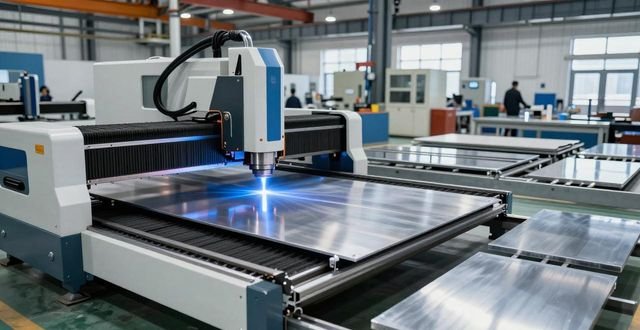
Compared with traditional machining, sheet metal working differs significantly. Its process approach is better suited to the forming and assembly of thin-sheet structures.laser cuttingHigh-precision cutting results have been achieved, whilst CNC bending delivers highly repeatable results, successfully avoiding the problem of cumulative errors associated with multiple processes in traditional machining. At the same time, its processing cycle is relatively short and it offers flexibility in changeovers, effectively supporting the production of small to medium batches of a wide variety of products.
In terms of costs, sheet metal fabrication does not require complex toolpaths or extensive machining, so it offers a high material utilisation rate; moreover, its production efficiency is better suited to the OEM designated supply model. Compared to milling and turning, sheet metal fabrication requires lower capital investment in equipment and is less labour-intensive, making it particularly well-suited to the large-scale manufacture of structural component housings.
Impact on delivery times, costs and consistency control
A decisive factor is the standardised sheet metal fabrication process in managing lead times and costs. Through the use of CNC cutting, flexible bending and automated loading and unloading, we are able to respond quickly to orders and shorten manufacturing lead times. Crucially, for procurement managers, this is directly linked to supply chain security and the predictability of production scheduling.
Within the scope of consistency control, digitalised production processes can minimise errors caused by human factors to the greatest extent possible. Through the use of jigs and fixtures, combined with in-line inspection, we are able to consistently achieve batch production with stable dimensional tolerances and high structural alignment accuracy, thereby meeting the stringent requirements for quality consistency demanded by sectors such as server cabinets and new energy equipment. Such a manufacturing approach also serves as a crucial technical foundation for establishing long-term, fixed-site partnerships.
Principles and Applications of Laser Cutting
High-precision, high-speed blanking using high-energy beams is the primary stage of sheet metal fabrication, and it plays a decisive role in subsequent bending, assembly and delivery schedule management.
Laser cutting is characterised by its non-contact nature, high efficiency and considerable versatility; it plays a significant role in meeting the precision machining requirements of most metallic materials. Compared to traditional stamping or sawing, laser cutting demonstrates a clear ability to reduce the number of processing steps involved. It also demonstrates its worth in shortening the required processing cycle times and significantly reducing changeover times. With such outstanding features of high precision and flexibility, laser cutting has become a standard process in the manufacturing of electrical control cabinets, enclosures and new energy equipment housings.
Explanation of Common Materials and Thickness Ranges
Laser cutting is widely applicable and suitable for common industrial materials such as cold-rolled steel sheets, stainless steel, aluminium alloys and galvanised sheet, among other common industrial materials. Depending on the power rating of the equipment, cutting thicknesses typically range from 0.8 to 12 mm, with 1.0 to 3.0 mm being the standard specifications for standard enclosure components such as server cabinets and electrical control cabinets.
When it comes to thicker sheet metal, cutting power and focal length adjustment are key factors affecting precision. High-power equipment is better suited to high-strength structural components such as new energy battery pack trays and energy storage cabinet housings; conversely, medium- and low-power models offer excellent value for money in the mass production of housings for household appliances and telecommunications equipment. The choice of suitable thickness directly impacts cost structure and cycle time control capabilities.
The Relationship Between Cutting Accuracy, Speed and Equipment Compatibility
Cutting accuracy is closely linked to laser power, nozzle diameter, cutting speed and material properties; High-power equipment with high stability can control errors within a range of ±0.1 mm, thereby meeting the requirements for precise assembly of cabinet structural components. There is often a trade-off between speed and precision; excessive speed may result in slag or cutting marks, whilst too slow a speed will reduce production output.
There is another key factor to consider, namely equipment compatibility. For small to medium-volume production, there is typically a preference for fibre laser cutting machines with rapid changeover capabilities; whereas for large-volume, fixed-location supply, high-end models are favoured, as these feature automatic edge detection, edge tracking and remote diagnostics. Such differentiated configurations directly determine the efficiency of the entire production line, as well as its stability.
The impact of automatic loading and unloading on cycle times and costs
By introducing an automated loading and unloading system during the laser cutting stage, the time required for manual intervention can be significantly reduced, cutting the cycle time for individual parts by between 20% and 40%. This approach is particularly well-suited to batch orders and scenarios requiring a stable supply; the machining of electrical control cabinet enclosures or cabinet side panels are typical examples of such scenarios.
Automated loading and unloading enhances safety, improves equipment utilisation rates, reduces the risks associated with manual operations, and minimises downtime. For OEM contract manufacturers, this optimisation of production cycles helps to better balance production costs and lead times, increases the annual capacity utilisation of individual production lines, and lays the groundwork for flexible manufacturing.
Typical industry applications (server racks, air conditioning casings)
The laser cutting stage in the production of server racks determines the dimensional accuracy of the front panels and side panels; it plays a fundamental role in the assembly of the entire unit and in the layout of the ventilation holes. High-precision cutting ensures that holes are aligned correctly and guarantees the stability of subsequent bending operations, thereby reducing rework and minimising assembly interference.
In the field of air conditioning casing manufacturing, laser cutting, thanks to its inherent flexibility, is able to adapt to changes across a wide range of models and can also meet the structural update requirements for casings designed for new refrigerants such as R32 and R454B. Compared to traditional die stamping, it offers lower costs and shorter lead times when changing models, and can support the simultaneous production of multiple models, making it well-suited to situations where seasonal orders are at their peak.
An Analysis of Bending and Forming Processes
In sheet metal fabrication, the bending operation and the forming process have an impact on structural accuracy and are also crucial factors in ensuring stability. By controlling the bend radius, angle and springback compensation, it is possible to maintain consistency in processing across different sheet thicknesses and structural conditions.
The process of bending parts does not merely determine their final geometric shape; it also has a direct impact on subsequent assembly accuracy and surface finish. In the context of mass production, the ability to achieve stable and consistent bending angles and dimensional accuracy across multiple product types and specifications is central to a production line’s flexibility and its capacity to meet delivery deadlines. Particularly in the manufacture of electrical control cabinets, equipment cabinets and energy storage cabinets, bending accuracy and consistency are closely linked to the assembly clearances and overall structural integrity of the finished unit.
Bending radius, angle control and material springback
Differences in springback after bending are caused by variations in the elastic modulus and thickness of different materials; by setting an appropriate bending radius and incorporating a compensation angle during programming, the margin of error can be effectively controlled. In typical processes, cold-rolled steel and stainless steel sheets with common thicknesses ranging from 1.0 to 3.0 mm are bent using V-die dies, with angle errors controlled to within ±0.5°.
Control methods include: adjusting the width of the lower die slot, selecting the appropriate bending angle, optimising the pressure hold time, and setting the pre-bend angle within the programme. For high-precision components, angle sensors are also incorporated to provide real-time feedback and corrections, thereby reducing the need for secondary debugging and rework.
Flexible bending and die changeover efficiency
In production scenarios involving multiple product varieties and small to medium batch sizes, flexible bending equipment can significantly reduce the changeover time associated with tasks such as die replacement. With the aid of a CNC system, the positions of the backgauge and the hold-down device can be adjusted rapidly; combined with universal dies, product changeovers can be completed in a matter of minutes. Compared to traditional methods relying on manual adjustment, this can save over 50% of changeover time.
This flexibility is particularly crucial for OEM suppliers; when faced with orders from different batches and customised housing designs, the ability to switch moulds quickly translates to higher production line utilisation and shorter lead times. At the same time, flexible bending helps maintain angle consistency and reduces errors caused by manual intervention, thereby improving repeatability.
Process characteristics of electrical control cabinets and cabinet-type products
Products such as electrical control cabinets and server racks are generally composed of numerous panels. Cumulative errors in bending angles and dimensions can directly affect assembly fit and also compromise the effectiveness of the seal. Consequently, during process design, it is common practice to employ standard bending angles and standardised die specifications, with the aim of minimising the spread of assembly tolerances.
Furthermore, most products of this type utilise sheet metal with a thickness ranging from 1.2 to 2.5 mm; there are strict requirements regarding the consistency of bending accuracy and right angles for such sheet metal. To achieve this consistency, automated angle detection and verification of the first processed component are frequently incorporated into the production process. This ensures that, within the cycle time of mass production, the dimensions of every component remain consistent and that angles are precise and meet the required specifications. A series of characteristics, including the use of sheet metal and automated cycle inspection, make the bending process a critical factor in controlling the quality of the entire machine structure.
Control of welding and assembly processes
Welding is a critical stage in the sheet metal fabrication process, ensuring structural stability. Assembly is equally crucial, guaranteeing visual consistency. By selecting appropriate welding methods, controlling thermal distortion and managing jigs, it is possible to effectively improve the precision of the finished product.
This stage links cutting, bending and painting, and determines whether structural components can maintain consistent geometric accuracy and surface quality during mass production. Particularly in the manufacture of electrical control cabinets, enclosures and energy storage equipment housings, welding quality not only affects structural strength but also has a knock-on effect on subsequent painting and assembly efficiency. Therefore, standardised processes and jig control are the key methods for ensuring consistency.
Common welding methods and their applications
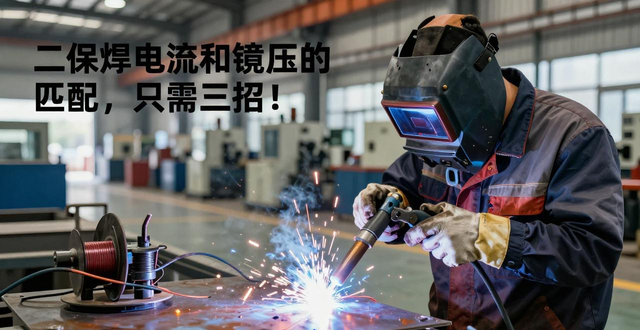
TIG welding, spot welding, gas metal arc welding (GMAW), and laser welding are the primary methods used for welding sheet metal components; these are the predominant techniques.
Generally speaking, the choice of process is often determined by the sheet thickness, the assembly configuration and the subsequent surface treatment. For example, in server cabinets, a combination of spot welding and TIG welding is often used to balance efficiency and aesthetic quality.
Thermal Deformation Control and Fixture Applications
During welding, heat is concentrated in a relatively small area; if control procedures are not properly managed, this can cause the workpiece to warp or result in misalignment of the assembly. By employing appropriate segmented welding techniques, following a symmetrical welding sequence and utilising low-heat-input processes, the risk of cumulative thermal deformation can be effectively minimised. In addition to these measures, the use of clamping fixtures is crucial for ensuring dimensional stability.
During welding, fixtures are often used to restrict the free deformation of workpieces and to ensure assembly accuracy by utilising pre-defined reference surfaces; in cabinet manufacturing, where structures are complex, flexible fixture systems are particularly important; they can accommodate a wide range of product models, reducing reliance on single-purpose jigs whilst also shortening set-up times.
Key Points for Managing Jigs and Fixtures in Mass Production
During mass production, the standardisation of jigs and the management of their service life can have a significant impact on welding efficiency and the consistency of the finished product.
In the context of long-term OEM supply, jig management is generally integrated with the quality traceability system, thereby creating a closed-loop cycle comprising “batch—jig—inspection record”. Consequently, this not only reduces human error but also provides quantifiable process control support for a large volume of orders.
Process lead times and delivery from prototypes to mass production
By clearly defining the takt time for prototyping, followed by that for trial production, then for small-batch production, and finally for mass production—whilst incorporating flexible scheduling and consistency management—it is possible to achieve stable lead times and controllable costs in batch sheet metal fabrication.
At this stage, the transition from technology validation to mass production is crucial in determining whether a sheet metal fabrication company can support OEM designated production. Production cycle times and lead times depend not only on equipment capacity but are also constrained by process coordination, production line flexibility and quality stability control. Clear phase milestones help to rapidly identify risks prior to mass production, thereby reducing the likelihood of rework and delays.
Milestone control for prototyping, pilot production, small-batch production and mass production
In sheet metal fabrication projects, process validation typically follows four stages:
Prototyping stage: This stage involves verifying the design’s feasibility and manufacturability, as well as assessing whether the precision of cutting, bending and welding meets the requirements specified in the drawings; Trial production stage: Process parameters and equipment configurations must be established to determine standard working hours; Small-batch production: This involves verifying cycle times and stability, whilst optimising changeovers, loading/unloading, and inspection processes; Mass production stage: Full-scale operations commence, with a focus on cycle times, yield rates, and quality consistency.
This phased approach effectively minimises uncertainties, thereby ensuring that production line rhythms and cost structures are already stable by the time full-scale production commences.
Flexible Production Lines and Workflow Scheduling Management
The introduction of flexible production lines is key to shortening lead times and improving capacity utilisation. With modular cutting, bending, welding and painting units, the production cycle can be flexibly adjusted to meet order requirements. Compared to traditional fixed production lines, this scheduling method offers greater adaptability when handling orders involving multiple models and multiple batches.
At the same time, the digital production scheduling system is able to allocate production capacity and equipment utilisation in real time, thereby reducing line changeover waiting times and minimising the impact of bottleneck processes. In the context of OEM batch supply, flexible scheduling serves as the core technological foundation for supporting “fixed-point delivery and stable production rhythms”, whilst also providing a buffer to cope with seasonal fluctuations in demand.
Methods for controlling consistency and quality stability
No matter how fast the pace, it is difficult to achieve effective delivery if quality cannot be maintained consistently. For this reason, high-volume sheet metal fabrication is often accompanied by multi-tiered quality control, which includes:
Furthermore, the management of tooling and jigs affects consistency, as does the equipment maintenance schedule. During mass production, automatic inspection can be used to ensure stable dimensional accuracy, whilst SPC control can be employed to ensure stable assembly quality. Furthermore, traceability management can ensure both stable dimensional accuracy and stable assembly quality, whilst enabling predictable lead times and cost control without compromising production cycle times.
A Comparative Analysis of Cost and Accuracy
In sheet metal fabrication, costs are closely linked to precision and cycle times. By analysing the breakdown of costs across each stage and selecting the appropriate combination of processes, it is possible to achieve a dynamic balance between lead times and costs throughout the production process.
In most OEM supply and mass production scenarios, procurement managers and technical engineers are often required to strike a balance between cost, lead time and precision. The laser cutting stage has a varying degree of impact on total cost and cycle time, as does the bending stage; welding similarly affects overall costs and cycle times to varying degrees, and painting also affects overall costs and cycle times to varying degrees; therefore, understanding the sources of costs and the patterns of precision variation is helpful for devising production process routes more efficiently.
Cost breakdown for the cutting, bending, welding and painting processes
At every stage, costs vary in line with precision requirements, exhibiting a pattern characteristic of non-linear growth; in the case of high precision, this implies a need for higher-capacity equipment and greater investment in process control.
The interplay between precision, cycle time and cost
In sheet metal fabrication, higher precision typically requires stricter process control and more frequent inspections, which have a direct impact on cycle times and production capacity. For example, improving cutting precision may entail a reduction in speed or increased consumption of assist gas; if bending angles are to be controlled more strictly, this will require angle feedback and automatic compensation systems.
This interdependence allows companies to establish different strategies for various order types; for orders requiring rapid delivery, tolerance standards can be relaxed to some extent in order to save labour hours, whereas in the manufacture of high-end equipment, it is essential to strike the optimal balance between reducing cycle times and improving precision.
Recommendations for compatibility between different equipment and process combinations
Not only does the appropriate combination of equipment and processes affect processing costs, but it also determines the production line’s takt time and quality consistency. In actual production, such combinations are often dynamically adjusted in line with order cycles and product structures in order to achieve an optimal balance between cost and precision.

Industry Application Case Studies and Standard Mapping
There are significant differences in how sheet metal fabrication is implemented across different industries. For typical products, mapping their structural parameters against standard requirements enables greater design manufacturability and ensures a stable supply chain.
The diverse nature of manufacturing scenarios means that sheet metal processing cannot be approached in a one-size-fits-all manner. Specifically, in numerous sectors—including server cabinets, electrical control cabinets, structural components for new energy vehicles, and household appliance casings—there are clear and explicit standards regarding dimensional accuracy, strength, protection ratings, corrosion resistance and process consistency. These requirements directly determine the configuration of processes such as cutting, bending, welding and painting, whilst also influencing production cycle times and cost structures.
Typical parameter requirements for server racks, electrical control cabinets and energy storage cabinets
Standard server racks and electrical control cabinets are typically constructed from cold-rolled steel or galvanised steel sheets with a thickness of 1.2 to 2.5 millimetres; their structure is primarily assembled through bolting and welding. Typical specifications include:
Energy storage cabinets place greater emphasis on weather resistance and structural strength, and typically utilise sheet metal with a thickness of 2.0 to 3.0 mm, as well as reinforced rib structures, whilst also meeting outdoor protection requirements of IP54 or higher. The manufacturing process focuses on the airtightness of the enclosure welds and the anti-corrosion performance of the coating; consequently, higher standards are required for both the spraying and curing stages during production.
Structural and Manufacturing Characteristics of Battery Packs and Mounting Brackets for New Energy Vehicles
When it comes to sheet metal fabrication for battery packs in new energy vehicles, the requirements for dimensional accuracy are even more stringent; similarly, for mounting brackets, the requirements for structural strength are even more demanding. Furthermore, both battery packs and mounting brackets require even more rigorous standards regarding connection methods during sheet metal fabrication.
Typically, such products are deployed in large-scale automated production lines, where they must meet extremely high standards in terms of cycle time control and quality traceability; they represent the epitome of flexible manufacturing capabilities.
Key points for the standardised production of air conditioning and household appliance casings
Products falling within the category of household appliance casings—particularly items such as air conditioners, refrigerators and water purifiers—place particular emphasis on surface quality, whilst also placing great importance on batch consistency.
Such products often rely on standardised jigs, flexible bending equipment and fully automated painting lines to achieve high production efficiency. Compared to server cabinets or energy storage cabinets, they have slightly lower structural strength requirements, but higher demands in terms of visual consistency and coating quality.
Quality and Delivery Assurance Mechanism
Through standardised inspection processes, close alignment with OEM requirements and production capacity coordination mechanisms, sheet metal fabrication companies are able to ensure consistent lead times and quality in bulk supply, leaving no room for variation between the two.
In the vast majority of OEM partnership projects, quality and delivery assurance are key factors in determining whether a supply relationship can be long-term and stable. As sheet metal fabrication involves multiple interconnected processes, a loss of control at any single stage can lead to delays across the entire supply chain; consequently, it is essential to establish a comprehensive quality and delivery management system covering the entire process, from raw materials right through to the dispatch of finished products.
Inspection Process and Key Quality Indicators
Generally speaking, standardised inspection procedures typically include incoming quality control (IQC), in-process quality control (IPQC), final inspection (OQC), and outgoing quality control.
Common quality indicators include angular error, panel flatness and tolerance width, as well as coating thickness and adhesion. These indicators can be integrated with SPC (Statistical Process Control) to ensure the stability of the mass production process.
Alignment with OEM supply requirements
OEMs generally have strict requirements regarding delivery cadence, batch consistency and quality traceability. In the early stages of receiving an order, sheet metal fabricators create product master data, which includes process routes, inspection standards and fixture references, to ensure that each production stage remains in line with OEM standards.
At this stage of bulk delivery, we ensure comprehensive documentation of the entire process—covering both manufacturing and quality—through first-article approval, batch tracking numbers and factory inspection reports. In the field of high-end equipment manufacturing, additional quality verification steps are incorporated, such as FAI (First Article Inspection) and PPAP (Production Part Approval Process), to ensure standardised and transparent delivery.
A mechanism for coordinating quality and production capacity to ensure long-term, stable supply
Sustained supply of goods relies not only on quality standards, but also on the ability to maintain stable production capacity and production rhythms. Companies typically achieve this synergy through a combination of capacity planning and a closed-loop quality management system:
This collaborative system effectively reduces rework rates and the risk of delivery delays, and is a key competitive advantage in long-term partnerships with OEMs.
How can knowledge of sheet metal working be turned into a competitive advantage in production?
The value of sheet metal fabrication extends far beyond the production process itself; through the selection of appropriate processes and the implementation of automation, it can be directly translated into delivery capabilities and market competitiveness.
For medium-to-large-scale manufacturing enterprises whose business model is primarily based on supplying designated OEMs, the maturity of their sheet metal processes and their capacity for flexibility determine whether they can maintain stable operations in the face of order fluctuations and cost pressures. By transforming process knowledge into a production advantage, requires clearly defining the scope of application for different process routes, whilst leveraging automation and digitalisation to further reduce reliance on manual labour and minimise cycle time variability.
Selecting the appropriate process route
Different product structures, order types and delivery requirements call for different process configurations:
This tiered approach to path design enables companies to allocate production capacity and capital flexibly, taking into account the entire lifecycle of a product—from its inception to its decline—as well as order patterns.
The Value of Process Upgrades and Automation Modernisation
The upgrade to automation has not only increased the production cycle time but has also improved consistency and traceability by reducing fluctuations in manual operations. Flexible bending has been introduced, as have automated loading and unloading systems and laser welding; an in-line inspection system is also currently being implemented. These initiatives have stabilised the production rhythm, thereby meeting the strict delivery requirements imposed by long-term OEM supply contracts.
In addition, digital production scheduling and process monitoring can maximise equipment utilisation, thereby reducing production management costs. For manufacturing companies facing rising labour costs and shorter order cycles, this is a key focus area for improving operational efficiency and enhancing quality competitiveness.
Impact on a company’s delivery capabilities and market competitiveness
Once the sheet metal fabrication process and the automated production line form a closed-loop system, companies are able to consistently deliver large volumes of products with a high degree of uniformity within short lead times; this is of paramount importance for OEM partnerships. Lead times can be effectively managed whilst quality remains consistent, which translates into greater bargaining power and longer-term partnerships.
Within the broader context of market competition, this manufacturing process and production line capacity enable the company to respond swiftly to new product development, switch flexibly between different models, and secure a first-mover advantage in high-growth sectors such as energy storage, new energy vehicles and data centre cabinets. Enhanced process capabilities ultimately translate into significantly improved delivery efficiency, significantly improved cost control, and significantly enhanced customer loyalty.


 Chinese
  Japanese
  English
  German
  Finnish
No comments