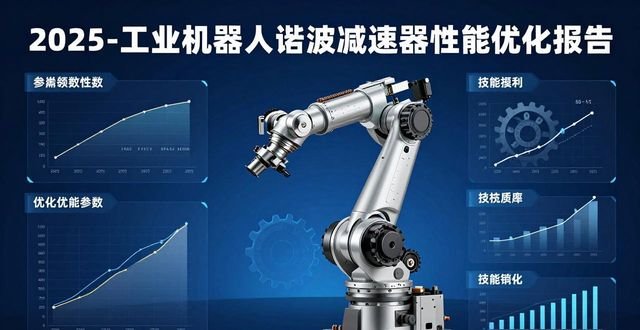


Template for a Report on the Performance Optimisation of Harmonic Reducers for Industrial Robots in 2025
I. Report on the Performance Optimisation of Harmonic Reducers for Industrial Robots in 2025
1.1 Background to the Report
1.2 Purpose of the Report
1.3 Contents of the Report
II. Overview of Performance Optimisation Techniques for Harmonic Reducers
2.1 History of Technological Development
2.2 Key Points for Performance Optimisation
2.3 Technological Trends
2.4 Technological Innovation and Application
3. High-performance harmonic reducersMaterial Selection
3.1 The Importance of Material Selection
3.2 Applications of Metallic Materials
3.3 Applications of Non-metallic Materials
3.4 Comparison of Material Properties
3.5 Principles for the Selection of Materials
4. Harmonic ReducerManufacturing processexplore
4.1 The Effect of Manufacturing Processes on Performance
4.2 Analysis of Key Manufacturing Processes
4.3 Strategies for Optimising Manufacturing Processes
4.4 Trends in Manufacturing Processes
V. The Application of Harmonic Reducers in Industrial Robots
5.1 Overview of Application Areas
5.2 Analysis of Key Application Areas
5.3 Case Studies
5.4 Outlook for Future Applications
VI. Current Status and Challenges of the Harmonic Reducer Industry in China
6.1 Current State of the Industry
6.2 Advantages of the Industry’s Development
6.3 Challenges to the Development of the Industry
6.4 Strategies for Industrial Development
VII. Trends in the Performance Optimisation of Harmonic Reducers
7.1 Driven by technological innovation
7.2 Intelligence and Integration
7.3 Weight Reduction and Miniaturisation
7.4 High Performance and High Reliability
7.5 Environmental Protection and Sustainable Development
7.6 Internationalisation and Market Competition
VIII. Policy Recommendations for Optimising the Performance of Harmonic Reducers
8.1 Policy Guidance and Support
8.2 Development of a Standardisation System
8.3 Talent Development and Recruitment
8.4 Technological Innovation and R&D Investment
8.5 International Cooperation and Exchange
8.6 Environmental Protection and Sustainable Development
IX. Analysis of the Industrial Chain for Harmonic Reducer Performance Optimisation Technologies
9.1 Analysis of the Industrial Chain Structure
9.2 Key stages of the industrial chain
9.3 Coordinated Development of the Industrial Chain
9.4 Trends in the Development of the Industrial Chain
X. Conclusions and Outlook
10.1 Conclusions
10.2 Outlook

I. Report on the Performance Optimisation of Harmonic Reducers for Industrial Robots in 2025
1.1 Background to the Report
As the level of industrial automation continues to rise, industrial robots are being used more and more widely in the manufacturing sector. As one of the core components of these industrial robots, the performance of harmonic reducers has a direct and critical impact on the operational efficiency and stability of the robots. In recent years, China’s harmonic reducer industry has made significant progress; however, certain issues remain, such as unstable performance and relatively short service life. To further enhance the performance of harmonic reducers for industrial robots in China, this report will analyse and discuss the subject from the perspectives of technology, materials and manufacturing processes.
1.2 Purpose of the Report
The aim is to analyse performance optimisation technologies for industrial robot harmonic reducers in 2025, thereby providing useful guidance for the development of China’s harmonic reducer industry. Specific objectives are set out below:
To analyse the technological trends driving improvements in the performance of harmonic reducers, thereby providing guidance for technical research within China’s harmonic reducer industry.
To explore the selection of materials for high-performance harmonic reducers, thereby providing a basis for material research, development and selection.
To investigate the manufacturing processes for harmonic reducers with a view to improving manufacturing quality and efficiency.
To analyse the current state of harmonic reducers in industrial robotics and thereby support the development of China’s industrial robotics industry.
1.3 Contents of the Report
This report is divided into the following sections:
An Overview of Performance Optimisation Techniques for Harmonic Reducers
Material Selection for High-Performance Harmonic Reducers
A Study on the Manufacturing Process of Harmonic Reducers
The Application of Harmonic Reducers in Industrial Robots
The Current State and Challenges of the Harmonic Reducer Industry in China
Trends in the Performance Optimisation of Harmonic Reducers
The Prospects for the Application of Harmonic Reducer Performance Optimisation Technology in China
Policy Recommendations for the Performance Optimisation of Harmonic Reducers
Analysis of the Industrial Chain for Performance Optimisation Technologies in Harmonic Reducers
Conclusions and Outlook
II. Overview of Performance Optimisation Techniques for Harmonic Reducers
2.1 History of Technological Development
Since their emergence in the 1960s, harmonic reducers have become a highly efficient and compact transmission device. Their technological development has undergone a significant transformation from traditional mechanical structures to modern precision manufacturing. Originally, they were primarily used in precision instruments and specialised equipment; however, due to limitations in manufacturing processes and materials, their performance and reliability were relatively low. However, with advances in materials science and precision machining technology, the performance of harmonic reducers has improved significantly, leading to their gradual widespread adoption in fields such as industrial robotics, aerospace and medical devices.
2.2 Key Points for Performance Optimisation
The performance optimisation of harmonic reducers focuses primarily on the following areas:
Transmission accuracy, as a key performance indicator of harmonic reducers, has a direct impact on the motion accuracy and stability of robots. Optimising transmission accuracy requires a multi-faceted approach, encompassing design, materials and manufacturing processes. This includes the use of high-precision moulds, precision machining equipment and high-precision inspection methods.
Load-bearing capacity: During operation, harmonic reducers must withstand a certain amount of load; the magnitude of this load-bearing capacity directly affects the robot’s operational range and efficiency. Load-bearing capacity can be enhanced by optimising the structural design of components such as the harmonic generator, waveguide pulley and rigid pulley, and by selecting materials with high strength and rigidity.
When operating at high speeds, harmonic reducers generate specific noise and exhibit a certain degree of vibration. This not only affects the robot’s operating environment but may also impact the robot’s service life. Noise can be reduced by implementing vibration-damping measures and selecting materials with low vibration characteristics; this is achieved on the basis of optimising the structural design of the harmonic reducer.
Component service life and reliability: The service life and reliability of harmonic reducers are key indicators used to measure their performance. Improving service life and reliability requires addressing factors such as material selection, manufacturing processes and heat treatment; for example, by selecting wear- and corrosion-resistant materials and employing advanced manufacturing processes and heat treatment techniques.
2.3 Technological Trends
As the level of industrial automation continues to rise, the following trends are emerging in the field of harmonic reducer performance optimisation:
Intelligent design utilises computer-aided design (CAD) and computer-aided engineering (CAE) technologies to achieve the intelligent design of harmonic reducer structures, thereby enhancing design efficiency and precision.
Lightweight design: by optimising the structural design, the weight of the harmonic reducer is reduced, energy consumption is lowered, and operational efficiency is improved.
Multifunctional integration is carried out by combining the harmonic reducer with other functional components, such as sensors and controllers, to achieve an integrated design, thereby enhancing the overall performance of the system.
With a focus on environmental protection and sustainability, eco-friendly materials are used to minimise the environmental impact of harmonic reducers, thereby meeting the requirements of sustainable development.
2.4 Technological Innovation and Application
In the field of technological innovation for optimising the performance of harmonic reducers, China has already achieved a series of results, such as the development of high-precision harmonic reducers with independent intellectual property rights and the use of new materials to enhance load-bearing capacity. At the application level, harmonic reducers have been widely adopted in sectors such as industrial robotics, aerospace and medical equipment, providing strong support for the development of industrial automation and smart manufacturing in China.
III. Material Selection for High-Performance Harmonic Reducers
3.1 The Importance of Material Selection
In the manufacturing process of harmonic reducers, the selection of materials plays a decisive role in the final product; High-performance harmonic reducers impose extremely stringent requirements on material properties, encompassing high strength, high hardness, excellent wear resistance and corrosion resistance, as well as sufficient toughness. Therefore, the appropriate selection of materials is key to enhancing the performance of harmonic reducers.
3.2 Applications of Metallic Materials
In harmonic reducers, metallic materials play a crucial role, particularly in key components such as the waveguide pulley and the rigid pulley. The following is an analysis of several commonly used metallic materials.
Stainless steel offers excellent corrosion resistance and wear resistance, making it suitable for highly corrosive working environments. However, under conditions of high load and high speed, its performance may not match that of certain other materials.
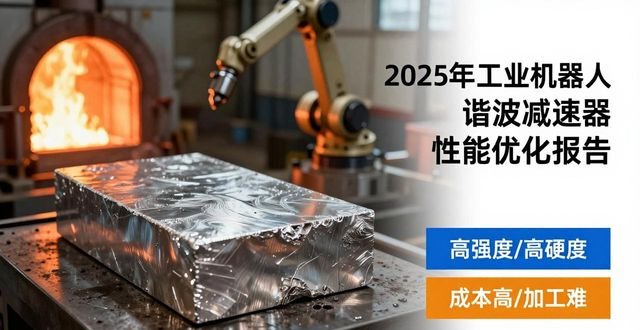
Alloys for use in extremely high-temperature environments: There is a type of alloy suitable for use in high-temperature, high-pressure conditions; it possesses relatively high strength and a certain degree of hardness. However, this alloy is relatively expensive and presents significant challenges in terms of machining.
Titanium alloys are suitable for use in harmonic reducers due to their lightweight nature, high strength and corrosion resistance; these properties make them ideal for harmonic reducers where weight and strength are critical considerations.
3.3 Applications of Non-metallic Materials
With the ongoing development of materials science, the use of non-metallic materials in harmonic reducers is becoming increasingly widespread. Below is an analysis of several commonly used non-metallic materials.
Ceramic materials possess extremely high hardness and excellent wear resistance, making them suitable for use in working environments involving high-speed operation and heavy loads. However, ceramic materials tend to lack toughness, which makes them prone to brittle fracture under such conditions.
The material is a polymer; polymer materials are lightweight and easy to process, and are cost-effective. Polymers are suitable for harmonic reducers where weight is a key consideration, and they are also suitable for those where cost is a key consideration. However, polymer materials have relatively poor wear resistance and relatively poor corrosion resistance.
A composite material characterised by high strength, light weight, wear resistance and corrosion resistance, it is formed by combining the advantages of metallic and non-metallic materials, and is suitable for harmonic reducers where high overall performance is required.
3.4 Comparison of Material Properties
The performance of several commonly used materials in harmonic reducers is compared with a view to better identifying the most suitable material:
In terms of strength, high-temperature alloys and ceramic materials are both relatively strong and are suitable for high-load environments, whereas polymer materials are relatively weak and are suitable for low-load environments.
In terms of hardness, ceramic materials are the hardest, making them suitable for high-speed, high-wear environments. Stainless steel and titanium alloys have moderate hardness and are suitable for general working environments.
When comparing wear resistance, ceramic materials exhibit the highest level of wear resistance; this characteristic makes them suitable for environments where high wear resistance is required. Stainless steel and titanium alloys exhibit moderate wear resistance, whilst polymer materials demonstrate relatively poor wear resistance.
Let us compare their corrosion resistance. Stainless steel offers relatively good corrosion resistance and is suitable for corrosive environments. Titanium alloys also offer relatively good corrosion resistance and are suitable for such environments. Ceramic materials offer average corrosion resistance, whilst polymer materials offer relatively poor corrosion resistance.
3.5 Principles for the Selection of Materials
When selecting materials for harmonic reducers, the following principles should be observed:
Select suitable materials based on the operating environment and conditions of the harmonic reducer.
Taking into account factors such as the material’s performance, cost and ease of processing.
Focus on the sustainability and environmental performance of materials.
We place great emphasis on practical experience with materials and market feedback.
IV. A Study on the Manufacturing Process of Harmonic Reducers
4.1 The Effect of Manufacturing Processes on Performance
The manufacturing process of harmonic reducers has a crucial and indispensable impact on their performance. From the selection of raw materials right through to the final assembly of the product, every stage of the process must be strictly controlled to ensure that the reducer meets the requirements for high precision, high stability and a long service life. Optimising the manufacturing process not only enhances product performance but also reduces production costs, thereby improving production efficiency.
4.2 Analysis of Key Manufacturing Processes
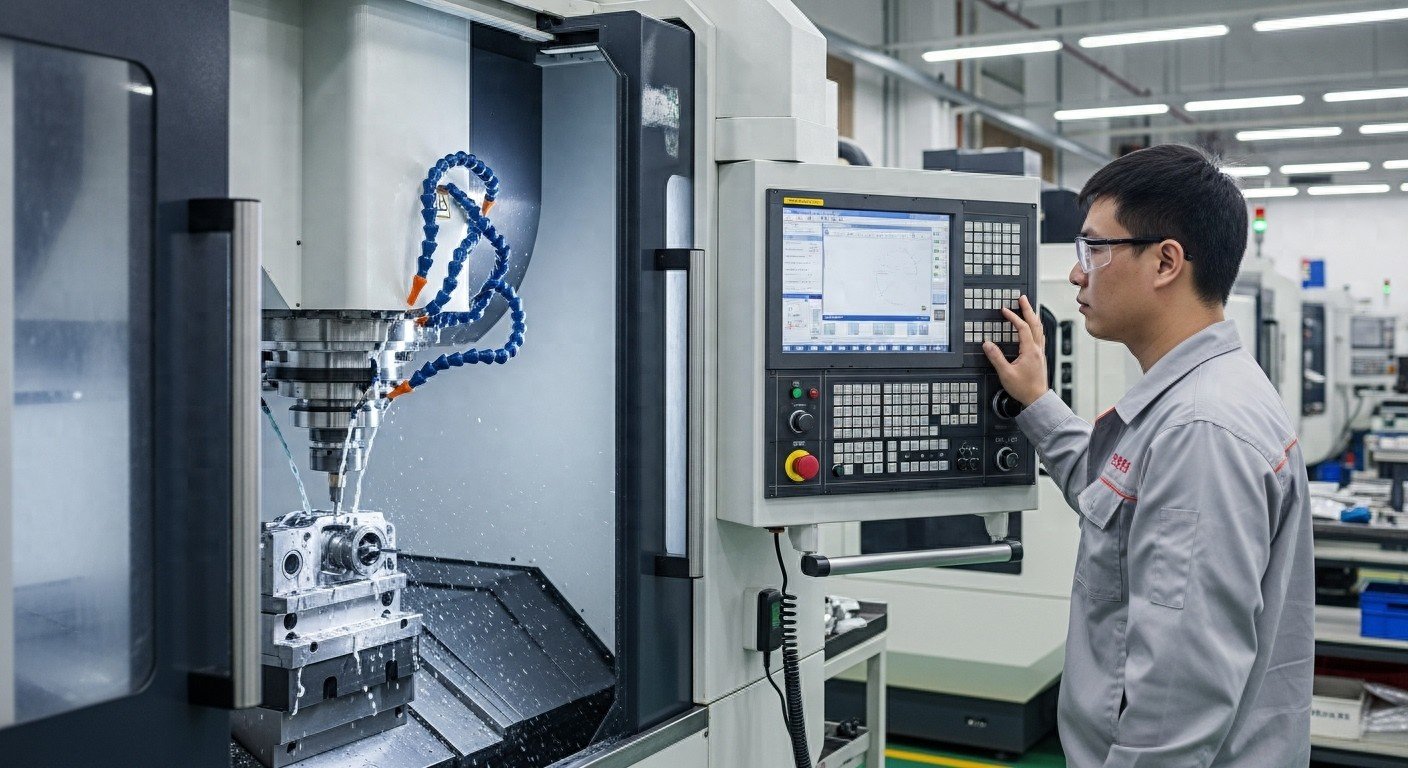
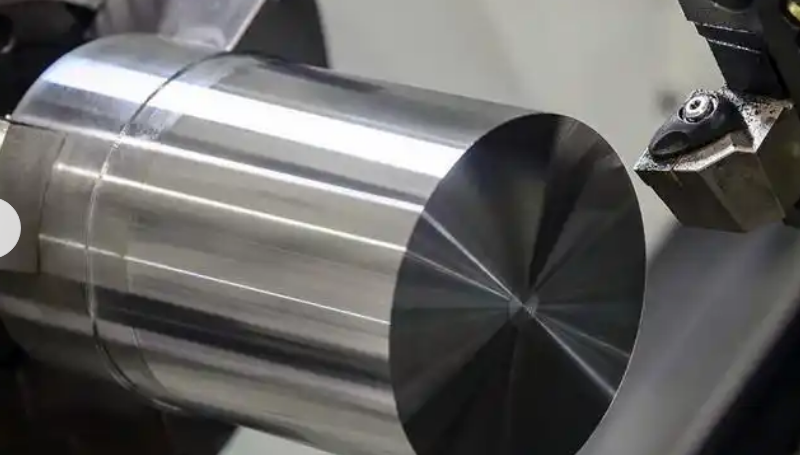
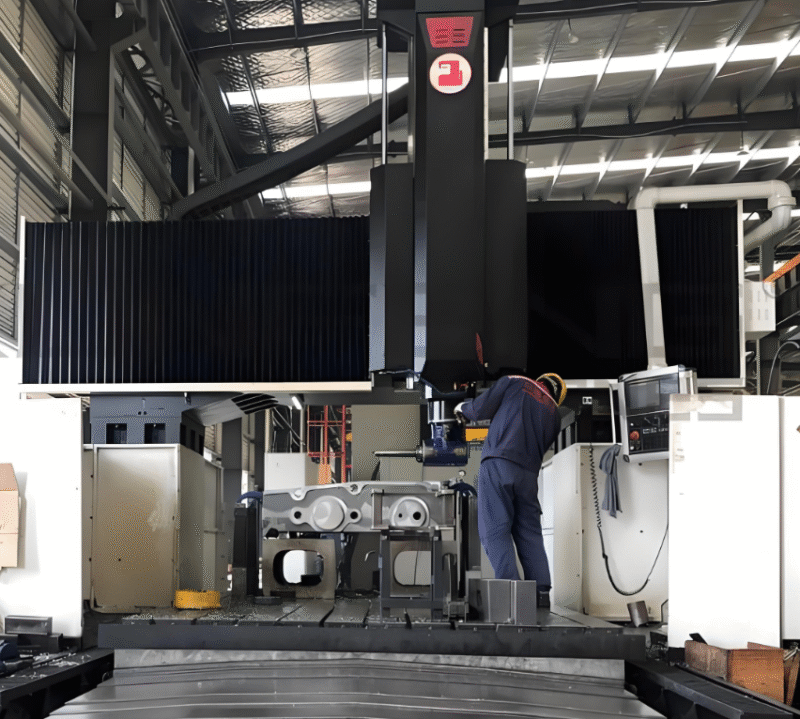
The machining of key components such as waveguide wheels and harmonic generators in the manufacture of harmonic reducers falls within the scope of precision machining, which is a core aspect of harmonic reducer manufacturing. The accuracy of precision machining processes directly affects the transmission accuracy and smoothness of motion of the reducer. To enhance machining accuracy, high-precision CNC machine tools, ultra-precision machining technologies and in-process inspection equipment are generally employed.
Heat treatment is one of the key processes used to enhance the material properties of harmonic reducers. By employing appropriate heat treatment processes, it is possible to achieve the desired hardness, strength and toughness in the material. Common heat treatment processes include annealing, normalising, quenching and tempering. As different heat treatment processes have varying effects on material properties, the choice must be made based on the specific material and performance requirements.
With regard to surface treatment, there are processes designed to improve the wear resistance, corrosion resistance and fatigue resistance of harmonic reducers. Common surface treatment processes include plating, coating and nitriding. Plating and coating provide a protective layer that prevents the material from coming into direct contact with corrosive agents in the environment, Meanwhile, nitriding can enhance the surface hardness of the material.
4.3 Strategies for Optimising Manufacturing Processes
To improve the manufacturing processes for harmonic reducers, the following optimisation strategies are proposed:
Processes are optimised by refining existing manufacturing procedures and eliminating unnecessary processing steps, thereby improving production efficiency. For example, the use of multi-axis machining technology enables multiple machining operations to be completed in a single set-up.
The level of automation has been enhanced; this means that automation within the manufacturing process has been increased, thereby reducing errors caused by manual operations and ultimately improving product quality. For example, by using robots for assembly, automated assembly is achieved.
Green manufacturing places a strong emphasis on environmental protection and energy conservation throughout the manufacturing process, thereby reducing the impact on the environment. For example, it employs clean production technologies to minimise waste emissions.
To achieve continuous improvement, we must rely on a steady stream of technological innovations and process enhancements to raise the standard of harmonic reducer manufacturing. For example, by introducing advanced machining equipment and employing cutting-edge machining techniques, we can improve machining accuracy and increase production efficiency.
4.4 Trends in Manufacturing Processes
As industrial technology has advanced, manufacturing processes for harmonic reducers have continued to improve; below are some of the trends in these manufacturing processes.
As the future direction of manufacturing processes, smart manufacturing utilises integrated sensors and actuators, combined with control systems and data processing technologies, to achieve intelligent, automated and flexible production processes.
Green manufacturing focuses on environmental protection and sustainable development; by optimising production processes and improving resource efficiency, it minimises the impact on the environment.
In the field of precision machining technology, as the technology continues to advance, both the machining accuracy and efficiency of harmonic reducers are set to improve further.
The use of new materials in the manufacture of harmonic reducers opens up new possibilities, enhancing product performance and extending product life; these possibilities stem from the research, development and application of these new materials.
V. The Application of Harmonic Reducers in Industrial Robots
5.1 Overview of Application Areas
Thanks to their high precision, high efficiency and compact design, harmonic reducers are widely used in the field of industrial robotics. As the level of industrial automation continues to rise, the scope of applications for harmonic reducers in industrial robots is constantly expanding. The following provides an overview of their main areas of application.
5.2 Analysis of Key Application Areas
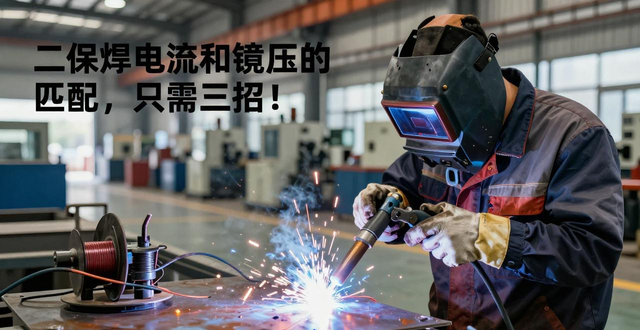
Welding robots are one of the key application categories within the industrial robotics sector. The use of harmonic reducers in welding robots primarily serves to enhance welding precision and efficiency. The high-precision transmission characteristics of harmonic reducers ensure accurate positioning during the welding process, thereby reducing welding defects.
Material-handling robots play a vital role and are widely used in sectors such as logistics and manufacturing, and harmonic reducers are found in these material-handling robots.



 Chinese
  Japanese
  English
  German
  Finnish
暂无评论内容